Tang Dynasty Hufu: Silk Road Influences and Modern Hanfu Styling
The Silk Road Catalyst: How Trade Redefined Tang Fashion
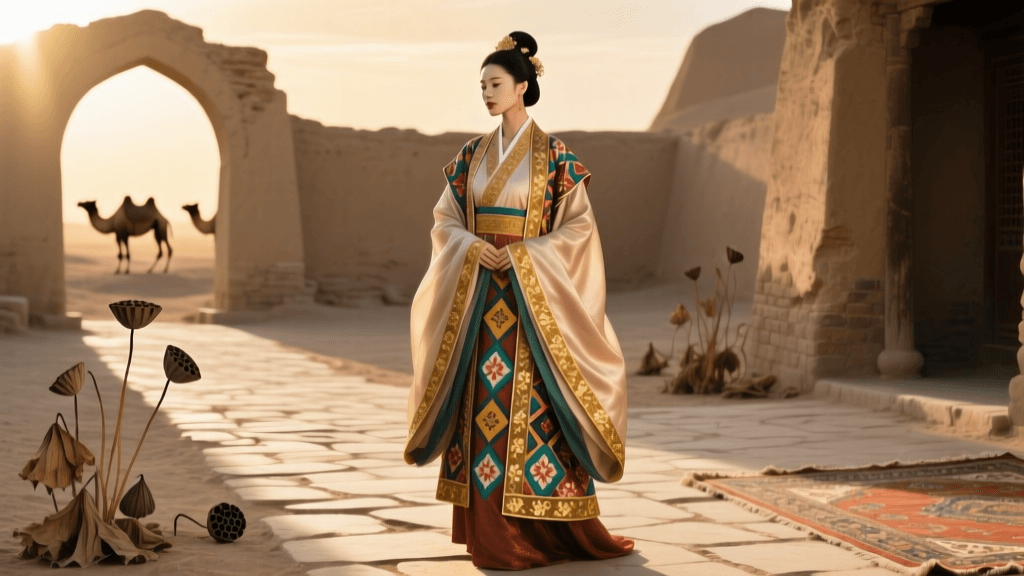
The Tang Dynasty (618–907 CE) is widely regarded as the golden age of Chinese cosmopolitanism, a period where the capital of Chang'an served as the eastern terminus of the vast Silk Road network. As merchants, diplomats, and artisans traversed these historical trade routes, they brought with them not only spices, precious metals, and religious texts, but also revolutionary sartorial concepts. This cross-cultural exchange gave rise to Hufu (foreign dress), a fashion movement that fundamentally altered the trajectory of traditional Chinese clothing. According to the UNESCO Silk Roads Programme, the continuous flow of Sogdian, Persian, and Turkic peoples into Tang society created a vibrant melting pot where foreign aesthetics were eagerly adopted by the Chinese aristocracy and commoners alike.
Unlike the flowing, wide-sleeved, and cross-collared robes of pre-Tang Hanfu, which emphasized Confucian ideals of modesty and structural drape, Hufu was inherently practical, equestrian-friendly, and heavily tailored. The integration of Central Asian clothing structures into the Tang wardrobe represents one of the most fascinating examples of historical globalization. Textiles played a massive role in this exchange. The Victoria and Albert Museum notes that Sogdian weavers introduced complex weaving techniques like samite (weft-faced compound twill) and damask to Chinese artisans, leading to the creation of hybrid textiles featuring traditional Chinese silk threads woven with Persian pearl-roundel motifs and confronting animal patterns.
Anatomy of Hufu: Key Garments and Textile Exchange
To understand the modern revival of Tang-era Hufu within the contemporary Hanfu movement, one must first deconstruct the primary garments that defined this cross-cultural aesthetic. The adoption of foreign dress was not merely a costume trend; it was a reflection of a society fascinated by the exoticism and utility of the Western Regions.
The Fanling Pao (Lapel Robe)
The Fanling Pao is perhaps the most iconic garment of the Hufu tradition. Characterized by its folded lapels, it diverged sharply from the standard Jiaoling Youren (cross-collar, right lapel) of traditional Han dress. The lapels could be worn open to reveal an inner tunic, or buttoned at the neck to form a round collar (Yuanling). This dual-functionality was highly prized by Tang officials and nobles who engaged in polo, horseback riding, and martial arts. The garment typically featured narrow sleeves (zhaixiu) to prevent fabric from catching on reins or weaponry, a direct import from nomadic steppe cultures.
The Banbi (Half-Sleeve Jacket)
Originally a practical military garment worn over armor or long robes, the Banbi evolved into a staple of both male and female Tang fashion. The International Dunhuang Project archives reveal numerous murals and manuscripts depicting women wearing heavily brocaded Banbi over high-waisted skirts. The shortened sleeves and cropped waist allowed for greater mobility while providing an additional layer of warmth and an opportunity to showcase expensive, imported Silk Road brocades.
Comparative Analysis: Traditional Hanfu vs. Silk Road Hufu
The structural differences between indigenous Han clothing and Silk Road-influenced Hufu highlight the profound impact of cross-cultural trade on garment engineering. Below is a structured comparison of the two distinct styles:
| Garment Feature | Traditional Pre-Tang Hanfu | Silk Road Influenced Hufu |
|---|---|---|
| Collar Structure | Cross-collar (Jiaoling Youren) | Folded Lapel (Fanling) or Round Collar |
| Sleeve Cut | Wide, flowing, floor-draping (Guangxiu) | Narrow, tapered, wrist-fitted (Zhaixiu) |
| Lower Body | Flowing skirts or wide-leg trousers | Fitted trousers, leggings, and leather boots |
| Primary Textiles | Plain weave silk, gauze, ramie | Samite, heavy brocade, wool-blends |
| Fastening Methods | Woven fabric ties and sashes | Metal toggles, buttons, and leather belts |
Actionable Guide: Sourcing and Styling Modern Hufu Revivals
For modern Hanfu enthusiasts, historical reenactors, and textile collectors, accurately reviving Tang Dynasty Hufu requires attention to specific tailoring measurements, fabric weights, and sourcing timelines. The contemporary Hanfu market offers a wide spectrum of quality, making it essential to know exactly what to look for when commissioning or purchasing these garments.
Fabric Selection and Textile Weights
Authentic Hufu relies heavily on structured, ornate fabrics that mimic the heavy brocades of the Silk Road. Avoid flimsy, mass-produced chiffons or lightweight polyesters, which fail to hold the stiff lapels of a Fanling Pao.
- Autumn/Spring Wear: Opt for 100% silk jacquard or brocade with a weight of 22 to 25 momme (approx. 95–105 GSM). Look for 'pearl-roundel' (lian zhu wen) motifs featuring lions, boars, or ducks, which are historically accurate Sassanian-inspired patterns.
- Winter Wear: Seek out heavy cotton-linen blends or wool-silk blends weighing at least 300 GSM. These provide the necessary stiffness for the lapels and the warmth required for the garment's steppe origins.
- Inner Layers: Pair the outer robe with a lightweight, cross-collar inner shirt (Zhongyi) made of 16 momme habotai silk or breathable ramie to manage moisture and provide a contrasting color pop at the neckline.
Precision Measurements and Tailoring
When ordering custom Hufu from specialized tailors on platforms like Taobao, Etsy, or independent Hanfu ateliers, providing precise measurements is critical to achieving the correct historical silhouette.
- Lapel Width (Fanling): The folded lapel should be drafted at 15 to 18 cm wide. This ensures the lapel lays flat against the chest when open, and forms a perfect circle when buttoned at the neck.
- Sleeve Cuff Circumference: Unlike wide-sleeved Hanfu, Hufu cuffs must be tapered. Specify a cuff circumference of 16 to 18 cm. This allows the sleeve to sit snugly on the wrist, accommodating leather bracers or tight layering without bunching.
- Banbi Length: A historically accurate Banbi should be cropped to the natural waist, measuring approximately 45 to 50 cm from the shoulder seam. This ensures it sits perfectly above the waistband of a high-waisted Tang skirt or trousers.
Sourcing, Costs, and Tailoring Timelines
Navigating the economics of high-quality Hanfu requires understanding the difference between factory-produced garments and bespoke tailoring.
- Entry-Level (Mass-Produced): Polyester-cotton blend Fanling Pao and Banbi sets typically range from $45 to $85 USD (300–600 RMB). These are readily available with 3-to-5-day shipping but often lack historical motif accuracy and structural interfacing in the collars.
- Mid-Tier (Authentic Textiles): Garments made from genuine mulberry silk brocade with accurate pearl-roundel motifs will cost between $180 and $350 USD (1200–2500 RMB). Brands like Ming Hua Tang or specialized Taobao weavers offer these, but expect a 15-to-20-day lead time for fabric cutting and assembly.
- Bespoke / Custom Commission: For fully custom-woven silk samite or hand-embroidered Hufu tailored to your exact measurements, costs start at $500 USD and can exceed $1,200 USD. Timing: Custom jacquard weaving and hand-tailoring require a strict 45 to 60-day lead time. Plan your commissions at least two months ahead of historical festivals, cosplay events, or cultural exhibitions.
Styling Tip: To complete the Hufu silhouette, abandon traditional Han cloth shoes. Invest in a pair of knee-high or calf-high leather riding boots with a slight heel. Pair the ensemble with a thick, tooled leather belt featuring brass or bronze plaques, mirroring the equestrian gear of Sogdian merchants and Tang cavalrymen.
Conclusion
The legacy of the Silk Road is inextricably woven into the fabric of Chinese fashion history. Tang Dynasty Hufu stands as a testament to an era when borders were porous, and cultural exchange was celebrated through the very garments people wore on their backs. By understanding the historical trade routes that brought samite, lapels, and narrow sleeves to Chang'an, modern enthusiasts can approach the Hanfu revival not just as a sartorial choice, but as a living continuation of global textile history. Whether you are sourcing a 25-momme silk brocade Banbi or tailoring a bespoke Fanling Pao, wearing Hufu is an act of honoring the merchants, weavers, and travelers who connected the ancient world.