Decoding Tang Dynasty Hanfu: Wu Zetian's Iconic Style
The Political Power of Tang Dynasty Fashion
Wu Zetian (624–705 CE) remains one of the most formidable and fascinating figures in Chinese history. As the only female emperor to rule China in her own right, her ascent from a low-ranking concubine to the sovereign of the Zhou Dynasty required not only political genius but also a masterful command of visual propaganda. According to Encyclopedia Britannica, Wu Zetian utilized religion, architecture, and courtly aesthetics to legitimize her unprecedented reign. Central to this visual authority was her wardrobe, which evolved to reflect her supreme status and the cosmopolitan zenith of the Tang era.
Tang Dynasty fashion was characterized by its boldness, vibrant colors, and openness to foreign influences from the Silk Road. As noted by the Metropolitan Museum of Art, the Tang dynasty is widely considered a golden age of Chinese arts and culture, with fashion reflecting unprecedented cosmopolitan influences from Central Asia, Persia, and India. Wu Zetian’s court attire was not merely decorative; it was a calculated display of imperial power, utilizing rare textiles, restricted colors, and imposing silhouettes to command absolute reverence.
Deconstructing Wu Zetian’s Iconic Silhouette
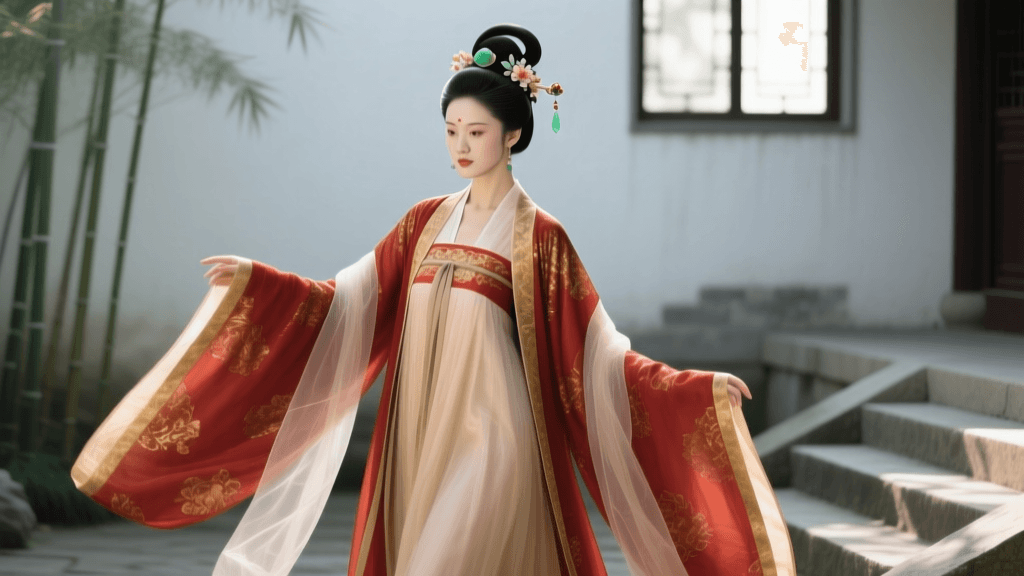
The quintessential Tang Dynasty silhouette, heavily favored by court ladies and elevated to imperial heights by Wu Zetian, is defined by high waists, voluminous sleeves, and flowing drapery. This silhouette projected an image of opulence, health, and aristocratic leisure.
The Qixiong Ruqun (Chest-High Skirt)
The foundation of Wu Zetian’s daily court wardrobe was the Qixiong Ruqun, a chest-high skirt ensemble. Unlike the lower-waisted skirts of the preceding Sui or subsequent Song dynasties, the Tang chest-high skirt was tied securely above the bust, often with wide, ornate silk ribbons. This design elongated the lower body, creating a statuesque and imposing presence. The top, or Shan, was typically a lightweight, short-sleeved or long-sleeved blouse tucked into the skirt, featuring a low, U-shaped or straight neckline that showcased the elaborate collar layering beneath.
The Banbi and Pibo Layers
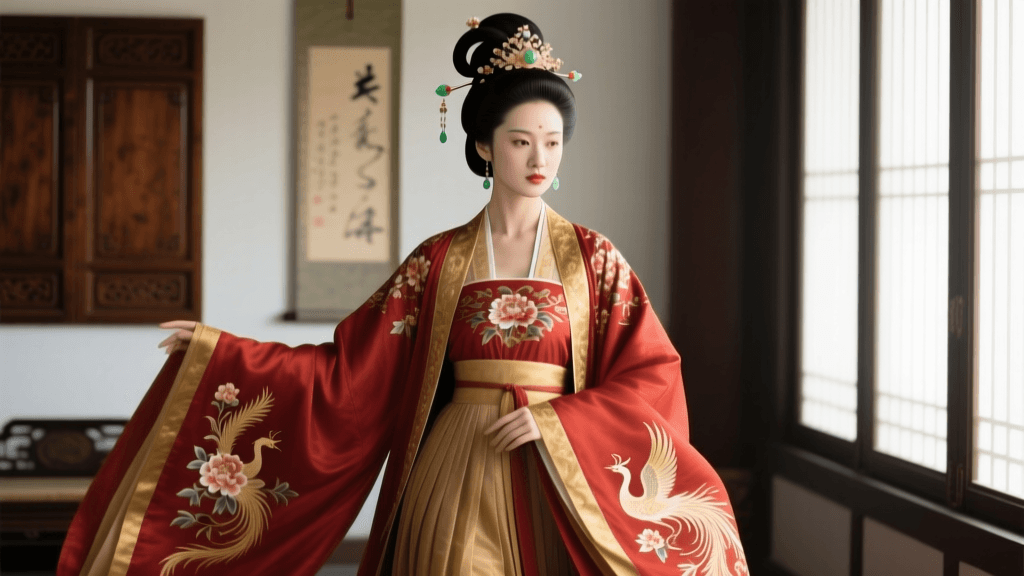
To add structural complexity and denote rank, the Banbi (half-sleeve jacket) was worn over the Shan. Originally a practical garment for commoners and soldiers, the Banbi was adopted by the Tang court and transformed into a luxurious item made of heavy brocade. Draped over the entire ensemble was the Pibo, a long, flowing silk shawl that wrapped around the arms and trailed behind the wearer. The Pibo dictated the wearer's movements, requiring a slow, gliding gait that epitomized imperial grace.
Imperial Textiles: Brocades, Dyes, and Motifs
The fabrics utilized in Wu Zetian’s wardrobe were strictly regulated by sumptuary laws. The imperial court favored Zhijin (woven gold brocade) and Kesi (silk tapestry), techniques that required immense labor and skill. The mastery of these textiles is so profound that UNESCO recognizes Chinese sericulture and silk craftsmanship as Intangible Cultural Heritage, a testament to the ancient techniques that clothed the Tang elite.
Color was a potent political tool. While commoners were restricted to undyed hemp or dull, plant-based hues, Wu Zetian’s court monopolized vibrant crimsons, deep purples, and imperial yellows. The motifs woven into her robes were equally symbolic. The Tuanke (roundel) patterns, heavily influenced by Sasanian Persia, enclosed mythical beasts, paired phoenixes, and dragons. The phoenix (Fenghuang), in particular, became deeply associated with Wu Zetian’s empress status, symbolizing the ultimate feminine authority in the cosmos.
Structured Guide: Tang Court Garments Breakdown
Understanding the layers of Tang court fashion is essential for historians and modern Hanfu enthusiasts alike. Below is a comparative breakdown of the core garments that defined the imperial wardrobe.
| Garment Name | Historical Function & Placement | Modern Fabric Recommendation | Estimated Cost (USD) |
|---|---|---|---|
| Qixiong Ruqun | Core dress; chest-high skirt and inner blouse | Silk Jacquard or Tencel blend | $60 - $150 |
| Banbi | Half-sleeve outer jacket for layering | Cotton-linen blend or light Brocade | $30 - $80 |
| Pibo | Decorative silk shawl draped over arms | Lightweight Mulberry Silk or Chiffon | $20 - $50 |
| Daxiushan | Grand ceremonial wide-sleeve outer robe | Heavy Silk Brocade with gold threading | $120 - $300 |
Actionable Guide: How to Wear Tang Hanfu Today
For modern practitioners of the Hanfu movement, recreating the majestic style of Wu Zetian’s court requires attention to precise measurements, fabric behavior, and historical styling techniques. Here is your practical guide to assembling and wearing an authentic Tang Dynasty ensemble.
Sizing and Measurements
The most common mistake modern wearers make with the Qixiong Ruqun is improper sizing, leading to the skirt slipping down. To achieve the historical silhouette:
- Upper Chest Measurement: Measure the circumference of your torso directly above the bust, under the armpits. The skirt’s waistband must match this exact measurement, plus 2 cm for overlap.
- Skirt Width: For the iconic, voluminous Tang pleats, the total fabric width of the skirt must be at least 3 to 4 meters. This allows for deep, stacked pleats that drape heavily and elegantly.
- Skirt Length: Measure from your upper chest to the floor, then add 5 to 10 cm. Tang skirts were meant to pool slightly on the floor, hiding the shoes and emphasizing a gliding walk.
Fabric Selection and Budgeting
Authenticity in Tang Hanfu relies heavily on the drape and sheen of the fabric. Avoid stiff cottons or cheap, shiny polyesters that reflect light unnaturally.
- Entry-Level ($40 - $80): Look for high-quality polyester jacquard or Tencel blends. These offer a decent drape, are machine washable, and resist wrinkling, making them ideal for outdoor festivals or summer wear.
- Mid-Range ($90 - $180): Opt for silk-cotton blends or rayon. These provide a breathable, historically accurate matte finish with a soft drape, perfect for the Shan (blouse) and Banbi.
- Museum-Grade ($200+): Invest in 100% mulberry silk, silk brocade, or hand-woven Xiangyunsha (gambiered silk). These are essential for the Daxiushan and formal photography, offering the heavy, luxurious movement seen in Tang dynasty scroll paintings.
Hair, Makeup, and Accessories
The Tang aesthetic was famously bold, particularly regarding cosmetics, which were heavily influenced by Wu Zetian’s court trends.
- The Huadian (Forehead Decal): Apply a floral or geometric decal directly between the eyebrows. Historically made of gold leaf, jade, or painted pigment, modern wearers can use high-quality cosmetic decals or liquid eyeliner to paint intricate plum-blossom motifs.
- Mianye (Dimple Dots): Paint two small, crescent-shaped or circular dots in deep crimson at the corners of the mouth to simulate dimples, a hallmark of Tang court beauty.
- Hair and Buyao: Tang hairstyles were highly structured, often requiring hairpieces to achieve the necessary volume. Sweep the hair into a high, elaborate bun (such as the Yunji or cloud bun). Secure it with a Buyao (golden buyao hairpin with dangling tassels) and a heavy, ornate comb placed at the front of the bun.
Conclusion
Wu Zetian’s wardrobe was a masterclass in the politics of appearance. By elevating the Qixiong Ruqun, monopolizing vibrant dyes, and embracing the cosmopolitan textiles of the Silk Road, she crafted an imperial image that transcended traditional gender boundaries of her time. Today, the revival of Tang Dynasty Hanfu allows us to step into this golden age of Chinese history. By understanding the precise measurements, luxurious fabrics, and bold aesthetics of the era, modern wearers can respectfully and accurately channel the enduring majesty of China’s only female emperor.