Tang Dynasty Hanfu: Silk Road Influences & Modern Styling
The Silk Road's Sartorial Revolution in Tang China
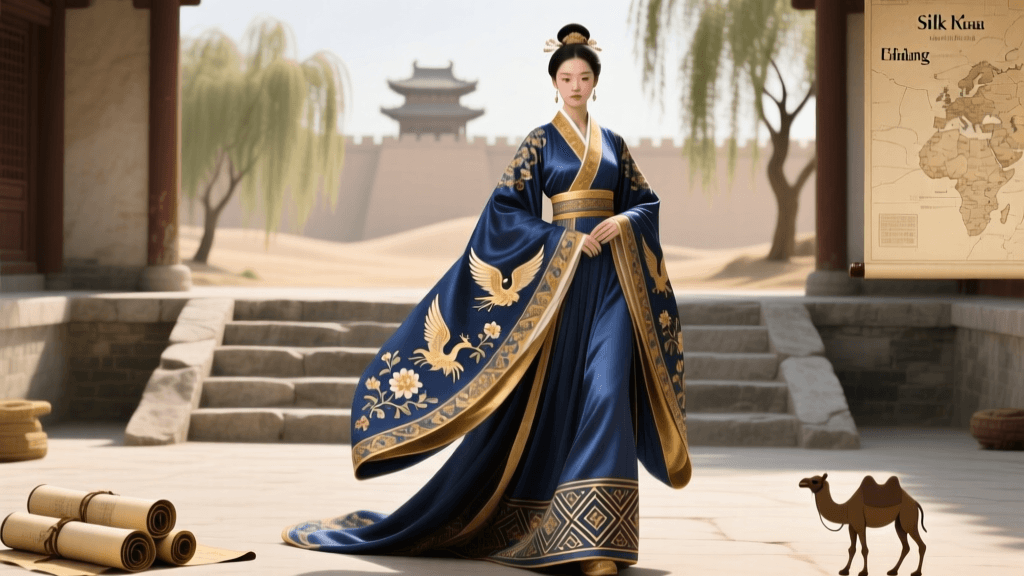
The Tang Dynasty (618–907 CE) is universally celebrated as a golden age of Chinese art, poetry, and cosmopolitanism. At the heart of this cultural flourishing was the Silk Road, a vast network of trade routes that connected the Tang capital of Chang'an (modern-day Xi'an) to Central Asia, Persia, India, and the Byzantine Empire. While traditional Hanfu is often associated with the flowing, cross-collared robes of the Han and Wei dynasties, the Tang era introduced a radical sartorial revolution driven by cross-cultural exchanges. According to the UNESCO Silk Roads Programme, these routes were not merely conduits for goods, but vibrant corridors for the exchange of ideas, aesthetics, and technologies, fundamentally altering the trajectory of Asian traditional garments.
As foreign merchants, diplomats, and artisans flooded into Chang'an, the local elite developed a profound fascination with 'Western' (Central Asian and Persian) fashions. This resulted in a unique synthesis where indigenous Chinese tailoring merged with Sogdian, Xianbei, and Persian influences. For modern Hanfu enthusiasts and historians alike, understanding this cross-cultural pollination is essential for accurately recreating, sourcing, and appreciating Tang Dynasty clothing.
Key Cross-Cultural Garments and Textiles
The Yuanlingpao (Round-Collar Robe) and Nomadic Tailoring
Perhaps the most iconic garment to emerge from this era of cultural synthesis is the Yuanlingpao, or round-collar robe. Prior to the Tang Dynasty, Hanfu was predominantly defined by the jiaoling youren (cross-collar, right lapel) style. The introduction of the round collar was heavily influenced by the Xianbei and other nomadic horse-riding cultures of the Northern Wei, as well as Sogdian merchants. Designed for mobility, the Yuanlingpao featured side slits (or front/back slits in military variants) and was typically secured with a leather belt rather than a silk sash. It was worn by both men and women, with women often adopting it as a symbol of progressive, cosmopolitan femininity.
The Banbi (Half-Sleeve Jacket) and Persian Motifs
The Banbi is a short-sleeved or half-sleeved jacket worn over high-waisted skirts or inner robes. While its silhouette has indigenous roots, the decorative motifs that adorned Tang-era Banbi were distinctly foreign. The Metropolitan Museum of Art's Heilbrunn Timeline of Art History notes that Persian and Sogdian weavers introduced the 'pearl roundel' motif—a circular border of pearls enclosing confronting animals like peacocks, boars, or lions. Tang weavers eagerly adopted these motifs, blending them with native Chinese auspicious symbols to create a hybrid visual language that defined the era's luxury textiles.
Samite and Weft-Faced Compound Twill
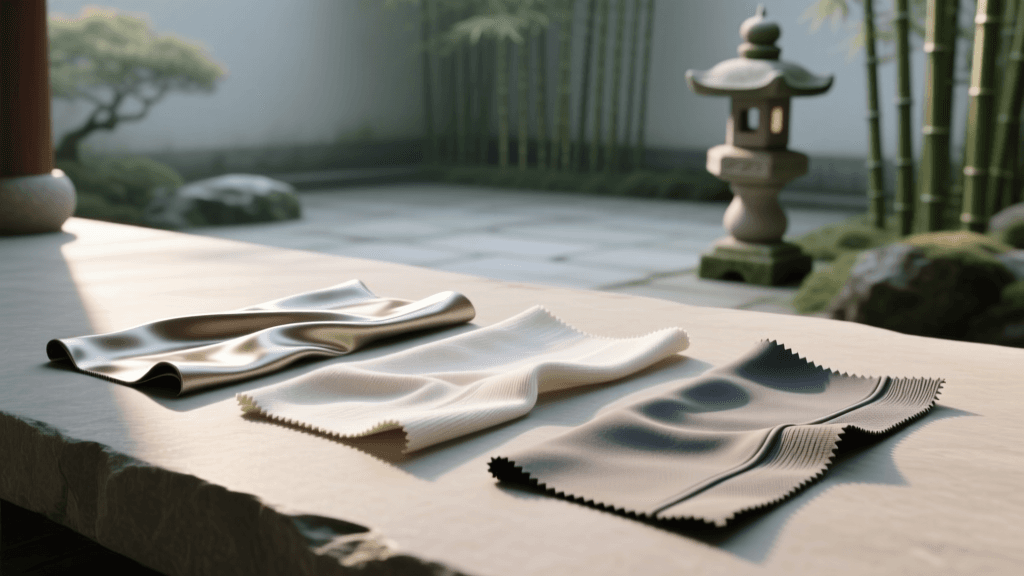
Before the Silk Road's peak, Chinese silk weaving was dominated by warp-faced techniques, which produced smooth, lightweight fabrics like damask and plain weave. Central Asian and Persian weavers, however, specialized in weft-faced compound twill, known as samite. This technique allowed for much thicker, heavier, and more vibrant textiles with complex, large-scale geometric and floral patterns. The integration of samite into Tang Hanfu meant that garments became more structured, opulent, and visually striking, perfectly suited for the voluminous silhouettes favored by Tang aristocrats.
'The Silk Road was never a single route, but a shifting network of paths that transformed the very fabric of the societies it touched, weaving foreign threads into the domestic tapestry of Tang China.' — Adapted from Smithsonian Magazine
Data Table: Pre-Tang vs. Silk Road Influenced Tang Garments
To understand the magnitude of this cross-cultural shift, it is helpful to compare the structural and aesthetic differences between earlier Hanfu and the Silk Road-influenced garments of the Tang Dynasty.
| Feature | Pre-Tang Hanfu (Han / Wei / Jin) | Tang Silk Road Hanfu |
|---|---|---|
| Collar Style | Predominantly cross-collar (jiaoling) | Introduction of round-collar (yuanling) and lapel-collar (fanling) |
| Fastenings | Silk sashes, fabric ties | Leather belts with metal plaques, buttons, and toggles |
| Sleeve Construction | Drop-shoulder, massive trailing sleeves | Set-in sleeves, tapered cuffs, and half-sleeves (banbi) |
| Primary Motifs | Clouds, dragons, geometric borders | Pearl roundels, confronting lions, grapevines, lotus |
| Textile Weave | Warp-faced silks, lightweight gauzes | Weft-faced samite, heavy brocades, vibrant dyes |
Practical Guide: Sourcing and Styling Tang-Silk Road Hanfu Today
For modern practitioners, cosplayers, and cultural enthusiasts, accurately recreating Tang Dynasty Hanfu with Silk Road influences requires attention to specific fabrics, measurements, and tailoring techniques. Here is actionable advice for sourcing and styling these garments today.
1. Fabric Sourcing and Material Specifications
To replicate the heavy, structured drape of Tang samite and brocade, avoid lightweight chiffons or standard mulberry silk habotai. Instead, search for the following materials:
- Song Brocade or Modern Jacquard: Look for silk-blend jacquards with a weight of at least 19mm to 30mm. These provide the necessary body to hold the round-collar shape without collapsing.
- Motif Selection: When buying fabric by the yard, seek out 'pearl roundel' (zhuwen) or 'confronting animal' jacquard weaves. Avoid Ming Dynasty 'cloud and dragon' weaves, which are anachronistic for Tang styling.
- Cost Expectations: Authentic silk-blend jacquard suitable for Tang Hanfu typically costs between $15 and $45 per yard. A full Yuanlingpao requires roughly 4 to 6 yards depending on your height and desired sleeve width.
2. Crucial Measurements and Tailoring
Tang garments bridge the gap between fluid drapery and structured tailoring. When ordering custom Hanfu or adjusting off-the-rack pieces, pay close attention to these measurements:
- Shoulder Seam: Unlike earlier Hanfu which features a seamless drop-shoulder, a historically accurate Tang Yuanlingpao often features a distinct shoulder seam or a structured yoke to support the weight of brocade fabrics.
- Sleeve Length: For the iconic Tang drape, the sleeve should extend 10 to 15 cm past the wrist bone. However, unlike the floor-sweeping sleeves of the Han dynasty, Tang sleeves should taper slightly at the wrist or feature a distinct cuff (xiu kou).
- Skirt Waistline: Tang women's fashion favored extremely high waistlines. The chest-high skirt (qixiong ruqun) should sit directly under the armpits, secured with a wide, structured sash rather than thin strings, to support the weight of the pleated fabric.
3. Purchasing and Timing
If you are buying ready-to-wear Tang Hanfu from specialized merchants (such as those on Taobao, Weidian, or dedicated international Hanfu boutiques), expect the following:
- Price Tiers: Off-the-rack, machine-embroidered polyester sets range from $45 to $90 USD. High-end, historically accurate silk brocade sets with authentic metal-plaque leather belts range from $180 to $350+ USD.
- Custom Tailoring Timing: If you are commissioning a custom Yuanlingpao with specific Sogdian-inspired brocade, allow 30 to 45 days for production. Many specialized artisans also require an additional 2-3 weeks to source specific vintage or deadstock jacquard fabrics.
- Accessories: Complete the Silk Road look by sourcing a die-xie belt (a leather belt with hanging straps and metal rings used to carry tools or pouches), which typically costs an additional $30 to $60 USD from leatherworking artisans.
Conclusion
The Tang Dynasty's embrace of Silk Road aesthetics proves that traditional Chinese clothing was never a static monolith. The integration of Sogdian tailoring, Persian motifs, and Central Asian weaving techniques created a vibrant, hybridized fashion culture that continues to captivate the world today. By understanding the historical mechanics of these cross-cultural influences, modern enthusiasts can move beyond generic costumes and thoughtfully curate garments that honor the rich, interconnected history of the ancient Silk Road.