Traditional Chinese Wedding Attire: Qun Kua & Xiu He Fu Guide
The Renaissance of Traditional Chinese Wedding Attire
In recent years, there has been a profound cultural renaissance in Asian bridal fashion, with modern couples increasingly eschewing Western white gowns in favor of their ancestral heritage. Traditional Chinese wedding attire is not merely clothing; it is a wearable tapestry of blessings, history, and familial honor. For the contemporary bride, navigating the intricate world of ceremonial garments can be overwhelming. This comprehensive guide breaks down the most iconic silhouettes—Qun Kua, Xiu He Fu, and Long Feng Gua—providing actionable advice on sourcing, fittings, costs, and the sacred customs that accompany them.
Understanding the Big Three: Decoding Bridal Silhouettes
When planning a traditional Chinese wedding, particularly the pivotal Tea Ceremony, brides generally choose between three primary garments. Each carries distinct historical roots, regional preferences, and structural differences.
1. Qun Kua (裙褂) - The Cantonese Heritage
Originating from the Guangdong province, the Qun Kua is a two-piece ensemble consisting of a structured, collarless jacket and an A-line pleated skirt. It is renowned for its dense, intricate embroidery using gold and silver metallic threads. The craftsmanship involved in creating a Qun Kua is staggering, often linked to the rich heritage of regional silk and embroidery techniques recognized globally for their complexity. As documented by UNESCO's Intangible Cultural Heritage list, the sericulture and silk craftsmanship of China form the foundational bedrock of these luxurious textiles.
Grading System: Qun Kua are graded by the density of their embroidery, which directly dictates their cost and prestige:
- Xiao Wu Fu (小五福): 30% embroidery density. The most affordable and lightweight option.
- Zhong Wu Fu (中五福): 50% density. A popular middle-ground choice.
- Da Wu Fu (大五福): 70% density. Highly ornate, with the red silk base barely visible.
- Gua Huang (褂皇): 100% density. The pinnacle of bridal wear. The base fabric is entirely obscured by gold and silver thread. A bespoke Gua Huang can take over a year to embroider by hand and costs upwards of $15,000 to $30,000 USD.
2. Xiu He Fu (秀禾服) - The Romantic Favorite
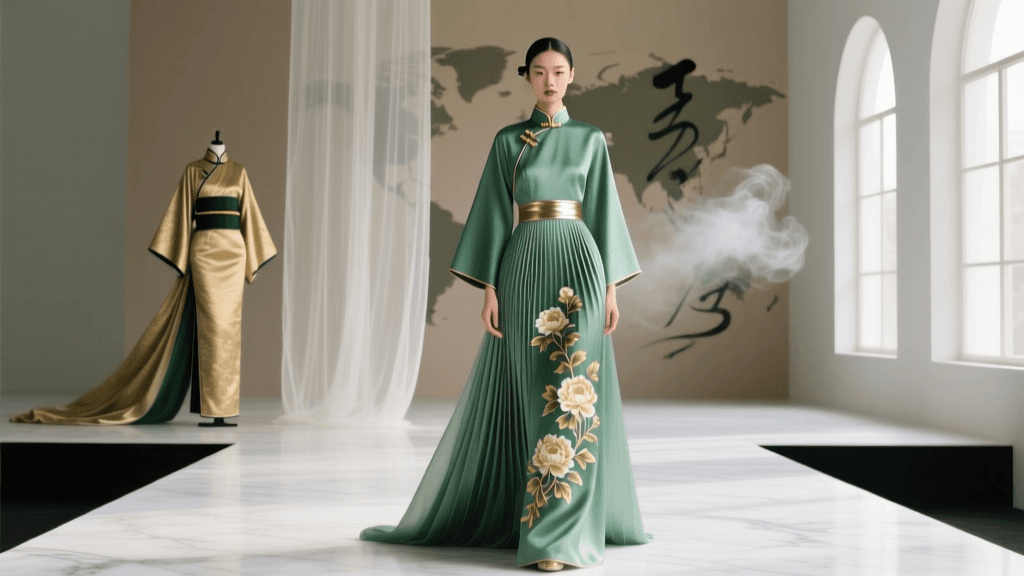
Unlike the historically rooted Qun Kua, the Xiu He Fu is a relatively modern invention, popularized by the 2001 television drama Orange Turned Red (where the main character, Xiu He, wore it). It features a softer, more romantic silhouette with a flared, multi-tiered skirt and wide, flowing sleeves. The embroidery utilizes colorful silk threads rather than heavy metallic ones, featuring motifs like peonies, lotuses, and butterflies. Because it is less structured and lacks the rigid tailoring of the Qun Kua, the Xiu He Fu is highly forgiving, comfortable, and universally flattering for all body types.
3. Long Feng Gua (龙凤褂) - The Royal Standard
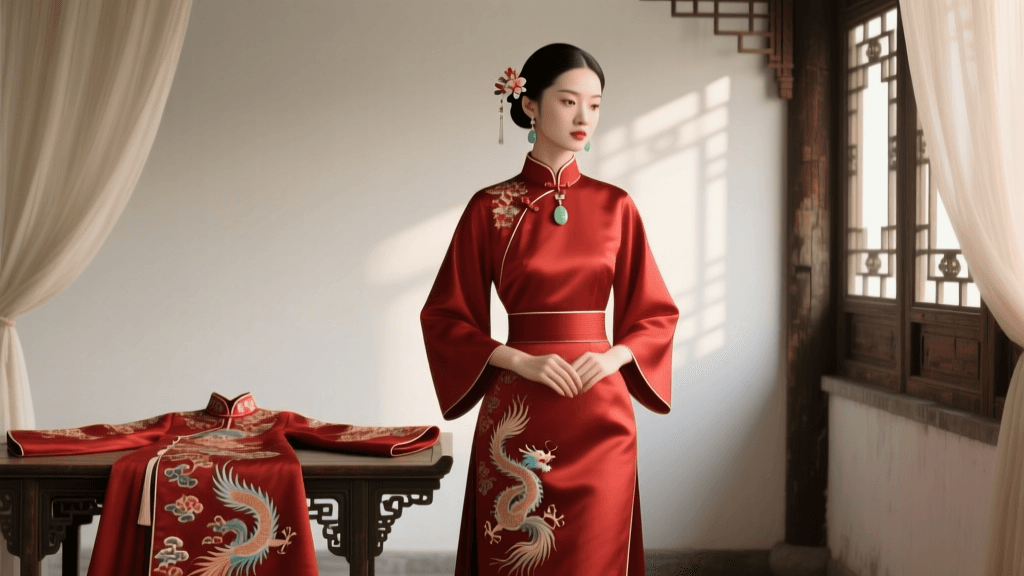
Often used interchangeably with Qun Kua, the Long Feng Gua specifically refers to garments where the Dragon (Long) and Phoenix (Feng) motifs are the undisputed focal points. Historically reserved for royalty during the Qing Dynasty, these motifs represent the ultimate balance of Yin and Yang, and marital harmony. According to The Metropolitan Museum of Art's Heilbrunn Timeline, the integration of imperial motifs into civilian ceremonial wear marks a fascinating evolution in Chinese textile history, allowing commoners to experience 'royal' splendor on their wedding day.
Comparison Chart: Choosing Your Perfect Bridal Look
| Garment | Skirt Silhouette | Embroidery Material | Avg. Purchase Cost (USD) | Best Ceremony Phase |
|---|---|---|---|---|
| Qun Kua | Straight / A-line Pleated | Gold & Silver Metallic Thread | $1,500 - $30,000+ | Tea Ceremony, Door Games |
| Xiu He Fu | Flared / Multi-tiered Bell | Colorful Silk Threads | $300 - $1,500 | Tea Ceremony, Photography |
| Long Feng Gua | Straight / Pencil | Dense Gold/Silver Thread | $2,000 - $20,000+ | Main Tea Ceremony |
| Qipao / Cheongsam | Form-fitting One-piece | Silk, Brocade, Light Embroidery | $200 - $2,000 | Banquet Toasting, Reception |
Practical Guide: Sourcing, Fittings, and Timelines
Securing the perfect traditional garment requires meticulous planning. Unlike Western gowns, the structure and symbolism of Chinese wedding attire demand specific attention to detail.
The 6-Month Fitting Timeline
- Month 6 (Sourcing): Decide whether to buy bespoke, buy off-the-rack, or rent. If opting for a bespoke Da Wu Fu or Gua Huang, you must place your order now, as hand-embroidery takes hundreds of hours.
- Month 4 (First Measurement): Visit your tailor or rental boutique. Crucial measurements include the bust, natural waist, hips, shoulder width, and wrist-to-wrist sleeve span. Pro Tip: If you plan to lose weight, inform your tailor; Qun Kua jackets are meant to fit snugly, while Xiu He Fu should drape loosely.
- Month 2 (The Mock Fitting): Try on the base garment. Check the sleeve length—traditional sleeves should cover the wrists entirely to hide the hands, symbolizing modesty and the retention of wealth.
- Month 1 (Final Adjustments & Accessories): Finalize the hemline based on your chosen ceremonial shoes. Purchase your undergarments (traditionally red silk pajamas or a red slip) to wear beneath the sheer or heavily embroidered layers.
Renting vs. Buying: Cost Expectations
Given the exorbitant cost of high-density Qun Kua, renting is the most practical route for 80% of modern brides. Rental packages in major hubs like Singapore, Kuala Lumpur, and Guangzhou typically range from $500 to $1,500 USD for a 3-day period, often including matching groom attire (Changshan or Tangzhuang) and bridal hairpieces. If purchasing an authentic, hand-embroidered Xiu He Fu, expect to spend between $400 and $1,200 USD, making it a viable keepsake for future generations.
Ceremonial Customs, Taboos, and Etiquette
Wearing traditional Chinese wedding attire is steeped in superstition and cultural protocol. Adhering to these customs ensures good fortune and respects familial elders.
Strict Taboos to Avoid
- No Pockets: Authentic Qun Kua and Long Feng Gua are traditionally made without pockets. Pockets are believed to 'hold' or 'leak' the family's wealth and good fortune away from the bride's new household.
- The 'One-Time' Rule: A bride should only wear the complete, fully buttoned outfit once—on her actual wedding day. During fittings, the bride should only slip it on without fully fastening the buttons or tying the skirt. Wearing it fully beforehand is considered bad luck, symbolizing a 'rehearsal' of the marriage or inviting widowhood.
- Avoiding Black and White: Undergarments, shoes, and hair accessories must strictly be red, gold, or jade. Black and white are associated with mourning and must never touch the bridal ensemble.
The Tea Ceremony Protocol
The Tea Ceremony is the emotional core of a Chinese wedding, where the bride and groom serve tea to their parents and elders to express gratitude. The bride's attire plays a functional role here. The wide sleeves of the Xiu He Fu or the structured cuffs of the Qun Kua are designed to allow the bride to hold the small tea cups with both hands—a mandatory sign of respect. As elders drink the tea, they gift the bride heavy gold jewelry, particularly Long Feng bangles and jade pendants. The bride must put these on immediately over her red garment, layering them up her arms as a public display of the family's wealth and blessing.
According to textile historians and archives at the Victoria and Albert Museum, the integration of symbolic motifs in Asian ceremonial dress serves as a visual language, communicating societal values, spiritual protection, and familial aspirations without a single word being spoken.
Decoding the Embroidery Motifs
Every stitch on a traditional Chinese wedding garment carries profound meaning. When selecting your dress, look for these auspicious combinations:
- Five Bats (Wu Fu): The Chinese word for bat (fu) sounds identical to the word for good fortune. Five bats represent the Five Blessings: longevity, wealth, health, virtue, and a peaceful death.
- Peonies: Known as the 'King of Flowers,' peonies symbolize honor, wealth, and feminine beauty.
- Pomegranates: Because they are filled with seeds, pomegranates are a direct prayer for fertility and a household full of children.
- Lotus and Koi Fish: A homophonic blessing for continuous wealth and harmony year after year.
Accessorizing the Traditional Bride
To complete the ceremonial look, the bride's styling must match the grandeur of the garment. Hair is traditionally swept into an elaborate updo, secured with gold hairpins, jade combs, and fresh flowers (often red roses or orchids). Footwear consists of red silk slippers embroidered with phoenixes or double-happiness characters. Modern brides often opt for red velvet block heels for comfort during the lengthy Tea Ceremony, but the traditional silk slipper remains a mandatory inclusion for the bridal trousseau and bedroom rituals.
Conclusion
Choosing traditional Chinese wedding attire is a deeply personal journey that bridges the gap between ancient heritage and modern celebration. Whether you opt for the majestic, gold-laden structure of a Gua Huang Qun Kua, the romantic flow of a silk Xiu He Fu, or the tailored elegance of a reception Qipao, understanding the history, craftsmanship, and customs behind these garments elevates the wedding experience. By respecting the timelines, measurements, and cultural taboos, brides ensure that their ceremonial attire is not just a beautiful outfit, but a powerful talisman for a prosperous and harmonious marriage.