Chinese Elements in Global Couture: A Runway Guide
The Evolution of Chinese Motifs in Global Couture
For decades, the global fashion runway has looked to the East for inspiration, often blurring the lines between cultural appreciation and Orientalist fantasy. However, the contemporary landscape of international couture has shifted dramatically. Today, traditional Chinese garments and textile techniques are not merely exotic backdrops; they are structural and philosophical foundations for some of the world's most celebrated haute couture collections. The watershed moment for this shift was widely recognized during the Metropolitan Museum of Art's landmark exhibition, which explored the profound impact of Chinese aesthetics on Western fashion China: Through the Looking Glass. This exhibition catalyzed a new era where global fashion houses began collaborating directly with Chinese artisans, moving past pastiche into profound material respect.
Key Traditional Elements Dominating the Runway
The Mamianqun (Horse-Face Skirt)
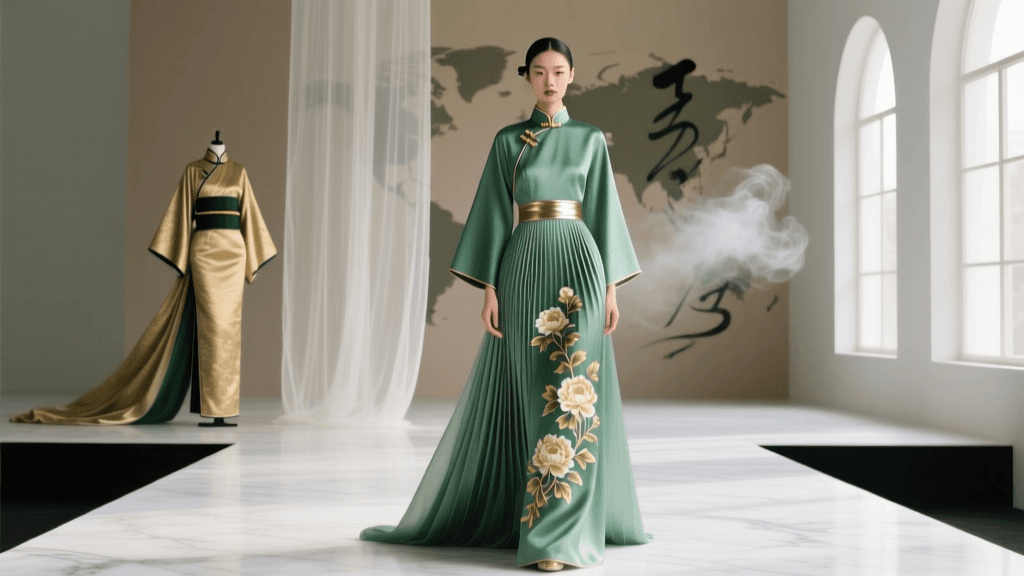
Recently, the mamianqun has become a focal point of both runway showcases and cultural discourse. Characterized by its flat front and back panels with intricately pleated sides, this Ming Dynasty staple has been reinterpreted by both heritage brands and avant-garde designers. On the runway, we see the traditional woven gold and silver threads replaced or augmented with modern laser-cut organza and sustainable vegan leathers, yet the foundational geometry of the skirt remains untouched. When international houses attempt to replicate this silhouette without acknowledging its origins, it sparks vital conversations about intellectual property in traditional cultural expressions.
Su Embroidery and Silk Brocade
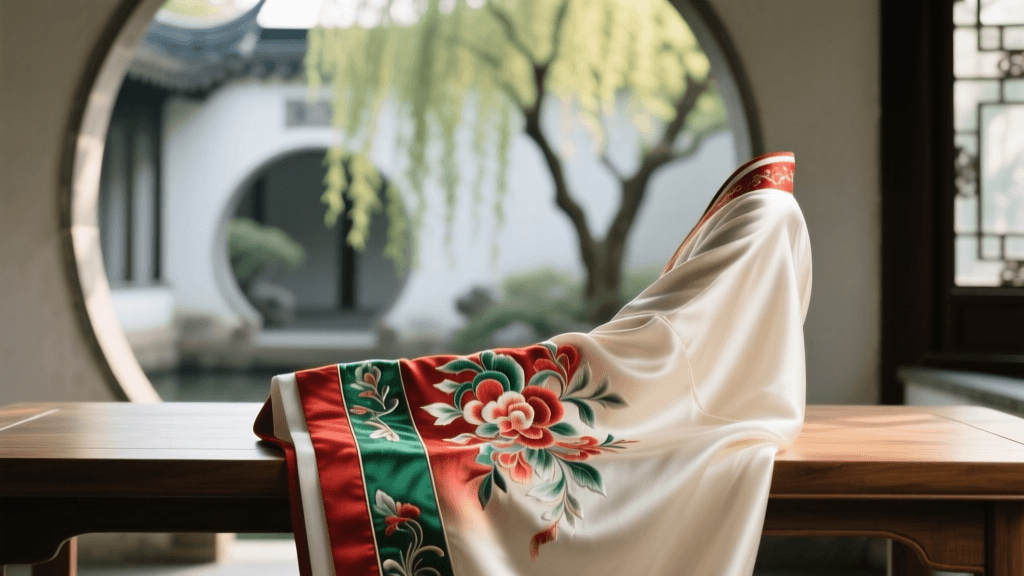
Su embroidery, originating from Suzhou, is renowned for its delicate, painstaking stitch work, often utilizing silk threads split into fractions as thin as a human hair. Recognized globally for its immense cultural value, traditional sericulture and silk craftsmanship are protected as vital intangible heritage Sericulture and silk craftsmanship of China. In modern couture, Su embroidery is utilized to create three-dimensional floral motifs that appear to bloom directly off the tulle bodices of evening gowns. The cost for authentic, hand-stitched Su embroidery panels for couture pieces typically starts at $1,500 and can exceed $10,000 depending on the density of the stitch work and the complexity of the motif.
Yunjian (Cloud Collar)
The Yunjian, or cloud collar, is a highly decorative, multi-layered accessory historically worn over the shoulders to frame the face and denote status. Modern couture designers have deconstructed the Yunjian, transforming it from a removable accessory into the structural foundation of tailored jackets and bridal bodices. By utilizing rigid silk organza and hidden boning, designers create dramatic, floating shoulder silhouettes that pay homage to the traditional cloud collar's sweeping, asymmetrical lines.
Runway Interpretations vs. Traditional Authenticity
Understanding the distinction between a runway's stylistic interpretation and the authentic traditional garment is crucial for collectors and enthusiasts. Below is a comparison guide to help you navigate these nuances when investing in Chinese-inspired couture.
| Garment Element | Runway Interpretation | Traditional Authenticity | Styling & Sourcing Tip |
|---|---|---|---|
| Mamianqun (Skirt) | Asymmetrical hems, mixed fabrics like denim or latex, reduced pleat counts. | Symmetrical flat panels, precise mathematical pleating, woven silk or brocade. | For daily wear, source a modern mamianqun with a cotton-poly blend from specialized Hanfu vendors ($80-$150) and pair with a structured Western blazer. |
| Su Embroidery | Machine-embroidered approximations, oversized motifs, synthetic threads. | Hand-split silk threads, double-sided stitching, motifs carrying specific auspicious meanings. | Invest in bespoke panels directly from Suzhou artisan guilds. Expect a 3-to-6-month lead time for authentic hand-stitched lapels. |
| Yunjian (Collar) | Exaggerated proportions, integrated into the neckline, made of leather or metal. | Detachable, layered silk with intricate edging, worn over robes for ceremonial occasions. | Use a vintage or replica Yunjian as a statement necklace over a minimalist, high-necked modern sheath dress for gala events. |
Actionable Guide: Sourcing and Styling Couture Chinese Elements
Incorporating high-fashion Chinese elements into your wardrobe requires a balance of historical respect and modern styling. Here is how you can build a couture-inspired wardrobe with actionable precision.
1. Commissioning Bespoke Embroidered Pieces
If you wish to invest in authentic Su embroidery for a custom garment, bypass standard retail and connect directly with embroidery institutes in Suzhou or Shanghai. Provide your exact measurements (bust, waist, hip, and shoulder width) in centimeters. Request a "half-embroidered" design (where the embroidery covers 30-40% of the garment, such as the cuffs and hem) to keep costs between $800 and $2,000, whereas full-coverage embroidery will easily surpass $5,000. Always request a sample of the silk thread and a digital mockup of the motif before production begins.
2. Styling the Mamianqun for the Modern Office and Evening
The versatility of the horse-face skirt makes it a perfect bridge between traditional Chinese fashion and contemporary Western tailoring. For a professional setting, choose a mamianqun in a subdued, dark-toned jacquard (navy, charcoal, or deep emerald) that falls just below the calf. Pair it with a crisp, white poplin button-down shirt and a tailored, single-breasted wool blazer. For evening couture events, opt for a floor-length silk brocade mamianqun featuring traditional auspicious motifs like the phoenix or peony, and pair it with a fitted, backless velvet top to balance the volume of the skirt.
3. Identifying Authentic Silk Brocade
When shopping for Chinese-inspired couture, verifying the textile is paramount. Authentic Song brocade (Songjin) or Shu brocade (Shujin) possesses a distinct weight and a subtle, multi-directional light reflection due to the complex warp and weft weaving techniques Chinese Silk. To test authenticity, gently crush a small, inconspicuous part of the fabric. Real silk brocade will resist severe wrinkling and will feel warm to the touch, whereas synthetic runway approximations will feel cool and hold sharp creases.
The Role of Color Theory in Chinese Couture
Color in traditional Chinese garments is never arbitrary; it is deeply rooted in the philosophy of Yin and Yang and the Five Elements (Wu Xing). On the international runway, designers frequently borrow these palettes, though sometimes without understanding their profound cultural weight. For instance, Xuan (black) and Xun (yellow) were historically reserved for imperial and ceremonial garments, representing the heavens and the earth. In modern couture, a striking black and gold silk brocade gown echoes this imperial majesty. When commissioning or purchasing a couture piece, consider the elemental associations of the colors: wood (green/blue) for growth and spring, fire (red/purple) for joy and summer, earth (yellow/brown) for stability, metal (white/gold) for purity and autumn, and water (black) for wisdom and winter. Integrating these intentional color stories into your wardrobe elevates a garment from a mere aesthetic choice to a piece of wearable philosophy.
Supporting Authentic Chinese Designers
The most ethical and stylish way to engage with Chinese couture on the global stage is to support the designers who are intrinsically connected to the culture. Visionaries like Guo Pei, whose elaborate, architecture-defying gowns have redefined the boundaries of haute couture, and Samuel Gui Yang, who masterfully blends traditional Chinese tailoring with modern London-based sensibilities, are leading the charge. By investing in these designers, you are not merely purchasing a garment; you are funding the preservation of ancient textile techniques and ensuring that Chinese fashion history is authored by its rightful cultural inheritors.
Ultimately, the presence of Chinese traditions on the international runway is no longer a fleeting trend but a permanent, evolving dialogue. By understanding the history, respecting the craftsmanship, and styling these pieces with intention, you can participate in this global sartorial conversation with elegance and authenticity.