Tang Dynasty Hanfu: Silk Road Influences on Chinese Garments
The Silk Road: A Conduit for Cosmopolitan Fashion
When we envision the historical Silk Road, we often picture caravans laden with spices, jade, and raw silk. However, as documented by the UNESCO Silk Roads Programme, this vast network of trade routes was equally a superhighway for cultural and sartorial exchange. During the Tang Dynasty (618–907 AD), the capital city of Chang'an (modern-day Xi'an) was a cosmopolitan metropolis of over one million people. Here, Han Chinese traditions collided with Persian, Sogdian, Indian, and Turkic influences, resulting in a golden age of fashion that permanently altered the trajectory of traditional Chinese clothing.
For modern enthusiasts of Hanfu (traditional Han Chinese clothing), the Tang dynasty represents a unique era of boundary-pushing silhouettes and vibrant textiles. Understanding these cross-cultural influences is not just an academic exercise; it is essential for collectors, historical reenactors, and fashion designers seeking to source or recreate authentic garments today.
Key Garments Born from Cross-Cultural Exchange
The Yuanlingpao (Round-Collar Robe)
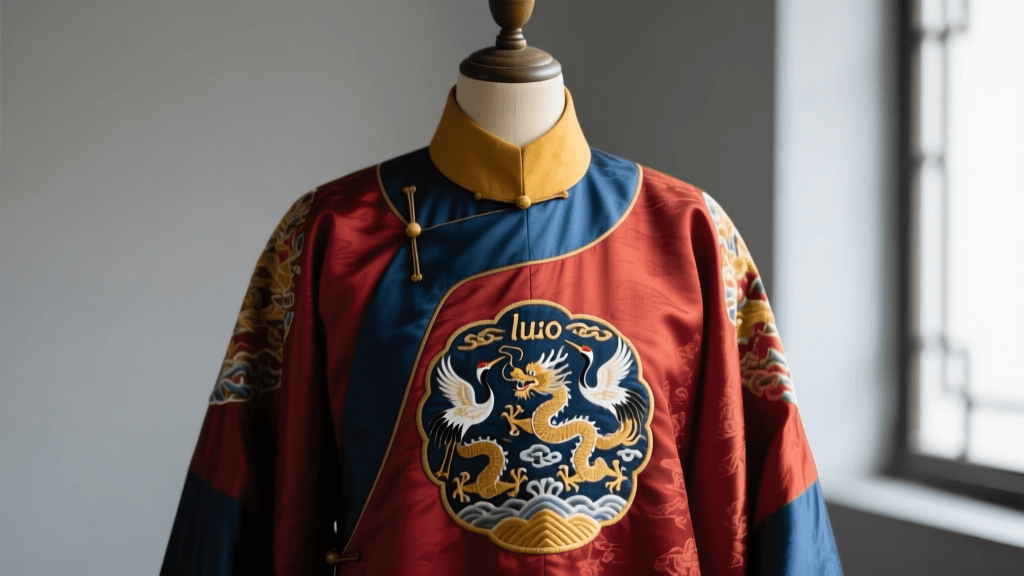
The Yuanlingpao is perhaps the most iconic garment of the Tang era, worn by officials, scholars, and commoners alike. Unlike the traditional cross-collared (jiaoling) robes of earlier Han dynasties, the round collar was heavily influenced by the nomadic tribes of the steppes and Central Asian merchants. According to The Metropolitan Museum of Art's Heilbrunn Timeline of Art History, the integration of nomadic riding gear into mainstream Chinese court dress reflects the Tang empire's deep military and cultural ties to the Tarim Basin and beyond.
Actionable Sourcing Tip: When purchasing a modern Yuanlingpao, look for structured collars that sit flush against the neck. Authentic replicas often include hidden inner ties and a stiffened collar band. Expect to pay between $90 and $140 for high-quality polyester-cotton blends from reputable Taobao brands like Shi San Yu, or upwards of $300 for pure mulberry silk versions.
The Banbi (Half-Sleeve Jacket) and Pibo (Silk Stole)
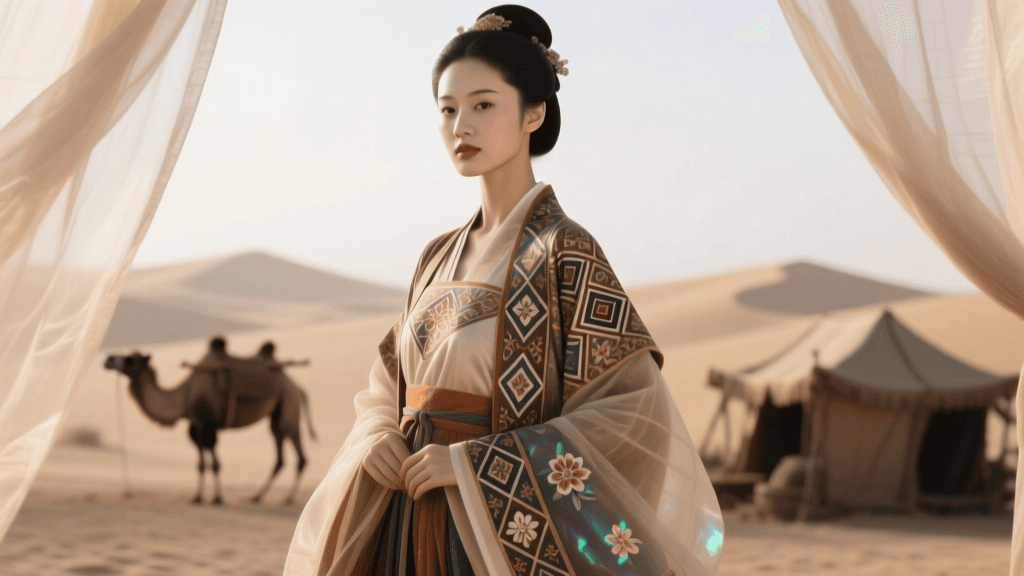
The Banbi is a short-sleeved jacket worn over long-sleeved under-ruyi or skirts. Its origins are debated, with some historians tracing it to Central Asian waistcoats brought via the Hexi Corridor. Similarly, the Pibo—a long, flowing silk stole draped over the arms and shoulders—bears striking resemblances to the Hellenistic and Indian scarves that traveled through Gandharan Buddhist art routes into China.
Together, these pieces created the quintessential Tang female silhouette: high-waisted, voluminous, and layered. To recreate this look today, buyers should source a Banbi made from heavier brocade to contrast with the lightweight, sheer silk gauze of the Pibo.
The Qixiong Ruqun: Indigenous or Imported?
The Qixiong Ruqun, a high-waisted skirt tied above the bust, is a staple of Tang women's fashion. While some early 20th-century scholars theorized that this silhouette was influenced by the high-waisted garments of the Hellenistic world or Indian Buddhist art transmitted via the Silk Road, modern textile historians largely agree it is an indigenous Han evolution. However, the textiles used for these skirts—heavily patterned brocades featuring lotus flowers intertwined with Persian-style palmettes—were undeniably products of Silk Road cross-pollination. When sourcing a Qixiong Ruqun today, prioritize skirts with at least 3 to 4 meters of fabric width to achieve the correct historical volume and pleating.
Sasanian and Sogdian Motifs in Tang Textiles
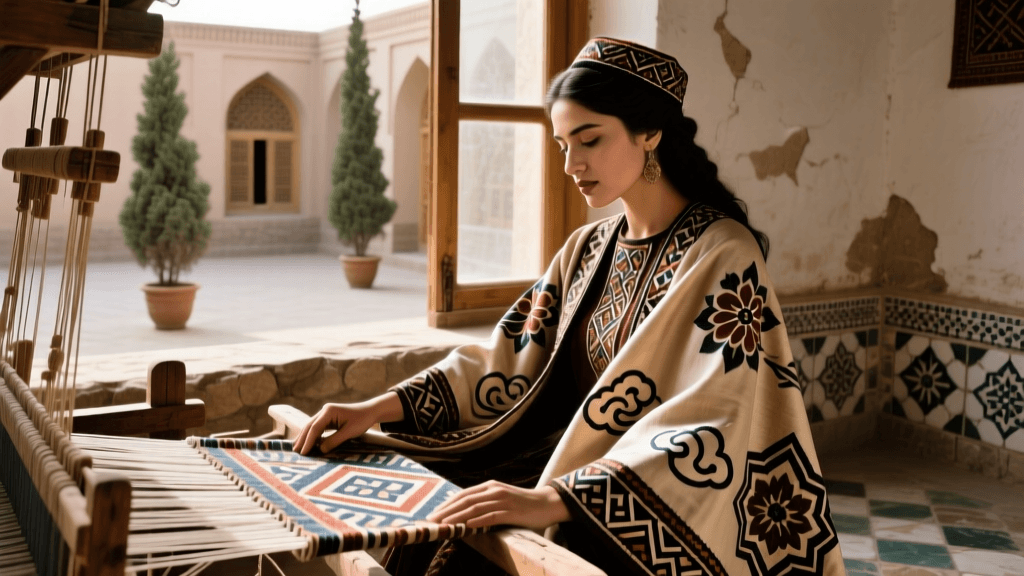
The visual language of Tang textiles was radically transformed by foreign trade. Sogdian weavers, who acted as the primary middlemen of the Silk Road, introduced the "pearl roundel" motif—a border of pearls enclosing confronting animals like peacocks, lions, or boars. This Sasanian Persian design was eagerly adopted by Tang imperial workshops.
Furthermore, the introduction of weft-faced compound twills (samite) from the West allowed Chinese weavers to create more complex, polychrome patterns. The China National Silk Museum houses numerous excavated fragments from the Astana Tombs in Turpan that perfectly illustrate this fusion of Chinese silk fibers with Western weaving structures and motifs.
Textile Comparison Chart: Tang Dynasty Weaves
When commissioning or buying Tang-style Hanfu, selecting the correct fabric is crucial for achieving the proper historical drape. Below is a comparison of historical weaves and their modern equivalents.
| Weave Type | Historical Context | Modern Equivalent | Drape & Weight | Estimated Cost (per yard) |
|---|---|---|---|---|
| Samite (Weft-faced Twill) | Imported from Sasanian Persia; used for heavy winter court robes. | Heavy Silk Brocade / Jacquard | Stiff, structured, heavy. | $45 - $85 |
| Damask (Figured Weave) | Indigenous Chinese development, elevated by Silk Road pattern exchanges. | Silk Damask / Tone-on-Tone Brocade | Fluid, medium weight, lustrous. | $30 - $60 |
| Leno Gauze (Luo) | Highly prized for summer wear and Pibo stoles; traded heavily to Japan. | Silk Gauze / Organza | Sheer, lightweight, crisp. | $20 - $50 |
Modern Buyer’s Guide: Sourcing Tang-Style Hanfu
Acquiring historically accurate Tang Dynasty Hanfu requires navigating a market flooded with modernized, fantasy-inspired costumes. Here is a practical guide to ensuring your investment yields an authentic, high-quality garment.
Essential Measurements and Sizing
Tang garments are characterized by their generous, flowing proportions. Unlike modern Western tailoring, historical Hanfu relies on flat cutting and fabric drape rather than darts and seams. When ordering from Chinese retailers or custom tailors, provide the following measurements:
- Bust/Chest: Measure around the fullest part. For the Yuanlingpao, add 10-15 cm (4-6 inches) for historical ease and layering.
- Waist: Measure at the natural waist. For Tang women's high-waisted skirts (Qixiong Ruqun), measure the upper chest/underarm area where the skirt will actually sit.
- Sleeve Length: Tang sleeves can be exceptionally wide and long. Measure from the center back of the neck, over the shoulder, down to the wrist bone, and add 10 cm for the traditional "water sleeve" drape.
- Height: Crucial for determining the hemline of the Yuanlingpao, which should historically graze the top of the foot when worn with period-accurate leather boots.
Headwear and Footwear: Completing the Nomadic Fusion
A Tang Yuanlingpao is incomplete without its accompanying accessories, which further highlight the era's cross-cultural exchange. The Putou, a structured black hat with rigid side wings, evolved from simple nomadic head wraps used by Turkic and Xianbei horsemen to protect against the steppe winds. Similarly, the preference for knee-high leather riding boots over traditional Han cloth shoes was a direct adoption of Central Asian equestrian gear. For modern buyers, investing in a pair of handmade leather boots with a slight heel and a sturdy Putou crafted from stiffened organza and wire will elevate a Tang Hanfu set from a mere costume to a historically grounded ensemble. Expect to budget an additional $80 to $150 for these essential accessories.
Costs, Timing, and Sourcing
Timing: If ordering from specialized Taobao ateliers (such as Zhong Ling or Yan Si Ting), be prepared for a production time of 30 to 45 days. These workshops often operate on a "pre-sale" (预售) model, weaving and dyeing fabrics only after a batch of orders is secured. Factor in an additional 10-14 days for international freight forwarding via services like Superbuy or CSSBuy.
Costs: A complete, off-the-rack Tang women's set (Qixiong Ruqun with Banbi and Pibo) in synthetic blends will cost between $60 and $120. For men's Yuanlingpao sets with leather belts and Putou headwear, expect to spend $100 to $180. Custom, historically accurate mulberry silk sets with hand-woven brocade accents will easily range from $350 to $800+.
Verification: Always check for "Hanfu examplar" tags or references to historical artifacts (e.g., "based on the mural from Princess Yongtai's tomb"). Avoid shops that use the term "ancient costume" (古装), which usually denotes theatrical or fantasy wear rather than historically grounded traditional garments.
"The Tang dynasty's sartorial brilliance was not born in isolation. It was the direct result of a cosmopolitan openness that allowed the empire to absorb, adapt, and ultimately perfect the textile traditions of the entire Eurasian landmass." — Curator's Note, Asian Textile History Archives.
Conclusion
The traditional garments of the Tang Dynasty stand as a testament to the power of historical trade routes. The Silk Road did not merely transport goods; it wove the diverse cultures of Asia, the Middle East, and the steppes into the very fabric of Chinese identity. For today's Hanfu enthusiasts, wearing a Yuanlingpao or draping a silk Pibo is an act of historical preservation—a celebration of an era when cross-cultural exchange created some of the most breathtaking fashion the world has ever seen.