Chinese Couture on the Global Runway: Techniques and Motifs
The Intersection of Chinese Heritage and Global Haute Couture
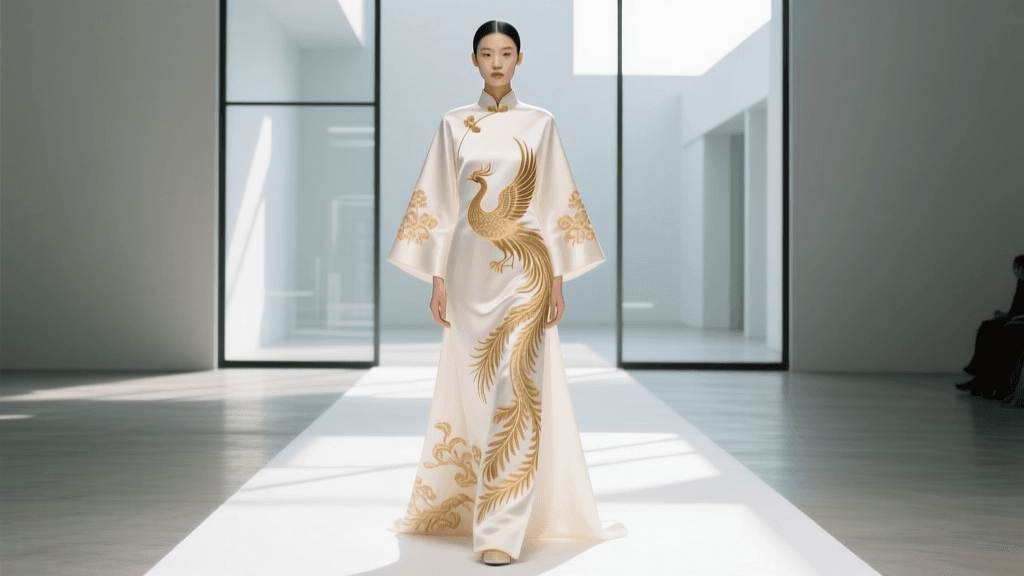
The global fashion runway has long looked to the East for inspiration, but the relationship between traditional Chinese garments and international haute couture has evolved dramatically over the past decade. Moving beyond superficial Orientalist pastiches—such as the mere application of dragon motifs or mandarin collars—modern couture houses and pioneering Chinese designers are now deeply integrating authentic, centuries-old textile techniques into contemporary silhouettes. As highlighted by The Metropolitan Museum of Art in its landmark exploration of Chinese cinematic and sartorial influence, the true luxury of Chinese fashion lies in its painstaking craftsmanship and profound material heritage. Today, the integration of these techniques on the global runway represents a sophisticated dialogue between Eastern antiquity and Western structural tailoring.
The Evolution from Pastiche to Technical Mastery
Historically, Western interpretations of Chinese fashion often relied on caricature. However, the elevation of Chinese designers to the highest echelons of the Parisian fashion establishment has shifted this paradigm. When Guo Pei became the first Chinese guest member of the Fédération de la Haute Couture et de la Mode, she brought with her an atelier of artisans trained in imperial-level craftsmanship. This milestone signaled to the global fashion industry that Chinese textiles were not merely decorative motifs to be printed on silk organza, but complex structural and material disciplines that require years of mastery. International houses like Dior, Yves Saint Laurent, and Giorgio Armani have since collaborated directly with Chinese artisanal hubs, recognizing that true couture demands the meticulous handwork found in provincial Chinese workshops.
Core Traditional Techniques on the Modern Runway
To understand how Chinese fashion influences the modern runway, one must examine the specific heritage techniques that define its highest tier. These methods are protected and celebrated by organizations like UNESCO Intangible Cultural Heritage, ensuring their survival in an era of fast fashion.
Su Embroidery (Suzhou) and Couture Beadwork
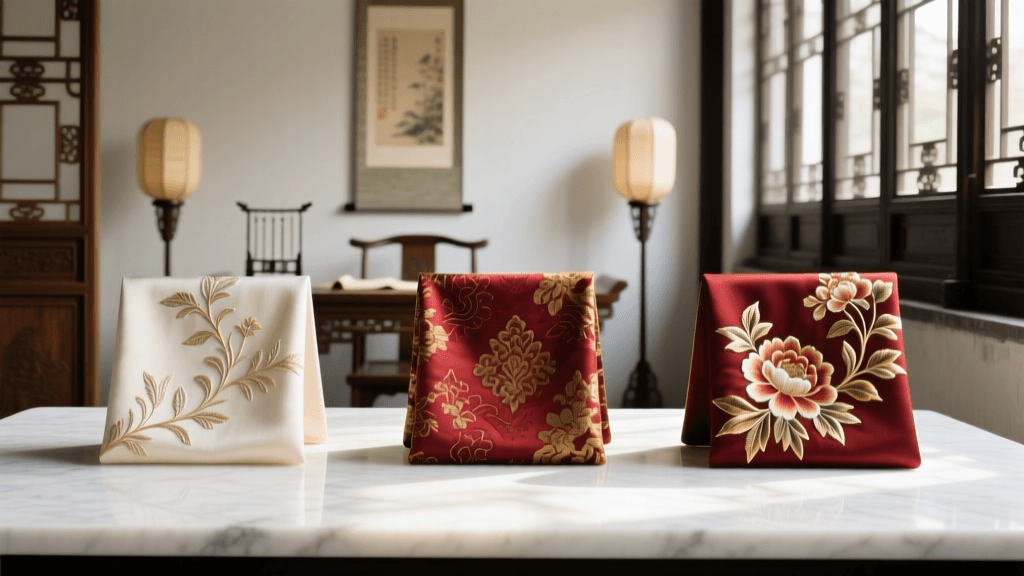
Originating from the Jiangsu province, Su embroidery is renowned for its delicate, almost photorealistic quality. The hallmark of this technique is thread splitting; a master artisan can split a single strand of silk thread into 1/16th, 1/32nd, or even 1/48th of its original thickness. On the couture runway, this allows for gradients and shading that rival oil paintings. Designers utilizing Su embroidery for bridal or red-carpet gowns must account for the immense time required. A single square inch of dense, double-sided embroidery can take up to 60 hours to complete. When integrated into Western corsetry or sweeping cathedral trains, the contrast between the rigid European boning and the fluid, shimmering silk embroidery creates a striking visual tension.
Kesi (Cut Silk) Tapestry Weaving
Kesi, which translates to 'cut silk,' is a highly complex weaving technique where the weft threads are turned back before they cross the entire width of the fabric, creating distinct color blocks and a carved, three-dimensional effect. Unlike standard embroidery which is applied to a base fabric, Kesi is the fabric itself. On the international runway, Kesi is frequently used for structured outerwear panels, stiff collars, and architectural bodices. Because the technique leaves tiny slits between color changes (the 'cuts'), the fabric possesses a unique structural integrity that holds its shape without the need for heavy interlining, making it a favorite for avant-garde couture silhouettes.
Xiangyunsha (Gambiered Canton Gauze)
Hailing from the Foshan region of Guangdong, Xiangyunsha is a remarkably sustainable and historically rich textile. It is created by dyeing raw silk gauze with the tannin-rich juice of the Dioscorea cirrhosa tuber, followed by a coating of iron-rich river mud. This chemical reaction turns the silk a deep, lustrous black on one side and a warm, earthy brown on the other. The fabric is then buried in the earth and sun-cured over several months. In contemporary couture, Xiangyunsha is prized for its crisp, rustling drape and its eco-friendly production cycle. Designers use it for voluminous, draped gowns and fluid trousers, leveraging its natural stiffness to create architectural folds that soften beautifully against the skin.
Sourcing and Production Metrics for Couture
For fashion houses and independent designers looking to incorporate authentic Chinese techniques into their collections, understanding the logistics, lead times, and costs is critical. The table below outlines the practical metrics for sourcing these heritage textiles for runway production.
| Technique | Origin Hub | Lead Time | Cost Estimate (USD) | Runway Application |
|---|---|---|---|---|
| Su Embroidery | Suzhou, Jiangsu | 6 - 18 Months | $300 - $800 / sq inch | Bodices, Trains, Veils |
| Kesi Tapestry | Suzhou / Dingzhou | 12 - 24 Months | $1,500+ / sq foot | Structured Corsets, Outerwear Panels |
| Xiangyunsha | Foshan, Guangdong | 6 - 9 Months (Curing) | $150 - $400 / yard | Draped Gowns, Fluid Trousers |
Actionable Advice for Emerging Designers
Integrating these techniques requires more than just capital; it demands cultural competency and strategic planning. If you are a designer aiming to feature Chinese heritage textiles in your upcoming collection, follow these actionable steps:
- Establish Direct Ateliers Relationships: Bypass middlemen by visiting the Suzhou Embroidery Research Institute or the Shengze Silk Markets in person. Building a face-to-face relationship (guanxi) with master weavers ensures priority scheduling and higher quality control.
- Implement NNN Agreements: When sharing your runway sketches and technical packs with Chinese workshops, ensure you have a bilingual NNN (Non-Disclosure, Non-Use, Non-Circumvention) agreement in place, governed by Chinese law. This protects your intellectual property far more effectively than a standard Western NDA.
- Mandate Swatch Testing: Always request a 10x10cm swatch of the finished textile before committing to full garment production. Heritage silks react differently to Western draping, steaming, and ironing techniques. Testing ensures the fabric will not warp or lose its luster under the hot lights of a runway show.
- Budget for Contingencies: Hand-woven and hand-dyed textiles are subject to environmental variables. A sudden rainy season in Guangdong can delay the curing of Xiangyunsha by weeks. Always build a 20% time buffer into your production calendar for runway deliveries.
Authenticating Haute Couture Chinese Elements
For collectors, archivists, and consumers investing in couture pieces featuring Chinese techniques, knowing how to authenticate the craftsmanship is essential. To verify genuine Su embroidery, examine the reverse side of the fabric. While traditional Su embroidery is famous for being double-sided, couture applications often utilize single-sided stitching for complex, shaded pieces. However, the knots should be virtually invisible, and the thread transitions should be seamless, lacking the bulky thread carries found in machine embroidery. For Kesi tapestry, hold the fabric up to the light. You should see the characteristic tiny vertical slits where the color blocks meet; if the pattern is perfectly continuous or printed over a woven base, it is a modern reproduction. Finally, authentic Xiangyunsha has a distinct, crisp 'crackle' sound when manipulated, and the dark side should exhibit a subtle, uneven patina that proves it was dyed and mud-coated by hand, rather than chemically treated in a factory.
The Future of Chinese Fashion in International Couture
The future of Chinese fashion on the global runway is intrinsically linked to the global push for sustainability and slow fashion. As the industry grapples with its environmental impact, the zero-waste patterns of traditional Hanfu-inspired draping and the natural, botanical dyeing processes of Xiangyunsha offer a blueprint for eco-conscious luxury. By treating Chinese heritage techniques not as exotic novelties, but as vital, living disciplines, the international couture community is ensuring that these ancient arts continue to evolve, drape, and shine under the lights of the modern runway.