Recreating Tang Dynasty Empress Wu Zetian's Iconic Hanfu Style
The Sartorial Power of Wu Zetian
The Tang Dynasty (618–907 CE) remains one of the most celebrated eras in Chinese history, renowned for its artistic brilliance, territorial expansion, and cosmopolitan culture. According to Britannica's historical overview of the Tang Dynasty, this era was marked by an unprecedented openness to foreign influences, which profoundly shaped its fashion and textile arts. At the zenith of this cultural golden age stood Wu Zetian, the only female emperor in Chinese history.
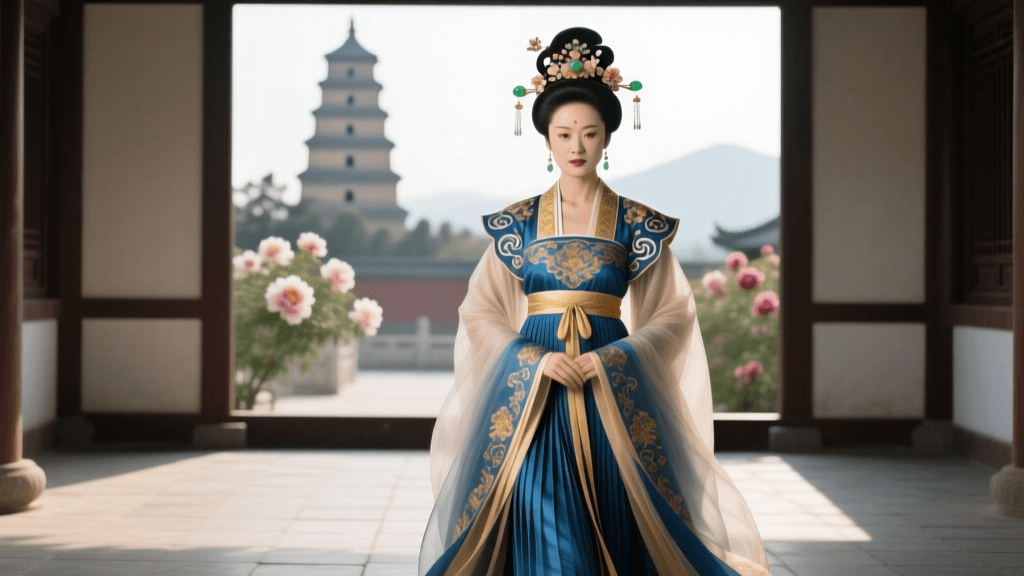
Wu Zetian understood the profound semiotics of dress. To legitimize her unprecedented rule in a deeply patriarchal society, she utilized fashion as a tool of political authority and divine right. Her wardrobe was not merely decorative; it was a calculated display of imperial power, blending traditional Han Chinese silhouettes with bold, cosmopolitan elements drawn from the Silk Road. Today, the modern Hanfu movement has sparked a global revival of these garments, allowing enthusiasts to step into the sartorial legacy of China's most powerful woman.
Anatomy of the Imperial Tang Wardrobe
Qixiong Ruqun (Chest-High Skirt)
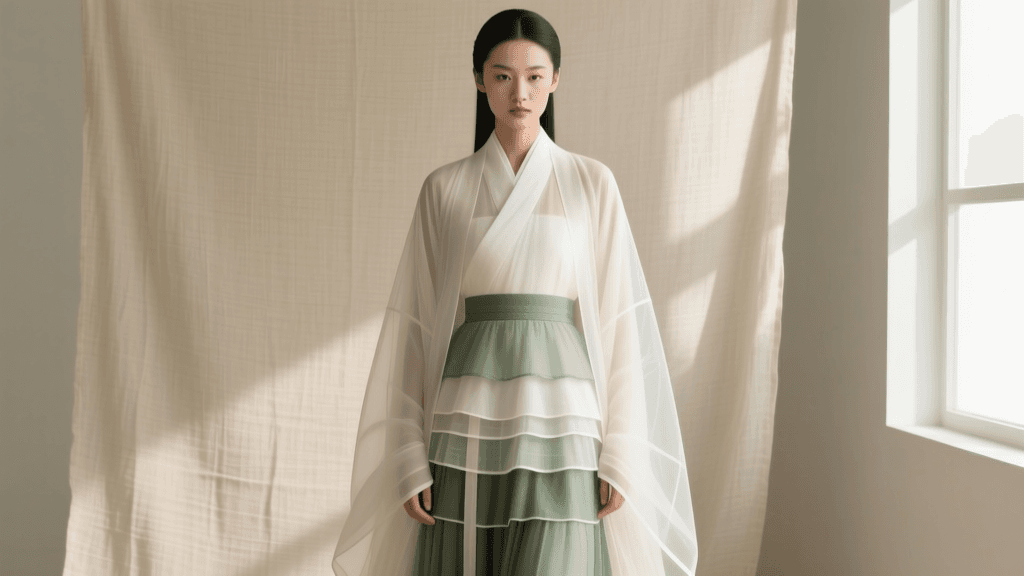
The cornerstone of Tang Dynasty women's fashion was the Qixiong Ruqun, a high-waisted skirt tied above the chest, just under the armpits. This silhouette elongated the lower body, creating a statuesque, elegant profile that was highly favored in the Tang court. The skirt was typically paired with a Ru (a short, fitted top) or a Shan (a lightweight, long-sleeved blouse).
Banbi and Pibo
To add layers and visual interest, Tang women often wore a Banbi (half-sleeve jacket) over their top. This garment, influenced by Central Asian nomadic riding wear, featured short, wide sleeves and was often crafted from contrasting, heavily patterned brocades. The ensemble was finished with a Pibo—a long, flowing silk stole draped over the shoulders and arms, which added a sense of ethereal movement and grace to the wearer's every step.
'The vibrant silks and sweeping silhouettes of the Tang court were not just garments; they were a canvas for the empire's wealth, artistic triumph, and boundless confidence.'
Practical Guide: Sourcing Your Tang Hanfu
Recreating an authentic Tang Dynasty look requires attention to fabric drape, proportions, and structural integrity. When shopping from modern Hanfu brands (such as Shisanyu, Tingyue, or Chanyi), keep the following actionable advice in mind:
- Skirt Length & Proportions: For a wearer who is 165 cm (5'5') tall, a standard Qixiong skirt length of 125 cm to 130 cm is ideal. This prevents tripping while maintaining the elegant, floor-grazing silhouette. Ensure the chest width (upper hem circumference) is at least 140 cm to allow for secure wrapping and tying without gaping.
- The Waistband (Yaotou): The chest band must be structured. Look for skirts with interfacing or stiffened cotton linings in the waistband. Flimsy waistbands will slip down during wear, ruining the historical silhouette.
- Sleeve Width: For a court-formal look (such as Wu Zetian's ceremonial wear), opt for a Daxiushan (large-sleeve robe) with sleeve widths exceeding 60 cm. For daily Tang-style wear, a standard Shan with 40 cm sleeves is more practical.
- Budgeting: Entry-level polyester jacquard sets (skirt and top) typically cost between $45 and $70 USD. Mid-tier sets featuring silk-blends, metallic yarn brocades, and embroidered Pibo stoles range from $90 to $160 USD.
Comparison: Historical Accuracy vs. Modern Wearability
| Feature | Historical Tang Dynasty Garment | Modern Commercial Hanfu Adaptation |
|---|---|---|
| Skirt Waistband | Wrapped multiple times with raw silk ties; relied on friction and tight binding. | Often features hidden side zippers, elasticized back panels, or Velcro for ease of dressing. |
| Sleeve Width | Exceedingly wide (up to 100+ cm for formal court wear), restricting manual labor. | Slightly tapered or reduced (40-60 cm) to accommodate modern commuting and daily tasks. |
| Fabric Weight | Heavy, multi-layered silk brocades and stiff linens for structural volume. | Lightweight polyester jacquards and chiffon to reduce heat and shipping costs. |
| Fastenings | Exclusively tied with woven silk ribbons and fabric knots. | Ties are retained for aesthetics, but internal snaps or hooks are added for security. |
Fabrics and Textiles: The Silk Road Influence
The visual impact of Wu Zetian's wardrobe relied heavily on the luxurious textiles produced by imperial workshops. The Tang Dynasty saw the peak of Zhijin (gold-thread brocade) and complex weft-faced compound twills. Patterns heavily featured 'Ling' (roundels) containing confronting beasts, floral medallions, and pearl borders—motifs directly imported from Sogdian and Persian artisans via the Silk Road.
The production of these luxurious textiles was a highly guarded state secret and the backbone of the imperial economy. Today, the traditional methods of creating these fabrics are preserved and recognized globally. As highlighted by UNESCO's Intangible Cultural Heritage list, Chinese sericulture and silk craftsmanship remain vital cultural practices. When purchasing a high-end Tang Hanfu, look for 'Song Brocade' or 'Yun Brocade' reproductions, which utilize real metallic threads woven into heavy silk-satin bases to mimic the opulent weight and light-catching qualities of Tang court silks.
Styling, Hair, and the 'Huadian' Forehead Flower
A Tang Dynasty empress look is incomplete without its iconic beauty and hair regimens. The Tang ideal of beauty favored fullness, vitality, and elaborate ornamentation.
- The Hair (Gaoji): Tang women wore their hair in towering, elaborate buns. To achieve this today without heavy hair extensions, purchase a pre-styled 'Hanfu hair bun' wig piece (costing around $15–$25 USD) that clips securely over your natural hair. Secure it with U-shaped hairpins rather than standard bobby pins to support the weight.
- Hairpins (Zan and Chai): Wu Zetian's court favored gold and jade. For modern wearers, avoid cheap plastic. Invest in brass or copper-alloy hairpins finished with enamel or freshwater pearls. Alternatively, seek out 'Ronghua' (velvet flowers), a traditional craft from Nanjing that provides a historically accurate, lightweight, and vibrant alternative to metal.
- The Huadian: This is the decorative floral decal applied to the center of the forehead. Historically made from gold leaf, fish scales, or beetle wings, modern enthusiasts can easily recreate this using cosmetic face gems, red eyeliner, or pre-cut adhesive Huadian stickers (available in packs of 50 for under $5 USD online).
- Makeup: The Tang 'Peach Blossom' makeup featured heavily blushed cheeks that swept up to the temples, paired with a distinct, bold lip shape. Use a deep crimson or plum lip tint to draw a 'cherry' lip, emphasizing the center of the mouth while fading the edges.
Conclusion
Recreating the iconic outfits of Empress Wu Zetian and the Tang court is more than an exercise in historical cosplay; it is an engagement with a pivotal era of Asian cultural history. By understanding the structural nuances of the Qixiong Ruqun, investing in proper silk-blend textiles, and mastering the art of Tang styling, modern wearers can authentically channel the confidence, elegance, and imperial majesty of China's most fascinating historical figures. Whether attending a cultural festival, a Hanfu gathering, or simply exploring traditional garment construction, the Tang silhouette remains a timeless testament to the artistry of Asian traditions.