The 2026 Guide to Takahata Loom Kasuri Weaving Setup
The Resurgence of the Takahata Loom in 2026
In the contemporary textile landscape of 2026, the revival of analog crafts has reached an unprecedented peak, driven by a global desire for sustainable, slow-made garments. At the heart of this movement in Japan is the Takahata, the traditional tall treadle loom. Unlike the simpler Jibata (backstrap loom), the Takahata allows for the creation of complex, multi-shaft patterns and wide bolts of fabric essential for high-quality kimono and modern fashion textiles. For artisans and studio weavers today, mastering the Takahata is not just about preserving history; it is about integrating centuries-old engineering with modern ergonomic and sustainable practices.
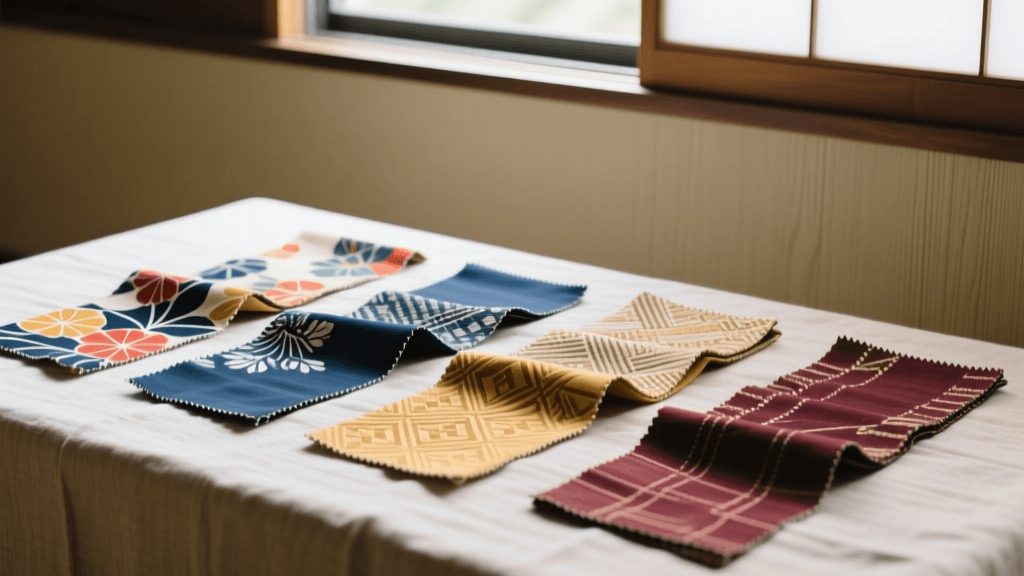
The most celebrated technique performed on the Takahata is Kasuri, the Japanese iteration of ikat weaving. Kasuri requires immense precision, as the patterns are dyed into the threads before they are even mounted on the loom. According to the Victoria and Albert Museum's Asian textile archives, the mathematical foresight required to align warp and weft resist-dyed threads represents one of the highest achievements in global textile history. Today, contemporary weavers are combining these historic methods with 2026's eco-conscious studio designs, ensuring the craft remains viable for future generations.
Understanding Kasuri: The Art of Resist Dyeing
Before a single thread is placed on the Takahata loom, the Kasuri process demands rigorous preparation. Kasuri (literally 'blurred pattern') relies on resist-dyeing specific sections of the yarn so that when woven, the undyed and dyed sections align to form intricate geometric or pictorial motifs.
Thread Binding and Indigo Fermentation
The foundation of traditional Kasuri is Ai-zome (indigo dyeing). In 2026, the most sought-after indigo is organically cultivated Persicaria tinctoria from Tokushima Prefecture, fermented using a centuries-old sukumo method but monitored with modern pH and temperature sensors to ensure absolute color consistency. Artisans tightly bind the yarn bundles with hemp or synthetic resist tape based on a pre-calculated grid. When submerged in the indigo vat, the bound sections resist the dye. The binding must be incredibly tight; even a millimeter of dye bleed can ruin the crispness of the final woven pattern.
Preparing the Warp: Sizing and Tensioning
Once the dyed threads are dried and unbound, they must be prepared for the loom. Cotton and hemp yarns, traditionally used in Kasuri, are prone to fraying and snapping under the high tension of the Takahata's warp beam.
The Norizuke (Sizing) Process
To prevent breakage, weavers apply Norizuke, a natural starch sizing. In 2026, while some traditionalists still use boiled rice starch or konjac paste, many professional studios have adopted refined, plant-based cellulose sizings that offer superior humidity resistance. The yarn is passed through the sizing bath, combed to ensure even distribution, and left to dry in climate-controlled rooms. This step is non-negotiable; without proper sizing, the friction of the heddles during weaving will destroy the meticulously dyed threads.
Takahata Loom Setup and Calibration
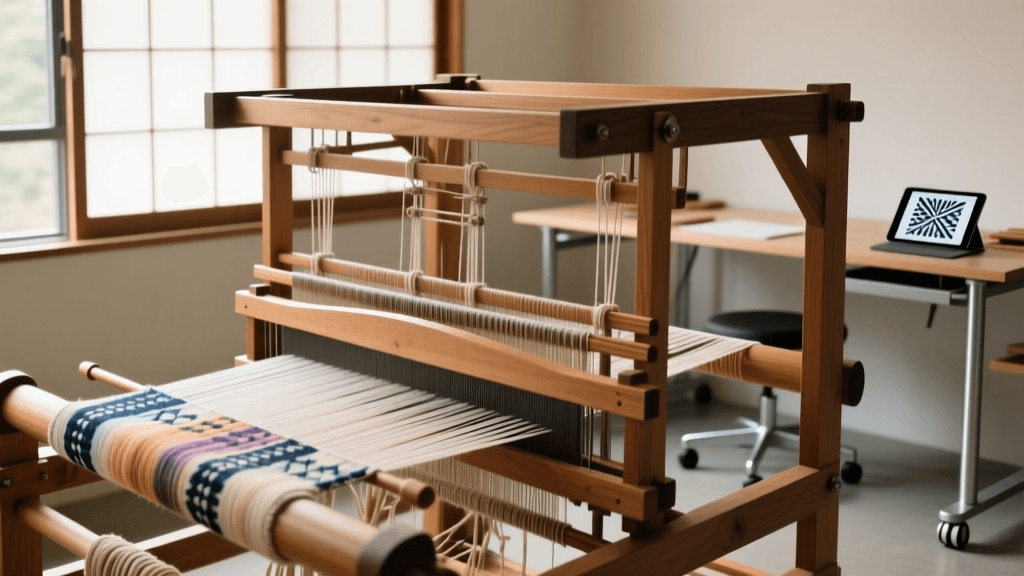
The Takahata is a formidable piece of machinery, often occupying a dedicated space of at least 3 by 2 meters. Setting it up requires an understanding of its core anatomy: the chikiri (warp beam), the so (heddles), the osa (reed), and the treadles (foot pedals).
Warping the Loom (Seikei)
Warping, or Seikei, is the process of measuring and aligning the longitudinal threads. Using a warping wheel (seikidai), the artisan measures out the exact length required for the bolt of fabric, plus an additional 15% for loom waste and take-up. The threads are then transferred to the chikiri. Tensioning is critical; modern 2026 studios often employ digital tension meters attached to the warp beam's brake system to maintain a consistent drag, a significant upgrade from the traditional leather-strap friction brakes.
Threading the Heddles and Reed
Each warp thread must be individually passed through the eye of a heddle and then through the dent of the osa (reed). The heddles control the shedding (raising and lowering of threads), while the reed determines the fabric's width and beats the weft into place. For a standard Kasuri cotton fabric, a reed with 40 to 50 dents per inch is common. Artisans use specialized threading hooks, working methodically from right to left, ensuring the complex threading draft is followed perfectly to allow the pattern sheds to open cleanly.
Weaving Techniques for Perfect Pattern Alignment
The true mastery of the Takahata loom reveals itself during the weaving process. Unlike standard plain weaving, Kasuri requires constant micro-adjustments to ensure the weft threads align perfectly with the warp threads to complete the motif.
The Kasuri Matching Method
As the weaver depresses the treadles to open the shed, they pass the shuttle (hi) carrying the weft yarn through. Upon beating the weft with the reed, the weaver must visually inspect the pattern. If the weft motif is slightly skewed, the weaver uses a technique called Yoko-gasuri adjustment, gently manipulating the weft thread with a small bamboo pick or their fingernails to nudge the dyed sections into perfect alignment before the next pick is beaten. This meditative, hyper-focused process is what gives hand-woven Kasuri its characteristic 'blurred' or 'breathing' edges, a hallmark of authenticity that digital printing cannot replicate.
2026 Studio Equipment and Ergonomic Adaptations
While the fundamental mechanics of the Takahata remain unchanged, the physical toll of weaving has led to significant ergonomic innovations in 2026. Aging master weavers and new artisans alike are adopting hybrid looms that respect traditional aesthetics while integrating modern materials science.
| Loom Component | Traditional Material | 2026 Modern Studio Adaptation |
|---|---|---|
| Treadles (Ashibumi) | Aged Hinoki Cypress | Recycled Carbon-Fiber Composite (reduces foot fatigue) |
| Reed (Osa) | Bamboo and Cotton Thread | Titanium-Alloy Dents with Biodegradable Resin Bindings |
| Shuttle (Hi) | Carved Cherry Wood | Aerodynamic Hardwood with Magnetic Tension Bobbins |
| Warp Beam Brake | Leather Strap and Ratchet | Electromagnetic Haptic Feedback Brake System |
| Studio Lighting | Natural Window Light | Full-Spectrum LED Warp-Illumination Arrays (CRI 98+) |
These adaptations allow weavers to produce high-tension, wide-width Kasuri fabrics without the severe back and joint strain historically associated with the craft. Furthermore, full-spectrum LED lighting calibrated to mimic northern daylight ensures that the subtle shades of indigo and natural dyes are accurately perceived during the meticulous pattern-matching phase.
Preservation and the Future of Japanese Hand-Weaving
The survival of the Takahata loom and Kasuri weaving relies heavily on institutional support and a new generation of eco-conscious consumers. Organizations recognized by the UNESCO Intangible Cultural Heritage lists continue to provide frameworks for protecting these complex artisanal skills. In Japan, the Agency for Cultural Affairs actively subsidizes apprenticeships, ensuring that the tacit knowledge of loom building, natural dyeing, and weaving is passed down.
As we move through 2026, the intersection of heritage and innovation defines the Japanese textile renaissance. The Takahata loom is no longer viewed as a relic of the past, but as a sophisticated, sustainable manufacturing tool. For the dedicated artisan, setting up and mastering this loom is a profound commitment to the rhythm of the threads, the chemistry of the dye, and the enduring legacy of Asian textile traditions.