Takahata Loom Weaving: Japanese Hand-Weaving Methods 2026
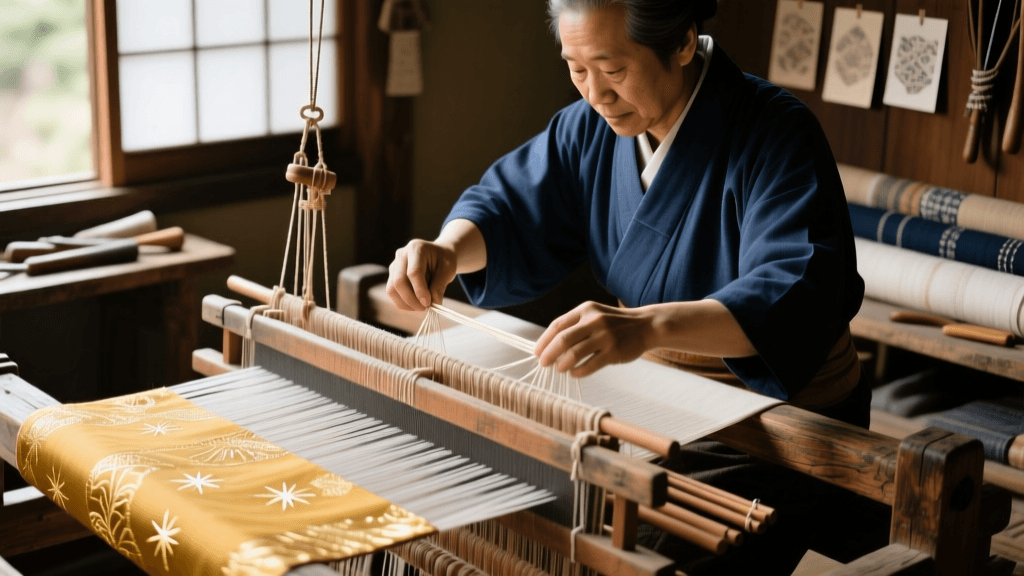
The Renaissance of Japanese Hand-Weaving in 2026
The year 2026 marks a pivotal renaissance in the world of traditional Asian textiles, driven by a global shift toward slow fashion, sustainable practices, and the preservation of intangible cultural heritage. At the forefront of this movement is the Japanese Takahata loom, a high-hand weaving apparatus that has been the backbone of Nishijin-ori and other prestigious silk weaving traditions for centuries. Unlike modern mechanized Jacquard looms, the Takahata demands a profound physical and spiritual connection between the weaver and the textile. Today, artisans and dedicated hobbyists are reviving these hand-weaving methods, blending Edo-period techniques with 2026 climate-control technologies and digital tension-monitoring tools to produce flawless silk garments.
Understanding the Takahata loom requires an appreciation of its engineering, the meticulous preparation of silk threads, and the rhythmic, full-body coordination required to weave a traditional kimono bolt, known as a tanmono. This comprehensive guide explores the anatomy of the loom, the precise hand-weaving methods utilized by master artisans, and the current landscape of sourcing and education for aspiring weavers in 2026.
Anatomy and Engineering of the Takahata Loom
The Takahata, literally translating to 'high handloom,' is a floor loom elevated above the ground, allowing the weaver to sit on a bench and operate treadles with their feet while manipulating the shuttle and beater with their hands. This ergonomic elevation distinguishes it from the Jibata (backstrap loom), where the weaver's own body weight provides the warp tension. The structural integrity of a traditional Takahata is typically crafted from aged hinoki (Japanese cypress) or keyaki (zelkova), woods prized for their resistance to warping under the immense tension of silk warps.
Core Components of the Loom
- Warp Beam (Chikiri): The rear cylinder that holds the unwoven warp threads. In 2026, many restored antique looms feature retrofitted digital tension brakes to maintain a consistent 30-40 Newton pull, crucial for delicate silk.
- Cloth Beam (Makimono): The front cylinder where the finished fabric is wound. It is secured with a ratchet and pawl mechanism to prevent backward slipping during the beating process.
- Heddles (Soko): Thin cords or flat steel eyes through which individual warp threads are passed. They are suspended from shafts and controlled by treadles to create the 'shed' (the opening for the shuttle).
- Reed (Osa): A comb-like structure made of bamboo or metal that spaces the warp threads evenly and beats the weft yarn tightly into the fell of the cloth.
- Treadles (Ashibumi): Wooden pedals connected to the heddle shafts via lamms. A standard Nishijin Takahata may feature anywhere from 4 to 16 treadles, depending on the complexity of the weave structure.
Preparing Nishijin Silk: 2026 Standards
The foundation of any premium Japanese textile is the quality of its yarn. Nishijin silk, renowned for its lustrous finish and durability, undergoes a rigorous preparation process before it ever touches the loom. In 2026, while the core degumming processes remain traditional, the environmental controls surrounding silk preparation have become highly advanced.
Raw silk contains sericin, a natural gum that makes the threads stiff and dull. Artisans boil the silk skeins in a mild alkaline solution, often utilizing wood ash lye or modern eco-friendly enzymatic baths, to remove the sericin. This reveals the brilliant, triangular cross-section of the fibroin fiber, which refracts light to create silk's signature shimmer. Following degumming, the silk must be wound onto bobbins using a hand-cranked winder (itomaki). Because silk is highly hygroscopic, modern weaving studios in Kyoto and Tokyo now maintain strict ambient humidity levels between 65% and 70% using ultrasonic humidifiers. If the air is too dry, the silk fibers become brittle and snap under the Takahata's tension; if too humid, the threads swell and stick together, ruining the shed.
Step-by-Step Hand-Weaving Method
Weaving on a Takahata is a symphony of sequential movements. The process of creating a basic plain weave (hirao) or a twill (aya) requires the weaver to master a continuous, flowing rhythm. Below is the actionable methodology for weaving a standard 38-centimeter-wide tanmono.
1. Warping and Threading (Seikei and Sokohi)
The warp is first measured on a large wooden warping board to ensure every thread is exactly the same length, typically around 12 to 14 meters to account for loom waste and take-up. The threads are then transferred to the warp beam. Next comes the most painstaking step: threading the heddles. Using a specialized hook, the weaver passes each individual warp thread through the eye of a heddle in a specific sequence dictated by the weave draft. For a simple 4-shaft twill, the sequence repeats 1-2-3-4. After the heddles, the threads are drawn through the dents of the reed, usually at a density of 40 to 60 ends per inch for fine kimono silk.
2. The Weaving Rhythm
Once the loom is dressed, the physical weaving begins. The weaver sits centered on the bench, feet hovering over the treadles, hands resting on the beater and shuttle race.
- Shedding: The weaver depresses the appropriate treadle with their foot. This lowers one set of heddle shafts, separating the warp threads and creating a clear, triangular tunnel called the shed.
- Picking: With a flick of the wrist, the weaver throws the shuttle (hi), which carries the weft bobbin, through the shed from one side to the other. Master weavers use a 'flying shuttle' mechanism on wider Takahata looms, pulling a cord to propel the shuttle mechanically, though traditional hand-throwing is preferred for narrow tanmono to maintain tactile feedback.
- Beating: As the shuttle is caught by the opposite hand, the weaver pulls the heavy wooden beater (batten) forward with force. The reed pushes the newly laid weft thread tightly against the previous pick. The force of the beat determines the fabric's density and drape.
- Advancing: After several picks, the weaver releases the cloth beam ratchet, rolls the finished fabric forward, and re-tensions the warp.
Comparing Traditional Japanese Looms
While the Takahata is the standard for professional silk weaving, it is not the only traditional loom used in Japan. Understanding the distinctions between these looms is vital for textile historians and practitioners in 2026.
| Loom Type | Primary Use Case | Tension Mechanism | Weaving Speed | 2026 Market Availability |
|---|---|---|---|---|
| Takahata (High Handloom) | Nishijin silk, fine kimono bolts, complex twills | Wooden ratchet and pawl on warp beam | Moderate (approx. 5-10 cm/hour) | High demand; refurbished antiques or custom builds |
| Jibata (Backstrap Loom) | Ojiya-chijimi crepe, rural cottons, narrow obi | Weaver's body weight and backstrap | Slow (approx. 2-5 cm/hour) | Widely available; often included in workshop kits |
| Ishibata (Stone-weighted) | Historical reproductions, heavy bast fibers | Stone weights hanging from warp ends | Very Slow | Rare; mostly found in museums or academic settings |
| Modern Jacquard | Mass-market kimono, synthetic blends | Automated electronic tensioning | Fast (meters per hour) | Industrial suppliers; not used for hand-weaving |
Sourcing, Pricing, and Education in 2026
For those looking to acquire a Takahata loom or study traditional hand-weaving methods in 2026, the market is robust but requires careful navigation. Authentic, antique Takahata looms, often dating back to the mid-Showa period, are highly sought after. According to recent artisan market data, a professionally restored Takahata loom with complete heddles, reeds, and shuttles ranges from ¥450,000 to ¥850,000 (approximately $3,000 to $5,700 USD). Buyers must factor in the significant cost of shipping and the spatial requirements, as these looms occupy a footprint of roughly 2 by 2.5 meters.
Raw materials also represent a significant investment. High-grade, gummed Nishijin silk threads, sourced directly from spinning cooperatives in Kyoto, cost approximately ¥15,000 to ¥22,000 per 100-gram skein in 2026. However, the resulting textile, when woven by a skilled artisan, commands premium prices in the global slow-fashion and bespoke kimono markets.
Education and preservation remain paramount. The Japanese government, through the Agency for Cultural Affairs, continues to heavily subsidize apprenticeship programs to ensure these techniques survive. Institutions recognized by UNESCO Intangible Cultural Heritage frameworks offer immersive residencies where students spend years mastering the micro-movements of the shuttle and the precise calibration of the reed. Furthermore, global textile enthusiasts frequently consult the extensive archives and conservation guidelines provided by the Victoria and Albert Museum Asian Collections to understand the historical context and structural analysis of antique Japanese woven textiles.
For international weavers unable to travel to Kyoto, digital apprenticeships have surged in 2026. Master weavers now utilize multi-angle 4K cameras and haptic feedback gloves to teach the physical 'beat' of the Takahata remotely, ensuring that the tactile knowledge of Japanese hand-weaving transcends geographical boundaries. Whether through a physical apprenticeship in a historic Kyoto machiya or a digitally augmented study session, the commitment to the Takahata loom remains a profound dedication to the art of Asian traditional garments.
Ultimately, the survival of the Takahata hand-weaving method in 2026 is a testament to the enduring value of human craftsmanship. In an era dominated by automated manufacturing, the rhythmic clack of the wooden beater and the shimmering emergence of hand-woven Nishijin silk offer a vital, tangible connection to the rich heritage of Japanese textile arts. Aspiring weavers who embrace these methods do not merely create fabric; they weave the very continuity of cultural history.