Hanfu for Family Ceremonies: 2026 Guide to Birth, Wedding & Rites
The Resurgence of Hanfu in Modern Family Ceremonies
As we navigate through 2026, the cultural renaissance of Hanfu has firmly transitioned from a niche subculture into a mainstream cornerstone of Chinese family life. No longer reserved solely for street fashion or photography, traditional Han garments are now the definitive choice for life's most pivotal milestones. According to recent cultural reports highlighted on the China Daily culture portal, the integration of historical dress into familial rituals has surged, driven by a profound desire among younger generations to reconnect with their lineage. In 2026, the Hanfu market is characterized by an emphasis on historical accuracy, sustainable textile production, and bespoke craftsmanship. Families are increasingly rejecting mass-produced, synthetic costumes in favor of meticulously researched garments that honor the specific sartorial codes of the Tang, Song, and Ming dynasties. This comprehensive guide explores the precise Hanfu styles, fabrics, and etiquette required for birth celebrations, traditional weddings, and solemn ancestral rites in the modern era.
Birth and Milestone Celebrations: Dressing the Youngest Generation
The arrival of a child and their subsequent early milestones are steeped in protective symbolism and ancestral blessings. In traditional Chinese culture, the first 100 days (Bairi) and the first birthday (Zhuazhou) are critical periods where the infant is ceremonially introduced to the family lineage and the broader community. In 2026, parents are prioritizing organic, skin-safe materials that mirror historical construction while meeting modern pediatric safety standards.
The Bairi (100-Day) Celebration
For the 100-day banquet, infants are traditionally dressed in the Baijia Yi, or 'Hundred Families Robe.' Historically, this garment was constructed from small scraps of fabric collected from one hundred different families, symbolizing a collective warding off of evil spirits and a community-wide blessing for the child's longevity. Today, bespoke 2026 iterations of the Baijia Yi utilize upcycled, organic mulberry silk and bamboo-cotton blends. These natural fibers are highly breathable, preventing overheating during lengthy family gatherings. The robe is typically paired with a tiger-head hat (Hu Tou Mao) and tiger-head shoes, which feature intricate hand-embroidery designed to frighten away malevolent spirits. A complete, hand-embroidered infant Baijia Yi set from a recognized heritage tailor currently averages between $120 and $280 USD, depending on the complexity of the silk thread work.
The Zhuazhou (First Birthday) Ceremony
The Zhuazhou ceremony involves placing the toddler in front of an array of symbolic objects (such as a book, a calculator, or a calligraphy brush) to 'predict' their future inclinations. For this active milestone, mobility is key. Toddlers are often dressed in a simplified, padded version of the Jiaoling Youren (cross-collared, right-over-left robe) or a festive Ruqun for girls. In 2026, the trend leans heavily toward vibrant, auspicious colors like vermilion and marigold, dyed using eco-friendly, plant-based methods that are entirely non-toxic. Accessories are kept minimal to avoid choking hazards, but a small, jade-carved longevity lock (Changming Suo) suspended on a red silk cord remains a non-negotiable staple for both boys and girls.
Traditional Hanfu Weddings: Ming and Tang Dynasty Revivals
The traditional Chinese wedding, or Hunli, is perhaps the most visually spectacular application of Hanfu in the modern family sphere. While Western-style white gowns dominated the late 20th and early 21st centuries, 2026 has seen a definitive shift toward historically accurate Ming and Tang dynasty wedding attire. These garments are not merely clothing; they are wearable heirlooms that signify the union of two families and the honoring of ancestors.
Ming Dynasty Grandeur: Fengguan Xiapei
The Ming dynasty wedding ensemble remains the gold standard for formal Hanfu weddings. For the bride, the centerpiece is the Fengguan Xiapei—the Phoenix Crown and Rosy Cape. The Fengguan is an elaborate headdress adorned with intricate gold filigree, kingfisher feather art (now ethically replicated using dyed silk and enamel in 2026 to protect wildlife), and dangling pearl buyao (step-shakes). The Xiapei is a heavily embroidered, vest-like cape draped over the shoulders, featuring motifs of dragons, phoenixes, and peonies. Brides typically wear a voluminous red Mamianqun (horse-face skirt) woven with gold threads. For the groom, the standard is the Wusha Mao (black gauze cap) and a red or deep blue round-collared robe with rank badge embroidery. A bespoke, historically accurate Ming wedding set crafted from premium Xiangyunsha silk can range from $3,500 to over $8,000 USD in 2026, making high-end rental services a popular alternative, typically costing around $400 to $600 USD for the weekend.
Tang Dynasty Opulence: Bold Silhouettes and Colors
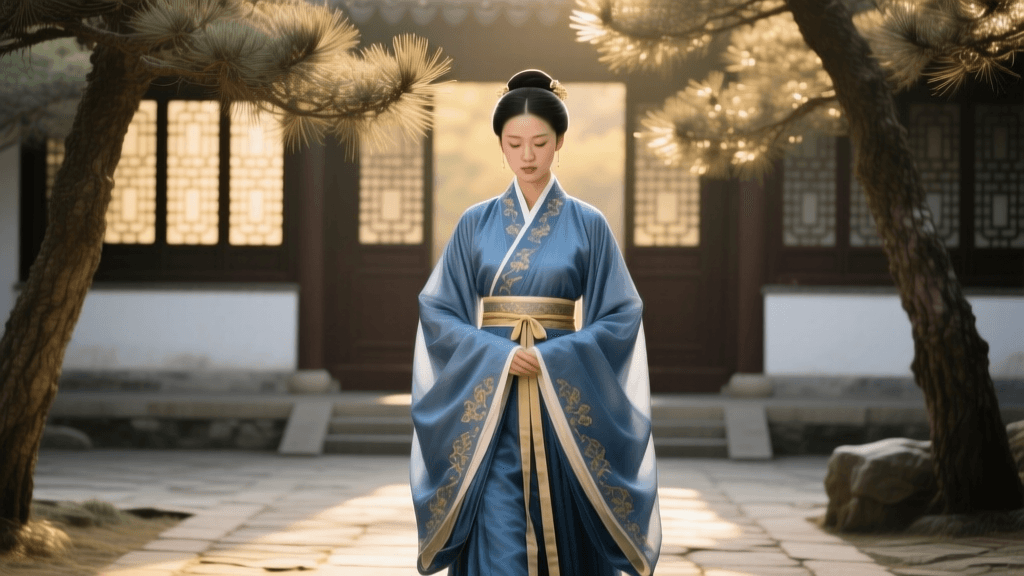
Couples seeking a more romantic, flowing aesthetic often opt for Tang dynasty styles. The Tang era was characterized by cosmopolitan openness, reflected in its daring necklines, wide sleeves, and vibrant color palettes. Brides may wear a Qixiong Ruqun (chest-high skirt) paired with a sweeping Daxiushan (large-sleeved robe) in striking hues of emerald green, sapphire blue, and gold. Grooms often wear a round-collared Yuanlingpao with a leather belt and black boots. The 2026 trend for Tang weddings emphasizes lightweight, layered chiffons and organzas that create an ethereal, floating effect during the traditional tea ceremony.
Ancestral Rites and Seasonal Festivals: Honoring the Lineage
While weddings and births are joyous, ancestral rites demand a截然不同的 (distinctly different) sartorial approach. Festivals such as Qingming (Tomb-Sweeping Day) and Zhongyuan (Ghost Festival) are times for solemn reflection, grave maintenance, and offerings to departed relatives. The Hanfu worn during these occasions must reflect humility, respect, and a connection to the earth.
Solemn Silhouettes and Subdued Palettes
For ancestral worship, flashy embroidery and bright colors are strictly avoided. The preferred garments are the Shenyi (a deep, one-piece robe that connects the upper and lower garments, symbolizing the unity of heaven and earth) or the Zhiduo (a straight, unadorned robe popular among scholars). In 2026, families participating in clan-wide ancestral hall ceremonies favor unbleached hemp, raw linen, and matte raw silk. The color palette is restricted to slate grey, deep navy, muted olive, and natural off-white. The emphasis is on the structural integrity and drape of the fabric rather than surface decoration. Men often wear a simple Futou (scholar's cap), while women keep their hair in restrained, low buns secured with wooden or bone hairpins, avoiding any metallic or glittering accessories.
The Importance of Natural Dyes in Ritual Wear
There is a growing movement in 2026 to ensure that ritual garments are dyed using traditional, plant-based methods. As recognized by the UNESCO Intangible Cultural Heritage frameworks, traditional dyeing techniques like indigo fermentation and tea-staining are not only environmentally sustainable but carry deep spiritual significance. Wearing garments dyed from the earth is seen as a way to physically align oneself with nature and the ancestors during tomb-sweeping rituals. A high-quality, naturally dyed linen Shenyi suitable for Qingming ceremonies typically costs between $150 and $300 USD from specialized heritage brands.
2026 Hanfu Ceremony Comparison Chart
To help families navigate the specific requirements and investments for different life events, the following table outlines the core elements of Hanfu for major family ceremonies in 2026.
| Ceremony Type | Primary Garment Style | Recommended 2026 Fabric | Avg. Bespoke Cost (USD) | Key Accessories |
|---|---|---|---|---|
| Birth (100 Days) | Baijia Yi (Patchwork Robe) | Organic Bamboo-Cotton, Mulberry Silk | $120 - $280 | Tiger-head hat, Jade longevity lock |
| Wedding (Ming) | Fengguan Xiapei, Mamianqun | Xiangyunsha Silk, Gold-woven Brocade | $3,500 - $8,000+ | Phoenix Crown, Pearl Buyao, Jade belts |
| Wedding (Tang) | Qixiong Ruqun, Daxiushan | Layered Silk Chiffon, Organza | $1,800 - $4,000 | Floral hairpins, Silk shawls (Pibo) |
| Ancestral Rites | Shenyi, Zhiduo | Raw Linen, Unbleached Hemp, Matte Silk | $150 - $300 | Scholar's cap, Wooden hairpins, Cloth shoes |
Sourcing, Conservation, and Care for Ceremonial Hanfu
Investing in ceremonial Hanfu is an investment in family heritage. Proper care is essential to ensure these garments can be passed down to future generations. For premium silks like Xiangyunsha (Gambiered Guangdong Gauze), which is treated with river mud and plant juices, standard dry cleaning can strip the fabric of its unique structural properties. In 2026, expert conservationists recommend gentle hand-washing in cool water with pH-neutral silk detergents, followed by air-drying in the shade. According to textile preservation guidelines outlined by the Metropolitan Museum of Art's Asian Art department, historic and delicate silk garments should be stored flat in acid-free tissue paper within cedar or camphor wood boxes to prevent moisture buildup and moth damage. Never hang heavy ceremonial skirts like the Mamianqun for long periods, as the weight of the brocade will distort the pleats and stress the waistband fibers.
When sourcing garments, families should look for tailors who provide detailed provenance for their fabrics and utilize traditional flat-pattern cutting, which minimizes fabric waste and preserves the structural integrity of the silk threads. By choosing authentic, well-crafted Hanfu for birth, weddings, and ancestral rites, modern families are not merely wearing clothes; they are actively weaving themselves into the enduring tapestry of Asian cultural history.