Mastering Takahata and Jibata Looms: 2026 Japanese Weaving Guide
The Resurgence of Japanese Hand-Weaving in 2026
In the landscape of global slow fashion and heritage preservation, the year 2026 marks a pivotal moment for traditional Japanese textiles. As mass-produced fast fashion faces increasing scrutiny over environmental and ethical concerns, a new generation of weavers, designers, and collectors are turning to the ancient rhythms of the Japanese loom. The meticulous hand-weaving methods that have defined Japanese sartorial culture for centuries are no longer just museum artifacts; they are living, breathing practices that continue to evolve while maintaining their deep historical roots.
At the heart of this textile renaissance are two primary traditional looms: the Takahata (high treadle loom) and the Jibata (backstrap loom). Understanding the mechanics, cultural significance, and modern applications of these looms is essential for anyone looking to engage with Japanese garment traditions today. Whether you are an aspiring artisan, a textile historian, or a collector of authentic heritage garments, mastering the nuances of these weaving methods offers a profound connection to the shokunin (artisan) spirit.
The Philosophy of the Shokunin in Modern Weaving
To weave on a traditional Japanese loom in 2026 is to participate in a lineage of discipline and reverence for materials. The shokunin philosophy dictates that the artisan must not only master their tools but also understand the soul of the raw materials. In Japanese weaving, this means recognizing the unique tensile strength of hand-spun silk floss, the crisp coolness of ramie, and the organic irregularities of hand-ginned cotton. The loom is merely the instrument; the weaver's body and mind are the true engines of creation. Modern weaving guilds in Japan emphasize this holistic approach, ensuring that apprentices spend months simply preparing yarns and studying botanical dyes before they are permitted to sit at the loom.
Takahata vs. Jibata: Understanding the Looms
While both looms produce exquisite textiles, their mechanics, physical demands, and ideal use cases differ vastly. The choice between a Takahata and a Jibata depends on the desired fabric width, the complexity of the weave structure, and the physical environment of the weaver.
| Feature | Takahata (High Treadle Loom) | Jibata (Backstrap Loom) |
|---|---|---|
| Primary Use | Wide bolts (Tanmono), complex Kasuri, silk | Narrow bands, Obi accents, rural cottons |
| Tension Mechanism | Fixed wooden frame with weighted warp beams | Weaver's body weight and backstrap |
| Warp Width Capacity | Up to 40 cm (standard kimono bolt width) | Typically 10 cm to 25 cm |
| Portability | Stationary; requires a dedicated weaving room | Highly portable; can be tied to a pillar or tree |
| 2026 Average Cost | ¥450,000 - ¥1,200,000 (Custom built) | ¥35,000 - ¥85,000 (Artisan crafted) |
The Takahata: Engineering Precision
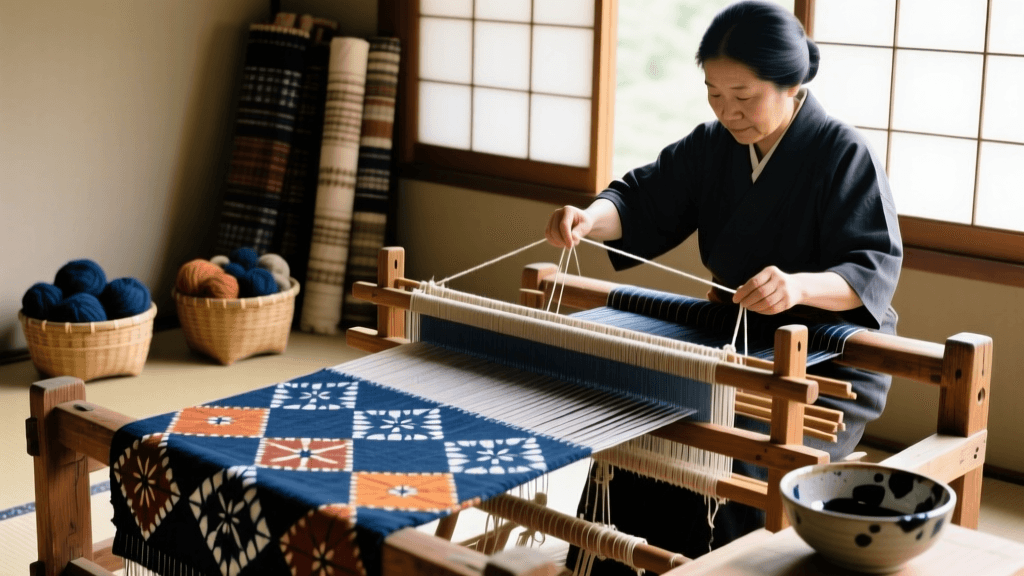
The Takahata is a marvel of traditional Japanese woodworking and engineering. Elevated off the ground, it utilizes a system of treadles (fumiki) and harnesses to lift specific warp threads, allowing the weaver to pass the shuttle (hi) swiftly through the shed. This loom is indispensable for weaving Tanmono—the standard 38-centimeter-wide bolts of fabric used to construct kimonos. In 2026, master carpenters in regions like Fukui and Shiga continue to build Takahata looms using aged hinoki cypress, prized for its smooth grain and resistance to warping. The rhythmic clack-thump of the beater (osa) against the fell of the cloth is the heartbeat of the traditional weaving studio.
The Jibata: The Intimate Connection
In stark contrast, the Jibata relies entirely on the weaver's body to maintain warp tension. One end of the warp is secured to a fixed point, such as a wooden pillar, while the other is attached to a strap that wraps around the weaver's lower back. By leaning forward or backward, the weaver micro-adjusts the tension with every breath. This intimate physical connection makes the Jibata ideal for weaving intricate, narrow textiles like Obijime (decorative cords) or the highly textured cottons of rural farming communities. Because it requires no massive wooden frame, the Jibata remains a vital tool for itinerant weavers and those practicing in small urban apartments in Tokyo and Kyoto.
Mastering Kasuri: The Mathematics of Tie-Dye Weaving
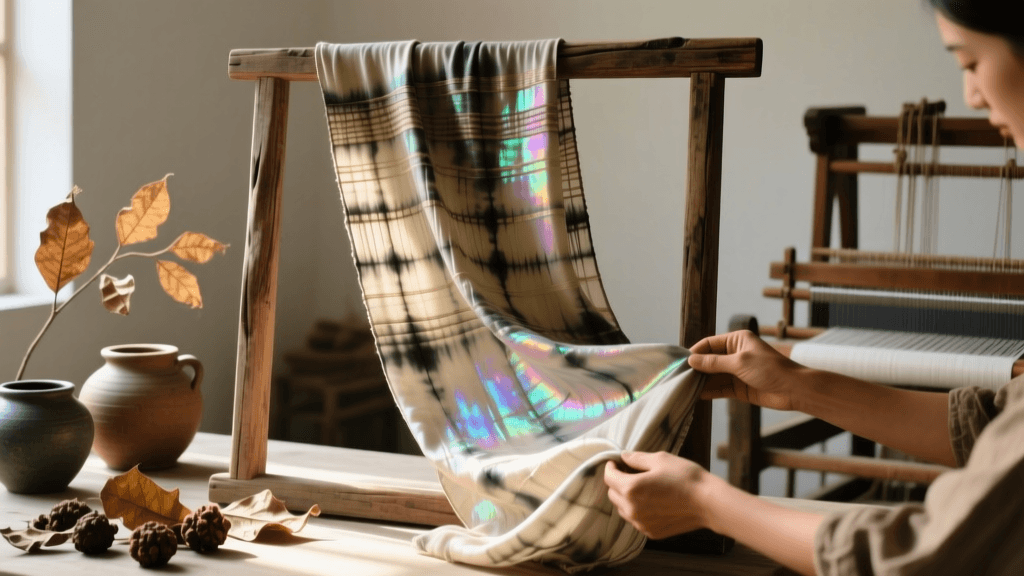
No discussion of Japanese hand-weaving is complete without exploring Kasuri (ikat), a technique where threads are resist-dyed before they are woven. The most celebrated form is E-gasuri (picture kasuri), where the dyed threads form distinct pictorial motifs—such as cranes, pine trees, or geometric waves—only when the warp and weft intersect perfectly on the loom.
Creating Kasuri on a Takahata loom requires astonishing mathematical foresight. The artisan must calculate the exact shrinkage of the yarn during the dyeing process and the precise tension of the loom. A deviation of even a single millimeter in the weft placement will blur the motif, turning a crisp image into a muddy abstraction. In 2026, while some commercial studios use digital aids for pattern drafting, the physical tying of the threads using cotton cord and the subsequent immersion in natural indigo vats (sukumo) remain entirely manual processes. The UNESCO Intangible Cultural Heritage designation for techniques like Yuki-tsumugi highlights the global recognition of this painstaking, hand-spun silk floss weaving, which relies heavily on the precise tension control of the Takahata.
Sourcing Authentic Materials in the 2026 Market
For contemporary weavers and collectors, sourcing authentic, traditionally processed materials is both a challenge and a rewarding pursuit. The supply chain for heritage textiles has tightened in 2026 due to the aging population of rural farmers and thread-spinners, making premium materials highly sought after.
- Ramie (Choma): The finest ramie for summer kimonos, such as the legendary Ojiya-chijimi, is still cultivated and processed in the Uonuma region of Niigata Prefecture. The process of splitting the ramie stalks by hand and twisting them into thread (oumi) yields a yarn with a distinctive slub. Expect to pay upwards of ¥60,000 per kilogram for premium, hand-plied Ojiya ramie in 2026.
- Silk Floss (Tsumugi-ito): Unlike the continuous filament silk used in glossy satin weaves, tsumugi silk is spun from the waste of broken cocoons. The resulting yarn is matte, textured, and incredibly warm. Authentic hand-spun Yuki-tsumugi silk from Ibaraki Prefecture is a luxury investment, often priced between ¥85,000 and ¥120,000 per kilogram depending on the fineness of the spin.
- Cotton (Momen): For Kasuri weaving, naturally dyed and hand-loomed cotton from Kurume in Fukuoka Prefecture remains the gold standard. Artisans here still utilize traditional shibori tying methods before dyeing the cotton in deep, fermented indigo.
Where to Study: 2026 Apprenticeships and Workshops
Learning to weave on a Takahata or Jibata is not a skill acquired over a weekend; it is a lifelong pursuit. However, for those serious about immersing themselves in the craft, 2026 offers several structured pathways. The Victoria and Albert Museum Japanese Collections frequently collaborates with international craft institutions to document and promote these techniques, but hands-on learning requires being on the ground in Japan.
The Japan Kogei Association (Japan Arts Crafts Association) oversees the preservation of these skills. Aspiring weavers often seek entry into regional craft cooperatives, such as the Ojiya Chijimi Shoji Cooperative in Niigata or the Kurume Gasuri preservation society. These cooperatives offer rigorous multi-year apprenticeships. For international students and short-term enthusiasts, specialized cultural schools in Kyoto, such as the Kyoto Traditional Arts and Crafts University, offer intensive semester-long courses focusing on the mechanics of the Takahata and the chemistry of natural dyes.
Caring for Heritage Textiles
The culmination of the weaver's labor is a textile that, if cared for properly, will outlive the artisan. Traditional Japanese garments are rarely washed with water and modern detergents. Instead, they are maintained through Mushiboshi—the annual ritual of airing out textiles. In 2026, conservation experts recommend airing kimono and woven textiles in a shaded, well-ventilated room during the dry, crisp days of late autumn. This prevents mold growth and allows the fibers to 'breathe.' When storing Takahata-woven silk or Jibata-woven cotton, it is crucial to wrap the garments in acid-free tatou paper and avoid plastic covers, which trap moisture and degrade the natural dyes over time.
Conclusion
The Takahata and Jibata looms are far more than wooden tools; they are the physical manifestations of Japanese cultural memory. As we navigate the textile landscape of 2026, the dedication of the artisans who continue to tie, dye, and weave by hand ensures that the profound beauty of Japanese heritage garments will endure. Whether you are studying the mathematical precision of Kasuri or simply admiring the tactile warmth of hand-spun silk, engaging with these traditional weaving methods is a powerful way to honor and sustain the living history of Asian traditions.