Evolution of the Kimono: Heian to Edo Dynasty Fashion Guide
The Living History of the Japanese Kimono
The Japanese kimono is often perceived as a timeless, unchanging symbol of traditional culture. However, from the perspective of historical dynasty fashion, the kimono is a dynamic garment that has radically transformed across centuries. Understanding the evolution from the lavish Heian court layers to the structured, expressive street styles of the Edo period not only enriches your appreciation of Asian traditions but also informs how you collect, style, and wear these garments today.
Heian Period (794–1185): The Art of Layering
During the Heian period, the aristocracy developed the junihitoe, a twelve-layered ensemble that weighed up to 20 kilograms. The focus was not on the silhouette, but on the visible edges of the layers at the collar, sleeves, and hem. This practice, known as kasane-iro (layered colors), was strictly dictated by the seasons and the wearer's rank. For example, the sakura (cherry blossom) combination featured a white layer over a deep pink one, visible only at the sleeve openings.
According to The Metropolitan Museum of Art, the Heian aesthetic was deeply rooted in miyabi (courtly elegance) and a profound sensitivity to the passing of the seasons, which was communicated entirely through textile color combinations.
Actionable Advice: Modern Heian Layering
While wearing a full junihitoe is impractical today, you can incorporate Heian layering into modern kimono styling:
- Han-eri (Half Collar): Use a contrasting, embroidered han-eri to mimic the peeking layers of the Heian collar. For spring, pair a pale pink kimono with a cherry-blossom white collar.
- Kasane-eri (Layered Collar): Insert a thin, secondary collar beneath your main collar to create a 2mm border of contrasting color, echoing the multi-layered historical effect.
Muromachi to Momoyama (1336–1603): The Kosode and Hakama
As political power shifted from the aristocracy to the samurai class, the elaborate layered robes were abandoned for practicality. The kosode (small sleeves), originally worn as an undergarment in the Heian period, became the primary outer garment. This era birthed the modern kimono silhouette. To accommodate the active lifestyle of the samurai and the working classes, the kosode was frequently paired with a hakama—pleated, wide-legged trousers that allowed for ease of movement, horseback riding, and martial arts. The obi (sash) was initially a narrow, functional cord used simply to tie the kosode closed beneath the hakama.
Edo Period (1603–1867): Sumptuary Laws and Street Fashion
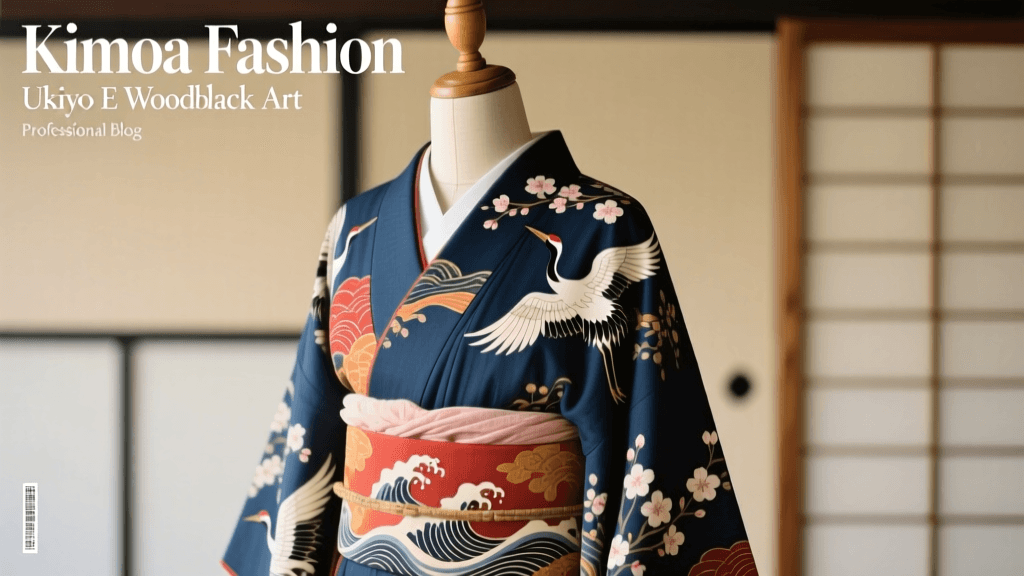
The Edo period brought prolonged peace and the rise of the wealthy merchant class (chonin). Denied political power, merchants expressed their wealth through fashion. The shogunate responded with strict sumptuary laws banning ostentatious displays of wealth, such as tie-dyeing and gold leaf. In response, artisans invented Yuzen dyeing—a resist-dye technique using rice paste that allowed for painterly, elaborate designs that bypassed the legal restrictions on woven brocades.
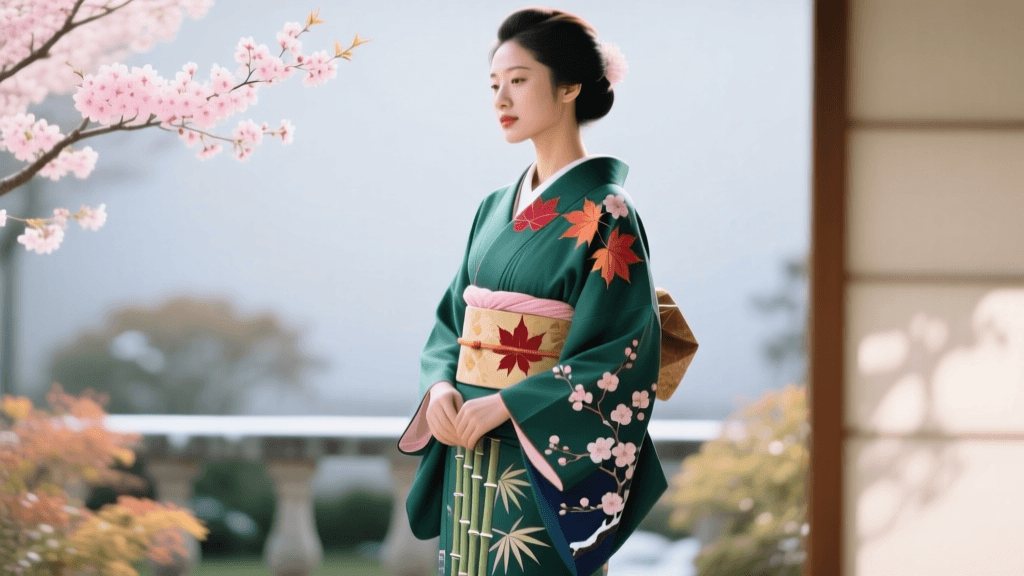
Furthermore, the obi widened dramatically from a narrow cord to a 30-centimeter-wide brocade sash, moving from the front to the back of the body. This shifted the kimono from a draped, fluid garment to a structured, cylindrical canvas. This era also popularized the haori, a hip- or thigh-length jacket worn over the kimono. When sumptuary laws banned bright colors on the exterior of garments, merchants developed the aesthetic of iki (subdued, hidden luxury). A merchant might wear a plain, dark indigo haori on the outside, but line the interior with breathtaking, vibrant Yuzen silk—a secret display of wealth known only to the wearer and those they trusted.
The Victoria and Albert Museum notes that the Edo period transformed the kimono into a highly codified system of visual communication, where motifs, dyeing techniques, and obi placements signaled a wearer's age, marital status, and social standing.
Historical Comparison: Heian vs. Edo Silhouettes
| Feature | Heian Period (Junihitoe) | Edo Period (Kosode/Kimono) |
|---|---|---|
| Primary Focus | Collar and hem color layering | Surface design and back panel motifs |
| Obi (Sash) | Narrow, hidden or purely functional | Wide (30cm), highly decorative, tied at back |
| Silhouette | Heavy, flowing, pooling on the floor | Cylindrical, structured, ankle-length |
| Sleeve Style | Wide, open, unattached at the sides | Tubular, with deep pouches (tamoto) |
| Key Technique | Woven brocades and solid dyeing | Yuzen resist-dyeing and embroidery |
Practical Guide: Sizing, Sourcing, and Seasonal Timing
For collectors and practitioners of Asian traditions, acquiring historical or historically accurate kimono requires an understanding of traditional Japanese tailoring and seasonal rules.
1. Measurements and Sizing
Unlike Western clothing, kimono are not sized by chest or waist. They are constructed from standard bolts of fabric (tanmono). A standard women's bolt is 36 to 38 centimeters wide. Because the panels are straight, the width of the kimono is fixed. To determine if a vintage kimono will fit you:
- Width Check: Measure your hips. The kimono's total width (usually around 130 cm when wrapped) must be at least 20 cm wider than your hip measurement for a proper overlap.
- Length Calculation: The ideal kimono length is calculated as:
(Your Height x 0.6) + 10 cm. This allows for the ohashori (the waist fold tucked under the obi). - Furisode Sleeves: If you are purchasing a formal furisode (long-sleeved kimono for unmarried women), ensure the sleeve length drops to at least the calf, traditionally measuring 100cm to 114cm in total sleeve depth.
2. Sourcing and Costs
When building a dynasty-inspired wardrobe, consider these market realities:
- Antique Markets (Edo/Meiji/Taisho eras): Venues like the Toji Temple Flea Market in Kyoto offer mid-century and older silk kimono. Expect to pay between $30 and $150 for vintage silk in good condition. Look for the basting stitches (shitsuke) on the hems, indicating the garment was properly cleaned and stored.
- Hakama Maintenance: When buying antique hakama, inspect the pleats carefully. Historical hakama were heavily starched to maintain their rigid, fan-like shape. If the pleats are entirely flattened, you will need to factor in the cost and time of professional re-pressing, which typically costs around $40 to $60 at specialized kimono cleaners.
- Modern Artisan Reproductions: For authentic, hand-painted Yuzen kimono crafted by modern artisans using Edo-period techniques, prices range from $2,500 to over $10,000. These are investment pieces, often commissioned directly from workshops in Kanazawa or Kyoto.
3. Seasonal Timing (The Kimono Calendar)
Historical fashion was inextricably linked to the calendar. Wearing the wrong weight of silk is a major faux pas in traditional dressing:
- Awase (Lined Kimono): Worn from October 1st to May 31st. These feature a solid silk lining.
- Hitoe (Unlined Kimono): Worn only in June and September. The transition months require a single layer of opaque silk.
- Usumono / Ro (Sheer Gauze): Worn in July and August. These are woven with intentional gaps in the threads to allow airflow, often revealing the contrasting colors of the under-kimono (nagajuban) beneath.
Conclusion
The journey of the kimono from the layered opulence of the Heian court to the vibrant, rule-breaking street fashion of the Edo period reflects the broader socio-political shifts of Japanese history. By understanding these historical periods, modern enthusiasts can do more than simply wear a garment; they can participate in a living, breathing tradition. Whether you are layering collars to evoke Heian nobility, pairing a kosode with a hakama for samurai practicality, or selecting an Edo-style Yuzen motif, the kimono remains a profound canvas of Asian cultural history.