Seasonal Japanese Kimono Motif and Color Symbolism Guide
The Living Canvas: Understanding Kimono Symbolism
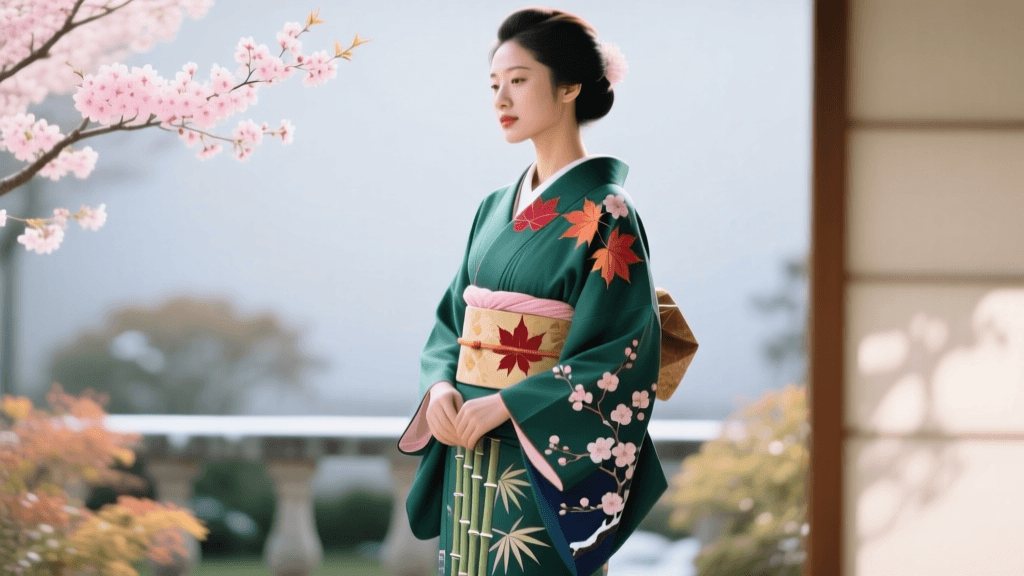
The traditional Japanese kimono is far more than a simple garment; it is a wearable canvas that reflects the wearer's age, marital status, social standing, and, most importantly, their deep connection to the natural world. In Japanese culture, the concept of kisetsukan (seasonal awareness) dictates that clothing must harmonize with the changing environment. Wearing a winter motif in the height of summer, or sporting cherry blossoms after the petals have already fallen, is considered a sartorial misstep. Understanding the intricate language of kimono motifs and colors is essential for collectors, cultural enthusiasts, and anyone looking to wear these garments with authenticity and respect.
According to the Metropolitan Museum of Art, the kimono evolved from a simple undergarment into a highly structured outer robe that served as a primary indicator of social status, age, and seasonal awareness, with its T-shaped silhouette providing an uninterrupted canvas for artistic expression.
Kasane no Irome: The Art of Color Layering
Before diving into specific seasonal motifs, one must understand Kasane no Irome, the traditional Japanese system of color layering. Originating in the Heian period (794–1185), this practice involved wearing multiple layers of silk robes, where the colors of the inner layers subtly peeked out at the cuffs, hems, and collars. Each color combination was strictly tied to a specific season or natural phenomenon. For example, the combination of a pale pink outer layer over a deep magenta inner layer represented Sakura (cherry blossoms) and was strictly reserved for early spring. Today, while modern kimono wearers rarely wear twelve-layered robes, the principles of Kasane no Irome survive in the coordination of the kimono, the obi (sash), the obijime (cord), and the han-eri (collar).
Spring: Anticipation and Renewal
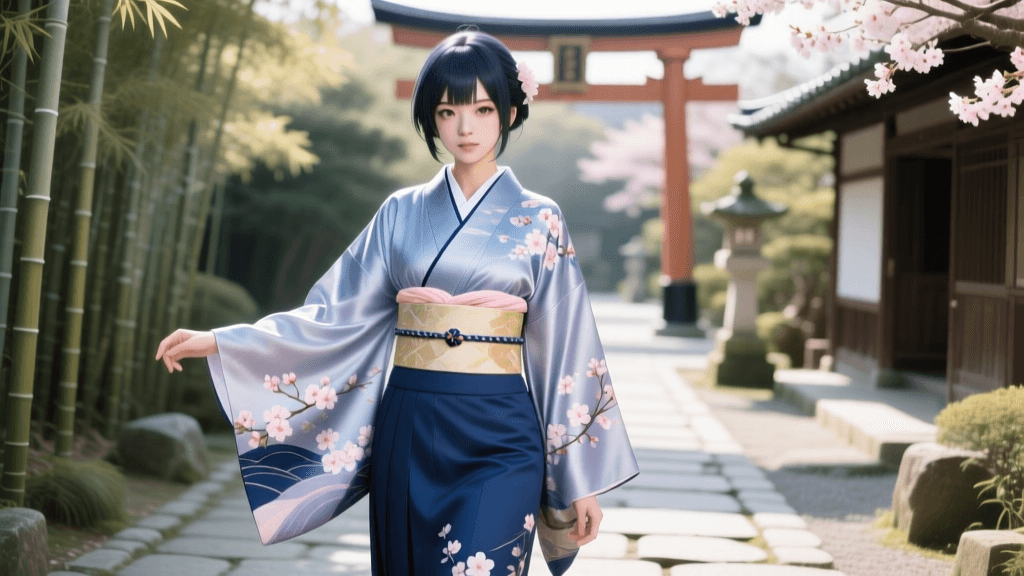
Spring in Japan is a time of profound cultural significance, marked by the blooming of plum and cherry blossoms. However, the golden rule of kimono motif timing is anticipation. You should wear cherry blossom (sakura) motifs in March, before the trees actually bloom. Wearing them in late April when the petals are falling is considered melancholic and out of sync with nature's peak.
- Ume (Plum Blossom): Worn in late winter to early spring (February to early March). Colors include deep reds and soft pinks against dark backgrounds.
- Sakura (Cherry Blossom): Worn in March. Colors feature sakura-iro (pale pink) and soft whites.
- Fuji (Wisteria): Worn in late April to May. Characterized by cascading purple motifs and soft lavender hues.
Summer: Coolness and Flowing Water
Summers in Japan are notoriously hot and humid. Therefore, summer kimono (such as the lightweight cotton yukata or unlined silk hitoe) focus on motifs that evoke a psychological sense of coolness. The Nippon Colors palette highlights shades like mizu-iro (water blue) and byakuroku (pale green) to visually lower the temperature.
- Nagashi (Flowing Water): Abstract blue streams that evoke the feeling of a cool river.
- Ayu (Sweetfish): Often depicted leaping over streams, worn in June and July.
- Asagao (Morning Glory): A quintessential mid-summer motif, usually rendered in deep indigo and crisp white.
- Uchiwa (Fans): Scattered fan motifs symbolize the physical act of cooling oneself.
Autumn: Melancholy and Harvest
Autumn motifs celebrate the changing leaves and the harvest. The color palette shifts dramatically to warm earth tones, rich crimsons, and golds. The Victoria and Albert Museum notes that autumn motifs often carry a poetic, slightly melancholic undertone, reflecting the fleeting nature of beauty and the passage of time.
- Momiji (Maple Leaves): Worn from October to November. Colors range from vibrant orange to deep burgundy.
- Kiku (Chrysanthemum): The symbol of the imperial family and longevity. Worn from September through November, often featuring intricate kiku-sui (chrysanthemum and water) patterns.
- Susuki (Pampas Grass): A subtle, elegant motif associated with the mid-autumn moon viewing festivals (tsukimi).
Winter: Resilience and Auspicious Wishes
Winter garments are lined and heavily padded. The motifs focus on plants that survive the harsh cold, symbolizing resilience, as well as auspicious symbols meant to bring good fortune for the upcoming new year.
- Shochikubai (Pine, Bamboo, and Plum): The ultimate auspicious trio. Pine represents longevity, bamboo represents flexibility and strength, and plum represents perseverance. Worn throughout winter, especially for New Year celebrations.
- Yukiwa (Snowflakes): Stylized, hexagonal snow crystals. Interestingly, snow motifs are sometimes worn in late spring to represent melting snow nourishing the new crops.
- Tsuru (Crane): A symbol of longevity and good fortune, often woven into the gold and silver brocade of formal winter obi.
Practical Guide: Sizing, Costs, and Purchasing
For collectors and wearers looking to build a seasonal kimono wardrobe, understanding measurements and market costs is crucial. Unlike Western clothing, kimono are sold based on specific vertical and horizontal measurements rather than standard S/M/L sizes.
Essential Measurements
- Mitake (Back Length): The ideal length is typically your height minus 20-30 cm. For a woman who is 160 cm tall, a standard mitake of 158 cm to 162 cm is ideal, allowing the hem to rest perfectly at the ankles.
- Yuki (Arm Span/Sleeve Length): Measured from the center of the back of the neck, over the shoulder, to the wrist. Standard women's yuki ranges from 62 cm to 66 cm.
- Sode (Sleeve Depth): This dictates the formality and age appropriateness. Furisode (for unmarried women) have deep sleeves measuring 100 cm to 114 cm. Tomesode and Komon (for married women or casual wear) have shorter sleeves measuring around 49 cm.
Seasonal Motif & Color Coordination Chart
| Season | Primary Motifs | Traditional Colors | Wearing Window | Approx. Vintage Cost (USD) |
|---|---|---|---|---|
| Spring | Sakura, Ume, Wisteria | Sakura-iro, Ume-iro, Fuji-iro | Feb - Early April | $80 - $350 |
| Summer | Ayu, Asagao, Water Streams | Mizu-iro, Byakuroku, Kon | June - August | $50 - $200 (Yukata/Hitoe) |
| Autumn | Momiji, Kiku, Susuki | Ko-iro, Kiku-iro, Kuri-iro | Sept - November | $90 - $400 |
| Winter | Shochikubai, Yukiwa, Tsuru | Shironeri, Aka, Kin-iro | Dec - January | $150 - $600+ (Lined/Awase) |
Cost Breakdown and Buying Advice
When building your collection, you will encounter two primary markets: vintage (recycle) and modern bespoke.
- Vintage Silk Kimono: Ranging from $50 to $400. Vintage shops in Kyoto and Tokyo, or specialized online dealers, offer incredible value. Look for Yuzen dyeing (hand-painted resist dyeing) for high-quality seasonal motifs. Always check the collar and hem for stains, as silk is notoriously difficult to clean.
- Modern Bespoke Kimono: Ranging from $3,000 to over $15,000. Commissioning a new kimono allows for precise seasonal customization. A master artisan will hand-dye your chosen motifs, but the lead time can be 6 to 12 months.
- The Obi (Sash): Do not underestimate the cost of the obi. A high-quality vintage brocade (nishiki) obi featuring seasonal motifs like autumn maple or winter crane can cost between $150 and $800, while new formal obi easily exceed $2,000.
Conclusion
Mastering the pattern, color, and motif symbolism of the Japanese kimono transforms the act of getting dressed into a poetic dialogue with nature. By respecting the rules of kisetsukan, understanding the historical depth of Kasane no Irome, and carefully selecting garments that fit both your physical measurements and the current month, you honor centuries of textile artistry. Whether you are donning a cool, water-stream yukata in July or a resilient, pine-patterned komon in January, the kimono allows you to wear the very essence of the season.