Japanese Takahata Bata Loom Weaving Techniques For 2026
The Renaissance of Japanese Hand-Weaving in 2026
In 2026, the global slow fashion movement has catalyzed a profound resurgence in traditional textile arts, placing Japanese hand-weaving methods at the forefront of sustainable luxury. As consumers and artisans alike turn away from mass-produced synthetics, the rhythmic clatter of the Takahata Bata (traditional Japanese floor loom) is once again echoing through studios from Kyoto to international craft hubs. This revival is not merely a nostalgic trend; it is a deliberate return to wabi-sabi aesthetics, where the subtle irregularities of hand-woven cloth are celebrated as marks of human touch and natural harmony.
For contemporary textile artists, mastering the Takahata Bata offers a direct connection to centuries of Japanese material culture. Unlike Western jack-type floor looms, the traditional Japanese counterbalance loom requires a deeply physical, full-body engagement. The weaver does not simply operate a machine; they become an extension of the loom, coordinating hands, feet, and breath to produce textiles of breathtaking complexity, such as Kurume Kasuri (ikat) and Yuki Tsumugi (pongee silk). This comprehensive guide explores the anatomy, sourcing, and practical weaving techniques required to master the Takahata Bata in the modern era.
Understanding the Takahata Bata: Anatomy and Mechanics
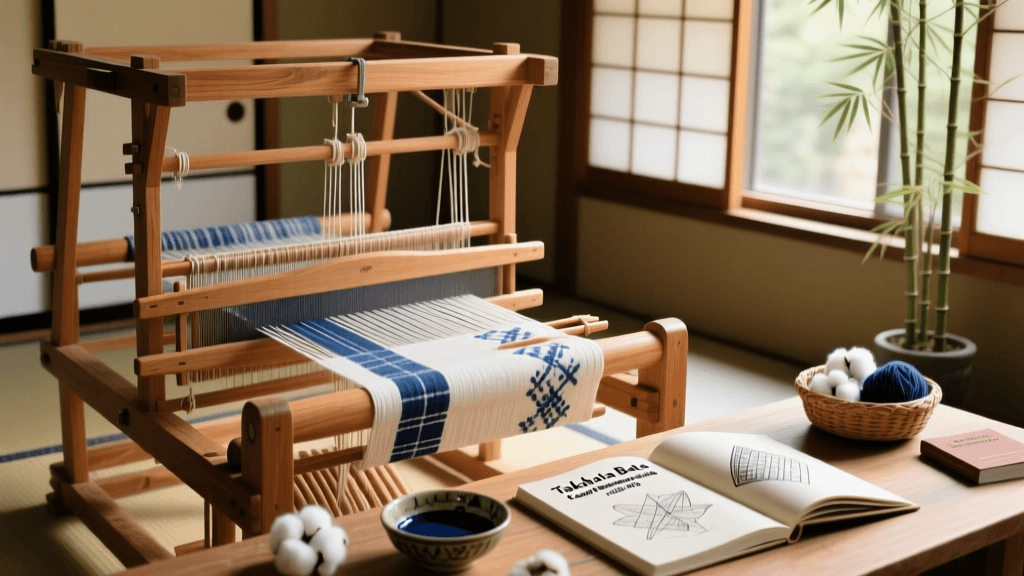
The Takahata Bata, which translates roughly to 'high-floor loom,' is a masterpiece of pre-industrial woodworking and ergonomic design. Typically constructed from aged Hinoki (Japanese cypress) or Keyaki (zelkova), these looms are prized for their resonance and durability. To weave effectively, one must understand the unique terminology and mechanical components that differentiate this loom from its Western counterparts.
- Osa (Reed): The comb-like structure that beats the weft yarn into place. Traditional Japanese reeds are often made from split bamboo, offering a gentler, more forgiving beat than metal reeds, which is crucial for delicate hand-spun silk.
- Soko (Heddles): The cords that lift and lower the warp threads. Traditional looms use hand-tied cotton or silk heddle loops, which reduce friction and prevent the snapping of fragile, unevenly spun heritage yarns.
- Hi (Shuttle): The boat-shaped tool that carries the weft bobbin (hii). Japanese shuttles are typically longer and heavier, designed to be thrown with a fluid flick of the wrist and caught seamlessly on the opposite side.
- Chikiri (Cloth Beam) and Makidoko (Warp Beam): The beams that hold the finished cloth and the unwoven warp, respectively. They utilize a traditional ratchet and pawl system, often secured with wooden pegs rather than metal gears.
- Treadles and Counterbalance System: The Takahata Bata relies on a counterbalance tie-up. When one treadle is pressed, the corresponding harness rises while the other simultaneously falls, creating a perfectly balanced shed. This requires precise tie-up adjustments but results in a remarkably clean shed for complex pattern weaving.
Jibata vs. Takahata Bata: A Comprehensive Comparison
While the Takahata Bata is the premier choice for wide, complex patterned fabrics, the Jibata (backstrap loom) remains a vital tool in the Japanese weaving lexicon. Understanding the differences between these two traditional setups is essential for selecting the right equipment for your 2026 studio practice.
| Feature | Jibata (Backstrap Loom) | Takahata Bata (Floor Loom) |
|---|---|---|
| Tension Control | Body weight and posture; highly intuitive but physically demanding. | Mechanical ratchets and weights; consistent and adjustable. |
| Maximum Weaving Width | Typically up to 40 cm (ideal for obi sashes and narrow bands). | Up to 120 cm or more (ideal for full kimono bolt widths). |
| Portability | Highly portable; can be rolled up and stored easily. | Stationary; requires a dedicated studio space (approx. 2x2 meters). |
| 2026 Market Price (Antique/Restored) | ¥80,000 - ¥150,000 | ¥450,000 - ¥950,000+ |
| Ideal Textiles | Narrow sashes, tea ceremony ribbons, simple cottons. | Full kimono silks, Kurume Kasuri, complex Tsumugi. |
Sourcing Authentic Looms and Heritage Yarns in 2026
Acquiring a genuine Takahata Bata in 2026 requires navigating a niche market of antique dealers, specialized woodworkers, and heritage craft cooperatives. Because the production of new, traditionally joinery-built looms has slowed, most weavers source restored antiques. The Oedo Antique Market in Tokyo and specialized textile brokers in Kyoto remain the premier physical locations for sourcing these looms. When inspecting a vintage Takahata Bata, pay close attention to the condition of the Hinoki wood. Look for signs of woodworm (shinboku) and ensure the structural joints, which rely on wooden pegs rather than nails, are tight.
If you require replacement parts, such as custom-sized bamboo reeds or hand-tied heddles, the Japan Traditional Crafts Center maintains an updated directory of certified artisans who still produce these specialized components. For yarns, sourcing authentic Tsumugi silk or hand-dyed indigo cotton is easier than ever thanks to direct-to-artisan e-commerce platforms that have matured over the last few years. However, purists still recommend visiting the spinning cooperatives in Amami Oshima or the indigo farms in Tokushima to select skeins in person, ensuring the twist and tensile strength are appropriate for the high-friction environment of a traditional bamboo reed.
Mastering Kurume Kasuri: A Step-by-Step Weaving Guide
Kurume Kasuri is a highly prized form of cotton ikat originating from Fukuoka Prefecture. The hallmark of Kasuri is its blurred, misty patterns, achieved by resist-dyeing the warp and weft threads before weaving. Aligning these patterns on the Takahata Bata—a process known as Kasuri-awase—is the ultimate test of a weaver's skill.
Step 1: Warp Preparation and Threading
Unlike plain weaving, Kasuri requires meticulous warp alignment before the threads even reach the loom. The dyed threads must be measured and aligned so that the pattern registers correctly across the width of the fabric. Threading the Soko (heddles) on a Takahata Bata for a Kasuri weave often requires a 4-shaft or 8-shaft setup, depending on the complexity of the geometric motif. In 2026, many weavers use digital pattern-mapping software on tablets to visualize the tie-up, though the physical threading remains entirely manual.
Step 2: The Weaving Rhythm and Kasuri-Awase
The magic of Kasuri happens at the beat. As you throw the Hi (shuttle) and pull the Osa (reed) forward, you must subtly adjust the weft thread with your fingers to align the dyed sections of the warp and weft. This micro-adjustment is what creates the signature 'blurred' edge of the Kasuri pattern. The traditional rhythm of the Takahata Bata is often described as karan-koron, mimicking the sound of the shuttle and the beat. Maintaining this steady, meditative rhythm is crucial; rushing the process will result in misaligned patterns and uneven cloth tension.
Step 3: Finishing and Setting the Cloth
Once woven, the cotton Kasuri cloth is boiled in alkaline water to remove sizing and then stretched on a Shinshi (bamboo tenter frame) to dry. This final step opens up the fibers, softens the hand of the textile, and locks the Kasuri patterns into their final, harmonious alignment.
Maintaining Your Takahata Bata
A well-maintained Takahata Bata can outlive its weaver by several generations. In 2026, best practices for loom maintenance emphasize natural, eco-friendly materials. The wooden beams and joints should be treated annually with raw tung oil or traditional egoma (perilla) oil to prevent the wood from drying out and cracking in climate-controlled studio environments. The bamboo reed must be kept free of dust and lint, using a soft, natural bristle brush after every weaving session. Avoid using commercial synthetic lubricants on the moving wooden parts, as these can attract dust and gum up the counterbalance pulleys.
Preservation and the Future of Japanese Textiles
The survival of the Takahata Bata and the techniques associated with it relies heavily on ongoing preservation efforts. As the population of master weavers ages, the transfer of tacit knowledge—such as the exact tension required for a specific silk twist or the auditory cues of a well-tied counterbalance—becomes critical. According to historical and cultural analyses provided by The Metropolitan Museum of Art's Heilbrunn Timeline of Art History, Japanese textiles have long been a vital medium for expressing regional identity and social status, making their preservation a matter of cultural urgency.
In response to this challenge, the Japanese government and various NGOs have expanded apprenticeship grants in 2026, incentivizing younger artisans to study under designated 'Living National Treasures' (Ningen Kokuho). Furthermore, international recognition of these practices, as documented in UNESCO's Intangible Cultural Heritage frameworks, has helped elevate hand-weaving from a dying rural trade to a globally respected fine art form. For the modern weaver, sitting at the Takahata Bata is not just an act of textile production; it is an active participation in the safeguarding of a profound cultural legacy. By embracing these traditional methods, weavers in 2026 are ensuring that the rhythmic heartbeat of the Japanese loom continues to resonate for centuries to come.