Su Embroidery Guide: Sourcing Authentic Silk Garments
The Legacy of Su Embroidery in Chinese Fashion
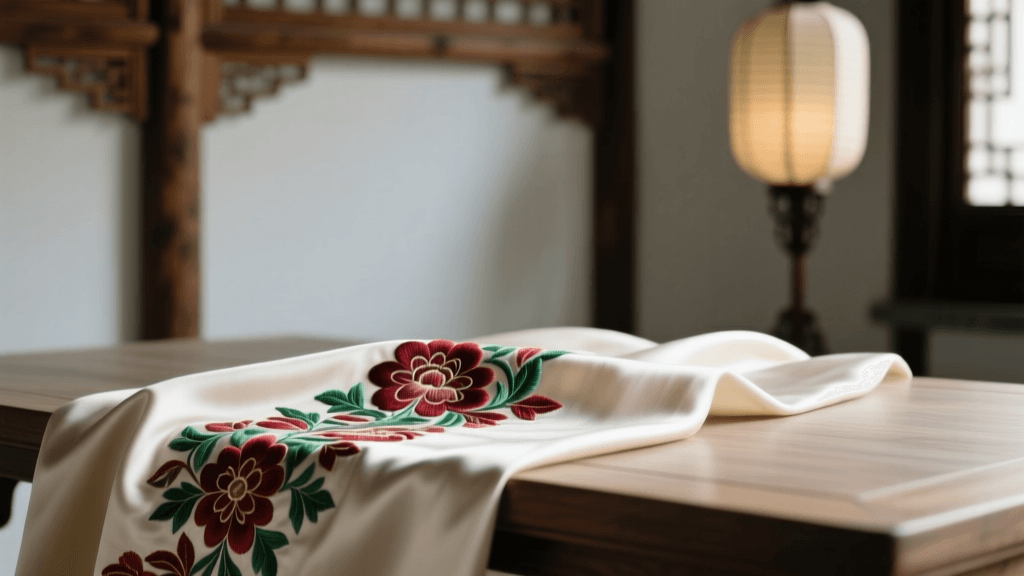
Suzhou embroidery, universally known as Su Xiu, stands as the most celebrated of China's four major regional embroidery styles, alongside Xiang (Hunan), Shu (Sichuan), and Yue (Guangdong). Originating in the Jiangnan region over two millennia ago, Su embroidery is characterized by its delicate needlework, elegant color palettes, and hyper-realistic depictions of nature. For textile collectors, historians, and enthusiasts of traditional Asian garments, understanding Su Xiu is essential. It is the defining textile art that elevates a standard silk garment into a museum-worthy masterpiece, particularly in the context of traditional Hanfu and the Republican-era Qipao (Cheongsam).
During the Ming and Qing dynasties, Su embroidery became heavily integrated into the wardrobes of the imperial court and the literati class. The intricate motifs found on the decorative bands (lan) of the Ming-style Mamianqun (horse-face skirt) and the sprawling floral patterns on Qing dynasty Aoqun (jacket and skirt ensembles) were predominantly executed by Suzhou artisans. Today, as the global Hanfu revival movement gains momentum, the demand for authentic, hand-stitched Su embroidery has surged, making it crucial for buyers to distinguish between genuine artisanal craftsmanship and mass-produced, machine-stitched imitations.
Core Techniques: The Art of Silk Splitting
The unparalleled quality of Su embroidery lies in a meticulous technique known as thread splitting, or flossing. A single strand of mulberry silk thread is composed of multiple micro-filaments. Master embroiderers in Suzhou can split a single thread into two, four, eight, sixteen, and in the most extreme cases of hyper-realism, up to forty-eight individual strands. This allows for gradients and shading that mimic the effect of watercolor painting on silk.
Ping Xiu vs. Luan Xiu
When sourcing embroidered textiles, you will primarily encounter two fundamental stitching techniques:
- Ping Xiu (Flat Stitch): The most common and traditional technique, where stitches are laid flat and parallel to one another. It is heavily used for geometric borders, traditional cloud motifs, and the structured hems of Hanfu skirts. The surface is smooth, and the light catches the silk uniformly, creating a brilliant, continuous sheen.
- Luan Xiu (Random Stitch): Pioneered in the late Qing and early Republican eras, this technique involves crossing stitches at varying angles and lengths. It is heavily utilized in bespoke Qipao tailoring to shade complex subjects like peonies, koi fish, and plum blossoms. The overlapping threads create a three-dimensional, textured effect that gives the garment a lifelike depth.
According to the Victoria and Albert Museum's comprehensive guide to Chinese Embroidery, the evolution of these stitches allowed Chinese textile artists to move beyond purely decorative patterns into the realm of fine art, effectively 'painting with a needle' on silk crepe and satin.
Sourcing Authentic Su Embroidered Garments
Acquiring genuine Su embroidery requires a discerning eye and an understanding of the modern textile supply chain. The epicenter of this craft remains Zhenhu Town in Suzhou, where thousands of artisans and cooperatives continue the tradition. However, when buying online or from international boutiques, authentication is paramount.
How to Authenticate Hand-Stitched Su Xiu
To ensure you are investing in authentic hand-stitched silk rather than computerized machine embroidery, follow this structured inspection checklist:
- Examine the Reverse Side: Machine embroidery relies on a synthetic bobbin thread, creating a messy, uniform web of jump-stitches and synthetic mesh on the back. Authentic hand embroidery, especially double-sided Su Xiu (Shuangmian Xiu), will show continuous, deliberate thread paths, or a nearly identical mirror image on the reverse.
- Check the Thread Sheen and Texture: Mulberry silk has a natural, pearlescent luster that shifts in the light. Machine embroidery often uses rayon or polyester threads, which possess a harsh, plastic-like glare and lack the micro-texture of split silk.
- Look for Gradient Transitions: In hand-stitched Luan Xiu, color transitions are achieved by blending split threads of varying shades. If the shading looks pixelated or relies on sudden blocks of solid color, it is likely machine-programmed.
- Assess the Fabric Tension: Hand embroidery is done on a taut bamboo or wooden frame. Once removed, the silk may have a very subtle, organic tension. Machine embroidery often pulls the fabric tightly into a rigid, unnatural stiffness, requiring heavy chemical stabilizers.
Comparison Chart: Hand-Stitched vs. Machine Embroidery
Understanding the technical and economic differences between hand and machine embroidery is vital for accurate garment valuation. The following table outlines the primary distinctions when sourcing Hanfu and Qipao textiles.
| Feature | Authentic Hand-Stitched Su Xiu | Computerized Machine Embroidery |
|---|---|---|
| Thread Material | 100% Mulberry Silk (split to 1/16th or finer) | Rayon, Polyester, or unspun thick silk |
| Production Time | 3 to 12 months (depending on density) | 2 to 8 hours per garment panel |
| Reverse Side | Clean, continuous paths; or double-sided mirror | Synthetic bobbin web, jump stitches, stabilizer |
| Color Blending | Seamless gradients via multi-strand blending | Block colors or pixelated thread-crossing |
| Base Fabric Impact | Maintains natural drape and fluidity of silk | Stiffens fabric; requires heavy backing |
| Market Cost (USD) | $1,500 - $15,000+ | $80 - $400 |
Cost, Measurements, and Timeline Expectations
When commissioning or purchasing high-end traditional garments, buyers must align their expectations with the realities of artisanal labor. The Metropolitan Museum of Art notes that historical Chinese silk embroidery was an immensely time-consuming endeavor, often requiring the labor of multiple women over several months to complete a single ceremonial robe. This remains true for master-level contemporary pieces.
The Bespoke Qipao (Cheongsam)
A fully bespoke Qipao featuring extensive Su embroidery across the bodice and hem will typically require a base fabric of heavy silk crepe or Xiangyunsha (gambiered Canton gauze). Expect a timeline of 4 to 6 months. The artisan will spend the first month drafting the motif and selecting the silk floss colors. The embroidery alone can take 300 to 500 hours of continuous labor. Prices for a fully embroidered, master-crafted Qipao generally start at $3,500 and can exceed $12,000 for double-sided stitching or gold-leaf thread integration.
The Hanfu Mamianqun (Horse-Face Skirt)
For Hanfu enthusiasts, the Mamianqun is a staple. While woven jacquard patterns are common and affordable, authentic hand-embroidered lan (the decorative horizontal bands on the skirt) are rare luxury items. A high-quality Mamianqun with hand-embroidered floral or dragon motifs on the bands will cost between $800 and $2,500. The timeline is slightly shorter, usually 2 to 3 months, as the embroidery is confined to specific geometric panels rather than the entire garment.
Caring for Silk Embroidered Textiles
Silk is a protein fiber, and the meticulous stitching of Su Xiu requires specialized care to prevent structural degradation, color bleeding, and fiber snapping. Improper cleaning can destroy hundreds of hours of artisanal labor in minutes.
- Cleaning Protocol: Never submerge Su embroidered garments in water. The silk floss may shrink at a different rate than the base fabric, causing severe puckering. Always seek a dry cleaner who specializes in historical or haute couture textiles. Inform them specifically about the hand-stitched silk floss.
- Storage and Folding: The raised texture of Luan Xiu makes it susceptible to crushing. Do not hang heavy, embroidered Hanfu skirts or Qipaos on wire hangers, as the weight of the embroidery will distort the silk warp and weft. Store the garments flat in archival-quality, acid-free boxes.
- Moisture and Light Control: Store textiles in a climate-controlled environment with a relative humidity of 45-55%. Direct sunlight will rapidly degrade the natural dyes used in high-end Su embroidery, leading to irreversible fading. Use unbleached, acid-free tissue paper to stuff the folds and prevent hard creases from forming along the embroidered bands.
Preserving a Living Heritage
Investing in authentic Su embroidery is more than a fashion choice; it is an act of cultural preservation. Recognized globally for its immense cultural value, the broader context of this craft is protected under UNESCO's Intangible Cultural Heritage list for Sericulture and Silk Craftsmanship of China. By understanding the techniques, costs, and care requirements of Su Xiu, collectors and garment enthusiasts ensure that this ancient, poetic art form continues to thrive in the modern era, bridging the gap between historical Chinese fashion and contemporary textile appreciation.