Best Hanfu for Tai Chi & Qigong Practice in 2026: A Movement Guide
The Intersection of Hanfu and Traditional Wellness in 2026
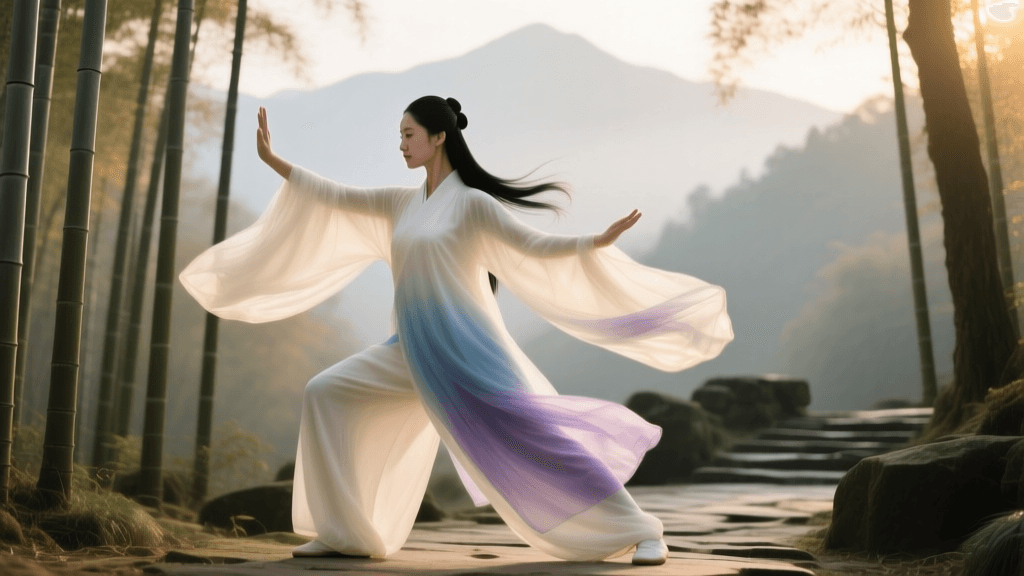
As the global wellness movement continues to evolve in 2026, the integration of traditional Chinese practices like Tai Chi and Qigong with authentic cultural attire has reached new heights. The modern Xin Zhongshi (new Chinese style) movement is no longer confined to street fashion or photography; it has deeply penetrated the holistic health sector. Practitioners are increasingly recognizing that the garments worn during energy cultivation are not merely aesthetic choices, but functional tools that influence biomechanics, breathwork, and the unobstructed flow of Qi (vital energy).
According to the National Center for Complementary and Integrative Health (NCCIH), Tai Chi and Qigong are highly recommended for improving balance, reducing stress, and enhancing cardiovascular health. However, to fully experience the biomechanical benefits of these ancient arts, practitioners must wear clothing that allows for a complete range of motion. Western athletic wear, while stretchy, often compresses the body and restricts the subtle expansions required in internal martial arts. Traditional Hanfu, with its unique flat-pattern cutting and flowing silhouettes, offers a superior alternative when selected correctly.
The Biomechanics of Flat-Pattern Cutting
To understand why specific Hanfu styles are ideal for Tai Chi, one must understand traditional Chinese tailoring. Unlike Western clothing, which relies on darts, seams, and 3D tailoring to contour the body, traditional Hanfu utilizes flat-pattern cutting. The fabric is cut in straight lines and draped over the body, secured with ties and sashes.
This structural difference is crucial for Qigong and Tai Chi. When a practitioner sinks into a deep Mabu (horse stance) or extends their arms in the "Single Whip" posture, flat-cut garments do not pull or bind across the shoulders and back. The cross-collar (jiaoling youren) naturally adjusts to chest expansion during deep diaphragmatic breathing, ensuring that the garment moves harmoniously with the body rather than acting as a restrictive shell.
Top Hanfu Silhouettes for Movement Arts
Not all Hanfu is created equal when it comes to physical exertion. While a sweeping, floor-length ceremonial robe might look stunning, it poses a tripping hazard during dynamic footwork. Here are the most practical silhouettes for wellness practitioners in 2026.
1. Shuhe (裋褐) - The Martial Standard
The Shuhe is historically the garment of the working class, martial artists, and travelers. It consists of a cross-collar top with narrow or bound sleeves, paired with loose-fitting trousers. This is the undisputed champion of Hanfu for Tai Chi. The narrow sleeves prevent fabric from catching on the hands during rapid forms, while the split hem of the top allows for deep, unrestricted lunges and stances. In 2026, many tailors offer modernized Shuhe sets with hidden elastic waistbands inside the traditional tie-closures, blending ancient aesthetics with contemporary convenience.
2. Daopao (道袍) - The Taoist Robe
For slower, meditative practices like Ba Duan Jin (Eight Brocades) or standing meditation (Zhan Zhuang), the Daopao is exceptional. Characterized by its wide sleeves and side slits, the Daopao creates a beautiful, bellows-like effect when the arms are raised and lowered, visually emphasizing the gathering and sinking of Qi. Because the sleeves are wide, practitioners often use arm bands (bihan) to secure the fabric during more active sequences.
3. Yiku (衣裤) Sets
Similar to the Shuhe but often featuring a longer, knee-length tunic, Yiku sets provide excellent coverage and modesty while maintaining mobility. They are particularly popular among older practitioners who prefer the joint warmth provided by longer tunics during early morning outdoor sessions in autumn and winter.
Fabric Analysis: Breathability and Drape
The choice of textile dictates how the garment regulates body temperature and manages moisture during a 60-minute practice. The 2026 textile market has seen a resurgence in heritage weaving techniques combined with modern eco-friendly processing.
Shengchou (Raw Silk)
Raw silk retains the natural sericin protein of the silkworm, giving it a slightly textured, matte finish and a crisp drape. It is highly breathable and possesses natural temperature-regulating properties. A custom-tailored Shengchou Shuhe set in 2026 typically ranges from $120 to $180, making it an accessible luxury for serious practitioners.
Xiangyunsha (Gambiered Guangdong Gauze)
Often referred to as "soft gold," this silk is dyed with river mud and the juice of the gambier plant. It is exceptionally lightweight, moisture-wicking, and naturally antibacterial. While historically expensive, improved sustainable production methods in 2026 have made Xiangyunsha more accessible. It is the ultimate fabric for hot and humid summer Qigong sessions, as it feels cool against the skin and dries almost instantly.
Modern Bamboo-Ramie Blends
For those seeking durability and ease of care, 2026 has introduced high-quality bamboo and ramie blends that mimic the slubbed texture of ancient Xia Bu (summer cloth). These blends offer the crisp structure of ramie with the soft, sweat-wicking properties of bamboo fiber, and they can be machine-washed on gentle cycles—a massive advantage for daily practitioners.
Fabric Comparison Chart for Tai Chi & Qigong
| Fabric Type | Weight & Drape | Moisture Management | Best Season | Maintenance Level |
|---|---|---|---|---|
| Shengchou (Raw Silk) | Medium / Structured | High | Spring / Autumn | High (Dry clean or hand wash) |
| Xiangyunsha | Light / Fluid | Very High | Summer | Medium (Hand wash in cool water) |
| Ramie (Xia Bu) | Light / Crisp | High | Summer | Medium (Wrinkles easily) |
| Bamboo-Ramie Blend | Medium / Soft | Very High | All Seasons | Low (Machine washable) |
| Organic Cotton Fleece | Heavy / Soft | Low | Winter | Low (Machine washable) |
Footwear: Grounding and Balance
The connection between the foot and the earth is foundational in Tai Chi. Thick, cushioned running shoes disrupt proprioception and destabilize the ankle during slow weight transfers. Traditional Yunxie (cloud shoes) or Buxie (cloth shoes) feature thin, flat cotton soles that allow the practitioner to feel the ground and grip with their toes.
In 2026, several heritage footwear brands have released hybrid Tai Chi shoes. These maintain the traditional black cotton upper and flat profile but incorporate a thin layer of natural latex or cork in the insole to provide arch support without sacrificing ground feel. When practicing on hard surfaces like concrete or polished wood, these modernized traditional shoes protect the joints while maintaining the authentic biomechanical alignment required for rooting.
Tailoring and Sizing for Unrestricted Flow
Buying off-the-rack Hanfu for wellness practices can be problematic if the sizing does not account for dynamic movement. When ordering a custom Shuhe or Daopao for Tai Chi, you must communicate your intended use to the tailor. According to research highlighted by Harvard Health Publishing, the fluid, continuous movements of Tai Chi require total physical relaxation; any tightness in clothing will cause subconscious muscular tension.
Request the following adjustments:
- Chest and Back Ease: Add at least 3 to 4 inches of ease across the upper back and chest to accommodate the expansion of the ribcage during deep abdominal breathing and the rounding of the back in postures like "Embrace the Tiger."
- Armhole Depth: Traditional Hanfu armholes are cut lower than Western garments. Ensure the gusset or underarm seam is dropped by an additional inch to prevent the fabric from pulling up when the arms are raised above the shoulders.
- Trouser Rise: For the trousers, request a high, dropped crotch seam. This is essential for deep stances and sweeping kicks, preventing the inseam from binding against the thighs.
Embracing the Mind-Body-Garment Connection
The Mayo Clinic notes that the meditative aspects of Tai Chi are just as vital as the physical movements. Wearing traditional Hanfu acts as a psychological anchor, signaling to the brain that it is time to transition from the chaos of modern life into a state of focused, mindful cultivation. The rustle of raw silk, the secure wrap of the cross-collar, and the grounded feel of cloth shoes all contribute to a multisensory experience that deepens the practice.
As we move through 2026, the synthesis of traditional Chinese garments and wellness practices represents a beautiful reclamation of holistic heritage. By carefully selecting the right silhouette, prioritizing natural and breathable fabrics, and ensuring a tailored fit that respects the biomechanics of internal martial arts, practitioners can elevate their Tai Chi and Qigong routines from simple exercise to a profound cultural and spiritual discipline.