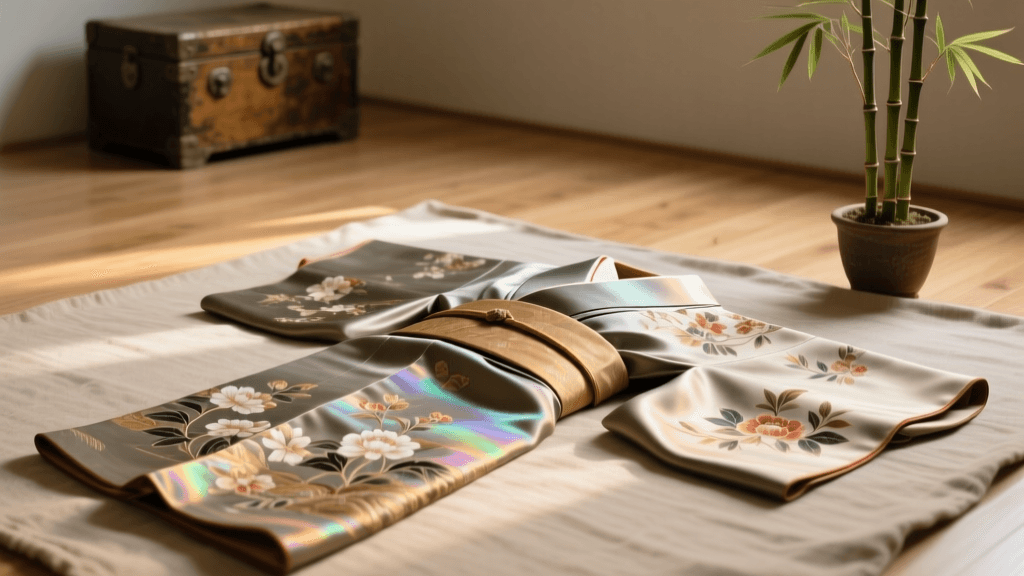
Packing Silk Kimonos For Travel in 2026: Expert Guide
The Renaissance of Personal Kimono Travel in 2026
As global tourism continues to evolve in 2026, a growing number of cultural enthusiasts and fashion historians are choosing to travel with their own traditional garments rather than relying solely on local rental shops. Bringing a personal silk kimono on an international flight or a domestic Shinkansen journey presents a unique set of logistical challenges. Silk is notoriously susceptible to humidity, friction, and deep-set creasing, making standard suitcase packing methods entirely inadequate for preserving the integrity of your go-fuku (formal wear) or komon (casual patterned kimono).
Whether you are attending a summer matsuri in Kyoto, participating in a traditional tea ceremony, or simply enjoying the quiet elegance of a rural ryokan, transporting your kimono requires a strategic approach. This comprehensive guide covers the latest 2026 packing technologies, traditional folding techniques adapted for modern hard-shell luggage, and on-the-go garment care to ensure your silk arrives in pristine condition.
Essential 2026 Packing Gear for Silk Garments
The days of simply wrapping a kimono in a plastic dry-cleaning bag are over. Modern textile preservation relies on breathable, friction-reducing materials. When preparing your luggage for a 2026 trip to Japan or an international cultural exhibition, you must invest in the right packing arsenal.
- Acid-Free Unbuffered Tissue Paper: Silk is a protein fiber that can degrade or yellow when exposed to the acidic compounds found in standard commercial tissue paper. Always use acid-free, unbuffered tissue to stuff the sleeves and cushion the folds.
- Eagle Creek Pack-It Isolate Cubes: The 2026 iterations of these packing cubes feature ultra-lightweight, water-resistant ripstop fabric that prevents moisture transfer from damp hotel environments or spilled toiletries in your luggage.
- Cotton Muslin Storage Bags: Never store silk in sealed plastic for extended periods during transit, as trapped moisture can lead to mildew. A breathable, unbleached cotton muslin bag allows the fabric to acclimate to cabin pressure and humidity changes.
- Handheld Travel Steamer: A compact, dual-voltage steamer is non-negotiable. As of 2026, aviation security guidelines permit empty, lithium-ion battery-powered steamers in carry-on luggage, provided the water reservoir is completely dry during security screening.
Mastering the Hon-Datami (Traditional Fold) for Suitcases
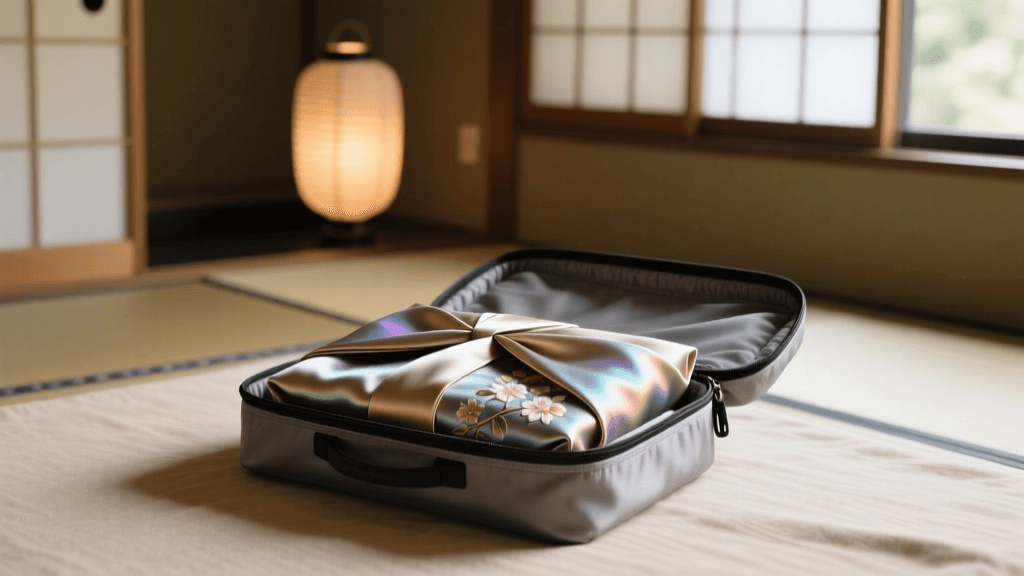
The Hon-Datami is the standard, traditional method for folding a kimono. It is designed specifically to align the seams and minimize stress on the silk threads. When adapted for a standard 24-inch or 28-inch hard-shell suitcase, this folding method prevents the sharp, off-grain creases that ruin the drape of the garment.
Step-by-Step Hon-Datami for Transit
- Lay Flat and Align: Spread the kimono face down on a clean, dry surface. Smooth out the back panel, ensuring the central seam is perfectly straight.
- Fold the Sleeves: Fold the left sleeve back onto the body of the kimono, aligning the edge with the center seam. Repeat with the right sleeve, stacking it neatly over the left.
- Fold the Sides: Fold the left side of the body inward toward the center seam. Then, fold the right side over the left, creating a long, narrow rectangle.
- Cushion the Folds: Before making the horizontal folds, roll up small logs of acid-free tissue paper and place them inside the fold lines. This prevents the silk from creasing sharply against itself.
- Final Horizontal Folds: Fold the bottom hem up to the collar, and then fold the collar down to meet the hem. The resulting packet should fit perfectly inside a large packing cube or muslin bag.
Transit Strategies: Shinkansen, Flights, and Luggage Forwarding
One of the greatest risks to a traveling kimono is the physical crushing that occurs in overhead bins or crowded train racks. For domestic travel within Japan in 2026, the most highly recommended strategy for preserving formal silk garments is utilizing a luggage forwarding service.
Yamato Transport's Ta-Q-Bin service remains the gold standard for travelers. By forwarding your heavy suitcase containing your carefully folded kimono directly from your arrival airport to your ryokan, you eliminate the need to drag your garment bag through crowded transit hubs. This allows you to board the Shinkansen or domestic flights with only a small carry-on, ensuring your kimono is not subjected to the crushing weight of other passengers' luggage in the overhead compartments.
If you must travel with your kimono in the cabin, request a closet hangar from the flight attendants immediately upon boarding. Most international long-haul carriers in 2026 are equipped with dedicated garment closets in premium cabins, and many will accommodate polite requests from economy passengers if space permits.
Packing Method Comparison Chart
Choosing the right packing method depends on your itinerary, the type of silk, and your luggage constraints. Below is a comparison of the most common transport methods used by kimono enthusiasts today.
| Method | Best For | Wrinkle Risk | Space Efficiency |
|---|---|---|---|
| Hon-Datami in Cube | Checked luggage, multiple kimonos | Low (if tissue-stuffed) | High |
| Garment Bag (Hanging) | Flights with closet access, short trips | Very Low | Low |
| Rolling (The Ranger Roll) | Synthetic/Washable kimonos, backpacks | High (for silk) | Very High |
| Vacuum Sealing | Never use on silk | Extreme Damage | High |
On-the-Go Wrinkle Release and Ryokan Etiquette
Upon arriving at your destination, immediate action is required to release any transit-induced creases. According to textile conservation guidelines outlined by institutions like the Metropolitan Museum of Art, silk fibers respond best to gentle, indirect moisture and gravity.
The Bathroom Steam Technique
If you do not have access to a garment steamer, the classic bathroom steam method is highly effective. Hang the kimono on a padded hanger (never a wire hanger, which will distort the shoulder seams) in the bathroom while you take a hot shower. Ensure the garment is at least four feet away from the water source to prevent direct splashing, which can leave permanent water spots on certain types of silk crepe, such as chirimen.
Ryokan Storage and Display
When staying at a traditional Japanese inn, respecting the space and the garment is paramount. The Japan National Tourism Organization (JNTO) notes that ryokan rooms are meticulously maintained, and bringing in damp or heavily wrinkled garments can disrupt the harmonious environment of the tatami room.
- Use the Provided Hangers: Most high-end ryokans provide wide, wooden kimono hangers (emono-kake) specifically designed to support the wide sleeves without stretching the fabric.
- Avoid Direct Sunlight: Never hang a silk kimono in direct sunlight, even for a few hours. UV radiation causes rapid fading and weakens the protein structure of the silk.
- Obi and Obijime Care: Do not fold your obi (sash). It should be rolled loosely from one end to the other and stored in its own breathable pouch to maintain its stiff, structured shape.
Final Thoughts for the 2026 Traveler
Traveling with a kimono in 2026 is a rewarding endeavor that bridges the gap between historical preservation and modern global mobility. By investing in acid-free packing materials, mastering the Hon-Datami fold, and leveraging Japan's world-class luggage forwarding infrastructure, you can protect your investment and ensure that your traditional garments look as immaculate on arrival as they did in your closet at home. Whether you are walking the historic streets of Higashiyama or attending a formal gathering overseas, proper transport ensures your kimono remains a flawless expression of Asian cultural heritage.