Swedish Folk Dräkt Livstycke Pattern Drafting Guide 2026
The Resurgence of the Swedish Livstycke in 2026
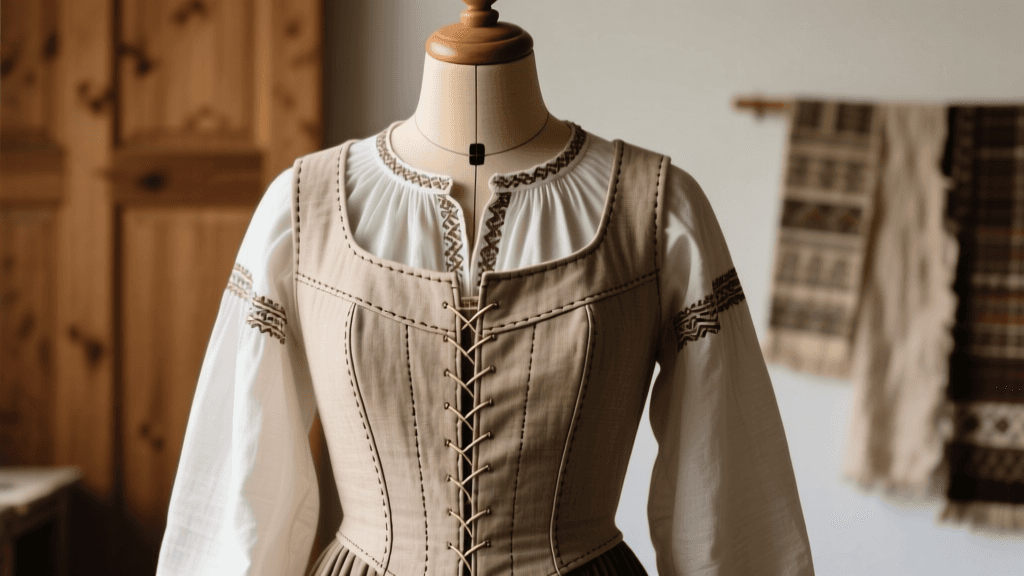
The traditional Swedish folkdräkt (folk dress) is a masterclass in regional identity, but from a construction standpoint, its most fascinating garment is the livstycke (bodice). In 2026, as the global sewing community heavily embraces zero-waste pattern cutting and historical sustainability, the geometric drafting techniques of 18th and 19th-century Swedish rural tailors are experiencing a massive revival. Unlike modern pattern drafting, which relies on curved slopers and generates significant fabric waste, the traditional livstycke is engineered using straight lines, rectangular gussets, and proportional geometry. This guide provides a comprehensive, actionable breakdown of how to draft, bone, and construct an authentic Swedish livstycke using historical methods adapted for the modern maker in 2026.
The Philosophy of Zero-Waste Historical Drafting
Before the advent of standardized commercial patterns, rural Swedish tailors utilized a proportional drafting system that maximized every inch of hand-woven linen and wool. Fabric was incredibly labor-intensive to produce, making zero-waste cutting an economic necessity rather than an environmental statement. The livstycke is drafted directly onto the fabric using a grid system based on the wearer's specific measurements. By relying on straight seams and inserting triangular or rectangular gussets (kilas) for shaping and mobility, the historical tailor avoided the curved armholes and princess seams that create off-cuts in modern bodice drafting. According to archives maintained by the DigitaltMuseum, surviving 19th-century bodices from regions like Dalarna and Halland consistently demonstrate this ingenious, waste-free geometric approach.
Essential Tools and Materials for 2026
To accurately reproduce a livstycke, you must bridge the gap between historical authenticity and modern accessibility. Here is what you need for your 2026 workbench:
- Fabric: Authentic Swedish half-bleached linen (halvblekt linne) for the lining and base, and a tightly woven tabby wool for the outer shell. As of early 2026, high-quality European heritage linen costs approximately €32 to €40 per meter.
- Drafting Tools: A traditional wooden tailor's square, a flexible metal measuring tape, and a soapstone or chalk wheel for marking dark wools.
- Awl and Stiletto: Essential for piercing eyelet holes without cutting the fabric threads. Prym's 2026 ergonomic brass-handled awl is highly recommended for reducing hand fatigue during heavy wool piercing.
- Boning: Historical reeds or modern synthetic alternatives (detailed in the comparison table below).
- Thread: 100% linen thread (waxed) for structural seams and silk buttonhole twist for binding and eyelets.
Taking Historical Measurements
Modern slopers require dozens of micro-measurements. The historical livstycke requires only a few foundational proportions, as the garment is designed to mold to the body through tight lacing and strategic boning rather than complex curved seams.
The Core Measurements
- Overbust Circumference: Measured across the fullest part of the bust, but taken slightly snug to mimic the compression of the final garment.
- Underbust Circumference: Crucial for determining the bottom width of the front panels.
- Waist Circumference: Measured at the natural indentation, usually just above the navel.
- Torso Length: From the top of the shoulder (near the neck base) down to the natural waistline.
- Back Width: Measured across the shoulder blades from arm crease to arm crease.
Drafting the Front and Back Panels
The drafting process begins with a large rectangle. Unlike modern patterns where the front and back are drafted separately with curved side seams, the historical method often drafts the side panels as continuous extensions or uses simple geometric additions.
Step 1: The Back Panel Rectangle
Draw a rectangle where the width is exactly half of your Back Width measurement plus 4 cm for seam allowances and lacing overlap. The height is your Torso Length plus 3 cm for a bottom hem and top binding. The center back line is drawn straight down the middle. The armhole is not curved; instead, it is created by cutting a straight diagonal line from the top outer corner down to the side seam, effectively creating a trapezoid. The missing 'curve' of the armhole is later compensated for by the sleeve head of the accompanying tröja (jacket) or the chemise underneath.
Step 2: The Front Panels and Gussets
The front panels are drafted as two separate rectangles, each measuring one-quarter of the Overbust measurement plus 2 cm for the front lacing gap. To achieve the necessary shaping over the bust and hips without curved princess seams, we insert gussets. A triangular gusset is inserted into a slit cut at the side seam, starting just below the underbust line and extending down to the hem. This forces the flat fabric to flare outward, accommodating the hips while keeping the waist tightly cinched. Research from the Textile Research Centre highlights that the placement and angle of these side gussets varied slightly by Swedish province, with some regions favoring multiple small gussets over one large one to distribute tension more evenly across the heavy wool.
Structural Techniques: Boning and Interfacing
The livstycke must act as a supportive foundation garment. In the 18th and 19th centuries, tailors used bundled reeds, whalebone, or stiff leather cords. In 2026, we have access to materials that mimic these historical properties while offering modern durability and ethical sourcing. The boning channels are created by sewing parallel lines of stitching through the linen lining and a layer of sturdy cotton drill or heavy linen interfacing, leaving the outer wool shell free to prevent visible stitching lines on the garment's face.
| Boning Material | Historical Accuracy | 2026 Availability & Cost | Best Use Case |
|---|---|---|---|
| Natural Rattan/Reed | High (18th/19th Century) | €12 per bundle (Specialty order) | Museum replicas, strict historical reenactment |
| Synthetic Whalebone (Rigilene) | Low (Modern substitute) | €3.50 per meter (Widely available) | Beginners, lightweight support, theatrical costumes |
| German Plastic Boning | Medium (Mimics reed flex) | €8 per meter (Readily available) | Daily wear folk dancers, durable support, washable |
| Flat Steel Boning | Low (Victorian/Corsetry) | €15 per meter (Corsetry suppliers) | Heavy-duty support, extreme waist reduction |
Recommendation for 2026: For most modern folk dress enthusiasts, German plastic boning offers the best compromise. It flexes similarly to historical reed, is entirely washable, and will not rust or snap during active folk dancing.
Assembly and Hand-Finishing Techniques
While machine sewing is acceptable for internal structural seams in modern interpretations, the visible construction of a high-quality livstycke should be done by hand to maintain historical integrity and allow for future alterations. Folk dress garments were designed to be passed down and resized across generations.
Key Historical Stitches
- Backstitch: Used for all primary structural seams. When sewn tightly with waxed linen thread, a hand-sewn backstitch is stronger and more flexible than a modern machine lockstitch.
- Fell Stitch: Used to secure the seam allowances flat against the lining. This prevents fraying and creates a clean interior without the need for modern overlocking or serging.
- Blanket Stitch / Buttonhole Stitch: Essential for finishing the hand-pierced eyelets. Unlike modern metal grommets which cut the fabric and eventually tear out, hand-stitched eyelets push the fabric threads aside, creating a virtually indestructible lacing hole.
Common Fitting Adjustments
Because the drafting system relies on straight lines, the fitting process is where the magic happens. When you sew your first toile (mock-up) in heavy canvas or scrap linen, you will likely find that the armhole gap is too wide or the bust lacks shaping. Do not curve the seams. Instead, adjust the lacing tension and the gusset width. If the bodice buckles at the waist, your side gusset is too wide; unpick the seam and trim the gusset triangle by 1 to 2 cm. If the fabric pulls aggressively across the ribs, widen the gusset. The front lacing gap should be perfectly parallel (about 4 to 5 cm wide) when the bodice is fully tightened. If the gap forms a 'V' or an 'A' shape, you must adjust the angle of the center front edge by shaving or adding millimeters to the straight front seam allowance.
Sourcing Authentic Materials in 2026
Sourcing the correct textiles is paramount for a livstycke that drapes and behaves historically. Avoid modern apparel wools, which are often blended with polyester or treated with synthetic softeners that cause the fabric to stretch and sag under the tension of lacing. Seek out 100% worsted wool or traditional Swedish vadmal (a dense, fulled woolen cloth). Several heritage weavers in Dalarna and Hälsingland continue to produce vadmal on traditional shuttle looms, shipping globally. Expect to pay between €45 and €60 per meter for authentic, locally milled Swedish wool in 2026. Pair this with a sturdy, unbleached linen lining, and your livstycke will not only look authentic but will last for decades, honoring the zero-waste, generational mindset of the original Swedish tailors.