Mastering Suzhou Silk Embroidery for Traditional Hanfu and Qipao
The Pinnacle of Thread: Introduction to Suzhou Embroidery
Suzhou embroidery, known as Su Xiu (苏绣), represents the zenith of Chinese textile arts. Originating in the Jiangsu province over 2,000 years ago, this meticulous craft is celebrated for its delicate patterns, elegant colors, and extraordinary needlework. As one of the Four Major Embroidery Styles of China, Su Xiu is deeply intertwined with the history of traditional Chinese clothing. Today, as the Hanfu revival movement gains global momentum and the Qipao remains a staple of elegant Asian fashion, understanding the practical application of Suzhou silk embroidery is essential for designers, collectors, and cultural enthusiasts alike.
According to the UNESCO Intangible Cultural Heritage archives, the broader context of Chinese sericulture and silk craftsmanship provides the foundational materials that make Su Xiu possible. The unique sheen and tensile strength of mulberry silk allow artisans to achieve photorealistic details and gradient color blending that machine embroidery simply cannot replicate.
Materials and Tools: Sourcing for Authenticity
To integrate authentic Su Xiu into traditional garments, one must begin with premium materials. The interaction between the needle, the thread, and the base fabric dictates the final drape and luster of the garment.
Selecting the Base Fabric
For Hanfu, particularly Ming Dynasty-style jackets (Ao) and horse-face skirts (Mamianqun), heavy silk brocades or 30-momme silk crepes are preferred to support the weight of dense embroidery. For the Qipao (Cheongsam), 19-momme to 22-momme silk charmeuse or crepe de chine provides the necessary fluid drape while remaining resilient enough to withstand the tension of the embroidery frame.
Silk Floss and Needles
Authentic Su Xiu utilizes untwisted mulberry silk floss. A standard skein of high-grade Suzhou silk floss costs between $15 and $35 USD, depending on the dyeing process (naturally dyed botanical threads command a premium). Artisans use extremely fine, sharp needles. Size 9 or 10 sharp needles (such as those from John James or Clover) are ideal for piercing tightly woven silk charmeuse without snagging or leaving visible holes.
The Embroidery Frame
Unlike Western embroidery which often relies on handheld hoops, Su Xiu requires a traditional wooden scroll frame or a trestle stand. The fabric must be stretched drum-tight to ensure the satin stitches lie perfectly flat. A professional-grade wooden trestle frame costs approximately $150 to $300 USD and is a necessary investment for garment-scale projects.
Core Techniques: The Art of the Split Thread
The defining characteristic of Suzhou embroidery is the artisan's ability to split a single strand of silk floss into multiple, microscopically thin filaments. A standard 2-ply silk thread can be split into 1/16th, 1/32nd, or even 1/48th of its original thickness. This technique, known as Pisi, allows for seamless color gradients, particularly when embroidering koi fish scales, lotus petals, or the delicate feathers of a crane.
'The needle is the brush, and the silk thread is the ink. To capture the soul of the subject, the thread must become as fine as a spider's silk, vanishing into the fabric itself.' — Traditional Suzhou Artisan Proverb
The most common stitch used in garment embroidery is the Satin Stitch (Pingzhen). In Su Xiu, the edges of the satin stitch are not merely stitched over; they are interlocked and hidden beneath subsequent layers, creating a smooth, scale-like surface that catches the light uniformly. Another vital technique is the Seed Stitch (Dazi), used for shading and creating textured backgrounds, such as the rough bark of a plum blossom tree on a Qipao bodice.
Integrating Su Xiu into Hanfu and Qipao Design
Applying Su Xiu to garments requires an understanding of historical placement and modern wearability. Embroidery should enhance the silhouette, not overwhelm it.
Hanfu Embroidery Placement
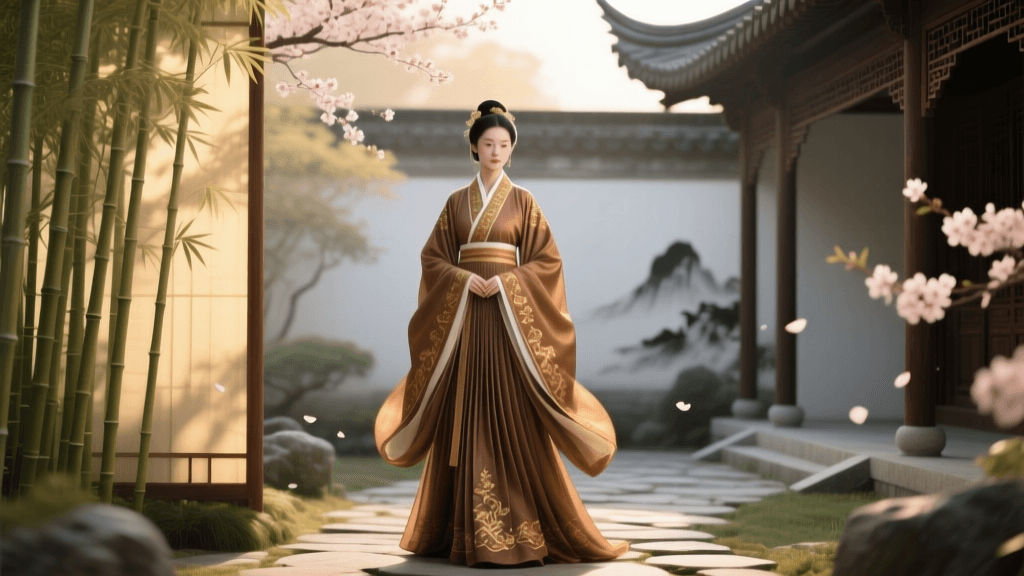
In traditional Hanfu, embroidery is strategically placed on structural edges. For a Ming Dynasty Yuling (standing collar) jacket, a narrow band of floral or geometric Su Xiu (typically 2 to 4 centimeters wide) is applied to the collar, the front lapel, and the cuffs. The Mamianqun (horse-face skirt) features wide, heavily embroidered panels at the front and back, often depicting auspicious motifs like peonies, phoenixes, or ocean waves. When designing a custom Hanfu, allocate 40 to 60 hours of labor for a fully embroidered collar and cuff set.
Qipao Embroidery Placement
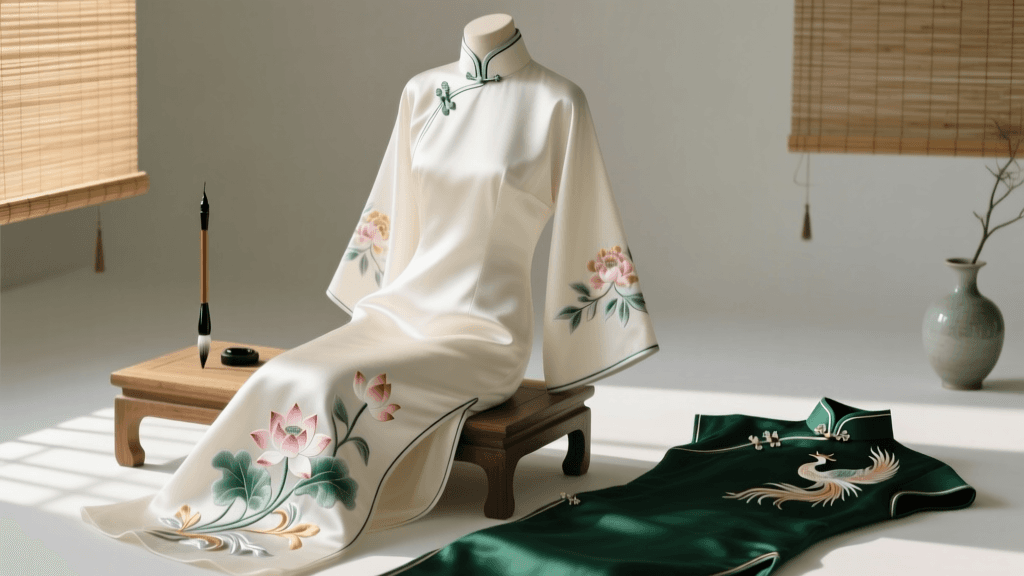
The 1920s and 1930s Shanghai-style Qipao favors asymmetrical, organic motifs. A classic design features a single, sprawling plum blossom or orchid branch originating from the lower hem and creeping up toward the hip or shoulder. Because the Qipao is form-fitting, the embroidery must be placed on the bias or designed with the garment's stretch and drape in mind. Heavy embroidery on the bust or stomach can cause the silk charmeuse to pull and pucker; therefore, master tailors restrict dense Su Xiu to the lower hem, the side slits, and the upper right shoulder.
Data Table: Cost, Time, and Thread Consumption
| Garment Component | Design Motif | Estimated Time | Silk Floss Required | Artisan Cost (USD) |
|---|---|---|---|---|
| Hanfu Collar & Cuffs | Geometric / Cloud | 40 - 60 Hours | 15 - 20 Skeins | $800 - $1,200 |
| Mamianqun Panels | Phoenix / Peony | 150 - 250 Hours | 60 - 90 Skeins | $3,000 - $5,500 |
| Qipao Hemline & Slit | Plum Blossom | 80 - 120 Hours | 30 - 45 Skeins | $1,600 - $2,800 |
| Full Qipao Bodice | Crane / Lotus | 300 - 500 Hours | 100+ Skeins | $6,000 - $12,000 |
Practical Guide: How to Authenticate Handmade Su Embroidery
As the demand for traditional Asian garments rises, the market has been flooded with machine-made imitations. The Victoria and Albert Museum's comprehensive guide on Chinese embroidery highlights the historical significance of hand-stitched textiles, making authentication a crucial skill for collectors and buyers.
- Examine the Reverse Side: Machine embroidery often leaves a chaotic web of bobbin threads and jump-stitches on the back. Authentic Su Xiu, especially double-sided embroidery (Shuangmian Xiu), will look nearly identical on both sides, with all thread ends meticulously woven back into the stitches and hidden from view.
- Check the Thread Sheen: Synthetic rayon threads used in mass production have a harsh, plastic-like glare. Genuine mulberry silk floss possesses a soft, pearlescent luster that changes dynamically depending on the angle of the light.
- Look for Gradient Blending: Machines struggle to replicate the microscopic color transitions achieved by splitting silk threads. If a lotus petal transitions from deep crimson to pale pink in seamless, imperceptible steps, it is likely the work of a human hand.
- Assess the Fabric Tension: Hand-embroidered garments stretched on traditional frames maintain perfect fabric tension. Machine embroidery often causes the delicate silk base to pucker around the dense stitch areas.
Care and Maintenance of Embroidered Garments
Preserving the integrity of Su Xiu requires meticulous care. Never machine wash or aggressively hand-wash an embroidered Hanfu or Qipao. The agitation will cause the untwisted silk floss to fray and lose its luster. For minor stains, use a pH-neutral silk detergent (such as Eucalan) and gently dab the area with a microfiber cloth. For comprehensive cleaning, seek a dry cleaner who specializes in historical textiles and haute couture. When storing the garments, avoid wire hangers; instead, pad the shoulders with acid-free tissue paper and store the garment in a breathable cotton canvas bag away from direct sunlight, which will rapidly degrade both the natural dyes and the silk proteins.
Conclusion
Suzhou silk embroidery is far more than a decorative afterthought; it is the very soul of traditional Chinese garment making. Whether adorning the sweeping pleats of a Ming Dynasty Mamianqun or tracing the elegant curves of a vintage Shanghai Qipao, Su Xiu transforms silk into a canvas of cultural heritage. By understanding the materials, respecting the time-intensive techniques, and learning to authenticate true craftsmanship, modern enthusiasts can ensure that this breathtaking textile art continues to thrive in the contemporary wardrobe. For further reading on the historical evolution of these silk routes and weaving techniques, the Metropolitan Museum of Art's Heilbrunn Timeline of Art History offers an exceptional academic resource on the global impact of Chinese silk craftsmanship.