Suzhou Silk Embroidery: Preserving Hanfu's Intangible Heritage
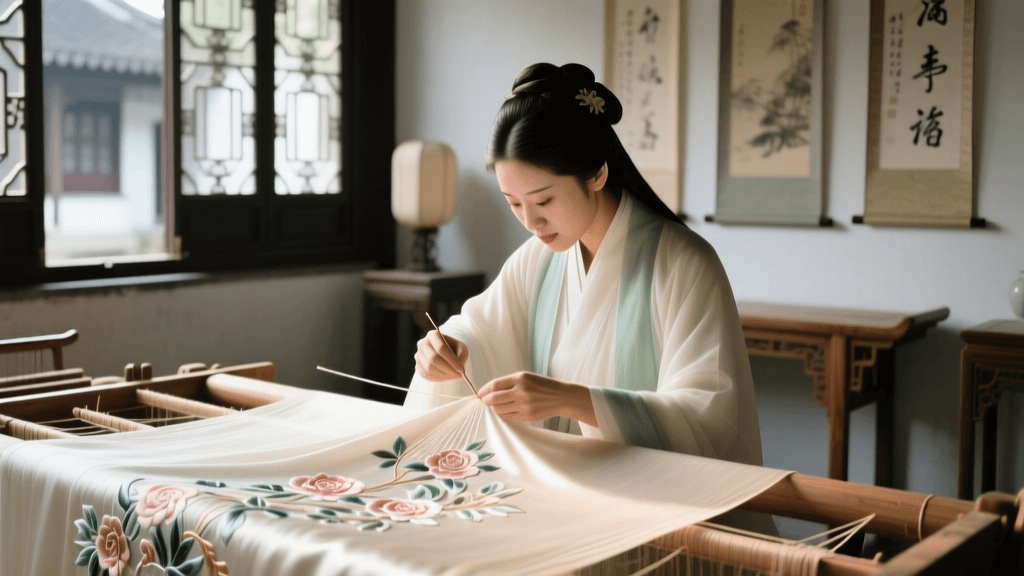
The Living Thread: Understanding Su Xiu (Suzhou Embroidery)
When we discuss the revival of Hanfu, the conversation often centers on silhouettes, dynasty-specific cuts, and historical accuracy. However, the true soul of traditional Chinese garments lies in the intricate textile arts that adorn them. Among these, Su Xiu (Suzhou silk embroidery) stands as the undisputed pinnacle of needlework. Originating in the Yangtze River Delta over 2,000 years ago, Su Xiu is celebrated for its delicate patterns, elegant colors, and the astonishing "double-sided" technique where the embroidery looks identical on both sides of the fabric.
The cultural significance of this craft is globally recognized. The traditional practices surrounding silk production and embroidery are so vital to Chinese history that they have been inscribed on the UNESCO Representative List of the Intangible Cultural Heritage of Humanity. This designation highlights not just the final embroidered garment, but the entire ecosystem of sericulture, silk reeling, and the masterful hand-stitching techniques passed down through generations.
The Artisans Behind the Intangible Heritage
Creating authentic Su Xiu Hanfu is not a manufacturing process; it is an act of profound devotion. Master artisans, often trained since childhood, possess an intimate understanding of silk tension, light refraction, and color blending. The hallmark of Suzhou embroidery is the "split silk" technique (pi xian). A single strand of silk thread, already finer than a human hair, is split into halves, quarters, eighths, and sometimes up to 1/64th of its original thickness. This allows artisans to create imperceptible color gradients, making embroidered koi fish appear to swim and peonies look as though they are blooming in real-time.
"Embroidery is not merely the decoration of cloth; it is the weaving of time, patience, and the soul of the artisan into the very fabric of our ancestors. To wear hand-embroidered Hanfu is to wear a piece of living history." — Master Artisan Proverb, Zhenhu Embroidery Town.
Today, the highest echelon of these creators are designated as National-Level Inheritors of Intangible Cultural Heritage. Commissioning a piece from these masters is akin to commissioning fine art, requiring deep respect for their time and creative process.
Comparison: The Four Famous Chinese Embroideries
While Su Xiu is the most famous, China boasts four major regional embroidery styles, each offering unique aesthetics for different types of Hanfu. Understanding these differences is crucial for collectors and enthusiasts.
| Embroidery Style | Region of Origin | Defining Characteristics | Best Hanfu Applications |
|---|---|---|---|
| Su Xiu (苏绣) | Suzhou, Jiangsu | Delicate, elegant, refined color gradients, double-sided stitching, split silk threads. | Ming dynasty Aoqun, delicate collars, cuffs, and high-end Mamianqun skirts. |
| Xiang Xiu (湘绣) | Hunan Province | Bold, rich colors, strong contrast, realistic shading, often features lions and tigers. | Tang dynasty round-collar robes, dramatic outerwear, theatrical or ceremonial pieces. |
| Yue Xiu (粤绣) | Guangdong Province | Extensive use of gold and silver threads, dense compositions, vibrant and luxurious. | Formal wedding Hanfu, Fengguan Xiapei (phoenix crown and cape), festive jackets. |
| Shu Xiu (蜀绣) | Sichuan Province | Soft satin bases, neat and smooth stitches, prominent floral, bird, and fish motifs. | Song dynasty Beizi (long coats), everyday elegant Hanfu, lightweight spring garments. |
Practical Guide: Commissioning and Buying Authentic Su Xiu Hanfu
For those looking to invest in authentic, hand-embroidered Hanfu, navigating the market requires specific knowledge. The transition from traditional markets to modern e-commerce has made these garments accessible, but it has also flooded the market with machine-made imitations. Here is how to approach commissioning a genuine piece.
Costs, Timelines, and Measurements
Authentic hand-embroidery is a luxury investment. The cost is dictated by the density of the stitches, the complexity of the motif, and the rank of the artisan.
- Entry-Level Hand-Embroidery ($300 - $800): Features small, localized motifs (e.g., a single orchid on a collar or bamboo on a cuff). Timeline: 1 to 3 months.
- Mid-Tier Artisan Work ($1,500 - $5,000): Includes elaborate skirt doors (Qunmen) on a Mamianqun or extensive chest and back panels on a Daopao. Timeline: 4 to 9 months.
- Masterpiece / National Inheritor Level ($10,000 - $50,000+): Full-coverage, double-sided embroidery on premium heavy silk. Timeline: 1 to 3 years.
Crucial Measurements for Commissioning: When ordering a custom embroidered Hanfu, providing standard S/M/L sizes is insufficient. You must provide precise metrics to ensure the embroidery aligns correctly with your body's drape. Required measurements include: Hollow-to-Hem (to ensure the embroidered hem doesn't drag or sit too high), Shoulder Slope (vital for the drape of traditional drop-shoulder seams), Arm Length (measured from the base of the neck to the wrist, to properly place cuff embroidery), and Chest/Waist/Hip circumferences. Always specify the desired pleat width (e.g., 3cm to 5cm) if commissioning a pleated skirt, as the embroidery must be calculated to avoid hiding the motif inside the folds.
How to Identify Authentic Hand-Embroidered Hanfu
As highlighted by historical textile analyses, such as those documented by the Metropolitan Museum of Art's Heilbrunn Timeline of Art History, the brilliance of Chinese silk lies in its natural protein structure and the way it interacts with light and dye. Modern computerized embroidery machines can mimic traditional patterns, but they cannot replicate the soul and physical properties of hand-stitched Su Xiu. Use these actionable checks to verify authenticity:
1. The "Backside" Test
Turn the garment inside out. Machine embroidery relies on a continuous bobbin thread, resulting in a messy, uniform web of backing threads, often stabilized with paper or synthetic mesh. Authentic hand embroidery (especially single-sided) will show the underside of the stitches. While neat, you will see the natural path of the needle, slight variations in thread tension, and the distinct start and stop knots of the artisan's hand.
2. Thread Sheen and Texture
Run your fingers over the embroidered motif. Hand-embroidered Su Xiu uses 100% mulberry silk thread, which feels exceptionally smooth, cool to the touch, and possesses a subtle, pearlescent luster. Machine embroidery often uses rayon or polyester threads, which have a harsh, plastic-like shine and feel slightly rough or squeaky when rubbed together.
3. Color Blending and Gradients
Examine a complex motif, such as a petal or a bird's wing. A machine achieves gradients by densely packing different colored threads side-by-side (pixelation). A Su Xiu master achieves gradients by splitting the silk thread and twisting two different colors together, or by layering semi-transparent silk threads over one another. The result is a seamless, painterly transition that looks organic rather than digital.
4. Base Fabric Weight and Puckering
Heavy embroidery requires a substantial base fabric. Authentic artisans will use a minimum of 19 to 30 momme weight mulberry silk or silk brocade to support the tension of the stitches. If you see intricate, dense embroidery on a very thin, flimsy fabric that is puckering or warping around the motif, it is almost certainly machine-embroidered, as the machine's high speed and tension will distort lightweight fabrics that haven't been properly hand-hooped.
Supporting the Artisans and Preserving the Craft
The survival of Su Xiu as an intangible cultural heritage relies on conscious consumerism. The rapid expansion of fast-fashion Hanfu brands has marginalized traditional workshops. To truly support the craft, enthusiasts should seek out direct commissions from established workshops in Zhenhu Town (the historical hub of Suzhou embroidery) or verified ateliers that transparently credit their specific artisans.
When you invest in authentic, hand-embroidered Hanfu, you are not merely buying a garment. You are funding the apprenticeship of the next generation of master embroiderers, ensuring that the split-silk techniques and the poetic motifs of ancient China continue to breathe, move, and shine in the modern world. By understanding the measurements, costs, and identifying markers of true craftsmanship, you become a vital patron of one of Asia's most exquisite and enduring traditional arts.