Suzhou Silk Embroidery: A Guide to China's Finest Textile Art
The Pinnacle of Asian Textile Arts: Suzhou Embroidery
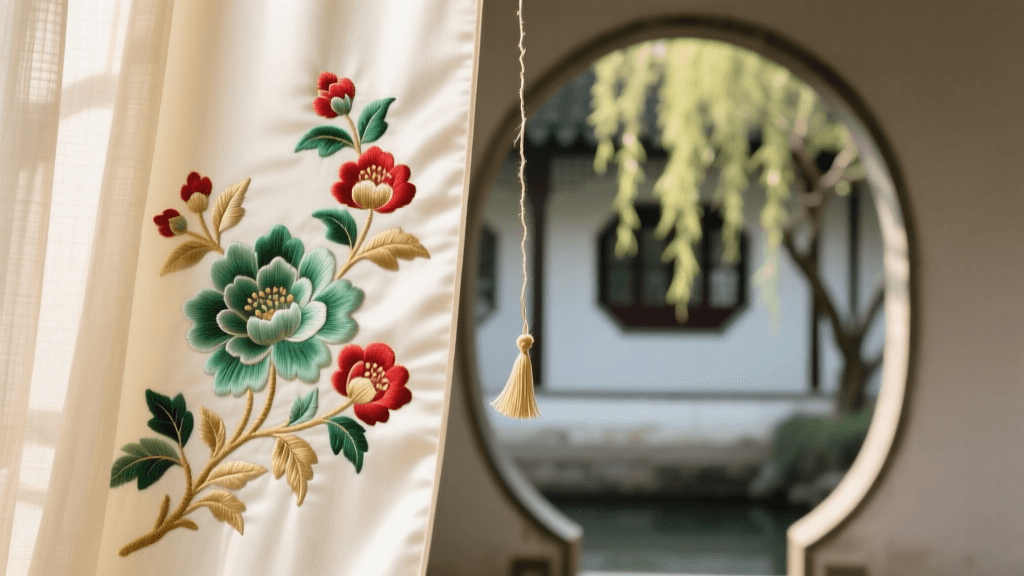
When discussing the zenith of Asian textile arts, few traditions command as much reverence as Suzhou embroidery, or Su Xiu. Originating in the Jiangsu province over 2,000 years ago, this meticulous craft is celebrated for its delicate needlework, vibrant color palettes, and breathtaking realism. Recognized globally for its cultural significance, the broader tradition of Chinese sericulture and silk craftsmanship was inscribed on the UNESCO Representative List of the Intangible Cultural Heritage of Humanity, cementing its status as a vital pillar of global textile history.
Suzhou embroidery is not merely decorative; it is a disciplined art form requiring decades of mastery. Artisans utilize incredibly fine silk threads, sometimes splitting a single strand of silk into 32 or even 64 microscopic filaments, to achieve gradients and textures that mimic traditional ink wash paintings. For collectors, textile artists, and historians, understanding the nuances of Su embroidery is essential for appreciating its true value and ensuring the preservation of authentic pieces.
The Four Great Embroideries of China
To contextualize Suzhou embroidery, one must understand its place within the 'Four Great Embroideries' of China. While Su Xiu is the most internationally renowned, the other three regional styles offer distinct aesthetic and technical characteristics that reflect their local cultures and environments.
| Embroidery Style | Region of Origin | Key Characteristics | Signature Motifs |
|---|---|---|---|
| Su (Suzhou) | Jiangsu Province | Ultra-fine thread splitting, flat and smooth surface, elegant color transitions, double-sided stitching. | Koi fish, cats, peonies, classical landscapes. |
| Xiang (Hunan) | Hunan Province | Bold colors, high contrast, use of black and white ink-wash aesthetics, textured 'lion' stitches. | Tigers, lions, dramatic floral arrangements. |
| Yue (Guangdong) | Guangdong Province | Rich, vibrant colors, heavy use of gold and silver threads, highly textured and raised surfaces. | Dragons, phoenixes, lychees, tropical birds. |
| Shu (Sichuan) | Sichuan Province | Soft, muted colors, tight and even stitching, practical and durable, often used on everyday garments. | Pandas, lotus flowers, bamboo, geometric borders. |
Mastering the Thread: Techniques and Materials
The foundation of any great embroidery is its material. According to The Metropolitan Museum of Art, China's historical monopoly on silk production allowed its artisans to experiment with the fiber in ways unavailable to the rest of the world. In Suzhou embroidery, the preparation of the silk floss is a specialized skill in itself.
Standard embroidery floss is composed of multiple plies twisted together. A Su embroidery master will untwist the main thread and split it into progressively thinner strands. For the outline of a leaf, a 1/4 or 1/8 strand might be used. However, to capture the shimmering scales of a koi fish or the delicate fur of a cat, artisans will use a 1/32 or 1/64 strand. This thread splitting allows for imperceptible color blending, creating a photorealistic or painterly effect.
Actionable Advice for Textile Artists: If you are attempting to replicate Su embroidery techniques, source 100% mulberry silk floss (often labeled as 'flat silk' or 'unspun silk'). Do not use standard cotton or rayon embroidery threads, as they lack the necessary tensile strength to be split below 1/16 of a strand without snapping. Use a size 9 or 10 sharp needle (crewel needle) with a small eye to prevent fraying the microscopic silk filaments.
The Magic of Double-Sided Embroidery (Shuangmianxiu)
The crowning achievement of Suzhou embroidery is Shuangmianxiu, or double-sided embroidery. In this technique, the design is stitched on a translucent silk organza base so that the image appears identical on both the front and the back. There are no visible knots, and the thread ends are meticulously woven into the microscopic fibers of the previous stitches.
An even more advanced variation is Shuangmian Yise Xiu (double-sided embroidery with different colors), where a cat might have yellow eyes on the front and blue eyes on the back, achieved by using two separate needles and threads simultaneously and hiding the transitions within the stitches. This technique is exclusively executed by master artisans and can take over a year to complete a single desktop screen.
A Collector’s Guide to Buying and Authenticating
As the global appreciation for Asian textile arts grows, the market has been flooded with machine-made imitations. Authenticating hand-stitched Suzhou embroidery requires a trained eye and an understanding of the craft's physical limitations.
How to Spot Hand-Stitched vs. Machine-Made Embroidery
- Examine the Reverse Side: Hand-stitched Su embroidery, especially high-quality pieces, will have a remarkably clean back. Machine embroidery often features a chaotic web of bobbin threads, jump stitches, and visible synthetic stabilizers.
- Check Thread Uniformity: Machines apply uniform tension. Human hands naturally create microscopic variations in tension and thread thickness, particularly when the artisan transitions from a 1/8 strand to a 1/32 strand for shading.
- Look for 'Seed Stitches' (Luandixiu): This technique involves thousands of tiny, seemingly random stitches used to create texture (like animal fur or rough tree bark). Machines struggle to replicate the organic, multidirectional flow of true Luandixiu.
- Assess the Color Gradient: Machine embroidery relies on thread changes to create gradients, resulting in a 'banded' look. Hand embroidery blends individual silk filaments of different colors within a single stitch, creating a seamless, painterly transition.
Pricing and Investment Value
Understanding the pricing structure is crucial for collectors. The value of Suzhou embroidery is dictated by the artisan's rank (Apprentice, Provincial Master, National Master), the complexity of the stitch, and the time invested.
- Machine-Made / Souvenir Grade ($30 - $150): Mass-produced, often using synthetic blends. Suitable for casual decor but holds no investment value.
- Apprentice / Studio Hand-Stitched ($300 - $1,500): Genuine hand-stitched pieces by junior artisans. Excellent for entry-level collectors. Expect standard motifs like koi fish or simple florals, taking 1 to 3 months to complete.
- Provincial Master ($3,000 - $15,000): Highly refined techniques, complex compositions, and superior silk quality. These pieces often feature advanced shading and take 6 to 12 months to finish.
- National Master / Museum Grade ($25,000 - $100,000+): Created by recognized Intangible Cultural Heritage inheritors. These include complex double-sided embroidery and original artistic compositions. They are considered fine art and appreciate in value over time.
Caring for Antique and Modern Silk Textiles
Silk is a protein fiber, making it highly susceptible to environmental damage, light degradation, and pest infestation. The Silk Road Seattle project at the University of Washington emphasizes the historical fragility of silk textiles along trade routes, a vulnerability that persists in modern collections.
Preservation Protocols for Collectors:
- Light Exposure: Ultraviolet (UV) light will rapidly degrade silk proteins and fade natural dyes. Always frame Su embroidery behind museum-grade UV-filtering acrylic or glass. Display pieces in rooms with minimal direct sunlight, keeping ambient lux levels below 50.
- Climate Control: Silk requires a stable environment. Maintain a relative humidity (RH) between 45% and 55%. Fluctuations in humidity cause the silk fibers and the backing fabric to expand and contract at different rates, leading to puckering and thread snapping.
- Archival Framing: Never allow the embroidery to touch the glass directly, as condensation can lead to mold. Use acid-free, lignin-free matting and spacers. The piece should be mounted using reversible, conservation-grade techniques (such as stitching to an acid-free backing board) rather than adhesives.
- Pest Management: Clothes moths and carpet beetles are attracted to silk. Avoid chemical mothballs, which can stain and degrade the fibers. Instead, use sealed display cases and periodically inspect the storage area for signs of insect activity.
Conclusion
Suzhou silk embroidery is a testament to the patience, precision, and artistic vision of Chinese textile artisans. Whether you are a textile artist seeking to understand the mechanics of thread splitting, or a collector looking to acquire a museum-grade masterpiece, approaching Su Xiu with a deep respect for its technical demands and historical context is paramount. By learning to authenticate hand-stitched work and adhering to strict preservation standards, collectors can ensure that these luminous threads continue to tell the story of Asia's rich sartorial heritage for generations to come.