Suzhou, Shu, and Cantonese Embroidery: A Hanfu Guide
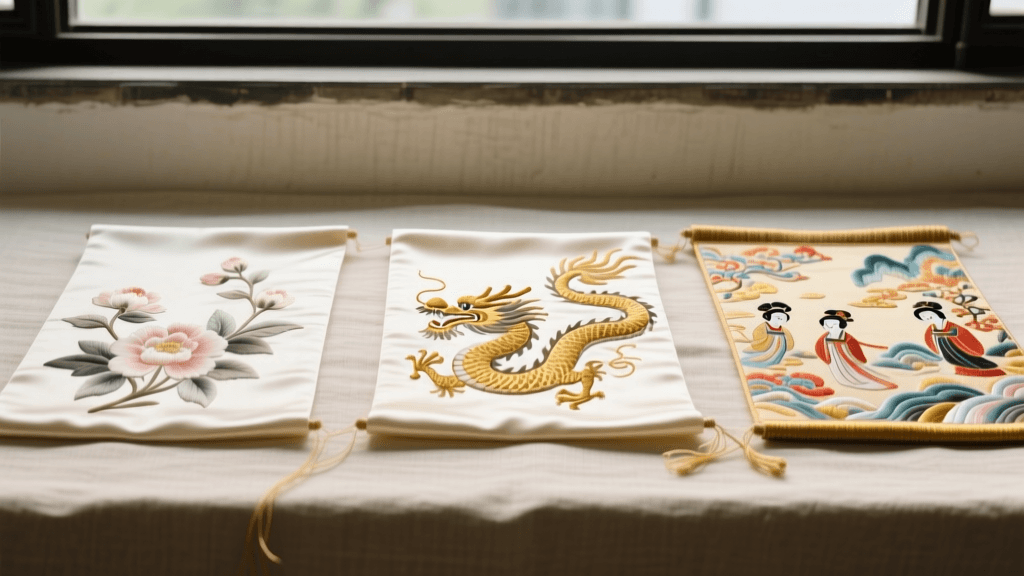
The Art of Chinese Silk Embroidery: Su, Shu, and Yue
For centuries, Chinese silk embroidery has been the defining embellishment of traditional garments, elevating Hanfu from simple woven textiles to masterpieces of wearable art. Among the diverse regional styles, the 'Four Famous Embroideries' of China hold the highest prestige. For modern Hanfu makers, collectors, and cultural enthusiasts, understanding the nuances of Suzhou (Su Xiu), Sichuan (Shu Xiu), and Cantonese (Yue Xiu) embroidery is essential. Each style boasts unique stitching techniques, regional dyeing methods, and distinct aesthetic philosophies that reflect the geography and culture of its origin.
According to The Metropolitan Museum of Art, Chinese embroidery is not merely decorative; it is a complex visual language conveying social status, regional identity, and philosophical ideals. Furthermore, the foundational skills of silk production and embroidery are globally recognized, with UNESCO inscribing the sericulture and silk craftsmanship of China on the Representative List of the Intangible Cultural Heritage of Humanity. This guide delves into the practical, technical, and historical aspects of Su, Shu, and Yue embroidery, offering actionable advice for sourcing, identifying, and caring for these exquisite textiles.
Suzhou Embroidery (Su Xiu): The Pinnacle of Delicacy
Originating from the water towns of Jiangsu province, Suzhou embroidery is celebrated for its breathtaking delicacy, photorealistic shading, and meticulous craftsmanship. Su Xiu relies on the finest mulberry silk, which master artisans can split into astonishingly thin strands—sometimes up to 1/64th of a single silk thread—to achieve seamless color gradients.
Key Techniques and Stitching
- Ping Xiu (Flat Stitch): The foundational stitch where threads are laid flat and parallel, creating a smooth, unbroken surface that catches the light uniformly.
- Luan Xiu (Messy/Random Stitch): Used primarily for shading and creating texture in fur, feathers, or foliage. The stitches cross at varying angles to mimic natural growth patterns.
- Shuang Mian Xiu (Double-Sided Embroidery): A highly advanced technique where the embroidery is identical on both sides of the silk organza base, with all knots and thread ends hidden within the stitches. This is frequently used for translucent Hanfu summer shawls and fans.
Dyeing and Color Palette
Suzhou embroidery traditionally utilizes soft, watercolor-like palettes. The silk threads are dyed using gentle botanical dyes, resulting in hundreds of subtle gradient shades. A single flower petal might require thread dyed in up to ten slightly varying hues of pink to create a three-dimensional, lifelike effect. For modern Hanfu makers sourcing Su Xiu panels, look for 'water-ink' (shui mo) colorways that mimic traditional landscape paintings.
Actionable Advice for Collectors
Authentic hand-embroidered Su Xiu is a premium investment. A genuine hand-stitched 30cm x 30cm panel typically starts at $400 USD and can exceed $2,000 USD for master-level double-sided pieces. When inspecting a piece, use a magnifying glass: authentic Su Xiu will show microscopic, perfectly uniform stitches with no visible starting or ending knots on the reverse side.
Shu Embroidery (Chuan Xiu): The Vibrant Soul of Sichuan
Shu embroidery hails from the Sichuan basin, a region historically known for its rich agricultural output and vibrant local culture. Shu Xiu is characterized by its bold, saturated colors, dense stitching, and a distinct three-dimensional texture that sets it apart from the flat elegance of Suzhou embroidery.
Key Techniques and Stitching
- Halo Stitch (Yun Zhen): A signature Shu technique where threads of varying lengths and shades are layered to create a 'halo' or glowing effect around the edges of motifs, particularly effective for rendering the fur of pandas or the scales of koi fish.
- Satin Stitch with Raised Padding: Shu artisans often use cotton or thicker silk wadding beneath the surface stitches to create heavily embossed, tactile motifs.
Dyeing and Color Palette
The Sichuan region's unique climate and botanical resources influence Shu dyeing. Artisans historically relied on local safflower for brilliant, colorfast reds, and high-quality indigo for deep blues. The resulting palette is high-contrast and luminous. When commissioning Shu embroidery for a Ming-style Hanfu (which favors bold colors and heavy fabrics), request the traditional 'five-color' (wu cai) palette to maintain historical accuracy.
Sourcing and Cost Guide
Shu embroidery is generally more affordable than Suzhou embroidery due to the use of slightly thicker threads and faster stitching times. A standard Shu-embroidered Hanfu skirt panel (approx. 1 meter of embroidered border) can be sourced from Chengdu-based cooperatives for $150 to $300 USD. Always verify that the base fabric is at least 19 momme mulberry silk to support the weight of the dense Shu stitching without puckering.
Cantonese Embroidery (Yue Xiu): Bold Textures and Gold
Cantonese embroidery encompasses the styles of Guangzhou (Guang Xiu) and Chaozhou (Chao Xiu) in Guangdong province. Yue Xiu is famous for its opulent use of metallic threads, dramatic 3D padding, and highly complex, densely packed compositions. It was historically the primary export embroidery, heavily influencing Western perceptions of Chinese textiles.
Key Techniques and Stitching
- Ding Jin (Gold Couching): Gold and silver threads (traditionally made by wrapping silk around thin strips of metallic foil) are laid on the surface and secured with tiny, nearly invisible silk stitches. This creates brilliant, light-catching surfaces.
- Dian Xiu (Padding Embroidery): A highly sculptural technique where cotton batting or dried sponge is stuffed beneath the embroidery to create dramatic high-relief motifs. This is frequently used for dragon scales and phoenix tails on ceremonial Hanfu and traditional wedding garments (Qun Kwa).
Dyeing and Material Preparation
While Yue Xiu utilizes dyed silk, its defining feature is the preparation of metallic threads. The traditional Cantonese method involves hammering gold leaf into microscopically thin sheets, cutting them into ribbons, and spiraling them around a core of yellow-dyed silk. This creates a flexible yet brilliant gold thread that does not tarnish easily. For modern DIY Hanfu projects, sourcing authentic Cantonese gold-wrapped silk thread (rather than synthetic Lurex) is crucial for achieving the correct drape and historical accuracy.
Comparative Analysis: Su, Shu, and Yue Embroidery
To help Hanfu makers and collectors select the appropriate embroidery style for their projects, refer to the comparison table below:
| Feature | Suzhou (Su Xiu) | Shu (Chuan Xiu) | Cantonese (Yue Xiu) |
|---|---|---|---|
| Origin Region | Jiangsu (Suzhou) | Sichuan (Chengdu) | Guangdong (Guangzhou/Chaozhou) |
| Thread Thickness | Ultra-fine (split up to 1/64) | Medium to Thick | Variable (includes thick metallics) |
| Signature Technique | Double-sided, Flat shading | Halo stitch, Dense satin | Gold couching, 3D padding |
| Color Palette | Soft, pastel, watercolor | Vibrant, high-contrast | Opulent, heavy gold/red |
| Ideal Hanfu Application | Summer Song-style Beizi, Shawls | Ming-style Aoqun borders | Wedding Qun Kwa, Winter cloaks |
| Relative Cost | High ($$$) | Medium ($$) | High ($$$) |
Practical Guide for DIY Hanfu Makers: Working with Embroidered Silk
If you are integrating antique or newly commissioned embroidered panels into your own Hanfu constructions, proper handling is paramount to preserve the integrity of the needlework.
Selecting the Base Fabric
Embroidery adds significant weight and tension to silk. For Su Xiu, a 16 to 19 momme silk satin or crepe de chine provides a smooth canvas that won't snag the ultra-fine threads. For the heavily padded Yue Xiu and dense Shu Xiu, you must use a heavier base fabric, such as 22 to 30 momme silk brocade or heavy crepe, to prevent the fabric from warping or tearing under the weight of the embroidery.
Needle and Hoop Selection
When adding supplementary stitches or repairing vintage pieces, use Japanese or Chinese embroidery needles sized 9 to 12. These needles have exceptionally sharp points and narrow eyes, preventing the splitting of the delicate silk floss. Always use a wooden embroidery hoop lined with cotton twill tape to grip the silk securely without crushing the weave or leaving permanent hoop marks.
Caring for and Preserving Embroidered Textiles
Proper maintenance ensures that these intricate garments survive for generations. The care regimen varies significantly depending on the embroidery style and the dyes used.
- Washing: Never machine wash embroidered Hanfu. For Su and Shu embroidery, gentle hand-washing in cold water (below 20°C) using a pH-neutral silk detergent (like Eucalan or a specialized Chinese silk wash) is acceptable. Gently press the water out; never wring. Yue Xiu, especially pieces with metallic gold couching or heavy padding, must only be professionally dry-cleaned by a specialist familiar with historical textiles, as water will tarnish the metallic foil and ruin the 3D padding.
- Drying and Ironing: Air dry flat in the shade. Direct sunlight will rapidly fade the delicate botanical dyes used in Suzhou embroidery. When ironing, always press from the reverse side on a low silk setting, placing a clean cotton pressing cloth between the iron and the garment. For raised Shu or Yue embroidery, iron face-down on a thick, plush towel to avoid crushing the 3D elements.
- Storage: Never fold embroidered Hanfu along the stitched lines, as this will cause permanent creases and eventually snap the silk threads. Roll the garments around acid-free cardboard tubes, interleaving the layers with unbleached, acid-free tissue paper. Store in a cool, dark, and well-ventilated cedar chest to deter moths without exposing the silk to the harsh chemicals found in synthetic mothballs.
By understanding the profound technical differences between Suzhou, Shu, and Cantonese embroidery, Hanfu enthusiasts can make informed decisions when commissioning, styling, and preserving traditional garments. Whether you are drawn to the whisper-thin elegance of Su Xiu, the vibrant energy of Shu Xiu, or the gilded majesty of Yue Xiu, each technique offers a unique window into the rich tapestry of Asian textile traditions.