Suzhou, Shu & Cantonese Embroidery: A Silk Masterclass
The Legacy of Chinese Silk Embroidery
Chinese embroidery is a testament to millennia of artistic evolution, technical mastery, and cultural storytelling. While the country boasts four major regional styles, three stand out for their profound influence on traditional garments, haute couture, and global textile history: Suzhou (Su Xiu), Sichuan (Shu Xiu), and Cantonese (Yue Xiu). For collectors, fashion designers, and enthusiasts of Asian traditions, understanding the nuanced differences between these techniques is essential. Recognized for its profound cultural significance, traditional sericulture and silk craftsmanship are inscribed on the UNESCO Representative List of the Intangible Cultural Heritage of Humanity. This guide delves into the technical specifications, sourcing strategies, and preservation methods for these three magnificent embroidery traditions.
Suzhou Embroidery (Su Xiu): The Pinnacle of Delicacy
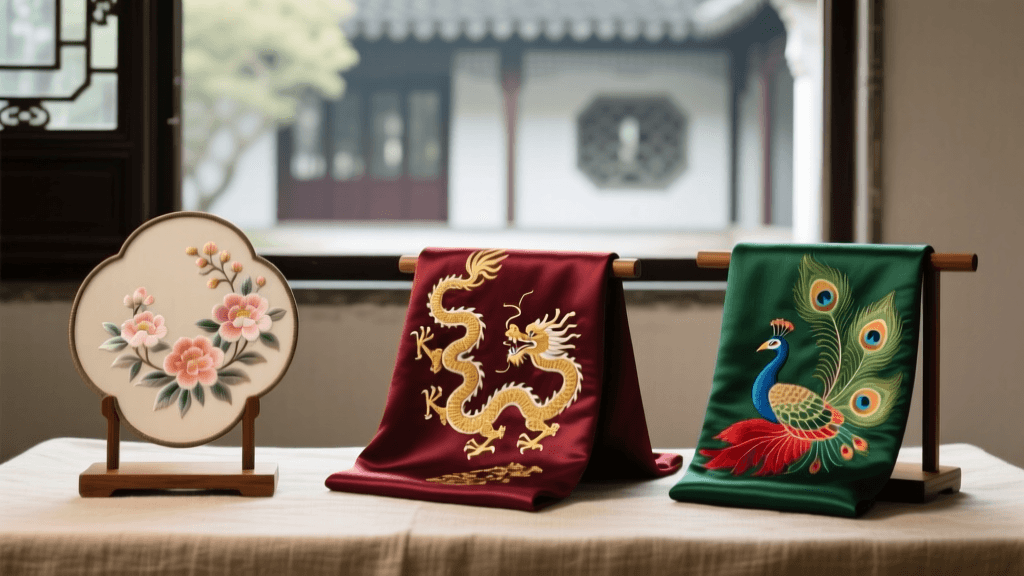
Originating from the Jiangsu province, Suzhou embroidery is celebrated for its refined elegance, meticulous stitching, and sophisticated color palettes. Su Xiu is characterized by its flat, dense, and incredibly fine stitches. The hallmark of a master Su Xiu artisan is the ability to split a single silk thread into fractions—as thin as 1/16th or even 1/32nd of the original strand—allowing for photorealistic gradients and imperceptible color transitions.
Signature Techniques and Motifs
The most famous technique within this style is Shuangmian Xiu (double-sided embroidery), where the design is identical on both sides of the fabric, with no visible knots or loose threads. Artisans achieve this by weaving the thread ends seamlessly into the stitches. Common motifs include koi fish, cats, and delicate floral arrangements like peonies and plum blossoms. The Luan Xiu (chaotic or messy stitch) is frequently used to render the soft, textured fur of animals, creating a three-dimensional illusion that shifts with the light.
Sourcing and Pricing
Authentic, hand-embroidered Su Xiu garments and accessories are premium investments. A hand-embroidered silk scarf featuring basic floral motifs typically starts around $300 to $600. Complex, double-sided table screens or master-crafted ceremonial jackets can take over a year to complete, with prices ranging from $5,000 to upwards of $25,000. When sourcing, always inspect the reverse side of the fabric; genuine Su Xiu will feature incredibly neat, almost invisible reverse stitches, whereas machine-made imitations will show chaotic bobbin thread patterns.
Sichuan Embroidery (Shu Xiu): Boldness and Texture
Hailing from the Chengdu region of Sichuan province, Shu Xiu offers a striking contrast to the delicate nature of Suzhou embroidery. It is known for its bold colors, thick textures, and a distinct sense of three-dimensional depth. The region's humid climate historically influenced the development of its soft, lustrous silk and satin fabrics, which serve as the perfect canvas for its heavy, expressive stitching.
Signature Techniques and Motifs
The defining technique of Shu Xiu is the Yun Zhen (halo stitch). This method utilizes up to 130 different shades of silk thread to create a seamless, glowing gradient effect, particularly effective in rendering the scales of a carp or the fur of a panda—two of the most iconic Shu motifs. The stitches are often layered and padded, giving the embroidered subjects a raised, tactile quality. Shu Xiu frequently employs the Gun Zhen (rolling stitch) to outline motifs with a crisp, bold edge that prevents the vibrant colors from bleeding into one another visually.
Sourcing and Pricing
Shu Xiu is highly sought after for statement outerwear, traditional theatrical costumes, and decorative wall hangings. Wearable pieces, such as embroidered silk shawls or lapel jackets, generally range from $250 to $1,200. When purchasing Shu Xiu, look for the characteristic "halo" effect in the shading of the motifs. The transition between colors should feel painted rather than stitched, a testament to the artisan's mastery of the 130-shade dyeing process.
Cantonese Embroidery (Yue Xiu): Vibrance and Theatricality
Cantonese embroidery, originating from the Guangdong province (specifically the Guangzhou and Chaozhou areas), is the most vibrant and theatrical of the three. Historically driven by the bustling maritime trade of the Pearl River Delta, Yue Xiu incorporates exotic materials and is heavily influenced by the region's rich folklore, opera traditions, and auspicious symbolism.
Signature Techniques and Motifs
Yue Xiu is famous for its extensive use of metallic threads, particularly gold and silver couching (Ding Jin). Artisans lay metallic threads on the surface of the fabric and secure them with tiny, nearly invisible silk stitches. Another unique feature is the incorporation of spun peacock feather threads and cotton padding to create highly raised, sculptural motifs. Dragons, phoenixes, bats (symbolizing good fortune), and the lychee fruit are prevalent motifs. This style is the foundation of the traditional Cantonese bridal jacket, known as the Kwa, which is densely embroidered with dragons and phoenixes and can weigh several kilograms due to the heavy metallic threads.
Sourcing and Pricing
Because of the labor-intensive nature of gold couching and the cost of metallic threads, Yue Xiu is among the most expensive. A traditional, fully embroidered bridal Kwa can cost anywhere from $3,000 for a rental or basic purchase, to over $15,000 for a bespoke, master-crafted heirloom piece. For modern fashion designers looking to incorporate Yue Xiu, sourcing smaller embroidered patches or collars from Guangzhou textile markets is a cost-effective entry point, typically costing $50 to $150 per piece.
Comparative Guide: Su, Shu, and Yue Embroidery
To help collectors and designers make informed decisions, here is a structured comparison of the three major embroidery styles:
| Feature | Suzhou (Su Xiu) | Sichuan (Shu Xiu) | Cantonese (Yue Xiu) |
|---|---|---|---|
| Primary Origin | Jiangsu Province | Sichuan Province | Guangdong Province |
| Visual Aesthetic | Delicate, elegant, photorealistic | Bold, textured, vibrant gradients | Theatrical, sculptural, metallic |
| Signature Stitch | Double-sided & Thread-splitting | Halo Stitch (Yun Zhen) | Gold Couching (Ding Jin) |
| Common Motifs | Cats, Koi, Peonies | Pandas, Carps, Hibiscus | Dragons, Phoenixes, Bats |
| Best Application | High-end scarves, screens, Qipao | Statement jackets, wall art | Bridal Kwa, opera costumes |
| Avg. Price (Wearable) | $300 - $2,500 | $250 - $1,200 | $800 - $15,000+ |
Practical Sourcing and Designer Integration
For fashion designers and stylists integrating these traditional techniques into modern wardrobes, understanding the structural integrity of the textiles is crucial. Institutions like The Metropolitan Museum of Art highlight the historical importance of Chinese silk, noting that its protein structure requires specific handling to maintain its luster and strength over time.
When commissioning custom pieces, specify the base fabric weight. Su Xiu requires a tightly woven, lightweight silk satin or organza to support fine thread-splitting without puckering. Shu Xiu requires a heavier silk crepe or damask to bear the weight of its padded stitches. Yue Xiu demands a robust foundation, often a heavy silk brocade or even velvet, to support the dense metallic couching without warping. Always request a 10x10 cm stitch sample before approving a full garment commission to verify the tension and color fastness of the dyed silk threads.
Preservation and Care for Embroidered Garments
Silk and metallic threads are highly susceptible to environmental degradation. Proper archival care is non-negotiable for preserving the value and beauty of these garments. As noted in textile histories documented by Encyclopedia Britannica, silk is a natural protein fiber that weakens when exposed to prolonged UV light and high humidity.
- Climate Control: Store embroidered garments in an environment with a stable relative humidity of 45% to 55% and a temperature of around 65°F (18°C). Fluctuations cause the silk base and the embroidered threads to expand and contract at different rates, leading to puckering.
- Light Exposure: Limit display lighting to a maximum of 50 lux. Never display Su, Shu, or Yue Xiu in direct sunlight, as UV rays will rapidly fade the complex, multi-shade silk dyes and tarnish silver couching threads.
- Storage Method: Never hang heavy Yue Xiu bridal jackets or Shu Xiu coats on standard hangers; the weight of the embroidery will distort the silk shoulders. Instead, pad the folds with acid-free, unbuffered tissue paper and store the garments flat in archival-quality textile boxes.
- Cleaning: Avoid dry cleaning unless the facility specializes in historical Asian textiles. The harsh solvents used in standard dry cleaning can strip the natural sericin from the silk threads, causing them to become brittle, and can dissolve the adhesives used in metallic thread wrapping.
Conclusion
The embroidery traditions of Suzhou, Sichuan, and Guangdong represent far more than mere decoration; they are intricate languages of texture, color, and cultural identity. Whether you are acquiring a delicate Su Xiu scarf, a bold Shu Xiu statement coat, or a majestic Yue Xiu bridal jacket, understanding the technical mastery behind each stitch elevates the appreciation of these garments from simple fashion to wearable fine art. By sourcing ethically and preserving meticulously, we ensure these ancient silk techniques continue to inspire the future of global fashion.