Suzhou Embroidery Guide: Buying Authentic Su Xiu Silk Textiles
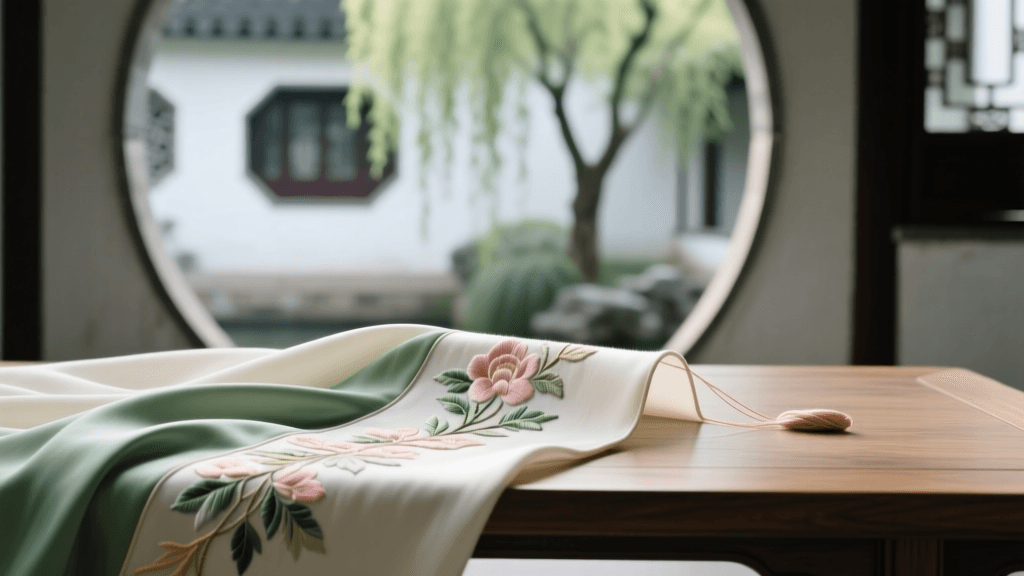
The Legacy of Su Xiu: China’s Premier Silk Embroidery
Suzhou embroidery, universally known as Su Xiu, represents the pinnacle of Chinese textile arts. Originating in the Jiangsu province over 2,000 years ago, this meticulous craft is celebrated for its delicate needlework, vibrant yet harmonious color palettes, and photorealistic depictions of nature, mythology, and classical literature. As one of the Four Great Embroideries of China (alongside Xiang, Yue, and Shu), Su Xiu has historically adorned the garments of imperial elites, ceremonial robes, and luxurious domestic screens.
Today, authentic Su Xiu remains a highly sought-after collector's item and a vital component of Asian traditional garment heritage. However, the modern market is flooded with machine-made imitations and synthetic blends that mimic the aesthetic of hand-stitched silk without possessing its cultural or material value. For serious collectors, interior designers, and cultural historians, understanding the technical nuances, pricing structures, and authentication methods of Su Xiu is essential. This comprehensive guide provides actionable insights into evaluating, purchasing, and preserving authentic Suzhou silk embroidery.
Core Techniques: What Makes Su Xiu Unique?
To evaluate a piece of Su Xiu, one must first understand the foundational stitching techniques that define its quality and market value. Master artisans in Suzhou employ dozens of distinct stitches, but three primary techniques dictate the complexity and price of a textile:
1. Ping Xiu (Flat Embroidery)
Flat embroidery is the most traditional and widely used technique. The stitches lie evenly across the silk base, creating a smooth, painted effect. High-quality Ping Xiu features seamless color gradients achieved by threading multiple needles with subtly varying shades of silk. It is frequently used for floral motifs, landscapes, and classical calligraphy.
2. Luanzhen Xiu (Crisscross or Random Stitch)
Developed in the late 19th and early 20th centuries, Luanzhen Xiu involves layering stitches at varying angles and lengths. This technique allows for a highly textured, three-dimensional effect that mimics the brushstrokes of traditional Chinese ink wash paintings or the realistic fur of animals. It requires an advanced understanding of light and shadow, making it a hallmark of master-level artisans.
3. Shuang Mian Xiu (Double-Sided Embroidery)
The undisputed zenith of Su Xiu is double-sided embroidery. Artisans stitch on a single piece of ultra-fine, transparent silk organza, hiding all knots and thread ends within the microscopic fibers of the fabric. The result is a piece that displays a flawless image on both the front and the back. In its most advanced form, Shuang Mian Yi Se Xiu, the artisan uses different colors and patterns on each side—for example, a white cat on the front and a tiger on the back—achieved by splitting silk threads to a microscopic fraction and weaving them in opposing directions.
The Art of Thread Splitting (Pi Xian)
The most critical actionable metric for evaluating Su Xiu is the thread split, or Pi Xian. A single strand of mulberry silk thread is naturally composed of multiple filaments. Master artisans use their fingernails and specialized tools to split a single thread into fractions: 1/2, 1/4, 1/8, 1/16, 1/32, and in the most extreme cases of masterworks, 1/64 of the original thread's thickness.
When purchasing a piece, always ask the gallery or artisan about the thread split used in the focal points of the embroidery. A 1/4 split is standard for background elements and broad leaves. A 1/16 split is used for detailed petals and bird feathers. A 1/32 or 1/64 split is reserved for the most intricate details, such as the whiskers of a cat, the scales of a koi fish, or the delicate stamen of a lotus flower. The finer the split, the longer the production time and the exponentially higher the cost.
Buyer’s Matrix: Pricing, Sizing, and Production Time
Authentic, hand-stitched Su Xiu is an investment in time and human mastery. A single master artisan may spend up to 10 hours a day on a complex piece. Below is a structured pricing and production matrix to help collectors budget and set expectations when commissioning or purchasing authentic works.
| Format & Size | Primary Technique | Thread Split Detail | Est. Production Time | Market Price Range (USD) |
|---|---|---|---|---|
| Small Table Screen (30x30 cm) | Ping Xiu (Flat) | 1/4 to 1/8 split | 1 - 3 Months | $400 - $1,200 |
| Medium Wall Scroll (60x90 cm) | Luanzhen Xiu (Textured) | 1/8 to 1/16 split | 4 - 8 Months | $2,500 - $6,000 |
| Large Floor Screen (100x200 cm) | Ping Xiu / Luanzhen Blend | 1/16 split average | 1 - 2 Years | $12,000 - $25,000 |
| Double-Sided Table Screen (40x40 cm) | Shuang Mian Xiu | 1/32 to 1/64 split | 8 - 14 Months | $8,000 - $18,000 |
| Masterwork Double-Sided (Different Colors) | Shuang Mian Yi Se Xiu | 1/64 split extreme | 2 - 4 Years | $40,000 - $100,000+ |
Note: Prices fluctuate based on the artisan's recognized title (e.g., Provincial Master vs. National Master of Intangible Cultural Heritage) and the rarity of the natural silk dyes used.
How to Authenticate Hand-Stitched Su Xiu
The proliferation of computerized embroidery machines has made it increasingly difficult for laymen to distinguish between authentic Su Xiu and mass-produced fakes. Use this actionable three-point checklist when evaluating a piece in person:
- The Light Halo Test: Authentic mulberry silk has a unique triangular prism-like molecular structure that refracts light, creating a soft, pearlescent 'halo' or depth of color. Machine embroidery often uses rayon, mercerized cotton, or polyester blends, which reflect light uniformly and appear flat or artificially glossy.
- The Magnification Test: Bring a jeweler's loupe (10x magnification). Hand-spun silk threads will show microscopic organic variations in thickness and twist. Machine threads are perfectly uniform. Furthermore, look at the transitions between colors; hand embroidery blends colors by interlocking individual micro-stitches, whereas machines often use a single, solid thread color per block.
- The Backing and Tension Test: For single-sided embroidery, turn the piece over. While the back will not be as pristine as the front, a master artisan's back will still show neat, organized pathways with minimal loose threads. More importantly, examine the tension. Hand embroidery possesses a dynamic, organic tension that gives the fabric a slight, natural flexibility. Machine embroidery is pulled uniformly tight by a hoop, often causing the silk base to warp or pucker rigidly.
Where to Source Authentic Pieces
For the most direct access to master artisans and authentic galleries, collectors should travel to Zhenhu Town in Suzhou. Known as the 'Embroidery Capital,' Zhenhu is home to thousands of practicing embroiderers and dedicated family-run studios. Walking down Zhenhu Embroidery Street allows buyers to commission custom pieces directly from the creators, bypassing middlemen and ensuring authenticity.
For those unable to travel to Jiangsu province, the Suzhou Embroidery Museum and its affiliated state-sanctioned galleries offer certified masterworks complete with certificates of authenticity and artisan biographies. When purchasing internationally, seek out galleries that specialize in Asian textile antiquities and require documented provenance. As noted by The Metropolitan Museum of Art, the historical continuity of Chinese silk craftsmanship relies heavily on the meticulous documentation of regional techniques and material sourcing.
Archival Care and Maintenance
Silk is a natural protein fiber (fibroin) that is highly susceptible to environmental degradation. To protect your investment and preserve the cultural integrity of the textile, adhere to the following conservation standards:
- UV Protection: Never hang Su Xiu in direct sunlight or under unfiltered halogen lighting. UV radiation breaks down the peptide bonds in silk, leading to rapid fading and fiber shattering. Always frame pieces behind museum-grade, UV-filtering acrylic (such as Optium Museum Acrylic) rather than glass, which can trap moisture.
- Humidity Control: Maintain a stable relative humidity (RH) of 45% to 55%. If the environment is too dry (below 40%), the silk fibers will become brittle and snap under their own tension. If the RH exceeds 60%, the organic silk and natural dyes become highly susceptible to mold and foxing.
- Dusting and Cleaning: Never use liquid cleaners, steam, or compressed air on Su Xiu. Dust should be removed gently using a soft, natural-hair conservation brush, working in the direction of the stitches. For deep stains or structural repairs, consult a professional textile conservator who specializes in Asian silk artifacts.
Conclusion
Suzhou embroidery is far more than a decorative art; it is a living testament to China's rich history of sericulture and textile innovation. Recognized globally for its cultural significance, the broader context of Chinese silk and embroidery is protected and celebrated by institutions like UNESCO's Intangible Cultural Heritage list, which highlights the profound generational knowledge required to master these techniques. Furthermore, the enduring legacy of Suzhou as a global hub for silk and water-based trade continues to draw cultural enthusiasts, as documented in modern explorations of the region's heritage by Smithsonian Magazine. By understanding the technical metrics of thread splitting, mastering the visual authentication tests, and providing proper archival care, collectors can ensure that these breathtaking silk textiles survive for generations to come.