The Ultimate Kimono Buying Guide: Types, Tiers and Costs
The Philosophy of TPO in Japanese Garments
Acquiring a traditional Japanese kimono is an investment in centuries of textile artistry, cultural heritage, and meticulous craftsmanship. However, for international collectors, vintage enthusiasts, and first-time buyers, the sheer variety of styles, fabrics, and rules can be overwhelming. Unlike Western fashion, where personal expression often dictates wardrobe choices, traditional Japanese dress is governed by the strict concept of TPO: Time, Place, and Occasion. Understanding this hierarchy is the foundational step in any kimono buying guide, ensuring that your purchase aligns with your intended use, whether for a formal tea ceremony, a summer festival, or an avant-garde fashion statement.
According to The Metropolitan Museum of Art, the evolution of the kimono from the Heian period to the modern era reflects deep shifts in Japanese social structures, sumptuary laws, and aesthetic philosophies. Today, buyers must navigate a complex matrix of formality, sleeve length, and pattern placement to make an informed purchase.
Decoding the Core Kimono Types
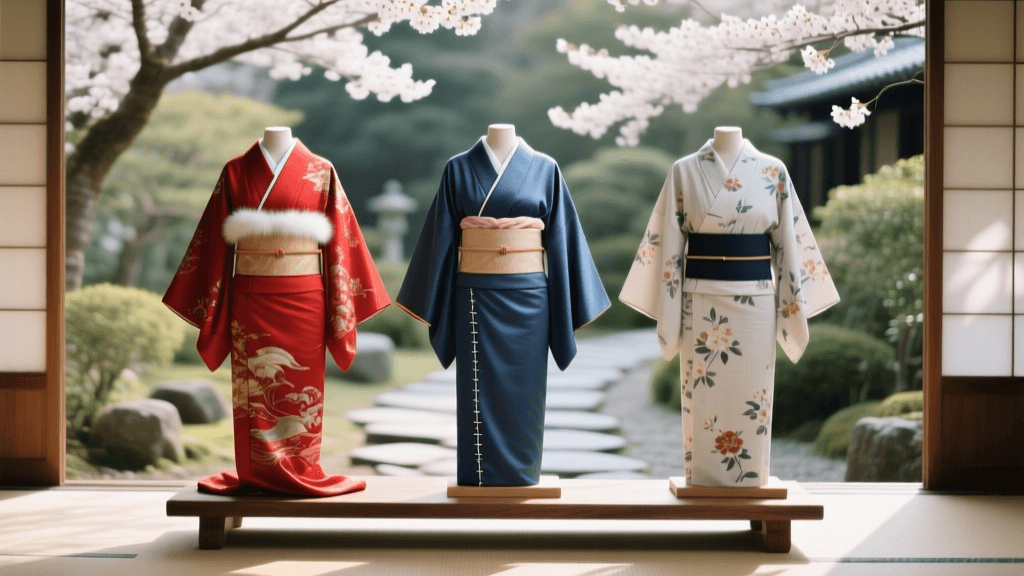
The formality of a kimono is primarily dictated by its pattern placement, the presence or absence of family crests (kamon), and the length of its sleeves. Here is a breakdown of the most prominent types you will encounter on the market.
Tomesode (The Pinnacle of Formality)
Kurotomesode (black) and Irotomesode (colored) are the most formal garments for married women. Kurotomesode features a solid black background with patterns restricted only to the lower hem (suso) and always bears five family crests. Irotomesode follows the same hem-only pattern rule but utilizes pastel or rich colored backgrounds, making it suitable for unmarried female relatives at weddings. Because of their high formality, these are rarely purchased by casual international collectors, but they remain highly prized in the vintage market for their exquisite hem embroidery and gold leaf work.
Furisode (The Unmarried Woman's Canvas)
Recognizable by their dramatically long, swinging sleeves (ranging from 85cm to 114cm), Furisode are the most formal kimono for unmarried women. The patterns typically cover the entire garment, utilizing vibrant colors and elaborate Yuzen dyeing techniques. Buying a new Furisode is a major financial undertaking, often exceeding $3,000, but the vintage market offers stunning mid-century pieces for a fraction of the cost. They are heavily sought after for coming-of-age ceremonies and formal gallery openings.
Houmongi (The Elegant Visitor's Wear)
Houmongi translates to 'visiting wear' and is characterized by its e-ba pattern, which flows continuously across the seams when the garment is laid flat. This creates a canvas-like effect that is visually striking. Suitable for both married and unmarried women, Houmongi sits just below Tomesode and Furisode in formality. It is the most versatile formal investment a buyer can make, perfect for attending weddings as a guest, participating in tea ceremonies, or attending formal dinners. Expect to pay between $800 and $2,500 for a new, hand-dyed silk Houmongi.
Komon (The Everyday Repeating Pattern)
Komon, meaning 'fine pattern,' features a repeating design that covers the entire garment, often applied using intricate paper stencils (katagami). This is the casual, everyday silk kimono. Because the pattern does not align across the seams like a Houmongi, it is strictly for informal outings, dining, or cultural classes. Komon represents the best entry point for vintage silk buyers, with high-quality, fully lined vintage pieces frequently available for $50 to $150.
Yukata (The Breathable Summer Staple)
Originally worn as a bathrobe by the nobility, the Yukata is an unlined, casual summer kimono made primarily of cotton or hemp. It is worn at summer festivals (matsuri) and fireworks displays. Yukata are highly accessible, easy to care for, and generally do not require the complex undergarments needed for silk kimono. New, high-quality cotton Yukata from renowned dyeing regions like Arimatsu typically cost between $100 and $300.
Comprehensive Kimono Comparison Chart
| Type | Formality | Sleeve Length | Primary Fabric | Avg. Vintage Price (USD) | Best Occasion |
|---|---|---|---|---|---|
| Kurotomesode | Ultra-Formal | Short | Silk Crepe | $150 - $400 | Weddings (Close Family) |
| Furisode | Formal | Long (85-114cm) | Silk Crepe/Satin | $100 - $500 | Coming-of-Age, Formal Events |
| Houmongi | Semi-Formal | Short/Medium | Silk Crepe | $80 - $300 | Tea Ceremony, Wedding Guest |
| Komon | Casual | Short | Silk/Wool/Poly | $30 - $120 | Dining, Classes, Theater |
| Yukata | Informal | Short | Cotton/Hemp | $20 - $80 | Summer Festivals, Lounging |
Crucial Measurements: Getting the Fit Right
Unlike Western clothing, kimono are constructed from straight bolts of fabric (tanmono) and are meant to be adjusted to the wearer's body through folding and tying. However, buying a garment that is drastically out of proportion will result in an awkward silhouette. When browsing online listings or vintage shops, focus on two critical measurements:
- Mitake (Back Length): Measured from the base of the collar down the back to the hem. For a modern, elegant silhouette, the Mitake should ideally be within 5 to 10 centimeters shorter than your total height. Vintage kimono from the early-to-mid 20th century were made for a shorter average population and may require you to wear them slightly hiked up at the waist, which is perfectly acceptable.
- Yuki (Sleeve Span): Measured from the center seam of the back collar, across the shoulder, and down to the wrist. The ideal Yuki should reach the wrist bone when your arm is relaxed at your side. If the Yuki is too short, the garment will look visibly ill-fitted.
Decoding Fabrics and Dyeing Techniques
The value of a kimono is heavily tied to its textile production. As noted by cultural resources like Japan Guide, traditional dyeing and weaving methods are protected cultural arts. When evaluating a purchase, look for these hallmarks of quality:
Chirimen (Silk Crepe): The most common fabric for formal and semi-formal kimono. It features a subtle, pebbled texture created by twisting the weft threads tightly before weaving. It drapes beautifully and resists wrinkling.
Rinzu (Figured Satin): A luxurious, glossy silk with damask-like woven patterns. Rinzu is heavier, highly reflective, and often used for wedding garments and high-end Furisode.
Kyo-Yuzen vs. Edo-Yuzen: Yuzen is a resist-dyeing technique that allows for painterly, multi-colored designs. Kyo-Yuzen (from Kyoto) is known for its lavish use of gold leaf, embroidery, and vibrant colors. Edo-Yuzen (from Tokyo) favors more subdued, sophisticated palettes and intricate stencil work, appealing to buyers who prefer understated elegance.
Navigating the Market: New, Vintage, and Recycle
The modern kimono market is bifurcated into the new retail sector and the booming vintage 'recycle' market. Buying new directly from a Gofukuya (traditional kimono shop) in Kyoto or Tokyo guarantees pristine condition, custom tailoring to your exact measurements, and the support of living artisans. However, the retail markup is immense; a complete new ensemble can easily surpass $5,000.
Conversely, the vintage market offers incredible value. Japan's 'Recycle Shops' (such as the famous Tansu-ya chain or Chicago in Harajuku) process thousands of garments daily. For international buyers, specialized online dealers and auction proxies provide access to these troves. When buying vintage, meticulously inspect the photos for shimi (age spots or water stains), particularly along the fold lines and the lower hem. A small stain on a $40 vintage Komon is a minor flaw; a stain on a $1,000 antique Furisode is a tragic devaluation.
The Hidden Costs of a Complete Ensemble
A common pitfall for first-time buyers is assuming the kimono is a standalone garment. In reality, the kimono is merely the outermost layer of a complex assembly. Budgeting for a kimono requires factoring in the essential accessories, which can sometimes cost more than the garment itself:
- Obi: The sash that secures the kimono. A formal brocade (Nishijin-ori) Fukuro obi can cost upwards of $500 new, though vintage options range from $50 to $200.
- Nagajuban: The silk or synthetic under-robe that protects the kimono from body oils and sweat. ($50 - $150)
- Himo and Datejime: The various cotton and silk ties used to secure the undergarments and the kimono before the Obi is tied. ($20 - $50)
- Obi-ita and Obi-makura: The stiff board and small pillow used to create a smooth, structured shape for the Obi knot. ($15 - $30)
- Tabi and Zori: The split-toe socks and formal sandals required to complete the silhouette from the ground up. ($30 - $80)
Authentic Sourcing and Expert Verification
Whether you are browsing the aisles of the Nishijin Textile Center in Kyoto or scrolling through curated online archives, provenance and authenticity are paramount. Be wary of synthetic 'costume' kimono marketed as traditional silk. Always check the lining (habutae); a genuine traditional kimono will feature a soft, breathable silk or high-grade cupro lining, while mass-produced tourist garments will utilize stiff polyester.
For those interested in the intersection of historical garment preservation and modern fashion, exhibitions and archives provide vital context. The Victoria and Albert Museum's extensive research on the kimono highlights how these garments have continuously evolved, influencing global haute couture while maintaining their strict cultural roots. By understanding the tiers, types, and hidden complexities of the kimono, buyers can confidently build a collection that respects the artistry of the past while serving the aesthetic needs of the present.