Sustainable Japanese Natural Dye Plants 2026: Kusaki-Zome Guide
The Renaissance of Kusaki-Zome in 2026
The global textile industry is undergoing a massive, necessary shift in 2026. With stringent environmental regulations like the EU's Strategy for Sustainable and Circular Textiles now in full effect, artisans, designers, and eco-conscious brands are rapidly abandoning synthetic petrochemical dyes. In their place, kusaki-zome—the traditional Japanese art of plant and bark dyeing—has emerged as a premier sustainable solution. According to the Ellen MacArthur Foundation, the transition toward circular fashion requires not just recycling, but the use of regenerative, non-toxic inputs from the very beginning of the supply chain. Japanese natural dye plants offer exactly this: a closed-loop system that nurtures soil, conserves water, and produces breathtaking, living colors.
This comprehensive guide explores the most vital Japanese natural dye plants for 2026, focusing on eco-friendly cultivation, zero-waste extraction methods, and bio-mordanting techniques that align with modern sustainability standards.
Top Japanese Natural Dye Plants for Eco-Friendly Textiles
1. Ai (Japanese Indigo - Persicaria tinctoria)
Japanese indigo, or Ai, remains the undisputed king of natural dyes. Unlike tropical indigo species, Persicaria tinctoria thrives in temperate climates and is famously cultivated in the Tokushima Prefecture. The traditional method of creating sukumo (composted indigo leaves) is inherently a zero-waste process. In 2026, modern ateliers have optimized this by using IoT-enabled temperature and moisture sensors to monitor the 90-day fermentation process, reducing water waste and ensuring perfect bacterial health without manual guesswork.
Eco-Friendly Vat Recipe (2026 Standard):
- Base: 100g premium Tokushima sukumo.
- Alkali: 300ml wood ash lye (pH 11.5). Avoid synthetic sodium hydrosulfite; use natural wood ash from untreated timber.
- Nutrient: 50ml wheat bran and 30ml organic sake to feed the indigo-reducing bacteria.
- Temperature: Maintain at 20°C using solar thermal water heating mats rather than electric immersion heaters.
The resulting vat can be kept alive for months. When the vat finally exhausts, the spent sludge is a nitrogen-rich fertilizer, completing the circular loop.
2. Kakishibu (Persimmon Tannin)
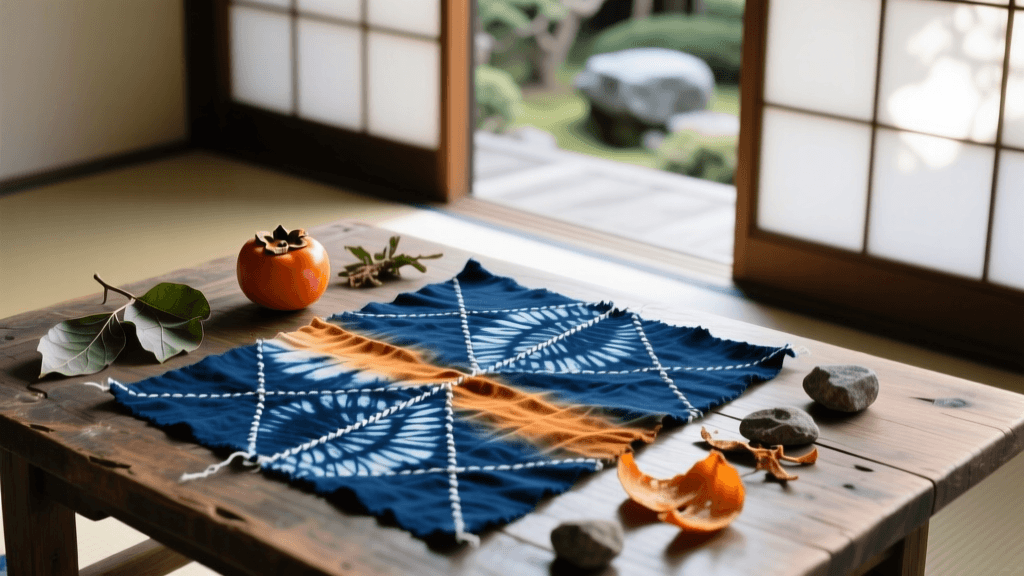
Kakishibu is a remarkable dye and natural waterproofing agent made from the fermented juice of unripe astringent persimmons. Unlike most botanical dyes that require boiling water and heavy heat extraction, kakishibu is a cold-process dye. The unripe fruits are crushed, pressed, and left to ferment in wooden vats for one to two years. The resulting liquid is rich in tannins that polymerize and turn a deep, rich brown when exposed to UV light and oxygen.
Sustainable Application Method:
Dilute raw kakishibu with water at a 1:3 ratio. Apply it to raw cotton, hemp, or shifu (traditional Japanese paper thread) using a wide brush. Hang the textile outdoors in direct sunlight for 48 hours. The UV rays catalyze the oxidation process, bonding the tannins to the cellulose fibers permanently. This method requires zero heating energy and no chemical fixatives, making it one of the most eco-friendly dyeing processes available in 2026.
3. Akane (Japanese Madder - Rubia argyi)
For vibrant reds and deep terracottas, Akane is the historical standard. The dye is extracted from the roots of the madder plant, which must grow undisturbed for three to four years before harvesting. This long growth cycle naturally aligns with regenerative agriculture practices, as the deep root systems prevent soil erosion and improve soil microbiome health. According to historical textile analyses preserved by institutions like the Metropolitan Museum of Art, madder-dyed silk was highly prized by the Japanese aristocracy for its colorfastness and depth.
Eco-Friendly Extraction:
Instead of boiling the roots, which consumes vast amounts of energy, 2026 best practices utilize slow solar-thermal extraction. Submerge 200g of dried madder roots in 4 liters of water in a dark glass vessel and leave it in a greenhouse or solar heater at 45°C for 24 hours. This low-heat method preserves the delicate pseudo-purpurin compounds, yielding a brighter, more lightfast red while cutting energy consumption by up to 70%.
Zero-Waste Mordanting and Bio-Fixatives
Historically, natural dyeing relied on heavy metal mordants like chrome, tin, and copper to bind colors to fibers. However, these metals are toxic to aquatic ecosystems and contradict modern sustainability goals. The 2026 standard for kusaki-zome relies entirely on bio-mordants and naturally occurring mineral salts.
- Oxalic Acid (Rhubarb Leaves): Rhubarb leaves contain high levels of oxalic acid, which acts as a brilliant mordant for yellows and greens. Boil discarded rhubarb leaves (a common garden waste product) in water for one hour, strain, and use the liquid to pre-treat cotton before dyeing with onion skins or weld.
- Tannin (Acorn Caps & Galls): Foraged oak acorn caps and oak galls are rich in tannins. They bind exceptionally well to plant-based cellulose fibers, preparing them to accept darker dyes like indigo or madder without the need for synthetic tannic acid.
- Iron Bio-Mordant (Rusty Vinegar): To sadden or darken colors (shifting reds to deep purples or yellows to olive greens), create a natural iron liquor. Combine one part oxidized iron (rusty nails or wire) with four parts white vinegar. Let it steep in a sealed glass jar for three weeks. Dilute this highly concentrated iron liquor at a ratio of 1:100 before use to prevent degrading the textile fibers.
Comparison: Synthetic Dyes vs. Eco-Friendly Kusaki-Zome (2026 Data)
To understand the environmental imperative of shifting to natural Japanese dye plants, consider the following comparison based on 2026 textile lifecycle assessments.
| Metric | Conventional Synthetic Dyes | Eco-Friendly Kusaki-Zome (2026 Methods) |
|---|---|---|
| Water Usage (per kg of textile) | 100 - 150 Liters | 15 - 30 Liters (with closed-loop vat recycling) |
| Energy Consumption | High (requires pressurized steam & high heat) | Low (cold fermentation & solar thermal extraction) |
| Toxicity & Effluent | Heavy metals, formaldehyde, micro-plastics | 100% Biodegradable, non-toxic, compostable waste |
| Soil Impact | Petrochemical extraction degrades land | Regenerative; spent dye materials fertilize soil |
| 2026 Avg. Market Cost | $0.50 - $1.20 per meter | $4.00 - $8.50 per meter (reflecting true ecological cost) |
Sourcing and Regenerative Cultivation
The sustainability of kusaki-zome relies heavily on how the plants are grown. The Food and Agriculture Organization (FAO) emphasizes that botanical crops must be integrated into regenerative agricultural systems to truly benefit the environment. In Japan, the most forward-thinking indigo and madder farms in 2026 utilize companion planting and no-till farming. By planting nitrogen-fixing legumes alongside indigo, farmers eliminate the need for synthetic fertilizers.
For international designers and hobbyists looking to source materials sustainably, it is crucial to purchase from certified B-Corp suppliers or direct-trade cooperatives that guarantee fair wages for Japanese farmers. Many Tokushima indigo farms now offer 'crop-share' programs, where global studios can fund a specific plot of ai in the spring and receive the processed sukumo in the autumn, ensuring complete transparency and financial support for the rural artisans keeping these traditions alive.
Conclusion
The practice of kusaki-zome is no longer just a historical curiosity; it is a vital, scalable component of the 2026 sustainable fashion ecosystem. By embracing Japanese indigo, persimmon tannin, and madder—alongside zero-waste bio-mordants and solar-powered extraction—textile artists and brands can create garments that are deeply connected to nature. These traditional methods prove that true luxury in the modern era is defined not by synthetic perfection, but by ecological harmony, living color, and a profound respect for the earth's natural cycles.