Kimono On Global Runways: 2026 Haute Couture Trends
The 2026 Runway Landscape: A New Era of Japonisme
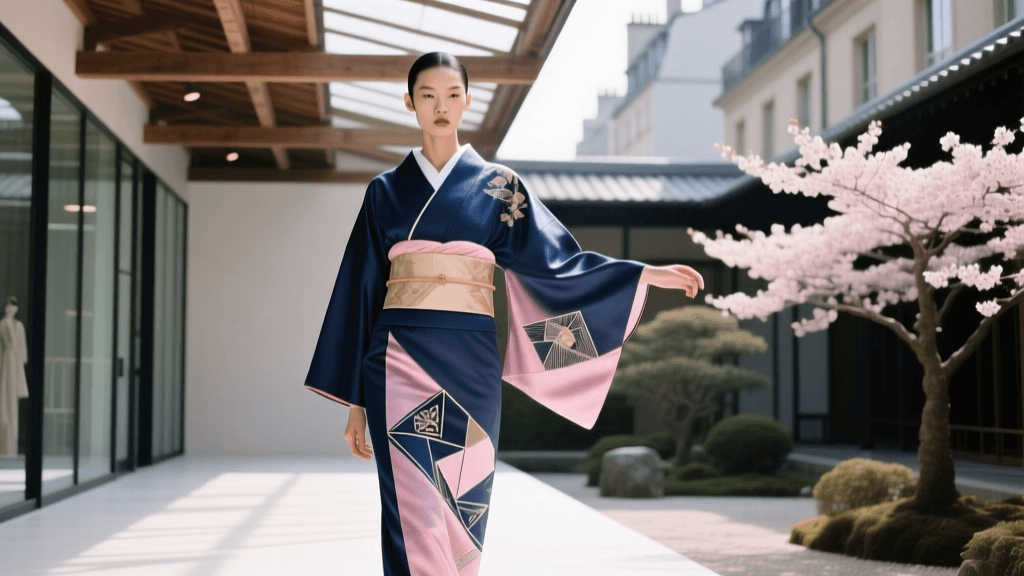
The global fashion landscape in 2026 is witnessing an unprecedented reverence for traditional Asian garments, with the Japanese kimono emerging as the undisputed centerpiece of international runway presentations. From the grand salons of Paris Haute Couture to the avant-garde showcases of Tokyo Fashion Week, the kimono has transcended its status as a regional cultural artifact to become a universal language of luxury, structure, and sustainable design. This year, the integration of wafuku (traditional Japanese clothing) into Western and global silhouettes is not merely about aesthetic borrowing; it is a profound dialogue between centuries-old artisanal craftsmanship and cutting-edge 2026 fashion technology.
Historically, the fashion industry's relationship with the kimono has been fraught with superficial interpretations and debates over cultural appropriation. However, the 2026 runway season marks a definitive pivot toward deep, respectful collaboration. According to the Metropolitan Museum of Art's Heilbrunn Timeline of Art History, the kimono's influence on Western fashion dates back to the late 19th-century Japonisme movement, where European designers were captivated by its flat, uncut construction and bold surface patterns. Today, that historical fascination has evolved into a sophisticated exchange, with global fashion houses partnering directly with master weavers in Kyoto and Kanazawa to preserve endangered techniques while pushing the boundaries of contemporary haute couture.
Deconstructing the Silhouette: Key Elements on the Runway
In 2026, designers are moving away from literal translations of the kimono, opting instead to deconstruct its core architectural elements. The runway is currently dominated by exaggerated proportions, modular layering, and the reimagining of traditional structural components. Below is a breakdown of how traditional kimono elements are being adapted for the 2026 global runway.
| Garment Element | Traditional Kimono Form | 2026 Runway Adaptation |
|---|---|---|
| Obi (Sash) | Wide, stiff brocade, tied at the back | Deconstructed corsetry, asymmetrical draping, utility harnesses |
| Furisode (Sleeves) | Long, swinging, continuous fabric panels | Detachable capes, exaggerated modular outerwear pieces |
| Eri (Collar) | Strict, layered, exposing the nape of the neck | Deep architectural V-necks, oversized structural lapels |
| Tanmono (Fabric) | 14-inch wide continuous bolt of woven silk | Zero-waste geometric pattern cutting, spliced upcycled denim |
The obi, traditionally a symbol of formality and intricate knotting, has been reimagined by Parisian couturiers as structural outerwear corsetry and asymmetrical hip harnesses. Meanwhile, the sweeping furisode sleeves of formal unmarried women's kimono are being detached and repurposed as dramatic, floor-sweeping capes that can be modularly attached to minimalist slip dresses. This modularity speaks directly to the 2026 consumer's demand for versatile, multi-functional luxury garments.
Leading Designers in the 2026 Kimono Renaissance
Hiromi Asai: Elevating Wafuku to Haute Couture
Hiromi Asai has been instrumental in positioning the kimono not as a costume, but as a legitimate form of high fashion on par with Western haute couture. In her 2026 collections presented during New York and Paris Fashion Weeks, Asai utilized vintage, hand-painted yuzen silks, transforming them into tailored evening gowns and sharp, structured blazers. Her meticulous approach ensures that the original artistry of the textile is preserved, even when the garment's shape is radically altered. By treating the kimono fabric as a precious, finite resource, Asai highlights the intersection of heritage preservation and modern luxury.
Mame Kurogouchi: The Intimacy of Layering
Maiko Kurogouchi, the visionary behind the label Mame Kurogouchi, continues to draw heavily from her Japanese heritage, specifically focusing on the undergarments and layering techniques of traditional dress. For the Autumn/Winter 2026 season, her runway featured garments inspired by the hadajuban (under-kimono) and the datejime (tying sashes), translating these intimate, hidden layers into sheer, ethereal outerwear. Her work exemplifies how the philosophy of the kimono—the importance of what is concealed and revealed—can inform modern, sensual ready-to-wear.
Textile Innovations and Sustainable Craftsmanship
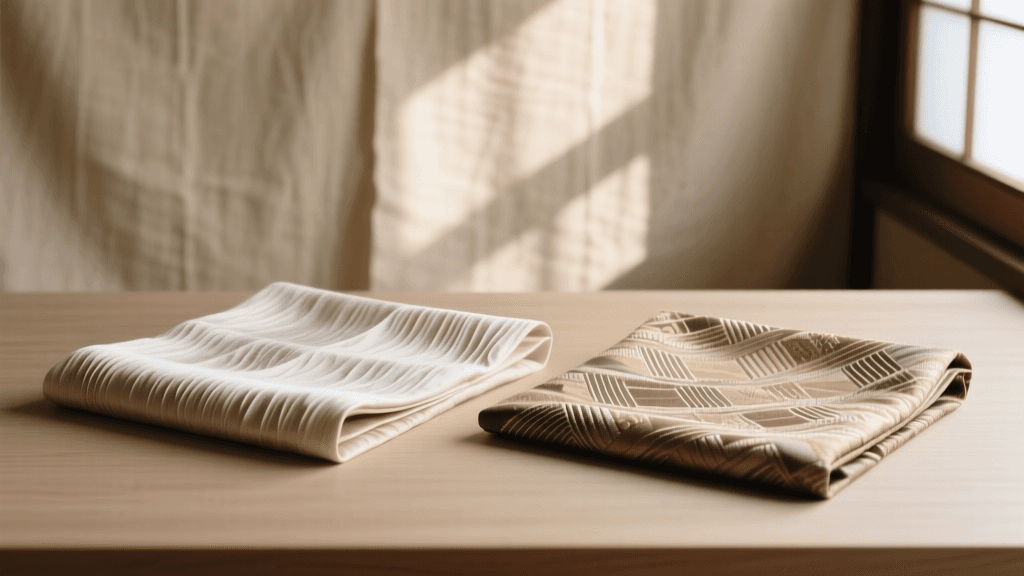
One of the most significant drivers of the kimono's runway resurgence in 2026 is its inherent alignment with sustainable fashion principles. The traditional kimono is constructed from a tanmono, a continuous bolt of fabric approximately 14 inches wide. Because the garment is cut in straight lines and folded rather than tailored to the body's curves, it produces virtually zero fabric waste. As the Victoria and Albert Museum's extensive Asian textile archives demonstrate, this uncut, flat canvas approach has defined Japanese dress for centuries.
In 2026, eco-conscious luxury houses are adopting the tanmono methodology to meet stringent new European Union zero-waste textile regulations. Designers are utilizing narrow-loom weaving techniques and geometric pattern cutting to eliminate offcuts entirely. Furthermore, traditional dyeing methods such as shibori (tie-dyeing) and kata-yuzen (stencil dyeing) are being combined with innovative, lab-grown bio-pigments. This fusion ensures that the vibrant, nature-inspired motifs characteristic of Japanese textiles are achieved without the environmental toll of synthetic chemical dyes.
Institutions like the Kyoto Costume Institute's digital archives have been pivotal in documenting these historical techniques, providing contemporary designers with a rigorous academic foundation. By referencing these archives, 2026 collections avoid pastiche, instead offering deeply researched, technically proficient garments that honor the original artisans while utilizing modern, sustainable materials.
Retail Translation and Market Impact in 2026
The influence of the kimono on the 2026 runways has rapidly filtered down to the luxury retail market, creating a highly lucrative category for 'heritage fusion' apparel. Consumers are increasingly willing to invest in pieces that offer a narrative of artisanal craftsmanship and cultural depth. The modern haori (a traditional hip- or thigh-length kimono-style jacket) has become a staple in the luxury outerwear market, functioning as a versatile layering piece over both evening wear and casual denim.
- Entry-Level Luxury Haori: $1,200 - $2,500 (Typically featuring machine-assisted weaving and contemporary synthetic-silk blends).
- Mid-Tier Artisanal Jackets: $3,500 - $8,000 (Hand-dyed using traditional techniques, featuring authentic Nishijin-ori brocade accents).
- Haute Couture & Archival Pieces: $15,000 - $45,000+ (Bespoke, one-of-a-kind garments utilizing upcycled Edo or Meiji-period textiles, fully integrated into modern couture silhouettes).
The secondary market for vintage kimono has also experienced a massive boom in 2026, driven by Gen Z and Millennial collectors who source authentic antique garments to wear as statement outerwear or to upcycle into bespoke streetwear. This circular economy not only reduces fashion waste but also injects capital back into the preservation of traditional Japanese garments.
Conclusion: A Lasting Sartorial Legacy
The presence of the kimono on the 2026 global runways is not a fleeting trend; it is a testament to the garment's unparalleled architectural brilliance and aesthetic versatility. By moving beyond superficial exoticism and embracing the structural, sustainable, and artisanal philosophies of traditional Japanese dress, the international fashion community has elevated the kimono to its rightful place as a cornerstone of global design. As we move through the 2026 fashion calendar, the dialogue between East and West continues to yield some of the most innovative, respectful, and breathtaking collections the industry has ever seen, ensuring that the legacy of the kimono will continue to shape the future of fashion for decades to come.