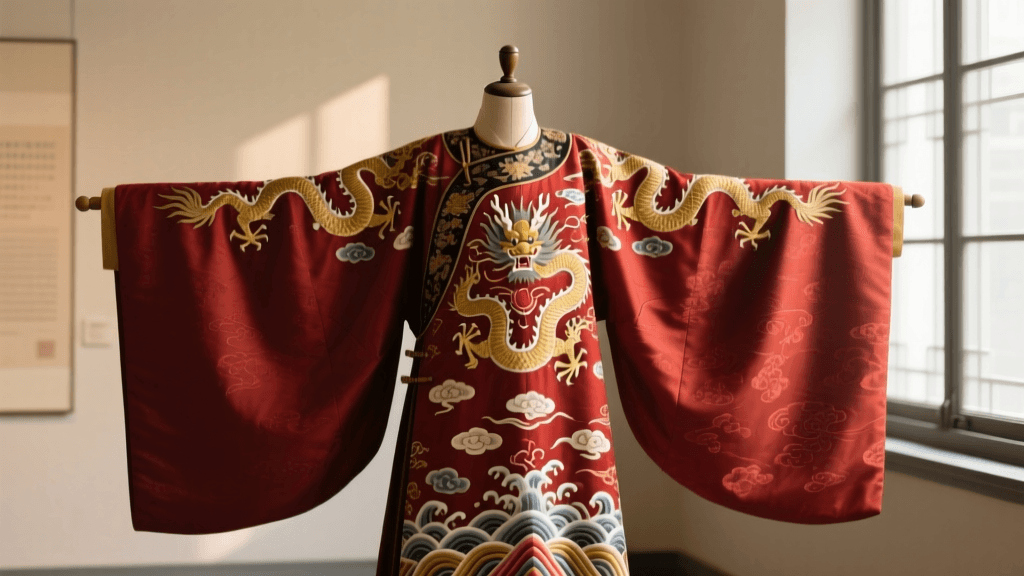
Eco-Friendly Kimono: Sustainable Silk and Ethical Dyeing in Japan
The Inherent Sustainability of the Tanmono
When discussing sustainable fashion, the modern industry often looks to futuristic fabrics and zero-waste pattern-making software. Yet, one of the most inherently sustainable garment structures in the world has existed in Japan for centuries: the kimono. Unlike Western tailoring, which relies on curved seams and results in significant textile offcuts, the kimono is constructed from a single bolt of fabric known as a tanmono.
A standard tanmono measures approximately 36 centimeters in width and 11.5 to 12 meters in length. According to the Victoria and Albert Museum's extensive research on kimono construction, the garment is cut in straight lines and sewn together with minimal waste. Every scrap of the 12-meter bolt is utilized, and because the seams are straight, a kimono can be entirely unpicked, washed, re-dyed, and resewn multiple times over a lifespan that frequently spans generations. However, while the design of the kimono is a masterclass in zero-waste engineering, the production of the silk and dyes has not always been environmentally benign. Today, a new wave of Japanese artisans is returning to ethical sericulture and natural dyeing to ensure the kimono's future is as sustainable as its past.
Ethical Sericulture: Beyond the Boiling Pot
Traditional silk production (sericulture) involves boiling silkworm cocoons intact to harvest a single, continuous thread that can stretch up to 1,000 meters. While this yields the lustrous, unbroken threads prized in high-end textiles, it necessitates the death of the pupae inside. In recent years, the global rise of "peace silk" or Ahimsa silk—which allows the moth to emerge before harvesting the broken fibers—has sparked conversations within Japan about ethical sericulture.
In historic silk-producing regions like Gunma and Fukushima, a hybrid approach to ethical farming is emerging. Rather than mass-producing cocoons in sterile, industrial environments, boutique silk farmers are reviving biodiverse mulberry groves. These groves avoid synthetic pesticides, relying instead on natural pest management and companion planting. The resulting silk, while sometimes featuring slight slubs or variations in thickness, possesses a profound, organic texture that modern consumers and ethical fashion advocates deeply value. Furthermore, the byproducts of the silkworms are composted and returned to the mulberry fields, creating a closed-loop agricultural system.
Aizome and Kusaki-Zome: The Revival of Natural Dyes
The vibrant colors of mid-20th-century kimono were often achieved using synthetic azo dyes, which require heavy metals as mordants and result in toxic wastewater runoff. In stark contrast, the traditional Japanese art of Kusaki-zome (plant dyeing) and Aizome (indigo dyeing) relies entirely on biodegradable, botanical ingredients.
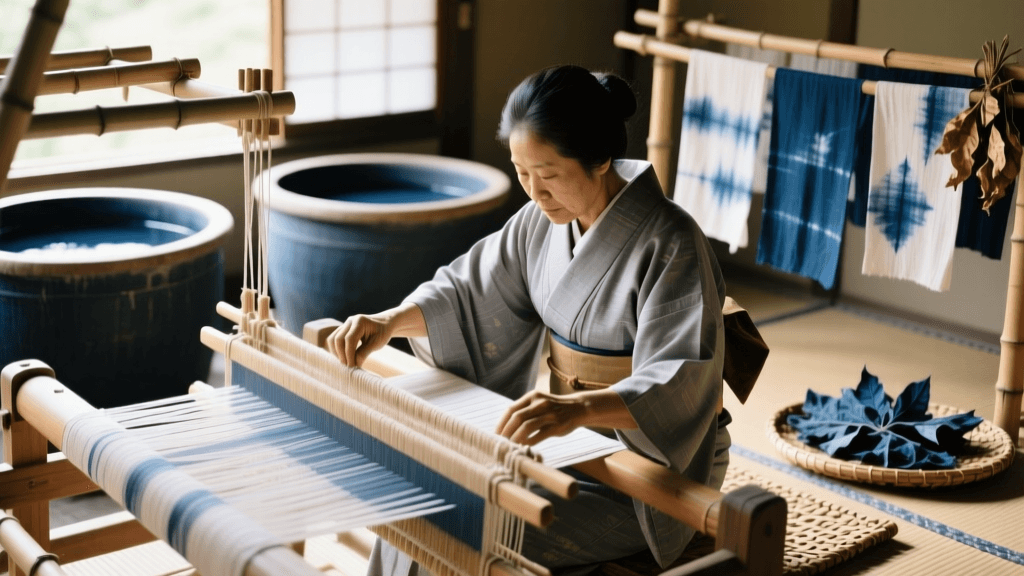
The most celebrated of these is Tokushima indigo. The creation of sukumo (fermented indigo leaves) is a grueling, 100-day process where artisans meticulously turn and water the composting leaves to cultivate the bacteria necessary for fermentation. When the indigo vat is prepared using wood ash lye and sake, it becomes a living ecosystem. A single vat can be maintained for years, and the spent dye liquid is safely used as an organic fertilizer for local farms. This commitment to natural, non-toxic dyeing not only protects local waterways but also yields colors that age beautifully, developing a rich patina over decades of wear.
Comparative Analysis: Conventional vs. Ethical Kimono Production
To understand the true impact of the sustainable kimono movement, it is helpful to compare modern conventional production with traditional, ethically-minded craftsmanship.
| Production Aspect | Conventional Modern Kimono | Sustainable & Ethical Kimono |
|---|---|---|
| Silk Harvesting | Industrial boiling, high yield, monoculture mulberry | Biodiverse groves, ethical harvesting, closed-loop composting |
| Dyeing Agents | Synthetic azo dyes, heavy metal mordants | Botanical sources (Indigo, Madder, Safflower), ash lye |
| Water Impact | High chemical runoff, toxic wastewater | Biodegradable, spent dye used as agricultural fertilizer |
| Production Time | 1-3 weeks (machine woven, chemically dyed) | 3-12 months (hand-woven, naturally fermented) |
| Average Cost | 30,000 - 80,000 JPY | 150,000 - 500,000+ JPY |
The Vintage Market: Upcycling as a Cultural Imperative
The most sustainable kimono is one that already exists. The Japanese concept of Mottainai—a profound sense of regret concerning waste—drives the country's massive vintage kimono market. Upcycling and recycling vintage silk is not merely a trend; it is a cultural imperative.
The philosophy of Mottainai is deeply woven into the Japanese textile tradition. A kimono is not merely a garment; it is a generational asset meant to be unpicked, dyed, and rewoven, ensuring that no thread is ever truly discarded.
For international buyers and sustainable fashion enthusiasts, navigating the vintage market requires specific knowledge of measurements and garment anatomy. Vintage kimono were tailored to the specific measurements of their original owners, who were generally shorter than modern wearers.
- Yuki (Sleeve Length): The most critical measurement. Standard modern yuki is 66-68 cm. Vintage garments often feature a yuki of 60-64 cm. Always check the internal seam allowance; a well-made vintage kimono will have 2-3 cm of extra fabric hidden inside the shoulder and sleeve seams to allow for lengthening.
- Baori (Collar) Inspection: Inspect the inside of the collar for hidden sweat stains or foundation makeup marks, which are notoriously difficult to remove from vintage silk without professional arai-hari (traditional washing and restretching).
- Haori as Outerwear: If a vintage kimono is too short or damaged, consider purchasing a haori (kimono jacket). Because haori are worn open and do not require precise lower-body measurements, they are an excellent, accessible entry point into sustainable vintage silk.
Actionable Guide: How to Source Sustainable Kimono
Whether you are investing in a newly woven ethical garment or rescuing a vintage piece, provenance and care are paramount. Here is how to ensure your kimono purchase aligns with sustainable practices.
1. Verify the Artisan and Origin
When purchasing new, look for the official designation from the Japanese government. The Ministry of Economy, Trade and Industry (METI) Traditional Crafts portal certifies textiles that meet strict criteria regarding traditional techniques, local materials, and hand-craftsmanship. Furthermore, techniques like Yuki Tsumugi are so culturally and historically significant that they are recognized by UNESCO as an Intangible Cultural Heritage. Purchasing certified textiles ensures you are financially supporting ethical artisans who maintain biodiversity and traditional, low-impact looms.
2. Understand the Investment and Timeline
Ethical kimono production is inherently slow. A single bolt of hand-pounded, naturally dyed Oshima Tsumugi or Yuki Tsumugi silk can take an artisan up to six months to complete. Expect to pay between 250,000 and 500,000 JPY for a custom, ethically produced silk kimono. While the upfront cost is high, the cost-per-wear over a 50-year lifespan makes it a sound investment in sustainable slow fashion.
3. Master Sustainable Care and Maintenance
Dry cleaning involves harsh chemicals like perchloroethylene, which degrade silk fibers and harm the environment. To care for your kimono sustainably:
- Mushiboshi (Airing Out): After wearing, hang the kimono in a shaded, well-ventilated area for 2 to 4 hours to allow moisture and odors to evaporate naturally.
- Spot Cleaning: Use a specialized silk eraser or a damp cloth with a drop of natural camellia oil for minor surface stains.
- Storage: Never store silk in plastic, which traps moisture and causes yellowing. Wrap the kimono in tatou-shi (traditional acid-free Japanese paper) and store it in a paulownia wood drawer, which naturally regulates humidity and repels insects without the need for chemical mothballs.
Conclusion
The kimono is far more than a beautiful garment; it is a blueprint for a sustainable fashion future. By embracing the zero-waste architecture of the tanmono, supporting ethical sericulture, reviving biodegradable natural dyes, and participating in the vibrant vintage market, modern consumers can honor Japanese tradition while actively protecting the planet. In the world of the kimono, true luxury is not defined by mass production, but by the time, ethics, and deep respect for nature woven into every single thread.