Chinese Couture: Traditional Motifs on Global Runways
The Intersection of Heritage and Haute Couture
The intersection of traditional Chinese garments and international haute couture represents one of the most dynamic cross-cultural dialogues in modern fashion history. From the bias-cut qipao to the intricate structural draping of the hanfu, Chinese sartorial heritage has continuously provided a rich lexicon for global designers. However, the transition from traditional dress to high-fashion runway spectacle requires a nuanced understanding of craftsmanship, cultural provenance, and structural tailoring. According to The Metropolitan Museum of Art's landmark 'China: Through the Looking Glass' exhibition, the Western fascination with Chinese aesthetics has historically oscillated between profound appreciation and exoticized pastiche. Today, a new generation of designers and informed stylists are dismantling superficial tropes, opting instead for authentic integration of Chinese textile arts into contemporary couture.
Key Traditional Elements Dominating the Runway
1. Su Embroidery and Couture Beadwork
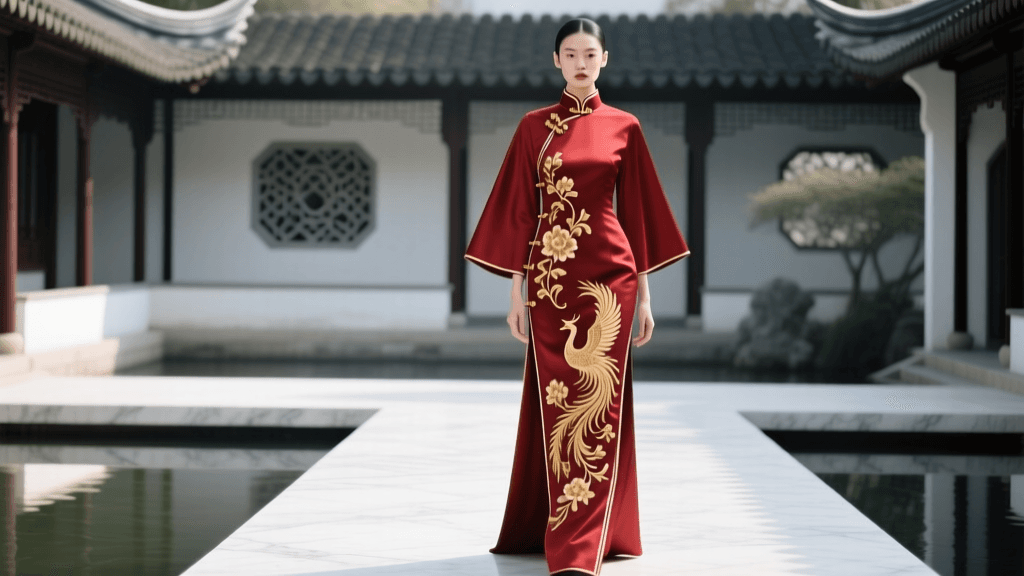
Originating from Suzhou, Su embroidery (Su Xiu) is renowned for its delicate, split-thread technique, where a single silk thread can be divided into up to 48 finer strands. In international couture, houses like Guo Pei and Dior have utilized these techniques to elevate evening wear from mere garments to wearable art. Authentic Su embroidery requires immense temporal investment; a single haute couture bodice featuring traditional peony or crane motifs can take upwards of 1,500 hours to complete by master artisans. When integrating this into modern runway pieces, designers often contrast the matte finish of hand-embroidered silk with the high-shine of French bullion wire or Swarovski crystal mesh, creating a dialogue between ancient Eastern techniques and modern Western embellishments.
2. The Qipao Silhouette and Pankou Fasteners
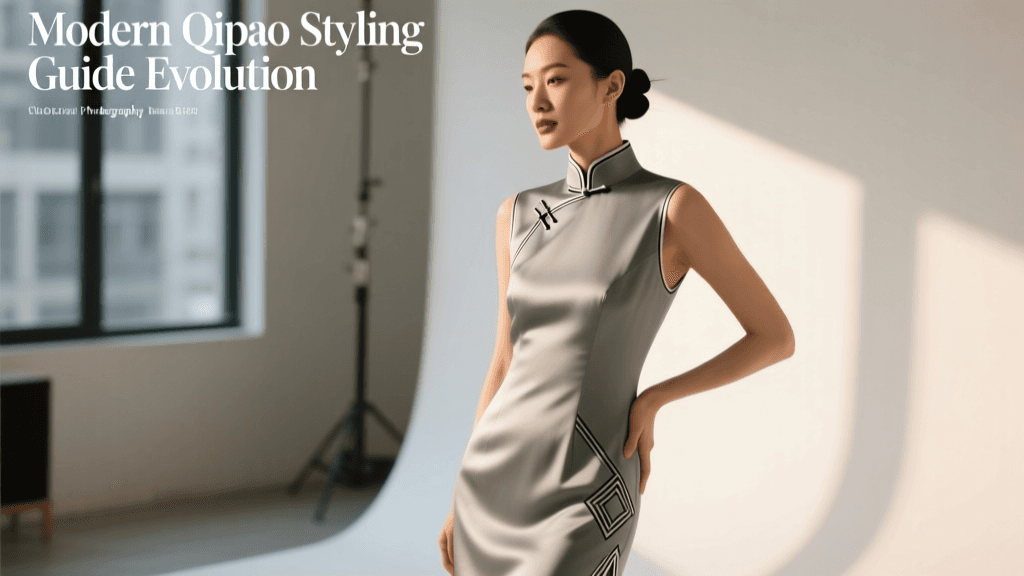
The qipao (or cheongsam) evolved in 1920s Shanghai as a symbol of modern femininity, characterized by its high Mandarin collar, asymmetric front opening, and form-fitting bias cut. On the international runway, the qipao's influence is frequently seen in the structural collars and side-slit skirts of contemporary evening gowns. The most critical, yet often overlooked, element of the qipao is the pankou (frog fastener). In authentic couture, pankou are not merely functional closures but sculptural elements crafted from silk-wrapped copper wire. Designers like Ralph Lauren and Tom Ford have historically referenced the qipao, but modern couturiers are now focusing on the internal architecture of the garment, utilizing hidden boning and silk organza underlinings to maintain the garment's sleek silhouette without restricting the wearer's movement.
3. Hanfu-Inspired Draping and the Mamianqun
While the qipao represents 20th-century modernity, the hanfu represents millennia of Han Chinese heritage. The jiaoling youren (cross-collar, right-over-left) and the mamianqun (horse-face skirt) have recently permeated global haute couture. The mamianqun, with its flat front and back panels and deeply pleated sides, offers a masterclass in kinetic fashion—designed to reveal intricate woven patterns only when the wearer is in motion. International designers are adapting these pleating techniques, combining traditional jacquard loom weaving with modern heat-setting technologies to create voluminous, architectural skirts that dominate the runway.
Comparative Analysis: Authentic Integration vs. Superficial Tropes
As Chinese motifs become ubiquitous in global fashion weeks, distinguishing between respectful couture integration and superficial cultural appropriation is vital for collectors, buyers, and fashion historians. The following matrix outlines how elite fashion houses approach these elements compared to fast-fashion or poorly researched runway interpretations.
| Design Element | Authentic Couture Integration | Superficial Runway Trope | Stylist & Buyer Recommendation |
|---|---|---|---|
| Mandarin Collar | Internally boned, tailored to the specific neck slope and posture of the client. | Stiff, generic interfacing that gaps away from the neck or chokes the wearer. | Always request a mock-up fitting; the collar should allow one finger's width of ease. |
| Dragon Motif | Historically accurate claw counts (five for imperial, four for nobility) and directional flow. | Generic, stylized 'tattoo' dragons placed randomly without regard for garment seams. | Verify the motif's provenance; authentic couture will align the dragon's spine with the garment's center back. |
| Silk Brocade | Woven on traditional draw-looms with real metallic threads (gold or silver leaf on paper). | Printed synthetic polyester mimicking brocade patterns, lacking texture and weight. | Perform a burn test on swatches; authentic silk and metallic threads will not melt into hard plastic beads. |
| Color Palette | Use of historically significant dyes (e.g., imperial yellow, cinnabar red, indigo) with symbolic meaning. | Neon or hyper-saturated 'orientalist' colorways that clash with traditional textile weights. | Opt for heritage colorways which photograph better and age more gracefully in archival collections. |
Actionable Guide: Commissioning Couture-Inspired Chinese Garments
For private clients, stylists, and serious collectors looking to commission bespoke pieces that bridge traditional Chinese craftsmanship with international couture standards, a meticulous approach is required. The process differs significantly from standard Western bespoke tailoring.
Measurements and Proportions
Traditional Chinese garments, particularly those influenced by hanfu and early qipao styles, rely on flat-pattern cutting rather than Western darts and princess seams. When commissioning a hybrid couture piece, you must provide specific measurements beyond the standard bust-waist-hip triad:
- Nape to Waist (Back): Crucial for determining the drop of the cross-collar and the placement of the waistband on a mamianqun.
- Shoulder Slope Degree: Essential for the Mandarin collar to sit flush against the clavicle without buckling.
- Armhole Apex Depth: Traditional qipao armholes are cut exceptionally high to allow arm mobility while maintaining a tight bodice. Measure exactly at the apex of the armpit.
Timing and Sourcing
Authentic hand-embroidery and custom silk weaving cannot be rushed. Expect a timeline of 4 to 8 months for a fully bespoke, couture-finished garment. Sourcing authentic materials requires engaging with specialized mills in Suzhou or Hangzhou. For instance, commissioning authentic Song brocade (Song Jin) for a structured jacket will require a minimum order quantity (MOQ) from the weavers, often pushing the fabric cost alone to between $800 and $2,500 per meter, depending on the complexity of the metallic thread integration.
Cost Expectations
Investing in couture-level Chinese traditional wear is a significant financial commitment. Entry-level bespoke pieces from reputable Shanghai or Beijing ateliers, utilizing machine-assisted embroidery and standard silk crepe, typically start around $3,000 to $5,000. However, master-level haute couture pieces—featuring entirely hand-embroidered Su Xiu panels, custom-woven brocade, and genuine jade or gold pankou fasteners—frequently range from $25,000 to over $100,000. According to archives detailed by The Victoria and Albert Museum's extensive research on Chinese dress, the preservation of these historical techniques is intrinsically linked to the economic viability of the artisan communities producing them, making high-end commissions a vital form of cultural preservation.
The Future of Chinese Heritage in Global Fashion
The narrative of Chinese fashion on the international runway is shifting from passive inspiration to active authorship. Visionaries like Guo Pei, whose iconic 'Yellow Queen' gown redefined global perceptions of Chinese couture, are proving that traditional techniques can dictate global trends rather than merely follow them. As the hanfu movement continues to grow among Gen Z consumers in Asia, international fashion houses are being held to a higher standard of cultural literacy. The future of this sartorial intersection lies not in the mere replication of ancient silhouettes, but in the innovative synthesis of Eastern textile philosophy with the avant-garde structural demands of the modern global runway.
'True couture is the preservation of time. When we weave the history of the Silk Road into the hem of a modern gown, we are not just designing clothing; we are engineering a cultural continuum.'
— Industry Consensus on the Evolution of Eastern Haute Couture
By prioritizing authentic craftsmanship, understanding the structural nuances of traditional flat-pattern cutting, and respecting the deep symbolism inherent in Chinese motifs, the global fashion industry can continue to honor and elevate the magnificent legacy of Asian sartorial traditions.