Sustainable Kimono Production: Eco-Friendly Dyes & Upcycled Silk
The Environmental Cost of Traditional Silk
The kimono is globally recognized as a masterpiece of Japanese heritage, a garment that encapsulates centuries of artistry, seasonal awareness, and cultural philosophy. However, the modern fashion industry's demand for textiles has cast a shadow on traditional silk production. Conventional sericulture (silk farming) and synthetic dyeing processes are resource-intensive. It takes approximately 10,000 liters of water to produce a single kilogram of conventional silk, and the heavy metal mordants used in synthetic dyeing often pollute local waterways.
As global awareness of textile waste grows, the Japanese garment industry is undergoing a quiet revolution. According to the Ellen MacArthur Foundation, transitioning to a circular fashion economy is critical to reducing the environmental footprint of global textiles. In Japan, this circularity is being achieved by looking backward—reviving ancestral, low-impact techniques and reimagining the lifecycle of the garment itself. Sustainable kimono production is no longer a niche concept; it is a vital movement preserving both the environment and the craft.
Eco-Friendly Dyes: Returning to Nature
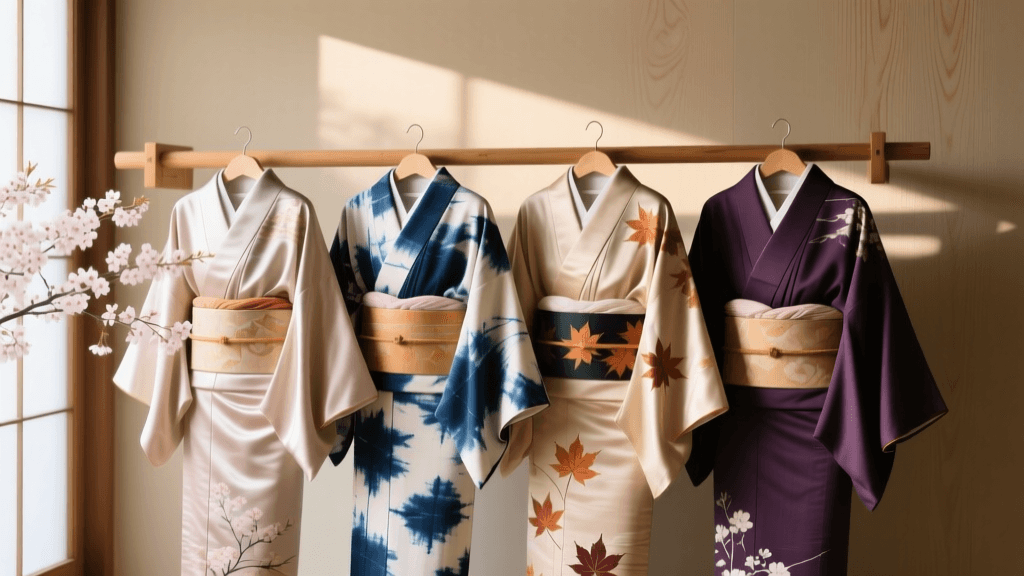
Before the Meiji Restoration introduced synthetic aniline dyes to Japan, all textiles were colored using shokubutsu-zome (botanical dyeing). Today, eco-conscious artisans are returning to these plant-based methods, eliminating toxic runoff and creating garments that age beautifully over time.
- Aizome (Japanese Indigo): Cultivated primarily in Tokushima and Saitama, natural indigo requires a living fermentation vat. The dyeing process takes weeks, relying on natural ash lye (akumizu) to adjust pH levels. Indigo is not only biodegradable but also possesses natural antibacterial and UV-resistant properties.
- Benibana (Safflower): Grown in Yamagata Prefecture, safflower yields a brilliant, delicate crimson. The extraction process is painstaking, requiring artisans to wash away the yellow pigments to isolate the red. It is a zero-waste process, as the leftover plant matter is composted for agricultural use.
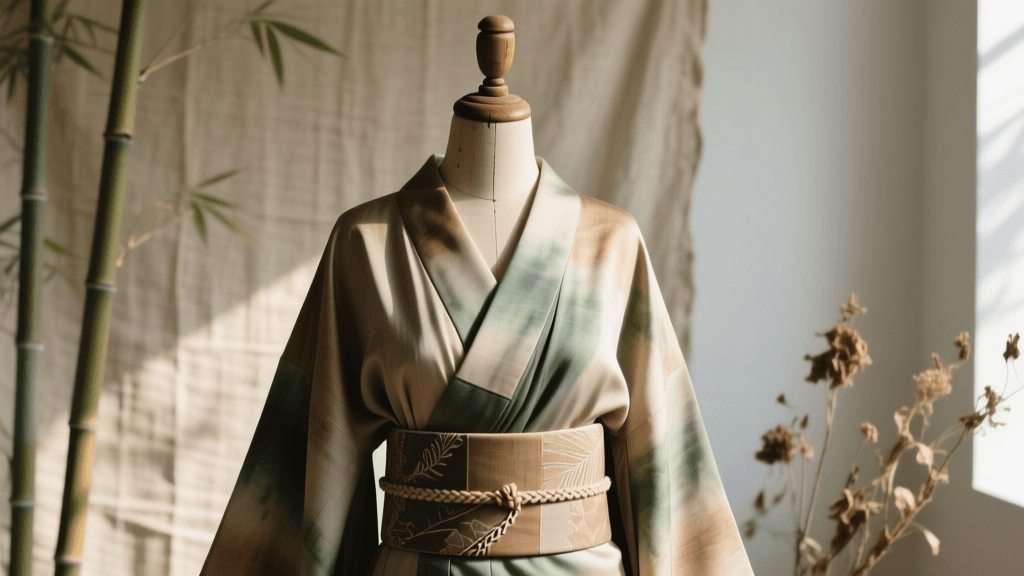
- Kurumi (Walnut) and Onion Skins: Artisans frequently upcycle food waste, such as onion skins and walnut husks, to achieve rich earthy browns and warm ochres, perfectly aligning with zero-waste principles.
'A naturally dyed kimono is a living record of its environment. The colors shift subtly with exposure to light and air, telling a story of time that synthetic dyes simply cannot replicate.' — Master Dyer, Kyoto
Actionable Advice: When shopping for naturally dyed kimonos, look for slight color variances and a faint, earthy scent. Synthetic dyes often have a uniform, plastic-like sheen and a chemical odor, whereas botanical dyes possess a matte finish and a subtle organic aroma.
Upcycled and Recycled Silk: The Tansu Revival
Japan possesses a massive surplus of vintage kimonos, many stored away in tansu (traditional wooden chests) and forgotten. The remake kimono movement deconstructs these vintage garments, cleaning and resewing the silk into modern, wearable silhouettes. This practice drastically reduces the demand for new silk production.
A standard kimono is woven from a single bolt of fabric called a tanmono, measuring roughly 36 centimeters in width and 12 meters in length. Because the fabric is cut in straight lines rather than curved patterns, deconstructing a kimono yields nearly 100% reusable textile. Artisans are transforming vintage silk into two-piece sets, modern wrap dresses, haori jackets, and even upcycled obi belts and bags.
Comparison: Conventional vs. Sustainable Kimono Production
| Feature | Conventional Silk Kimono | Sustainable / Upcycled Kimono |
|---|---|---|
| Material Source | Newly farmed silkworms (high water/mulberry use) | Recycled vintage silk / Peace silk (Ahimsa) |
| Dyeing Process | Synthetic azo dyes, heavy metal mordants | Botanical (Shokubutsu-zome), natural fermentation |
| Water Footprint | High (approx. 10,000L per kg of silk) | Low (Upcycled) / Moderate (Natural dye vats) |
| Average Cost (USD) | $800 - $3,000+ (New, mass-produced) | $150 - $600 (Remake) / $1,200+ (Artisan Natural) |
| Waste Generation | High (curved cutting, chemical runoff) | Near Zero (straight-line cutting, compostable dyes) |
Ethical Weaving and Heritage Preservation
Sustainability is not solely about environmental impact; it is also about the ethical treatment of artisans and the preservation of rural economies. Many of Japan's most exquisite weaving techniques are designated as Intangible Cultural Properties. For example, UNESCO recognizes Yuki-tsumugi, a meticulous hand-pulled silk weaving technique that relies on the floss from discarded or broken cocoons, making it an early form of recycled textile production.
The Japanese government actively supports these ethical supply chains. The Ministry of Economy, Trade and Industry (METI) certifies traditional crafts, ensuring that artisans receive fair compensation and that regional weaving communities can sustain their livelihoods. When you purchase a METI-certified kimono, you are directly funding the ethical preservation of rural Japanese heritage, preventing the exploitation of overseas factory labor.
A Buyer’s Guide to Ethical Kimonos
Navigating the market for sustainable Japanese garments requires knowing where to look and what questions to ask. Here is a practical guide to sourcing ethical kimonos:
- Shop the Remake Districts: In Tokyo, neighborhoods like Shimokitazawa and Harajuku are hubs for remake fashion. Boutiques here specialize in upcycled kimonos, often blending vintage silk with modern denim or cotton. Expect to pay between ¥15,000 and ¥50,000 ($100 - $350) for high-quality remade jackets and dresses.
- Seek Out Peace Silk (Ahimsa): Traditional silk production requires boiling the cocoon with the moth inside. Ethical brands are increasingly adopting 'Peace Silk,' which allows the moth to emerge naturally before the cocoon is harvested. While more expensive (often starting at ¥200,000 / $1,400), it guarantees cruelty-free production.
- Verify Botanical Dyes: When buying from artisans in Kyoto or Kanazawa, ask specifically for shokubutsu-zome. Reputable dyers will provide a certificate detailing the plants used (e.g., indigo, madder, cherry bark) and the natural mordants (like alum or iron) applied.
- Rent Before You Buy: If you are a tourist, participating in kimono rental experiences in Kyoto or Asakusa extends the lifecycle of existing garments. Many rental shops now source their inventory from vintage markets, giving older kimonos a vibrant second life.
Care for Sustainable Silk
Sustainable kimonos require mindful maintenance to avoid negating their eco-friendly origins. Never dry-clean a naturally dyed or upcycled kimono using harsh chemical solvents like perchloroethylene, which can strip botanical colors and damage vintage fibers. Instead, air out the garment in a shaded, well-ventilated area after wearing. For spot cleaning, use a mild, pH-neutral castile soap and cold water. Store your silk wrapped in acid-free tatoushi (traditional Japanese paper) inside a wooden chest or breathable cotton bag to prevent moisture buildup and yellowing.
Conclusion
The future of the kimono relies on its ability to adapt to the ethical demands of the modern world. By embracing eco-friendly botanical dyes, championing the upcycling of vintage silks, and supporting METI-certified rural artisans, consumers can ensure that this iconic Asian tradition remains vibrant, ethical, and sustainable for generations to come.