Miao Silver Jewelry & Embroidery: A Collector's Guide
The Wearable Archives of the Miao People
The Miao (often recognized globally as the Hmong) represent one of China's most culturally vibrant and historically resilient ethnic minorities. Concentrated primarily in the mountainous provinces of Guizhou, Yunnan, and Hunan, the Miao people have cultivated a breathtaking sartorial tradition that serves as far more than mere adornment. Because the Miao historically lacked a formalized written script, their history, mythology, clan identities, and migration routes were encoded directly into their garments and jewelry. Today, Miao silver jewelry and embroidery stand as masterclasses in indigenous craftsmanship, attracting textile collectors, fashion historians, and cultural enthusiasts from around the globe.
For collectors and cultural preservationists, understanding the nuances of Miao clothing traditions is essential. According to the Victoria and Albert Museum's Asian textile archives, Miao embroidery is globally celebrated for its complex structural stitches, vibrant natural dyes, and profound mythological motifs. This guide will walk you through the significance of these traditions, provide actionable advice for sourcing authentic pieces, and offer expert preservation techniques to protect your investments.
The Weight of Tradition: Miao Silver Jewelry
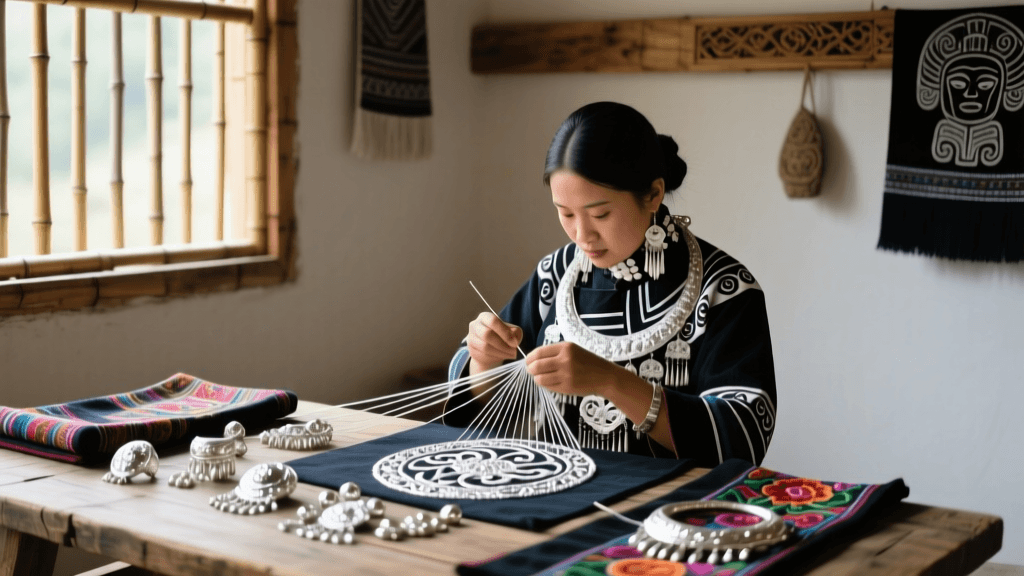
In Miao culture, silver is the ultimate symbol of wealth, spiritual protection, and social status. The creation of silver jewelry is a highly specialized craft, traditionally passed down through male lineages of master silversmiths. During major festivals, weddings, and coming-of-age ceremonies, Miao women don elaborate silver headdresses, necklaces, combs, and lockets that can weigh anywhere from 5 to 15 kilograms.
The most iconic piece is the silver horn headdress (niu jiao), which mimics the horns of the water buffalo—an animal deeply revered in Miao agrarian society. These headdresses are often accompanied by multiple layered neck rings, chest lockets featuring dragons or phoenixes, and intricate hairpins. The silversmithing process involves smelting, hammering, wire-drawing, and filigree work, often requiring hundreds of hours to complete a single ceremonial set. The sound of the silver bangles and pendants chiming as the wearer moves is believed to ward off evil spirits and announce the family's prosperity to the community.
Decoding the Stitches: Embroidery Techniques and Motifs
Miao embroidery is a labor-intensive art form taught to girls from a very young age. A single ceremonial jacket can take up to two years to complete. The techniques vary wildly between different Miao subgroups, but several core methods define the tradition:
- Broken Thread Stitch (Daxian): A unique technique where silk threads are wrapped with a finer metallic or contrasting thread, creating a raised, three-dimensional texture that catches the light.
- Braid Stitch (Bianxiu): Threads are braided into thin cords and then couched onto the fabric base, allowing for bold, sweeping outlines and geometric patterns.
- Flat Stitch and Appliqué: Often used in combination, where cut pieces of dyed fabric are layered and stitched down to create vibrant, mosaic-like scenes.
The motifs are deeply symbolic. The most prominent is the 'Butterfly Mother' (Mai Bang), the mythological ancestor of the Miao people, who is often depicted emerging from a maple tree alongside dragons, birds, and fish. Unlike the fearsome dragons of Han Chinese imperial tradition, Miao dragons are benevolent, water-dwelling protectors that frequently appear with the heads of buffalo, birds, or even silkworms.
Indigo and Earth: The Dyeing Process
Before the embroidery begins, the base fabric must be prepared. The Miao are masters of indigo dyeing and resist techniques like batik (using beeswax). The cloth is repeatedly submerged in fermented indigo vats, then pounded with wooden mallets and rubbed with egg whites or ox-hide glue. This process, known as calendering, gives the dark indigo fabric a stiff, metallic sheen that serves as the perfect canvas for brightly colored silk embroidery.
Collector’s Action Plan: Sourcing Authentic Pieces
Acquiring authentic Miao garments and silver requires strategic planning, an understanding of market pricing, and careful timing to avoid mass-produced tourist replicas. Here is your actionable buyer's guide:
Where and When to Buy
For the most authentic textiles, travel directly to the source regions in Guizhou province, specifically the markets in Kaili, Xijiang, and Shidong. The best timing for purchases is during major cultural gatherings, such as the Sisters' Meals Festival (typically held in March or April) or the Lusheng Festival (Autumn). During these times, local families often sell older, heirloom pieces to fund the creation of new festival garments. If you cannot travel to Guizhou, the Panjiayuan Antique Market in Beijing and specialized textile galleries in Shanghai are viable alternatives, though prices will carry a 40-60% premium.
Cost Expectations and Measurements
- Vintage Embroidered Jackets (1950s-1980s): Expect to pay between $300 and $800 USD, depending on the density of the embroidery and the condition of the silk.
- Modern Artisan Replicas: $150 to $250 USD. Ensure you are buying from a documented artisan cooperative to support the local economy.
- Antique Silver Horn Sets: $1,500 to $5,000+ USD. Beware of 'Tibetan silver' or white copper alloys passed off as Miao sterling. Always request a silver purity test or buy from established dealers.
- Pleated Skirts (Bai Zhe Qun): $200 to $600 USD. Authentic skirts require up to 20 meters of indigo-dyed cotton, pleated entirely by hand and bound with thread while damp to set the folds.
Sizing Note: Traditional Miao jackets are intentionally cropped to showcase the elaborate aprons and skirts below. Expect lengths of 45–55 cm and wide, boxy chest circumferences of 110–130 cm. They are designed to be worn open or loosely tied, making them highly adaptable for modern layering over contemporary garments.
Comparison Chart: Miao Subgroup Textile Styles
The Miao are not a monolith; their clothing traditions vary drastically by region and subgroup. Use this chart to identify the origins of potential acquisitions:
| Subgroup / Region | Key Garment | Embroidery Style & Motifs | Silver Preference |
|---|---|---|---|
| Xijiang (Leishan) | Long pleated skirt, cropped open jacket | Flat stitch, vibrant reds/greens, prominent Butterfly Mother and water buffalo motifs. | Massive, multi-tiered horn headdresses and heavy chest lockets. |
| Shidong (Taijiang) | Wrap skirts, heavily embroidered aprons | Broken thread stitch (Daxian), 3D texture, mythological dragons and composite beasts. | Intricate hairpins, silver combs, and layered neck rings. |
| Dananhe (Huangping) | Indigo batik skirts, cross-stitch tops | Geometric cross-stitch, star and sun motifs, heavy use of indigo and white contrast. | Delicate silver chains, small bells, and lightweight crowns. |
| Sixi (Bijie) | Woolen capes, wax-resist tunics | Beeswax batik (Laran), swirling floral and river patterns, muted earth tones. | Minimal silver; focus on beadwork and woven sashes. |
Preservation and Care of Ethnic Textiles and Silver
Preserving these artifacts requires strict adherence to archival standards. The UNESCO Intangible Cultural Heritage framework emphasizes that safeguarding these crafts also means protecting the physical artifacts that survive as historical records. Improper storage can destroy centuries of work in a matter of months.
Textile Care
- Storage: Never hang heavy, embroidered Miao jackets on wire or wooden hangers, as the weight of the stitching will distort the base fabric and cause tearing. Store them flat in archival-quality, acid-free boxes.
- Padding: Stuff the sleeves and folds with acid-free, unbuffered tissue paper to prevent hard creases that can snap brittle silk threads over time.
- Environment: Maintain a stable environment with a relative humidity of 45-55% and a temperature around 18°C (65°F). Keep garments away from direct sunlight, which will rapidly fade the natural indigo and madder dyes.
- Cleaning: Never wash antique indigo or embroidered pieces. The natural dyes will bleed, and the metallic threads will tarnish. Use a soft, natural-bristle brush to gently remove surface dust.
Silver Care
Miao silver is often an alloy containing trace amounts of copper, making it highly susceptible to tarnishing in humid environments. Store silver pieces in airtight containers lined with anti-tarnish cloth (such as Pacific Silvercloth). Include silica gel packets to control moisture. If tarnish occurs, avoid harsh chemical dips; instead, use a mild soap solution and a soft microfiber cloth, gently rubbing along the grain of the metal. For intricate filigree work, consult a professional metals conservator.
Supporting the Future of Miao Craftsmanship
As modernization and rural-to-urban migration threaten the continuity of traditional crafts, the role of the ethical collector becomes paramount. When purchasing Miao garments, prioritize buying from documented artisan cooperatives or NGOs that reinvest in local education and craft preservation. Institutions like the British Museum's Ethnographic Collection and various global textile foundations have increasingly highlighted the importance of keeping these traditions alive by supporting the living artisans who continue to weave, dye, and forge their heritage.
Conclusion
Miao silver jewelry and embroidery are far more than beautiful objects; they are the resilient, wearable archives of a people who refused to let their history be forgotten. Whether you are a seasoned collector of Asian antiquities or a fashion enthusiast looking to incorporate meaningful, handcrafted pieces into your wardrobe, understanding the profound cultural weight, regional variations, and proper care of these garments ensures that the legacy of the Butterfly Mother will continue to shine for generations to come.