The Modern Qipao: Styling the Cheongsam for Everyday Wear
The Sartorial Journey: From 1920s Shanghai to Modern Streets
The qipao, widely known in the West as the cheongsam, stands as one of the most recognizable silhouettes in global fashion. However, to view it merely as a static relic of mid-century Shanghai is to ignore its dynamic evolution. Today, the garment is experiencing a massive renaissance, driven by a younger generation of designers and consumers who are reclaiming their sartorial heritage. This movement, often referred to as Xin Zhongshi or 'New Chinese Style,' strips away the costumey connotations of the past and repositions the qipao as a versatile, everyday staple. In this comprehensive guide, we will explore the historical trajectory of the qipao, break down the anatomy of the modern cheongsam, and provide actionable styling and purchasing advice for integrating this iconic garment into your contemporary wardrobe.
To understand the modern qipao, one must first look at its origins. The garment emerged in the 1920s during the May Fourth Movement, a period of intense intellectual and social upheaval in China. Female students and progressive women adopted a looser, one-piece gown as a symbol of gender equality and modernity, stepping away from the restrictive two-piece jackets and trousers of the Qing Dynasty. As detailed in the authoritative text China Chic: East Meets West by Valerie Steele and John S. Major, the qipao quickly became the uniform of the modern Chinese woman, absorbing Western tailoring techniques like darts and set-in sleeves to create a more form-fitting silhouette by the 1930s and 1940s.
For decades following the mid-20th century, the qipao was largely relegated to formal wear, wedding attire, or the uniforms of hospitality staff, leading to a widespread misconception that it was an impractical, highly restrictive garment. However, the 2015 Metropolitan Museum of Art exhibition, China: Through the Looking Glass, highlighted the profound impact of Chinese aesthetics on global fashion, sparking a renewed international and domestic interest in the garment's structural brilliance. This set the stage for the current revival, where independent designers began deconstructing the traditional rules of the cheongsam.
The Rise of Xin Zhongshi (New Chinese Style)
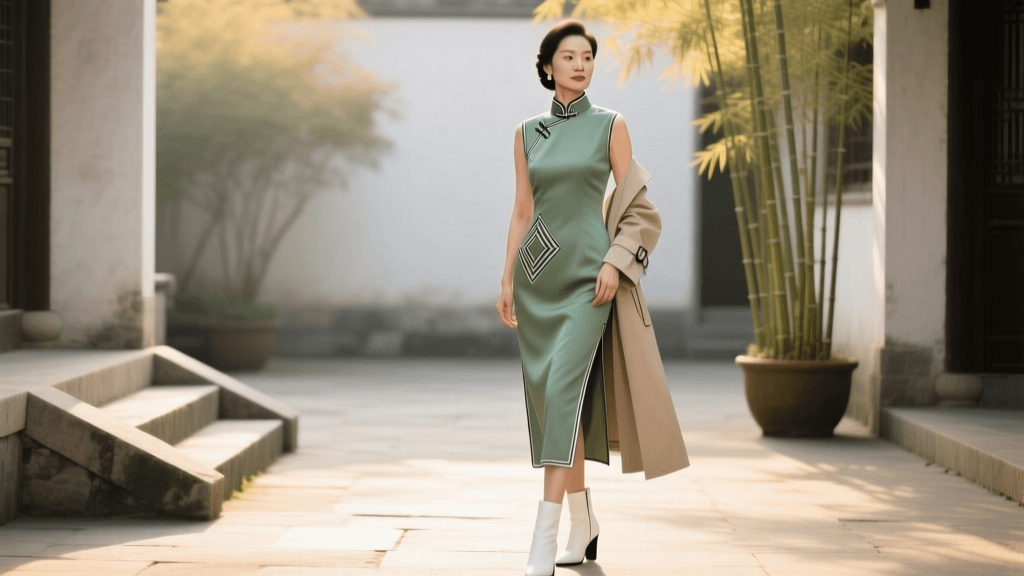
The contemporary iteration of the qipao falls under the umbrella of Xin Zhongshi, a fashion movement that blends traditional Chinese motifs, fabrics, and silhouettes with modern streetwear and minimalist aesthetics. Unlike the skin-tight, high-slit silk dresses of the 1990s cinematic depictions, the Xin Zhongshi qipao prioritizes comfort, structural experimentation, and daily wearability. Designers are utilizing A-line cuts, drop-waists, and asymmetrical hems, while swapping delicate silks for durable cotton-linen blends, denim, and even technical nylons.
Traditional vs. Modern Qipao: A Comparative Guide
To help you navigate the market, here is a structured comparison between the traditional formal cheongsam and the modern everyday qipao.
| Feature | Traditional Cheongsam | Modern Xin Zhongshi Qipao |
|---|---|---|
| Silhouette | Form-fitting, tailored darts, pencil skirt hem | A-line, shift dress, wrap-style, or oversized |
| Fabric | Brocade, heavy silk, velvet, Xiangyunsha | Linen-cotton blends, crepe, denim, jacquard |
| Collar | Stiff, high Mandarin collar (3-5 cm) | Soft stand collar, scoop neck, or collarless |
| Slit | High side slits (often above the knee) | Low slits, back slits, or no slits |
| Closures | Functional pankou (frog) knots | Decorative pankou, hidden zippers, snap buttons |
| Occasion | Weddings, banquets, formal ceremonies | Office wear, street style, casual outings |
How to Style the Qipao for Everyday Wear
Styling a qipao for daily life requires balancing its inherent elegance with grounded, contemporary pieces. The goal is to create a visual tension between the traditional and the utilitarian.
1. Master the Art of Layering
The most effective way to modernize a qipao is through layering. In cooler months, a sleeveless or short-sleeved A-line qipao worn over a fitted, ribbed turtleneck instantly transforms the garment into a chic pinafore-style dress. For a more avant-garde approach, layer an oversized, structured blazer or a cropped leather moto jacket over a midi-length qipao. This juxtaposition of tough outerwear against the delicate frog closures and mandarin collar of the dress creates a compelling, fashion-forward silhouette that is perfect for city environments.
2. Rethink Your Footwear
Leave the stiletto heels for formal events. The cornerstone of modern qipao styling is grounded footwear. Pair a calf-length cotton qipao with chunky loafers and white ankle socks for a preppy, academic aesthetic. Alternatively, combat boots add a grunge-inspired edge that completely neutralizes any 'costume' associations. For warmer weather, minimalist leather slides or sleek, pointed-toe flats maintain comfort while respecting the clean lines of the garment.
3. Accessorize with Intention
Traditional qipao styling often calls for jade bangles, pearl necklaces, and ornate hairpieces. For everyday wear, pivot toward minimalist, architectural jewelry. A single, sculptural metallic ear cuff or a chunky silver chain necklace complements the neckline without competing with the pankou knots. When it comes to bags, avoid small, embellished clutches. Instead, opt for a structured leather tote or a contemporary crossbody bag to reinforce the garment's integration into a modern, working wardrobe.
The Practical Buying Guide: Measurements and Costs
Purchasing a qipao, especially online, requires a precise understanding of your measurements. Because the traditional garment is cut close to the body, even modern, relaxed fits require accurate data to ensure the shoulders and armholes sit correctly.
Essential Measurements for a Modern Fit
When ordering a qipao, you will need four primary measurements, taken with a soft measuring tape over lightweight undergarments:
- Bust: Measure around the fullest part of your chest. For a modern, comfortable fit, add 4 to 6 cm of 'ease' to your actual measurement to prevent pulling across the chest.
- Waist: Measure at your natural waistline (the narrowest part of your torso). If buying an A-line or shift qipao, the waist measurement is less critical, but still required for bespoke orders.
- Hips: Measure around the fullest part of your hips and buttocks. Add 4 cm of ease for movement, especially if the dress features a straight or pencil hem.
- Hollow-to-Hem: Measure from the hollow at the base of your front neck down to your desired hemline. A modern midi qipao typically falls 105 to 115 cm from the hollow, ending mid-calf.
Cost Expectations: Off-the-Rack vs. Bespoke
The price of a qipao varies wildly based on construction, fabric, and origin.
- Fast Fashion / Off-the-Rack ($30 - $80): Typically made from polyester blends with printed motifs. These are mass-produced, often featuring faux pankou knots and back zippers. Good for experimenting with the silhouette, but lacking in breathability and structural integrity.
- Independent Designers / RTW ($120 - $350): The sweet spot for Xin Zhongshi. These garments feature natural fabrics (linen, silk blends), genuine hand-tied frog closures, and modern, inclusive sizing. Brands in this tier often focus on unique textile weaving techniques like jacquard or subtle embroidery.
- Bespoke / Haute Couture ($600 - $2,000+): A fully custom qipao crafted by a master tailor (shifu). This involves multiple fittings, hand-stitched hems, and premium fabrics like Xiangyunsha (mud-dyed silk). This is an investment piece meant to last a lifetime.
Preserving the Legacy
The evolution of the qipao from a symbol of 1920s feminist rebellion to a cornerstone of the modern Xin Zhongshi movement proves its enduring versatility. By understanding its history, respecting its construction, and styling it with contemporary intention, you can seamlessly integrate the cheongsam into your daily life. The modern qipao is not a costume; it is a living, breathing garment that continues to adapt, reflecting the dynamic identity of Asian fashion on the global stage.