Guide to Peking Opera Costumes: Mang Robes & Water Sleeves
The Foundation of Jingju Fuzhuang
Peking Opera, known locally as Jingju, stands as one of the most revered and visually striking theatrical forms in Asia. According to the UNESCO Intangible Cultural Heritage registry, this art form represents a comprehensive synthesis of music, vocal performance, mime, dance, and martial arts. However, the visual spectacle of the performance is fundamentally anchored by its extraordinary wardrobe, known as Jingju Fuzhuang. Unlike Western theatrical costumes that often strive for strict historical accuracy to a specific decade or century, the Peking Opera wardrobe operates on a timeless, highly codified symbolic system. As detailed in historical analyses by Encyclopedia Britannica, these garments are meticulously designed to instantly communicate a character's social status, personality, and moral alignment to the audience through specific colors, motifs, and silhouettes. For stage performers, cultural festival organizers, and textile collectors, understanding the mechanics, sourcing, and maintenance of these iconic garments is absolutely essential.
The Mang Robe: Imperial Grandeur on Stage
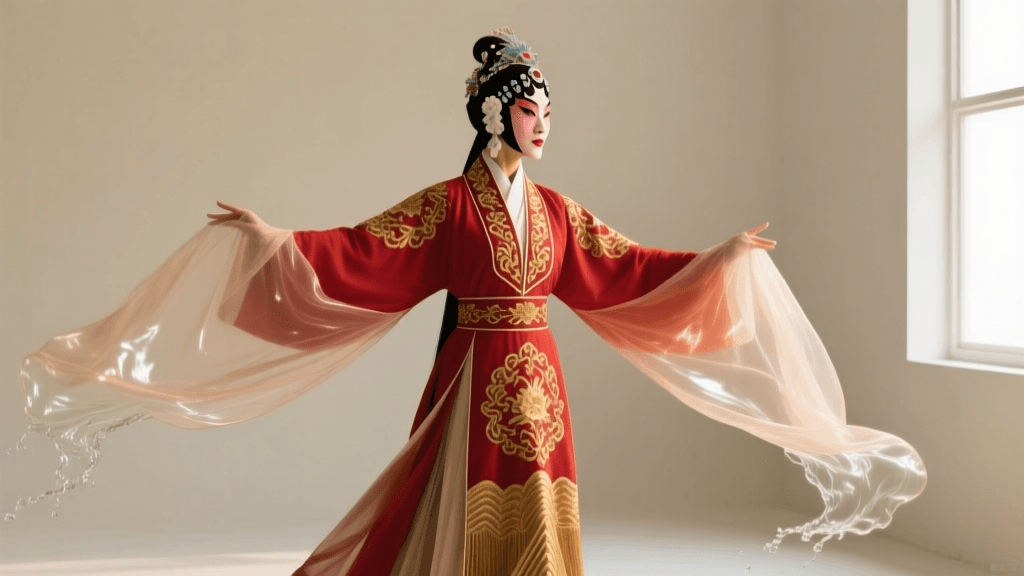
The Mang robe, or Python Robe, is the pinnacle of the Peking Opera wardrobe. Despite its name, it is not named after the snake, but rather the mythical python-like dragon that features four claws instead of the imperial five. The Mang is worn exclusively by characters of the highest rank, including emperors, kings, generals, and high-ranking civil officials. The robe is characterized by its sweeping A-line silhouette, deep side slits for movement, and a stiff, jade-studded belt worn at the waist.
Sizing and Structural Measurements
Traditional Mang robes are designed to be largely free-size, utilizing inner ties and overlapping front panels to accommodate different body types. However, for professional performers and festival parade leaders, custom tailoring is recommended to ensure the heavy embroidery does not restrict acrobatic movements. When commissioning a custom Mang, you must provide the following specific measurements:
- Robe Length: Typically ranges from 110 cm to 125 cm, measured from the base of the neck to the ankle bone.
- Shoulder Width: Measured seam-to-seam, usually between 45 cm and 55 cm, extended slightly with padded shoulders to create a commanding, heroic silhouette.
- Chest and Waist: The inner ties are placed based on a chest circumference of 100 cm to 120 cm, allowing for the thick quilted undergarments worn in winter performances.
- Sleeve Length: Measured to the wrist bone, ending exactly where the water sleeve attachment begins.
Embroidery and Motifs
The front and back panels of the Mang are heavily embroidered using the couching stitch, a technique where gold and silver threads are laid on the surface of the silk and stitched down with fine silk threads. The primary motif is the coiled dragon, surrounded by stylized clouds, pearls, and the 'lishui' (standing water) wave pattern at the hem. The color of the robe dictates the character: bright yellow is reserved for the Emperor, red for high-ranking officials or noble heroes, and black for fierce, impulsive generals.
Mastering Shuixiu: Water Sleeves
Perhaps the most recognizable element of Chinese opera and traditional festival dance is the Shuixiu, or Water Sleeve. These are long, flowing extensions of white silk attached to the cuffs of the Mang, Pei (informal robe), or Xuezi (scholar's robe). They are used to exaggerate gestures, convey complex emotions, and create fluid, calligraphy-like shapes in the air.
Selecting the Right Dimensions and Fabric
Choosing the correct water sleeve requires balancing the performer's skill level with the physical weight of the silk. The fabric of choice is Habotai silk, valued for its fluid drape and lightweight properties.
- Beginner (60 cm length): Ideal for students, children, and festival parade participants. The shorter length prevents tripping and requires less wrist strength to manipulate. Recommended silk weight: 8mm.
- Intermediate (80 cm length): The standard for most professional stage performers. Allows for complex folding and throwing techniques. Recommended silk weight: 10mm.
- Master (100 cm to 120 cm length): Reserved for highly skilled veterans performing specialized emotional arias. The extreme length requires immense forearm strength and precise snapping techniques to prevent tangling. Recommended silk weight: 12mm to 14mm for better momentum.
Attachment and Maintenance
Water sleeves are never permanently sewn to the garment. They are basted (temporarily stitched) to the inner cotton lining of the main robe's cuff. This allows them to be removed for dry cleaning and replaced when the white silk becomes stained with stage makeup or sweat. After every performance, the sleeves must be carefully pleated and rolled to maintain the silk's natural grain and prevent permanent creasing.
Adapting Opera Costumes for Cultural Festivals
While designed for the stage, Mang robes and water sleeves are increasingly prominent in Lunar New Year parades, temple festivals, and international cultural showcases. When adapting these garments for outdoor festival use, organizers must account for environmental factors. Stage silk is highly susceptible to water damage and UV fading. For outdoor parades, it is highly recommended to commission 'performance-grade' replicas made from high-density polyester blends. These synthetic alternatives mimic the sheen of silk, resist sudden rain showers, and can be machine-washed—a crucial feature for community dance troupes performing in unpredictable weather. Furthermore, festival organizers should equip performers with hidden weighted wristbands beneath the water sleeves to help control the silk in windy outdoor conditions.
Material Comparison: Authentic Silk vs. Performance Synthetics
When budgeting for a wardrobe, understanding the trade-offs between traditional materials and modern alternatives is critical for both stage and festival applications.
| Feature | Hand-Embroidered Silk (Authentic) | Machine-Embroidered Poly-blend (Performance) |
|---|---|---|
| Base Material | 100% Heavy Mulberry Silk | High-Density Polyester Satin |
| Embroidery | Hand-couched gold/silver bullion thread | Machine-stitched metallic rayon thread |
| Weight | Heavy (up to 4 kg per robe) | Lightweight (approx. 1.5 kg per robe) |
| Cost Estimate | $2,500 to $8,000+ USD | $150 to $350 USD |
| Maintenance | Strictly professional dry clean; spot treat | Machine washable on gentle cycle |
| Best Application | Professional stage, museum display, VIP gifts | Outdoor parades, student troupes, community festivals |
Sourcing and Commissioning: A Practical Guide
Acquiring authentic Peking Opera costumes requires navigating specialized artisan networks. The production of a single, high-quality Mang robe is a collaborative effort that spans multiple provinces in China.
Where to Source
For authentic, hand-embroidered silk garments, the sourcing hub is Suzhou, Jiangsu Province, famous for its Su Xiu (Suzhou embroidery) workshops. Many historic opera tailors also maintain storefronts in Beijing's Xuanwu District and Tianjin, where they cater directly to the national opera troupes. For synthetic festival wear, wholesale markets in Guangzhou and Yiwu offer ready-made alternatives, though custom sizing will require direct communication with manufacturers via platforms like Alibaba or direct factory contacts.
Commissioning Timeline and Costs
If you are commissioning a bespoke, hand-embroidered silk Mang robe, you must plan well in advance. The lead time is typically 3 to 6 months. The process involves selecting the silk base, drafting the dragon motif on tracing paper, pricking the pattern, and transferring it to the fabric before the embroidery phase begins. A single robe can require over 1,000 hours of manual embroidery labor. Expect to pay a 50% deposit upfront, with the remaining balance due upon completion and photographic verification. Always request a small swatch of the gold thread and silk base before production begins to ensure the colorfastness and metallic sheen meet your exact specifications.
Conclusion
The Mang robe and the Shuixiu water sleeves are far more than mere clothing; they are kinetic sculptures that bring the mythology and history of China to life. Whether you are outfitting a professional theatrical production, curating a museum exhibition, or organizing a vibrant community festival, understanding the precise measurements, material properties, and sourcing channels of Jingju Fuzhuang ensures that the legacy of this magnificent art form continues to captivate audiences worldwide.