Guide to Japanese Wedding Kimono: Shiromuku & Uchikake
The Art of the Japanese Bridal Trousseau
When planning a traditional Japanese wedding, known as a shinzen shiki (Shinto ceremony), the bride's attire is arguably the most significant and visually stunning element of the celebration. Unlike Western bridal fashion, which typically centers around a single white gown, a traditional Japanese bride may change garments multiple times throughout the day. Each outfit carries profound historical and cultural symbolism, reflecting her transition from her birth family to her new life. According to cultural overviews provided by Japan Guide, the transition from the solemn purity of the shrine ceremony to the vibrant celebration of the reception is mirrored perfectly in the evolution of the bridal kimono.
For modern brides, navigating the complexities of bridal kitsuke (the art of dressing in kimono) requires an understanding of garment types, layering techniques, and the logistics of acquisition. This comprehensive guide breaks down the essential ceremonial and wedding kimono styles, offering actionable advice on costs, timelines, and measurements for your special day.
The Shiromuku: The Pure White Wedding Kimono
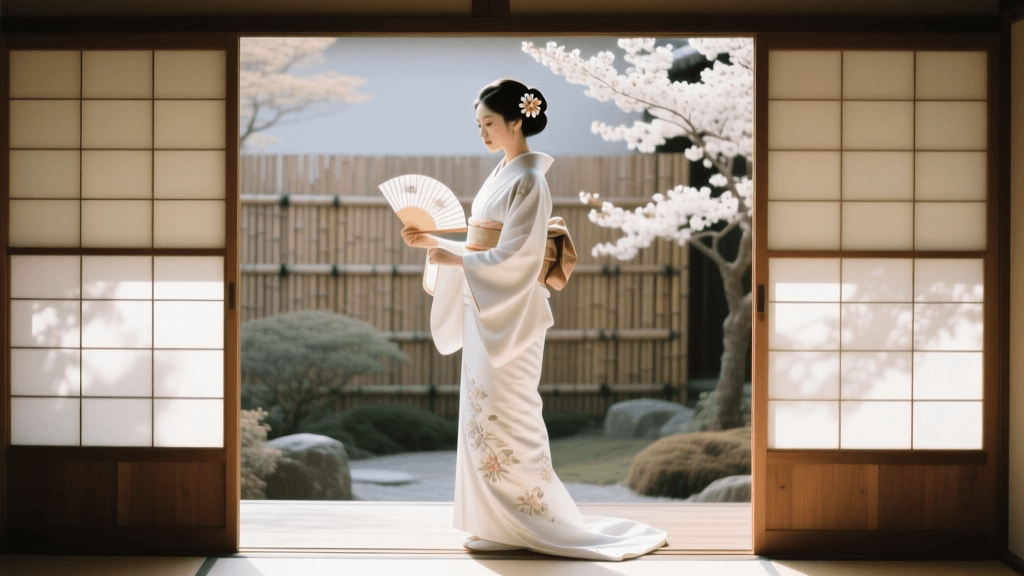
The shiromuku is the most formal and traditional wedding garment, worn exclusively during the Shinto shrine ceremony. The term translates to 'pure white,' and the ensemble consists of entirely white garments, from the inner robes to the outer coat. Historically, white symbolized purity and the bride's willingness to 'dye herself' in the colors of her groom's family. As noted by textile historians at the Victoria and Albert Museum, the evolution of the kimono from everyday wear to highly codified ceremonial dress reached its zenith during the Edo period, solidifying the shiromuku as the ultimate symbol of bridal virtue.
The shiromuku is not a single garment but a complex layering system:
- Hadajuban: The thin, white cotton undergarment worn directly against the skin.
- Nagajuban: The inner silk robe, featuring a white collar (han-eri).
- Kakeshita: The main base kimono, heavily padded at the hem to create a cylindrical silhouette.
- Uchikake: The thick, padded outer coat worn open over the kakeshita, often featuring subtle white-on-white brocade patterns like cranes or pine trees.
The Iro-Uchikake: Colorful Elegance for the Reception
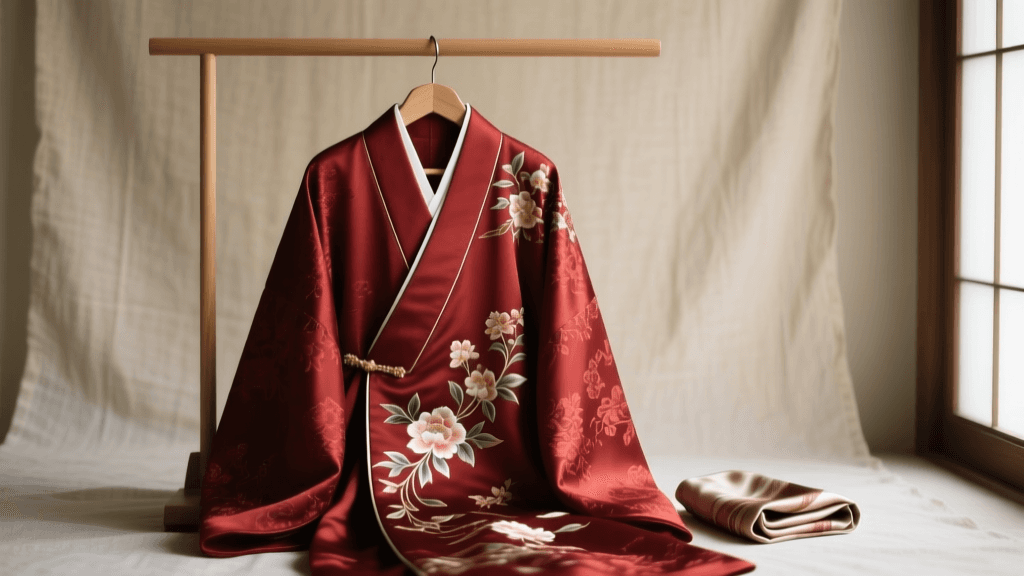
Following the solemn shrine ceremony, the bride typically changes into an iro-uchikake (colored outer robe) for the wedding reception (hirouen). While red remains the most popular color—symbolizing good fortune, passion, and protection against evil spirits—modern brides frequently opt for gold, black, deep purple, or pastel hues. The Metropolitan Museum of Art highlights that the development of advanced dyeing and weaving techniques allowed for the explosion of color and intricate motifs in formal Japanese garments, making the iro-uchikake a canvas for master artisans.
These garments are heavily embellished using Nishijin-ori (Kyoto brocade weaving) or Yuzen (resist dyeing) techniques. Motifs are deeply symbolic: cranes represent longevity, peonies signify wealth, and the sho-chiku-bai (pine, bamboo, and plum) triad embodies resilience and prosperity.
The Hikizuri: The Trailing Hemline
Though less common in standard modern weddings, the hikizuri is a stunning option for brides seeking a deeply historical aesthetic, often used in pre-wedding photography or specific regional ceremonies. The hikizuri features an extended, trailing hemline that sweeps the floor, a style historically reserved for high-ranking noblewomen and later adopted by geisha. Because the hem is not folded at the waist like a standard kimono, the hikizuri requires exceptional posture and a specialized tying technique to ensure the heavy fabric drags elegantly without tangling.
Comparison Chart: Bridal Kimono Styles
| Garment Type | Primary Occasion | Average Rental Cost | Weight & Feel | Traditional Headpiece |
|---|---|---|---|---|
| Shiromuku | Shinto Shrine Ceremony | ¥250,000 - ¥400,000 ($1,700 - $2,700) | Extremely heavy (up to 20kg with layers) | Wataboshi (silk hood) or Tsunokakushi |
| Iro-Uchikake | Reception & Banquet | ¥300,000 - ¥500,000 ($2,000 - $3,400) | Heavy, stiff brocade with padded hem | Floral Kanzashi or Western Tiara |
| Hikizuri | Photoshoots / Niche Ceremonies | ¥150,000 - ¥300,000 ($1,000 - $2,000) | Flowing, requires specialized posture | Traditional Shimada wig or floral pins |
Practical Guide: Renting vs. Buying
Acquiring a bridal kimono is a significant financial and logistical undertaking. Due to the exorbitant costs of silk and the difficulty of storage, over 90% of modern Japanese brides choose to rent their ensembles.
Renting: Costs and Inclusions
A standard rental package from a specialized bridal kimono salon typically ranges from ¥300,000 to ¥500,000 ($2,000 to $3,400 USD). This package is highly comprehensive and generally includes:
- The uchikake, kakeshita, and nagajuban.
- The maru-obi or fukuro-obi (formal sash).
- All necessary undergarments, padding, and ties.
- Footwear (zori sandals and white tabi socks).
- Professional kitsuke (dressing) services on the wedding day.
- Hair styling and makeup.
Buying: An Heirloom Investment
Purchasing a brand-new, custom-tailored silk iro-uchikake from a prestigious district like Kyoto's Nishijin easily exceeds ¥1,500,000 ($10,000+ USD). Vintage kimono markets offer a budget-friendly alternative, where brides can purchase high-quality antique uchikake for ¥50,000 to ¥150,000. However, vintage garments will still require professional cleaning, custom tailoring to fit the bride's exact measurements, and the separate purchase of all accessories and obi sashes.
Measurements and the Fitting Process
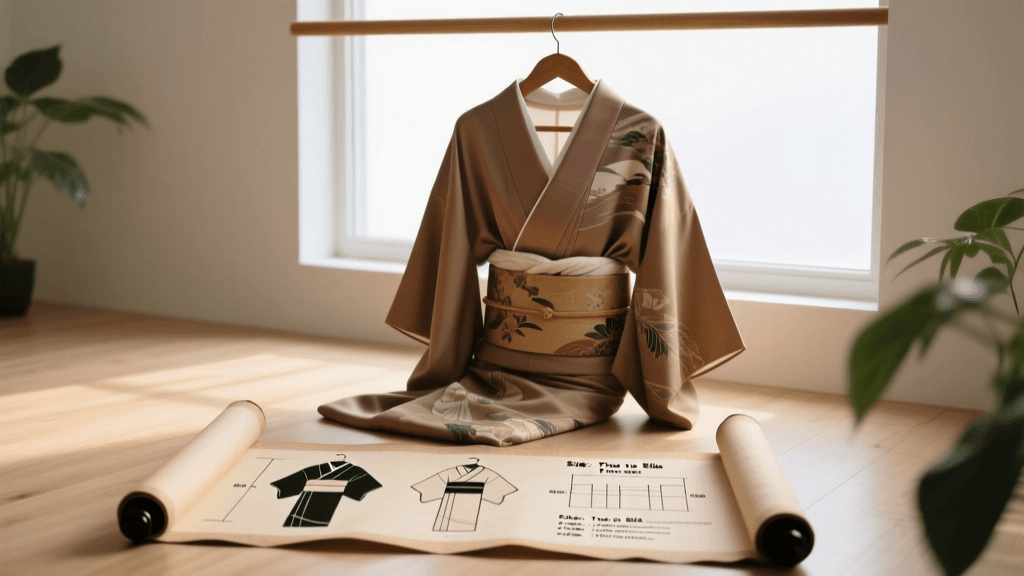
Unlike Western dresses that are altered to fit the body, a kimono is a flat, rectangular garment that is folded, tucked, and padded to fit the wearer. During your fitting (usually 2 to 3 months before the wedding), the salon will take precise measurements to ensure the mitake (total length) and yuki (sleeve span) are correct.
Actionable Advice for the Fitting:
- Padding is Essential: The kimono silhouette requires a cylindrical shape. The dresser will use specialized towels and padding (himomi) to fill in the curves of your waist and bust. Wear form-fitting, low-neckline undergarments to the fitting to allow the dresser to apply padding correctly.
- Posture Training: Walking in an uchikake requires the 'inner toe' (uchimata) stance, where the toes point slightly inward. Practice walking in flat sandals at home to build the necessary core and leg muscles, as the garment can weigh over 15 kilograms.
- Neckline Adjustments: The eri (collar) should be pulled back to expose the nape of the neck, considered the most sensual and elegant part of the body in Japanese aesthetics. Ensure the dresser secures the collar tightly with an erishin (collar stay) so it does not shift during the ceremony.
Essential Accessories for the Bridal Trousseau
The bridal kimono is incomplete without its accompanying accessories, each serving a symbolic or practical purpose:
- Sensu: A folding fan held in the obi, symbolizing a broad and prosperous future.
- Kaiken: A small, decorative dagger tucked into the obi. Historically carried by samurai women for protection, it now represents the bride's resolve and self-reliance.
- Hakoseko: A small, ornate mirror case worn over the left chest, originally used to carry cosmetics and incense.
- Kanzashi: Elaborate hair ornaments. For the shiromuku, brides often wear a tsunokakushi (a literal translation of 'horn-hider'), a white cloth meant to symbolically hide the 'horns' of jealousy and ego, promoting harmony in the marriage.
Timeline for Planning Your Kimono Wedding
To ensure a stress-free experience, adhere to this actionable timeline:
- 8-10 Months Prior: Book your venue and secure your kimono rental salon. High-end salons in Tokyo and Kyoto book out quickly during the peak wedding seasons (Spring and Autumn).
- 6 Months Prior: Attend your first consultation. Select your shiromuku and iro-uchikake. Discuss your color palette and motif preferences.
- 3 Months Prior: Attend the detailed fitting. Finalize your hair and makeup trials. If purchasing vintage, send the garment for professional arai-hari (traditional washing and restitching).
- 1 Month Prior: Finalize the wedding day schedule. Confirm the exact timing for the o-ironaoshi (the mid-reception outfit change), which usually takes 15 to 20 minutes with a professional team.
Conclusion
Choosing a ceremonial Japanese wedding kimono is a journey into centuries of textile mastery and cultural philosophy. Whether you opt for the blinding purity of the shiromuku or the opulent, colorful storytelling of the iro-uchikake, understanding the layers, costs, and logistics will allow you to wear these magnificent garments with confidence and grace. By respecting the traditions and preparing meticulously, your bridal trousseau will become a breathtaking highlight of your wedding celebration.