Edo Period Kosode vs Modern Kimono: History and Buyer Guide
The Roots of Japanese Dress: From Heian Layers to Edo Elegance
When we think of traditional Japanese clothing, the modern kimono immediately comes to mind. However, the iconic silhouette we recognize today is a relatively recent development in Japan's long sartorial history. To truly understand the craftsmanship and cultural weight of these garments, one must look back to the Edo period (1603–1867) and trace the evolution of the kosode—the direct ancestor of the modern kimono. According to The Metropolitan Museum of Art, the transformation of Japanese dress was deeply intertwined with shifting social hierarchies, economic booms, and strict governmental regulations. The transition from the multi-layered extravagance of the Heian court to the streamlined, surface-design-focused kosode of the Edo merchant class represents one of the most fascinating evolutions in global fashion history.
Anatomy of the Garment: Heian vs. Edo vs. Modern
Before the kosode became the dominant outer garment, the Heian period (794–1185) was defined by the junihitoe, a twelve-layer ensemble worn by court ladies. The kosode, meaning 'small sleeve,' originally began as a simple silk undergarment worn beneath these voluminous layers. As the samurai class rose to power and courtly extravagance waned, the kosode emerged as the primary outer garment. By the Edo period, it had become a canvas for extraordinary textile arts. Below is a structural comparison of these distinct historical eras.
| Feature | Heian Junihitoe | Edo Period Kosode | Modern Kimono |
|---|---|---|---|
| Sleeves | Extremely wide, open at the wrist | Narrow wrist opening (Kosode) | Variable (Tomesode, Furisode) |
| Obi (Sash) | None (Layers tied with thin cords) | Narrow, tied at front or side | Wide, elaborate bows at the back |
| Layers | Up to 12+ visible layers | 1-2 layers (Kosode + Uchikake) | 1 main layer + undergarments |
| Textile Focus | Color combinations of layered hems | Surface design (Yuzen, Shibori) | Surface design & Obi brocade |
Sumptuary Laws and the Birth of 'Iki'
The Edo period was defined by the Tokugawa shogunate's strict class system and subsequent sumptuary laws, which forbade the merchant class (chonin) from wearing overtly luxurious fabrics or bright colors. This suppression inadvertently birthed an explosion of creativity in textile dyeing and the aesthetic concept of Iki (refined, understated chic). Merchants bypassed restrictions by wearing subdued, dark-colored kosode on the outside, while lining them with exorbitantly dyed silks featuring hidden gold leaf and vibrant Yuzen patterns. As noted by the Victoria and Albert Museum, this era cemented the Japanese appreciation for subtle, hidden luxury and intricate surface-level craftsmanship over ostentatious structural volume.
True 'Iki' (chic) is found not in ostentatious display, but in the subtle reveal of a masterfully dyed inner lining or a hidden geometric pattern along the hem.
Actionable Buyer’s Guide: Sourcing Historical Replicas and Antiques
For collectors, historians, and practitioners of traditional arts, acquiring an Edo-style kosode or a verified antique requires specific knowledge of the secondary market. Whether you are seeking a genuine Taisho/early-Showa antique that mimics Edo sensibilities or a modern reproduction, understanding where to look and how to measure is critical.
Where and When to Buy
- Toji Temple Flea Market (Kyoto): Held on the 21st of every month, this is the premier destination for antique textiles. Arrive by 6:00 AM to access high-grade silk kosode before wholesale buyers clear the best stalls. Expect to pay ¥10,000 to ¥50,000 ($70–$350 USD) for unverified antique pieces.
- Ichiroya (Online): A highly reputable Osaka-based antique dealer that ships globally. They provide detailed condition reports and measurements. Excellent for sourcing verified shibori and yuzen pieces ranging from $150 to $800 USD.
- Nishijin-ori Weavers (Modern Reproductions): For brand-new, historically accurate Edo-style kosode woven with traditional techniques, commission directly from Nishijin textile houses in Kyoto. Lead times are typically 4 to 8 months, with costs starting at $2,500 USD.
Crucial Measurements for Vintage Kosode
Buying antique garments requires a departure from modern sizing charts. Historical garments were tailored to a population with a smaller average stature and a different wearing style (often worn with hands hidden inside the sleeves). Always request the following flat-lay measurements from sellers:
- Yuki (Center Back to Wrist): Modern standard is 63–65 cm. Antique kosode often measure 58–60 cm. If you are taller than 5'4" (162 cm), you must look for 'recut' antiques or accept a vintage, cropped-sleeve fit.
- Mihaba (Front Panel Width): Standard modern width is 35–36 cm. Antique panels are often narrower (32–34 cm). Ensure the combined front and back panels wrap comfortably around your hips with at least a 10 cm overlap.
- Sode-take (Sleeve Drop): Edo-style sleeves are generally shorter and less boxy than modern furisode, typically measuring 45–50 cm in drop length.
Cost Breakdown and Investment
When budgeting for historical Japanese garments, factor in the hidden costs of restoration and accessories. A $100 antique kosode may require a $60 professional arai-hari (traditional washing and re-stretching) if it has structural creasing or odors. Furthermore, a historically accurate kaku obi (stiff, narrow sash) will cost an additional $80–$200, while a modern wide fukuro obi can easily exceed $500.
Kitsuke: Dressing in the Historical Edo Style
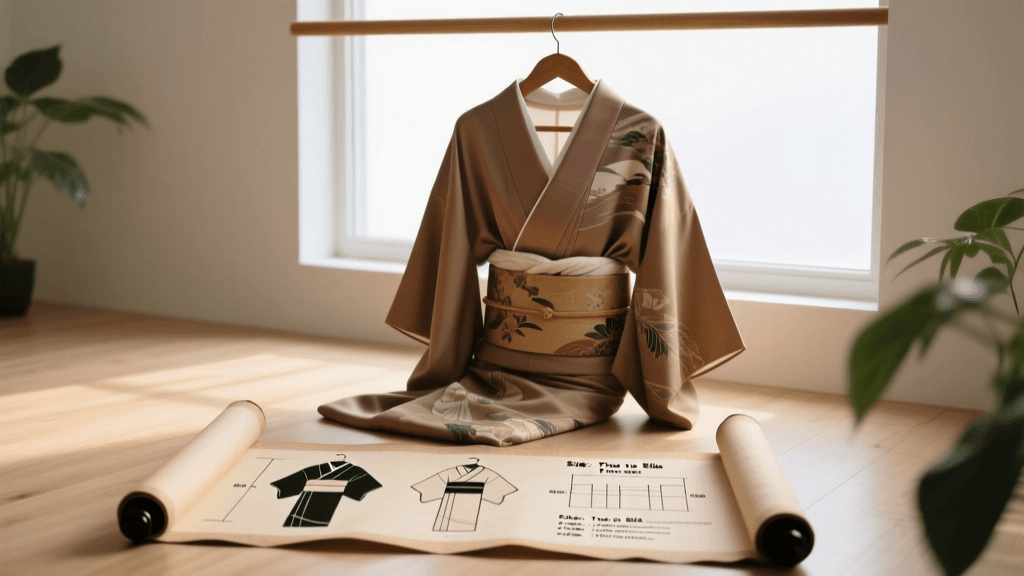
The art of dressing (kitsuke) in an Edo-period style differs vastly from modern kimono wearing. Modern kitsuke focuses on creating a smooth, cylindrical silhouette with the obi tied in an elaborate knot at the back. In contrast, the Edo merchant and samurai classes favored a softer, more natural body line. The obi was significantly narrower (around 15–20 cm wide compared to the modern 30 cm) and was frequently tied at the front or side in simple knots like the ichi-ju-gake or bunko. To achieve this look today, utilize a heko obi or a soft silk kaku obi, and avoid the stiff obi-ita (front boards) used in modern dressing to maintain the relaxed, historical drape of the fabric.
Preserving Your Garments: Archival Care Tips
Silk garments from the Edo and subsequent periods are highly susceptible to humidity, light, and protein-based pests. Never store an antique kosode on a wire or wooden hanger, as the weight of the silk will warp the shoulder seams. Instead, fold the garment along its original seam lines and wrap it in acid-free tatou-shi (traditional Japanese archival paper). Store the wrapped bundle in a tansu (wooden chest) made of paulownia wood (kiri), which naturally regulates humidity and repels insects. According to conservation guidelines from the Kyoto National Museum, airing out your silk garments on a dry, shaded day during the late autumn months is essential to prevent mold spores from taking root in the natural dyes.
Conclusion
The journey from the Heian court's layered junihitoe to the Edo period's masterfully dyed kosode is a testament to Japanese resilience and artistic ingenuity. By understanding the historical context, precise measurements, and proper care techniques outlined above, collectors and enthusiasts can responsibly preserve and wear these extraordinary garments, keeping the legacy of Asian textile traditions alive for future generations.