Sustainable Kimono: Eco-Friendly Silk & Upcycling Guide
The Intersection of Heritage and Ecology
The kimono is globally revered as a masterpiece of Japanese artistry, a garment that encapsulates centuries of cultural heritage, seasonal motifs, and meticulous craftsmanship. However, as the global fashion industry faces a long-overdue reckoning regarding its environmental footprint, the traditional Japanese garment sector is also undergoing a profound transformation. Today, a new wave of artisans, designers, and conscious consumers are redefining the kimono through the lens of sustainable and ethical production. From the cultivation of eco-friendly silk to the revival of ancient, non-toxic dyeing techniques and the vibrant upcycling of vintage textiles, the modern kimono is emerging as a beacon of slow, sustainable fashion.
The Hidden Environmental Cost of Conventional Silk
To understand the necessity of sustainable kimono production, one must first examine the environmental impact of conventional silk. Traditional sericulture requires vast amounts of water and mulberry leaves, and the subsequent degumming and dyeing processes often rely on harsh chemical mordants and synthetic dyes. According to data on fiber sustainability from Textile Exchange's comprehensive material reports, while silk is a natural, biodegradable protein fiber, its conventional processing can lead to significant water pollution and high energy consumption. Furthermore, the standard practice of boiling the silkworm cocoon to harvest the continuous filament raises ethical concerns regarding animal welfare. This intersection of ecological and ethical challenges has prompted Japanese textile innovators to seek alternatives that honor the luxury of silk without compromising the planet.
The Zero-Waste Heritage of the Tanmono
Ironically, the most sustainable aspect of the kimono is rooted in its ancient design. Unlike Western tailoring, which relies on curved seams and results in significant fabric offcuts, the kimono is constructed from a single bolt of fabric known as a tanmono. A standard tanmono measures approximately 36 centimeters in width and 12 meters in length. The garment is cut in straight lines, ensuring that nearly 100% of the woven textile is utilized. As highlighted by the Victoria and Albert Museum's landmark kimono exhibitions, this modular, zero-waste pattern cutting means that a kimono can be easily unpicked, washed, re-dyed, and resewn into a new garment or passed down through generations. This inherent circularity is a foundational principle that modern sustainable fashion brands are now scrambling to replicate.
Modern Innovations: Peace Silk and Vegan Alternatives
The Rise of Ahimsa (Peace) Silk
For those who desire the luxurious drape and temperature-regulating properties of silk but object to conventional sericulture, Ahimsa silk—often referred to as 'Peace Silk'—offers an ethical alternative. In this process, the silkworm is allowed to complete its metamorphosis and emerge from the cocoon as a moth before the silk is harvested. Because the filament is broken, the resulting yarn is spun rather than reeled, giving the fabric a slightly textured, matte finish that resembles raw cotton or linen. While it requires more labor and yields a shorter staple fiber, Ahimsa silk is increasingly favored by ethical kimono designers in Kyoto and Tokyo who prioritize animal welfare.
Cupro and Plant-Based Fibers
For vegan consumers, the market has expanded beyond synthetic polyesters, which shed microplastics. Cupro (often branded as Bemberg), a regenerated cellulose fiber made from cotton linter—a byproduct of the cotton industry—has become a staple in modern, sustainable kimono production. Produced in a closed-loop system where water and solvents are recycled, Cupro mimics the smooth, breathable, and anti-static qualities of silk, making it an ideal, cruelty-free, and eco-conscious alternative for both the outer kimono and the inner lining (juban). Additionally, innovative weavers are experimenting with bamboo silk and recycled ocean plastics (rPET) to create durable, washable everyday kimono.
Eco-Friendly Dyeing: Aizome and Kakishibu
The vibrant colors of a kimono traditionally come from nature, but the modern revival of natural dyeing is as much about environmental preservation as it is about aesthetics. Synthetic dyes, particularly azo dyes, can release toxic effluents into local waterways. In contrast, traditional Japanese natural dyes are experiencing a renaissance:
- Aizome (Japanese Indigo): Fermented from the Persicaria tinctoria plant, natural indigo requires no toxic mordants. It is naturally antibacterial, UV-resistant, and actually strengthens the silk or cotton fibers it dyes.
- Kakishibu (Persimmon Tannin): Derived from the fermentation of unripe persimmons, this earthy brown dye acts as a natural preservative, making the fabric water-resistant and highly durable.
- Madder and Safflower: Used for rich reds and pinks, these plant-based dyes are cultivated using regenerative agricultural practices by artisan cooperatives in regions like Tokushima and Kyoto.
The Upcycling and Vintage Kimono Renaissance
Perhaps the most impactful movement in sustainable kimono fashion is the embrace of vintage and upcycled garments. Japan has a robust culture of second-hand markets, and millions of high-quality silk kimono sit unworn in cedar chests across the country. Modern designers are deconstructing these vintage pieces to create contemporary fashion, accessories, or modernized kimono silhouettes. The UN Environment Programme's Alliance for Sustainable Fashion emphasizes that extending the life of a garment by just nine months reduces its carbon, water, and waste footprints by around 20-30%. By purchasing vintage kimono, consumers bypass the resource-intensive production phase entirely, rescuing exquisite hand-painted and woven textiles from landfills.
Data Comparison: Conventional vs. Sustainable Kimono Materials
When building an ethical wardrobe, understanding the material impact is crucial. The following table compares the environmental and economic profiles of different kimono materials available on the market today.
| Material Type | Water Impact | Chemical Usage | Biodegradability | Average Cost (USD) |
|---|---|---|---|---|
| Conventional Silk | High | Heavy (Synthetic Dyes) | Yes | $800 - $3,000+ |
| Peace (Ahimsa) Silk | Moderate | Low (Natural Dyes) | Yes | $600 - $1,500 |
| Cupro (Bemberg) | Moderate (Closed-loop) | Low | Yes | $300 - $800 |
| Upcycled Vintage Silk | Negligible | None (Reused) | Yes | $50 - $300 |
| Recycled Polyester (rPET) | Low | Moderate (Processing) | No (Sheds Microplastics) | $150 - $400 |
Actionable Guide: Building a Sustainable Kimono Wardrobe
Transitioning to a sustainable kimono wardrobe requires mindful purchasing and specialized care. Here is a practical guide to sourcing, wearing, and maintaining eco-friendly Japanese garments.
1. Sourcing and Shopping
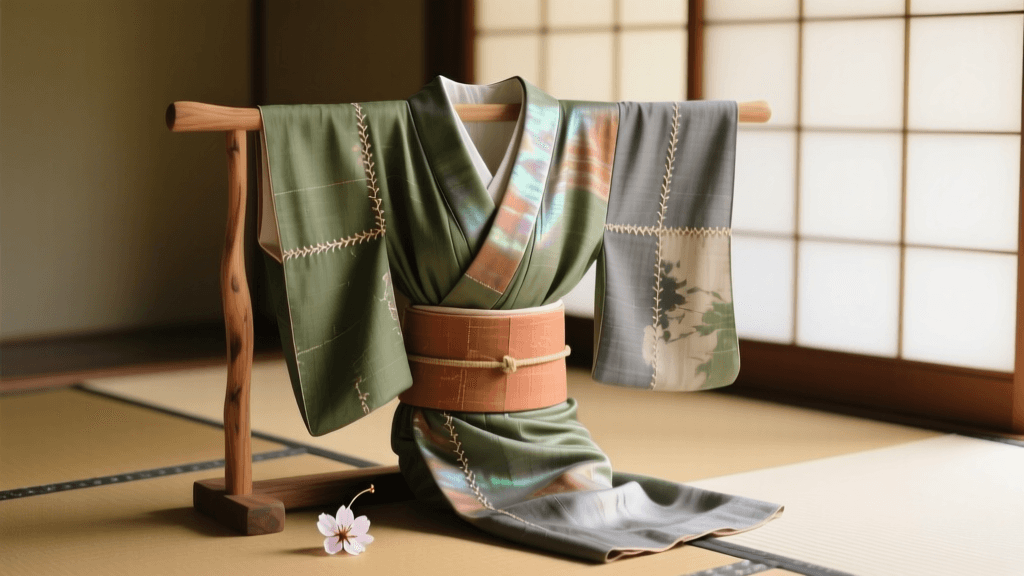
- Embrace Vintage: Visit specialized vintage dealers in Tokyo (such as the famous 'Chicago' thrift stores in Shimokitazawa) or reputable online platforms like Etsy and specialized Japanese export sites. Look for the term shimi (stains) or jimi (fading) in descriptions; minor flaws can often be hidden with strategic obi placement or patched using the visible mending technique of sashiko.
- Check the Width: Remember that vintage tanmono widths are often narrower (around 32-34cm) than modern standard widths (36-38cm). Ensure the garment's dimensions accommodate your body type before purchasing.
- Verify Certifications: If buying new, look for brands that utilize GOTS-certified organic cotton for casual yukata, or those that transparently disclose their use of closed-loop Cupro and natural dyes.
2. Ethical Care and Maintenance
'The true sustainability of a kimono lies not just in how it is made, but in how it is cared for over its multi-generational lifespan.'
- Washing Natural Dyes: Garments dyed with natural indigo or plant extracts should never be washed with alkaline detergents, which will strip the color. Use a pH-neutral, organic soap and hand-wash in cold water.
- Drying: Never hang a silk or Cupro kimono in direct sunlight. UV rays will rapidly degrade natural dyes and weaken protein fibers. Always shade-dry on a specialized kimono hanger (emonkake) to maintain the straight seam structure.
- Storage: Store your garments flat, folded along their original seam lines, in a breathable cotton cover or traditional tatoushi paper. Avoid plastic bags, which trap moisture and encourage mold growth, ensuring your garment survives to be passed down to the next generation.
Conclusion
The narrative of the kimono is no longer confined to museums or formal, rigid ceremonies. Through the adoption of peace silk, the mastery of zero-waste tailoring, the revival of botanical dyes, and the passionate upcycling of vintage textiles, the kimono is proving that tradition and sustainability are not mutually exclusive. By choosing eco-friendly materials and supporting ethical artisans, consumers can wear a piece of Japanese history that actively protects the future of our planet. The sustainable kimono is more than a garment; it is a wearable commitment to ecological harmony and enduring craftsmanship.