Sustainable Kimono Production: Eco-Friendly Silk and Dyes

The Hidden Environmental Cost of Traditional Garments
The kimono is globally revered as a masterpiece of Japanese heritage, artistry, and elegance. However, the modern mass-production of these garments often carries a hidden environmental toll. Conventional silk sericulture is highly resource-intensive, requiring vast amounts of water and energy, while modern synthetic dyes and chemical mordants used in techniques like Yuzen can introduce heavy metals and toxic runoff into local waterways. As the global fashion industry faces a reckoning regarding its ecological footprint, a dedicated movement of Japanese artisans, designers, and eco-conscious consumers is reshaping the landscape of sustainable kimono production. This guide explores the practical realities of ethical silk, natural dyeing renaissances, and the circular economy of vintage textiles.
The Inherent Sustainability of the Tanmono
Before examining modern eco-friendly interventions, it is vital to recognize that the traditional architecture of the kimono is inherently sustainable. Unlike Western garment manufacturing, which relies on curved pattern cutting that discards up to 15-20% of textile waste, the kimono is constructed using a method called chokusen-dachi (straight-line cutting). The fabric is woven into a single continuous bolt known as a tanmono, which measures approximately 36 centimeters in width and 12 meters in length. Every centimeter of this bolt is utilized to create the body, sleeves, and collars of the kimono. Furthermore, because the garment is assembled using simple, straight seams, it can be entirely disassembled, cleaned, re-dyed, and resewn, making the traditional kimono one of the world's earliest examples of zero-waste, modular fashion.
Ethical Silk: Ahimsa and the Circular Economy
Conventional silk production involves boiling the silkworm cocoon intact to harvest a single, unbroken thread, a process that kills the pupae inside. For eco-conscious and vegan-adjacent consumers, Ahimsa silk (often called Peace Silk) offers an ethical alternative. In this method, the silkworm is allowed to mature, break through the cocoon, and emerge as a moth before the silk is harvested. Because the emerging moth breaks the continuous filament, Ahimsa silk must be spun rather than reeled, resulting in a slightly textured, matte finish that resembles raw cotton or linen. While Ahimsa silk kimonos are rare and command premium prices—often starting at $1,500 USD per unlined hitoe garment—they represent a crucial step in cruelty-free sericulture.
Alternatively, the most sustainable silk is the silk that already exists. The Remake Kimono movement focuses on upcycling vintage and antique garments. According to global standards monitored by organizations like the Textile Exchange, utilizing recycled and upcycled textiles drastically reduces the carbon and water footprint of fashion. In Japan, specialized tailors will deconstruct damaged vintage kimonos, salvage the pristine sections of silk, and recut them into modern garments, haori jackets, or even Western-style dresses. The cost for bespoke upcycling tailoring typically ranges from $200 to $450 USD, excluding the cost of sourcing the vintage textile.
Ai-zome: The Renaissance of Natural Indigo
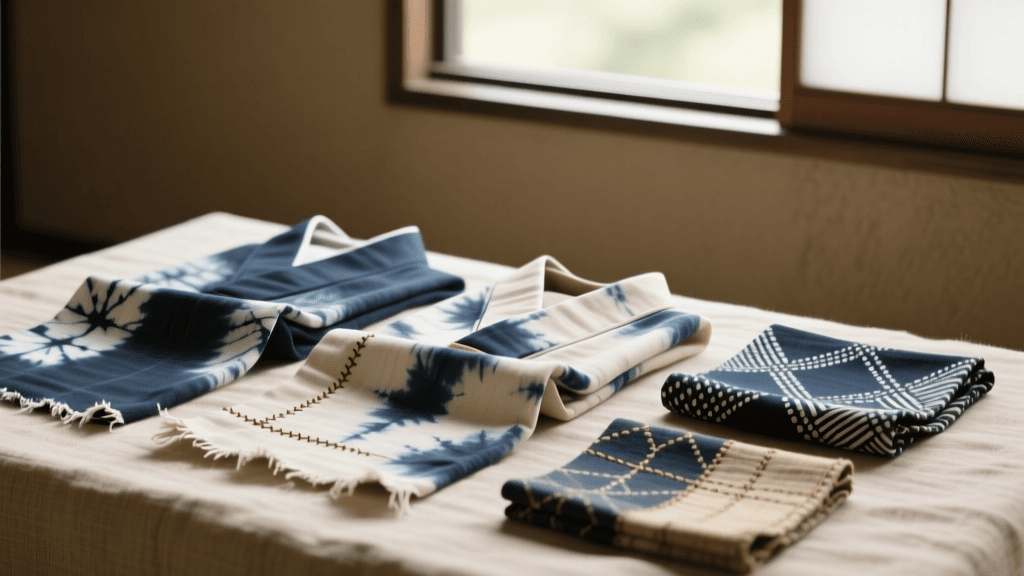
Perhaps the most celebrated pillar of sustainable kimono production is the revival of Ai-zome, or natural Japanese indigo dyeing. Unlike synthetic indigo, which is derived from petrochemicals and requires toxic reducing agents to bond with fibers, natural Ai-zome relies on the fermentation of Persicaria tinctoria leaves. The traditional process, recognized and protected by Japan's Ministry of Economy, Trade and Industry (METI) under its Traditional Craft Products designation, utilizes sukumo (composted indigo leaves) mixed with wood ash lye, sake, and wheat bran to create a living, fermenting dye vat.
Pioneering sustainable farms like Buaisou in Tokushima Prefecture have revolutionized this space by controlling the entire supply chain—from cultivating the indigo plants without synthetic pesticides to fermenting the leaves and dyeing the garments by hand. Buaisou's signature 'Jigoku-date' (Hell's Vat) technique uses only natural alkaline agents, ensuring that the wastewater is entirely non-toxic and can safely be returned to the earth. A fully hand-dyed, natural indigo silk kimono is a luxury investment, often costing between $2,500 and $5,000 USD, and requires a production timeline of three to six months due to the meticulous, repetitive dipping and oxidizing process required to achieve deep, colorfast shades of 'Japan Blue'.
Material Comparison: Conventional vs. Sustainable Kimono Textiles
When investing in a kimono, understanding the trade-offs between conventional and sustainable materials is essential for making an informed purchase. The table below outlines the practical differences in cost, environmental impact, and care requirements.
| Textile & Dye Type | Average Cost (USD) | Environmental Impact | Durability & Fading | Care Level |
|---|---|---|---|---|
| Conventional Silk & Synthetic Dye | $300 - $800 | High (Chemical runoff, high water usage, pupae mortality) | Moderate (Prone to harsh chemical fading over time) | Dry Clean Only |
| Ahimsa (Peace) Silk & Natural Dye | $1,500 - $3,500 | Low (Organic farming, no heavy metals, cruelty-free) | High (Develops a rich, organic patina with age) | Gentle Hand Wash |
| Natural Ai-zome (Indigo) on Silk | $2,500 - $5,000+ | Negative/Neutral (Carbon sequestering plants, non-toxic vats) | Exceptional (Indigo naturally strengthens silk fibers) | Specialist Hand Wash |
| Upcycled Vintage Silk (Remake) | $150 - $400 (Tailoring fee) | Negative (Diverts textiles from landfills, zero new water use) | Variable (Depends on the structural integrity of the vintage silk) | Specialist Clean |
Practical Guide: Sourcing and Verifying Eco-Kimonos
Where to Buy Sustainable Garments
Finding authentic, sustainably produced kimonos requires looking beyond standard tourist rental shops in Kyoto or Tokyo. Seek out specialized galleries and direct-to-consumer artisan cooperatives. For natural indigo, look for certifications or direct affiliations with Tokushima-based farms. For upcycled garments, search for 'Remake Kimono' boutiques in Tokyo's Shimokitazawa or Daikanyama districts, where young designers are actively deconstructing and modernizing vintage silks. When buying online, request detailed provenance reports that specify the dyeing method and the origin of the silk.
Verifying Authentic Natural Dyes
Greenwashing is prevalent in the global textile market, and synthetic dyes are frequently marketed as 'natural-inspired.' To verify authentic Ai-zome, rely on your senses. Natural indigo has a distinct, earthy, slightly fermented aroma reminiscent of damp soil and dried grass; synthetic indigo is odorless or smells faintly of chemicals. Furthermore, natural indigo is known for its antibacterial and deodorizing properties, a functional benefit that synthetic alternatives cannot replicate. Finally, authentic natural dyes will exhibit slight, beautiful irregularities in color depth, whereas synthetic dyes offer a flat, uniform perfection.
Care and Maintenance for Natural Dyes
Owning a sustainably dyed kimono requires a shift in maintenance habits. Natural dyes, particularly botanical dyes like safflower (benibana) and indigo, are highly sensitive to alkaline environments. Standard laundry detergents and modern dry-cleaning chemicals will strip the color and destroy the organic compounds.
- Washing: Always use a pH-neutral, organic castile soap or specialized natural-dye detergent. Wash in cold water (below 20°C / 68°F) by gently submerging the garment. Never wring or twist the silk.
- Drying: Natural dyes are photosensitive during the washing phase. Always dry your kimono in a well-ventilated, shaded area. Direct sunlight will cause rapid, uneven fading.
- Storage: Store the garment in a breathable, unbleached cotton cloth (tatoushi). Avoid plastic covers, which trap moisture and can cause the natural dyes to bloom or mold.
- Handling: Indigo will naturally rub off on skin and lighter clothing when new (a process called cropping). This is normal and will stabilize after the first few wears and gentle washes.
'True sustainability in Japanese textiles is not about inventing something new; it is about remembering the old ways. The earth provides the dye, the silkworm provides the thread, and the artisan provides the time. When we respect that trinity, the garment becomes a living archive of nature.'
— Master Artisan of Tokushima Ai-zome
Conclusion
The transition toward sustainable kimono production is a vital evolution of a centuries-old craft. By embracing ethical Ahimsa silk, supporting the rigorous, non-toxic practices of natural Ai-zome fermentation, and participating in the circular economy through vintage upcycling, consumers can protect both the environment and the cultural integrity of Japanese fashion. While the initial financial investment and care requirements for eco-friendly kimonos are higher, the reward is a profoundly meaningful garment—one that honors the earth, the artisan, and the enduring legacy of Asian textile traditions.