Sustainable Kimono: Eco-Friendly Dyes and Upcycling Guide
The Hidden Environmental Cost of Conventional Kimono
When we envision the traditional Japanese kimono, we often picture a garment of unparalleled elegance, steeped in centuries of cultural heritage. However, the modern mass-production of kimono and its accessories carries a significant, often overlooked environmental footprint. The shift toward synthetic fabrics like polyester and the use of chemical azo dyes in the mid-20th century transformed the industry. While these methods made kimono more affordable and colorfast, they introduced severe ecological issues. Chemical dyeing processes, particularly those used in mass-produced Yuzen dyeing, often release heavy metals and urea into local waterways. In historic textile hubs like Kyoto, the pollution of rivers such as the Kamo River became a pressing concern, prompting a modern reckoning within the Japanese fashion industry.
Today, a growing movement of artisans, designers, and conscious consumers are reclaiming the kimono's roots through sustainable and ethical production. By looking to the Victoria and Albert Museum's comprehensive guide to Kimono, we can see how historical garments were inherently sustainable, and how modern innovators are reviving these practices to protect the environment while preserving Japanese heritage.
The Inherent Sustainability of Traditional Kimono Construction
Long before the term 'zero-waste fashion' entered the global lexicon, the traditional kimono was the epitome of circular design. A standard kimono is constructed from a single bolt of fabric known as a tanmono. This bolt measures approximately 36 centimeters in width and 12 meters in length. Unlike Western tailoring, which cuts curved shapes from wide fabrics and discards the offcuts, kimono construction relies on straight-line cutting. The garment is assembled using flat, rectangular panels that are sewn together with minimal waste.
Furthermore, because the panels are not permanently altered or tailored to a specific body shape, a kimono can be easily disassembled, cleaned, re-dyed, and sewn back together. This modular approach aligns perfectly with the principles of the circular economy, a concept heavily championed by organizations like the Ellen MacArthur Foundation. When a kimono reaches the end of its life as formal wear, it transitions into everyday wear, then into sleepwear (yogi), and eventually into cleaning rags or patchwork, ensuring that not a single thread is wasted.
Botanical Dyes: The Return of Shokubutsu Zome
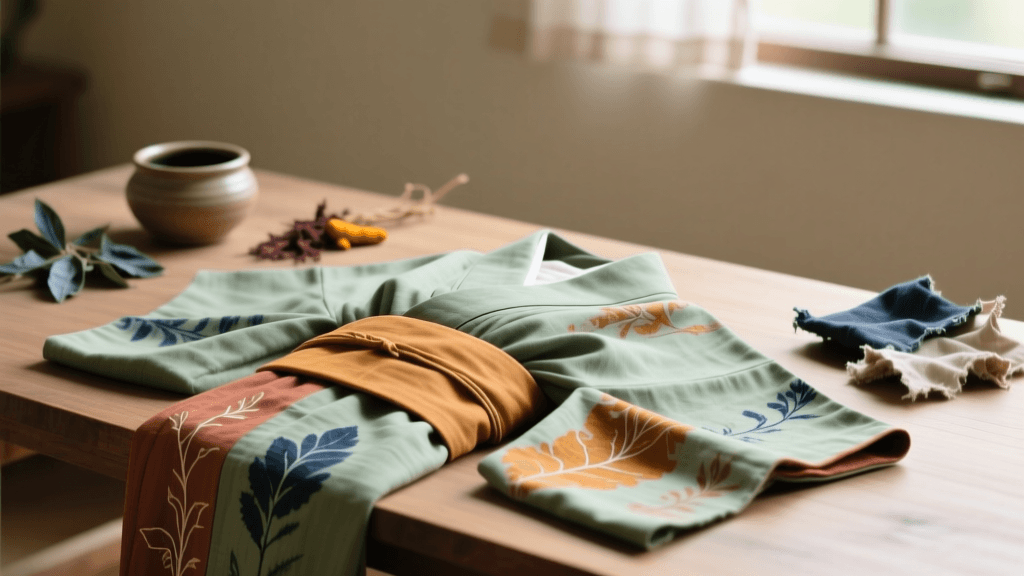
To combat the toxicity of synthetic dyes, ethical kimono artisans are returning to Shokubutsu Zome (botanical dyeing). This ancient technique utilizes plant matter, minerals, and natural mordants to create rich, living colors that evolve over time.
- Ai-zome (Indigo): Sourced from the Japanese knotweed plant (Persicaria tinctoria), natural indigo requires a living fermentation vat known as sukumo. Indigo is prized not only for its deep 'Japan Blue' hue but also for its natural antibacterial, insect-repellent, and UV-protective properties. A genuine, hand-dyed indigo kimono can cost upwards of ¥150,000 ($1,000 USD) due to the months-long fermentation and repetitive dipping process.
- Kakishibu (Persimmon Tannin): Extracted from unripe persimmons, this dye yields a beautiful earthy brown and acts as a natural water-proofer and fabric strengthener. It is frequently used for undergarments (juban) and workwear.
- Akane (Madder Root) & Kariyasu (Kariyasu Grass): These plants provide vibrant reds and yellows, respectively, using alum or ash as natural mordants to fix the color without heavy metals.
The Remake Movement: Upcycling and Mottainai
The Japanese concept of mottainai (a sense of regret concerning waste) has sparked a booming 'Remake' culture in Japan. With millions of vintage silk kimono sitting unused in household closets (tansu), modern designers are deconstructing these garments to create contemporary fashion. Upcycling not only preserves the exquisite hand-painted and woven silk of the Showa and Taisho eras but also completely bypasses the carbon and water footprint of new textile production. Activist groups like Fashion Revolution Japan frequently highlight upcycling as a critical step toward a transparent and waste-free fashion ecosystem.
Vintage kimono are being transformed into modern wrap dresses, wide-leg trousers, and even tailored blazers. The intricate Obi (sashes), woven with metallic threads and brocade, are frequently repurposed into luxury handbags, cushions, and table runners. For tourists and fashion enthusiasts, purchasing a remade vintage Haori (jacket) is one of the most accessible and sustainable ways to incorporate Japanese heritage into a modern wardrobe.
Material Comparison Chart: Sustainable vs. Conventional
When shopping for a kimono or kimono-inspired garment, understanding the material and dyeing process is crucial for making an ethical choice. Below is a comparison of common kimono materials based on cost, environmental impact, and care requirements.
| Material / Method | Approx. Cost (USD) | Environmental Impact | Durability & Care |
|---|---|---|---|
| Conventional Polyester | $30 - $80 | High (Microplastics, Petrochemicals) | Machine washable, low breathability |
| Synthetic Silk Dyes | $150 - $400 | Moderate-High (Water pollution, heavy metals) | Dry clean only, vibrant but toxic |
| Botanical Dyed Silk | $800 - $2,500+ | Low (Biodegradable, non-toxic) | Hand wash cold, fades beautifully |
| Upcycled Vintage Silk | $50 - $200 | Negative (Diverts waste, circular) | Spot clean, delicate due to age |
| Vegan Lotus/Bamboo | $200 - $600 | Low (Renewable, low water usage) | Gentle hand wash, highly breathable |
Practical Guide: Shopping for Ethical Kimono
Where to Buy and What to Look For
If you are seeking authentic, sustainable kimono, look for specialized boutiques in Kyoto and Tokyo that advertise Shokubutsu Zome or Remake collections. When purchasing new botanical-dyed garments, ask the artisan about their mordants; ethical dyers will use alum, iron, or wood ash rather than synthetic chemical fixatives. For upcycled pieces, reputable vintage shops in Tokyo's Shimokitazawa or Kyoto's antique markets offer curated selections. Always inspect the seams and the integrity of the silk, particularly under the arms and at the hem, where vintage fabric may show stress.
Price Expectations and Budgeting
- Vintage Remake Accessories: ¥3,000 to ¥10,000 ($20 - $70 USD). Great for entry-level sustainable fashion.
- Upcycled Haori or Jackets: ¥15,000 to ¥40,000 ($100 - $270 USD). Prices vary based on the rarity of the original silk weave (e.g., Yuki Tsumugi or Nishijin-ori).
- New Botanical Dyed Yukata (Cotton): ¥40,000 to ¥80,000 ($270 - $540 USD). Ideal for summer wear and casual outings.
- Custom Artisan Silk Kimono: ¥200,000 to ¥500,000+ ($1,350 - $3,400+ USD). A lifelong investment piece supporting master weavers and natural dyers.
Care and Maintenance for Eco-Friendly Garments
Naturally dyed and vintage garments require specific care to maintain their integrity and color. Because botanical dyes are sensitive to pH levels and UV light, standard laundry detergents can strip the color or cause unwanted chemical reactions.
- Washing: Never use alkaline detergents or bleach on naturally dyed silk or cotton. Use a pH-neutral, organic castile soap or a specialized silk wash. Hand wash in cold water (below 30°C / 86°F) and avoid wringing the fabric, which can break delicate vintage fibers.
- Drying: Botanical dyes are highly susceptible to UV fading. Always dry your kimono or remade garments in a well-ventilated, shaded area. Never hang silk in direct sunlight.
- Storage: Store silk garments flat or loosely rolled in acid-free tissue paper. Avoid plastic garment bags, which can trap moisture and cause mildew. For vintage pieces, include natural cedar blocks or dried indigo sachets to repel moths without the use of toxic chemical mothballs.
- Embracing the Fade: Unlike synthetic dyes, natural indigo and madder will soften and shift in tone over time. In the Japanese aesthetic of wabi-sabi, this aging process is celebrated as a record of the garment's life and use.
The Future of Japanese Heritage Fashion
The intersection of traditional Japanese craftsmanship and modern sustainability offers a powerful blueprint for the global fashion industry. By embracing zero-waste pattern cutting, investing in non-toxic botanical dyes, and participating in the circular economy through upcycling, the kimono industry is proving that heritage and environmental stewardship can beautifully coexist. Whether you are renting a vintage kimono for a day in Kyoto, investing in a hand-dyed indigo Yukata, or wearing a remade silk Haori as a modern statement piece, your choices directly support the artisans keeping these ethical traditions alive for generations to come.