The Complete Ming Hanfu and Jade Hair Accessory Guide
The Resurgence of Ming Dynasty Hanfu
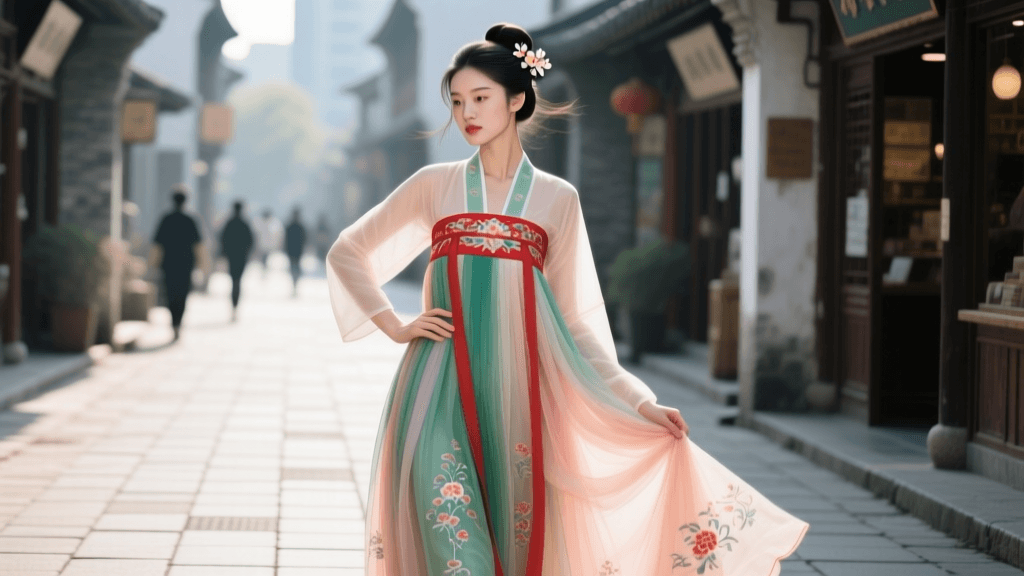
The global revival of traditional Chinese clothing, known as the Hanfu movement, has transitioned from a niche internet subculture into a mainstream cultural phenomenon. Among the various historical periods enthusiasts draw from, the Ming Dynasty (1368–1644) stands out as the most popular and accessible era for complete ensembles. This is largely due to the abundance of surviving garments, detailed portraiture, and archaeological findings that provide a clear blueprint for modern reproduction. For those looking to curate an authentic, high-quality wardrobe, understanding the interplay between Ming textiles and traditional jade hair accessories is essential. This guide will walk you through assembling a complete Ming Dynasty Hanfu ensemble, selecting historically accurate jade ornaments, and navigating the modern market for these exquisite pieces.
Anatomy of a Complete Ming Dynasty Ensemble
A traditional Ming wardrobe is defined by its structured silhouettes, rich fabrics, and layered elegance. Unlike the flowing, wide-sleeved garments of the Tang or the slender, delicate lines of the Song, Ming clothing offers a dignified, grounded aesthetic.
The Upper Garment: Ao (袄) and Shan (衫)
The foundational top for women in the Ming era is the Ao (a lined or padded jacket) or the Shan (an unlined, lighter top). These garments typically feature a standing collar (Liling) or a cross-collar (Jiaoling), fastened with intricate metal or jade buttons. The sleeves are famously cut in the "Pipa" shape—narrower at the wrist and wider at the elbow—allowing for graceful movement while maintaining a structured look. When purchasing, look for fabrics like cotton-linen blends for daily wear, or silk jacquard for formal events. A well-tailored Ao should end around the hips or knees, depending on whether it is a short Ao (Duan Ao) or long Ao (Chang Ao).
The Lower Garment: Mamianqun (马面裙)
No Ming ensemble is complete without the iconic Mamianqun, or "horse-face skirt." This wrap-around skirt features flat, unpleated front and back panels (the "horse faces") with heavily pleated side panels. The flat panels are often adorned with woven brocade borders (Lan), showcasing motifs like dragons, phoenixes, or floral scrolls. Modern reproductions range from $60 for basic polyester-cotton blends to over $300 for authentic silk Song Brocade (Songjin). Ensure the skirt length falls just above the ankle bone to prevent tripping while allowing your embroidered shoes to peek through.
Outerwear: Pifeng (披风) and Bijia (比甲)
To complete the silhouette, an outer layer is required. The Pifeng is a long, open-front coat with wide sleeves, worn over the Ao and skirt for formal occasions. For a more practical, everyday look, the Bijia—a sleeveless, quilted vest—provides warmth and adds a contrasting layer of color and texture to the ensemble.
The Crown Jewel: Jade Hair Accessories
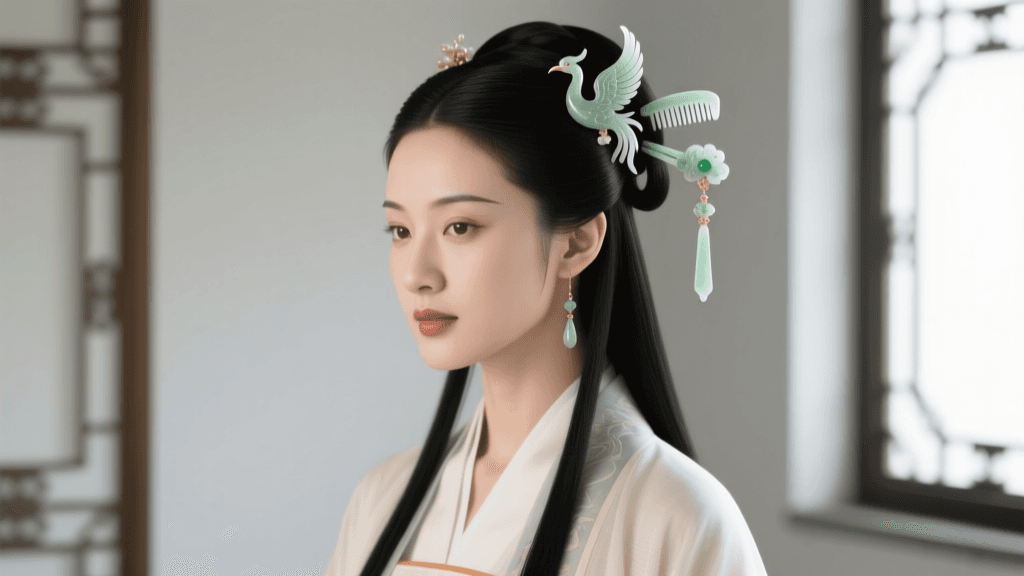
While the textiles provide the canvas, the hair accessories serve as the crown jewels of the Hanfu ensemble. In traditional Chinese culture, jade is revered above all other stones. According to the Metropolitan Museum of Art, jade in China has historically been associated with moral integrity, immortality, and social status, embodying the Confucian virtues of benevolence, righteousness, and wisdom.
Nephrite vs. Jadeite: A Historical Distinction
When shopping for "jade" hairpins, it is crucial to understand the difference between Hetian Nephrite (Ruan Yu) and Jadeite (Fei Cui). Historically, Ming Dynasty nobility exclusively used Hetian Nephrite, a stone prized for its creamy, mutton-fat white translucency. Jadeite, which is brighter and more glassy, did not become widely imported and popular in China until the Qing Dynasty. Therefore, for strict Ming historical accuracy, you should seek out white or celadon Hetian Nephrite hairpins rather than vivid emerald-green Jadeite. The Smithsonian's National Museum of Asian Art frequently highlights this distinction in their extensive jade collections, noting how nephrite's subtle luster was preferred by Ming artisans for intricate carvings.
Essential Hair Ornaments
- Zan (簪): A single-pronged hairpin used to secure the bun. Jade Zan often feature carved motifs like lotuses, magnolias, or ruyi clouds at the head.
- Chai (钗): A double-pronged hairpin that offers more stability for thicker hair and heavier ornamentation.
- Buyao (步摇): Translating to "step-shake," these feature dangling elements that sway with the wearer's movement. Ming Buyao often incorporated gold wire, pearls, and jade inlays.
- Diji (狄髻): The ultimate Ming hair accessory. This is a conical crown made of silver wire, horsehair, or silk, worn over the hair bun. A formal Diji is adorned with a complete suite of gold and jade hairpins known as a Toumian.
Sourcing and Budgeting: What to Expect
Building a complete, high-quality Ming Hanfu wardrobe and jade collection requires careful budgeting and patience. Most authentic garments are sourced through specialized Taobao boutiques or independent international Hanfu makers. Custom orders typically require a lead time of 30 to 60 days.
| Item | Historical Term | Material Recommendations | Estimated Cost (USD) |
|---|---|---|---|
| Upper Jacket | Ao (袄) | Silk Jacquard, Cotton-Linen | $60 - $180 |
| Horse-Face Skirt | Mamianqun (马面裙) | Song Brocade, Woven Jacquard | $80 - $350 |
| Outer Coat | Pifeng (披风) | Raw Silk, Wool Blends | $90 - $250 |
| Single Hairpin | Zan (簪) | Hetian Nephrite, Silver | $40 - $200 |
| Hair Crown Base | Diji (狄髻) | Silver Wire, Silk Thread | $50 - $120 |
| Step-Shake Pin | Buyao (步摇) | Gold-Plated Silver, Pearl, Jade | $70 - $300+ |
Note: When searching on Chinese e-commerce platforms, use terms like "明制汉服" (Ming-system Hanfu) and "和田玉发簪" (Hetian jade hairpin) to filter out modern, inaccurate costume pieces.
Styling Your Ensemble and Jade Ornaments
The Metropolitan Museum of Art's Heilbrunn Timeline notes that the Ming dynasty was a period of immense cultural restoration, where strict sumptuary laws dictated clothing and accessory usage based on social rank. While modern enthusiasts are free to mix and match, styling your hair in a traditional manner elevates the entire experience.
To style a formal Ming look, begin by gathering your hair into a high, tight bun at the crown of your head. Secure the bun with a sturdy wooden or jade Zan. Next, place the Diji crown directly over the bun, pushing a long, ornamental hairpin horizontally through the base of the crown and the bun beneath to lock it in place. Finally, arrange your Buyao and Chai symmetrically around the base of the Diji. The jade elements should catch the light subtly, providing a cool, elegant contrast to the rich, warm tones of your silk garments.
Care and Maintenance of Silk and Jade
Preserving your investment requires specific care routines. Ming-style silk brocades and jacquards should never be machine-washed. Instead, opt for professional dry cleaning or gentle hand-washing with specialized silk detergents in cool water. Never wring the fabric; roll it in a clean towel to absorb excess moisture and lay it flat to dry away from direct sunlight, which can fade the intricate woven dyes.
Jade, while durable, is porous and can be damaged by harsh chemicals. When removing your jade hairpins, wipe them gently with a soft, lint-free cloth to remove natural hair oils and styling products. Store your Hetian nephrite pieces in a soft velvet pouch separate from metal accessories to prevent scratching. Over time, the natural oils from your hands and hair will actually enhance the luster of the nephrite, a process known in Chinese antiquities as "pan yu" (playing with jade), which develops a rich, coveted patina on the stone's surface.
Conclusion
Assembling a complete Ming Dynasty Hanfu ensemble with authentic jade hair accessories is more than just a fashion choice; it is an act of cultural preservation and historical appreciation. By understanding the structural nuances of the Mamianqun, the historical preference for Hetian Nephrite, and the intricate artistry of the Diji crown, you can build a wardrobe that is both visually stunning and deeply rooted in Asian traditions. Whether you are attending a Hanfu convention, participating in a traditional tea ceremony, or simply exploring the rich tapestry of Chinese heritage, your meticulously curated ensemble will serve as a wearable testament to the enduring beauty of the Ming era.