Eco-Friendly Japanese Indigo & Kakishibu Dyeing Guide 2026
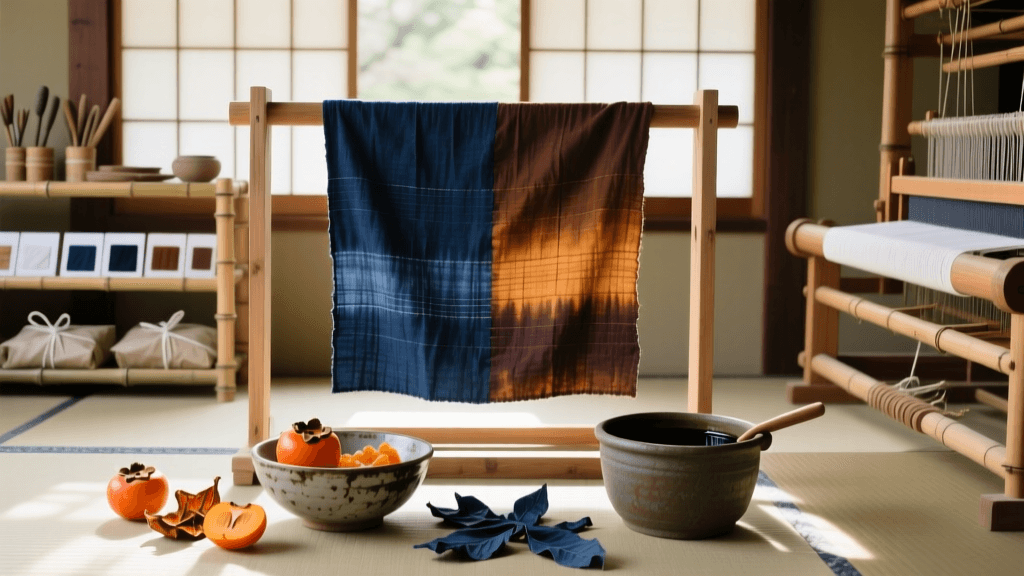
The Renaissance of Kusaki-zome in 2026
As the global fashion industry faces increasing scrutiny over its environmental footprint, the ancient Japanese art of Kusaki-zome (plant dyeing) has experienced a massive resurgence. In 2026, sustainable textile artisans and eco-conscious designers are turning away from synthetic azo dyes and heavy-metal mordants, embracing the biodegradable, low-impact methods perfected over centuries in Japan. According to the Textile Exchange Preferred Fiber and Material Market Report, the demand for naturally dyed, regenerative textiles has grown by over 40% in the past two years, driven by consumer demand for transparent, non-toxic supply chains.
Among the most celebrated and ecologically sound techniques are Ai-zome (Japanese indigo) and Kakishibu (persimmon tannin). Both methods utilize renewable botanical resources, require zero toxic chemical fixatives, and produce biodegradable wastewater. This comprehensive guide explores how to cultivate, extract, and apply these traditional Japanese dyes using modern, eco-friendly methods tailored for the 2026 sustainable studio.
Ai-zome: Eco-Friendly Japanese Indigo Reduction
Unlike tropical indigo species, Japanese indigo is derived from Persicaria tinctoria, a knotweed native to East Asia. The traditional process involves fermenting the leaves into sukumo (dried, composted indigo). Historically, reducing the insoluble indigo pigment into a water-soluble state required harsh synthetic chemicals like sodium dithionite. However, the 2026 standard for eco-friendly Ai-zome relies on organic reduction vats.
Building an Organic Fructose Vat
To maintain a truly non-toxic studio, modern dyers utilize organic reducing agents. A popular and highly effective eco-friendly recipe uses food-grade fructose and calcium hydroxide (pickling lime). This method, often called the '1-2-3 vat', is entirely safe for skin and can be composted after its lifespan ends.
- Botanical Source: 100g of high-quality, organically grown sukumo (fermented Persicaria tinctoria leaves).
- Alkaline Agent: 150g of calcium hydroxide to raise the pH to 10.5–11.0.
- Reducing Agent: 100g of organic fruit sugar (fructose) or henna powder to remove oxygen from the vat.
- Water: 10 liters of filtered, dechlorinated water heated to 50°C (122°F).
Combine the ingredients in a stainless steel or food-grade plastic vat. Stir gently to avoid introducing oxygen, cover tightly, and let it rest for 24 to 48 hours. When the vat is ready, the surface will feature a coppery, iridescent film known as the 'indigo flower' (ai no hana), and the liquid beneath will be a clear, yellowish-green. Dip pre-scoured, damp organic cotton or hemp garments into the vat for 5 to 10 minutes. Upon removal, the oxygen in the air will oxidize the pigment, magically turning the fabric from green to a deep, vibrant blue.
Kakishibu: The Zero-Waste Persimmon Tannin
While Ai-zome provides iconic blues, Kakishibu offers a spectrum of warm earth tones, ranging from pale amber to deep, rich mahogany. Extracted from unripe Diospyros kaki (Japanese persimmons), this liquid is incredibly high in tannic acid. What makes Kakishibu a darling of the 2026 slow fashion movement is its multifunctionality: it acts as a dye, a natural mordant, and a durable fabric finisher all in one.
Extraction and Eco-Application
Authentic Kakishibu is made by crushing unripe, astringent persimmons in late summer and fermenting the juice in cedar barrels for a minimum of two years. This long fermentation breaks down the harsh acids and stabilizes the tannins. Organizations like The Japan Foundation frequently highlight Kakishibu as a prime example of Japanese heritage crafts that align perfectly with modern zero-waste philosophies.
Unlike indigo, Kakishibu does not require a heated vat or an alkaline environment. It is applied directly to the fiber. For a deep, weather-resistant finish on linen or hemp:
- Dilute aged Kakishibu with water (a 1:1 ratio for dark tones, 1:4 for lighter amber hues).
- Apply the liquid evenly using a traditional hake (wide Japanese brush) or by immersion dyeing.
- Hang the garment in direct ultraviolet sunlight. UV exposure is the catalyst that polymerizes the tannins, binding them permanently to the cellulose fibers and darkening the color.
- Repeat the process 3 to 5 times, allowing the fabric to dry completely between coats, to build a water-resistant, antimicrobial patina.
Comparison: Ai-zome vs. Kakishibu
Understanding the distinct properties of these two dyes is crucial for designers and hobbyists planning their 2026 textile collections. Below is a structured comparison of their ecological and practical profiles.
| Feature | Ai-zome (Japanese Indigo) | Kakishibu (Persimmon Tannin) |
|---|---|---|
| Botanical Source | Persicaria tinctoria (Knotweed) | Diospyros kaki (Unripe Persimmon) |
| Active Compound | Indican (converts to Indigotin) | Tannic Acid / Persimmon Tannin |
| Mordant Required? | No (Vat dye, chemically bonds via oxidation) | No (Self-mordanting, polymerizes via UV light) |
| Primary Eco-Benefit | Spent vat acts as nitrogen-rich agricultural fertilizer | Provides natural UV and water resistance without synthetic PFAS |
| 2026 Avg. Cost (Japan) | ¥3,500 per 500g of organic sukumo | ¥4,200 per 1 Liter of aged (3-year) extract |
Eco-Friendly Scouring and Fabric Preparation
Natural dyes require impeccably clean fibers to achieve colorfast results. In the past, harsh synthetic detergents or heavy soda ash baths were used to strip natural waxes and oils from cotton and hemp. In 2026, the sustainable standard for scouring involves biodegradable, plant-based alternatives.
To prepare Global Organic Textile Standard (GOTS) certified hemp or organic cotton for Ai-zome or Kakishibu, simmer the fabric in a large pot of water with 5% Weight of Fabric (WOF) of eco-friendly soda ash and a generous amount of neem oil-based liquid soap. Simmer for 60 minutes, then rinse in warm water. This opens the fiber cuticle and removes pectin without introducing microplastics or phosphates into the local water system. As highlighted by advocates at Fashion Revolution, true sustainability must account for every step of the garment's lifecycle, starting with the very first wash.
Closed-Loop Water Management in the Dye Studio
One of the most significant advancements in natural dyeing over the last few years is the implementation of closed-loop greywater systems. Because Kusaki-zome relies on botanical ingredients, the wastewater is largely non-toxic, provided synthetic mordants like chrome or tin are avoided.
For the Ai-zome fructose vat, once the indigo pigment is exhausted, the remaining alkaline liquid is rich in nitrogen and calcium. By neutralizing the pH with a mild citric acid solution or diluted white vinegar, this spent vat can be safely used to irrigate acid-loving garden plants or added to compost heaps to accelerate decomposition. Kakishibu rinse water, which contains trace tannins, is naturally antimicrobial and can be safely routed to municipal greywater treatment systems or used to water ornamental, non-edible landscaping. By adopting these circular water practices, modern dye studios ensure that their craft heals rather than harms the local ecosystem.
Conclusion: The Future is Rooted in the Past
The integration of Ai-zome and Kakishibu into contemporary fashion is more than a passing trend; it is a vital pivot toward ecological responsibility. By utilizing organic reduction vats, harnessing the self-mordanting power of UV-cured tannins, and managing studio wastewater through closed-loop systems, artisans in 2026 are proving that luxury and sustainability are not mutually exclusive. Whether you are a professional textile designer or a home crafter looking to reduce your environmental impact, embracing these time-tested Japanese botanical dyes offers a profound connection to nature, history, and the future of ethical fashion.