Mastering Su Embroidery: A Guide to Chinese Silk Textile Arts
The Legacy of Chinese Silk Embroidery
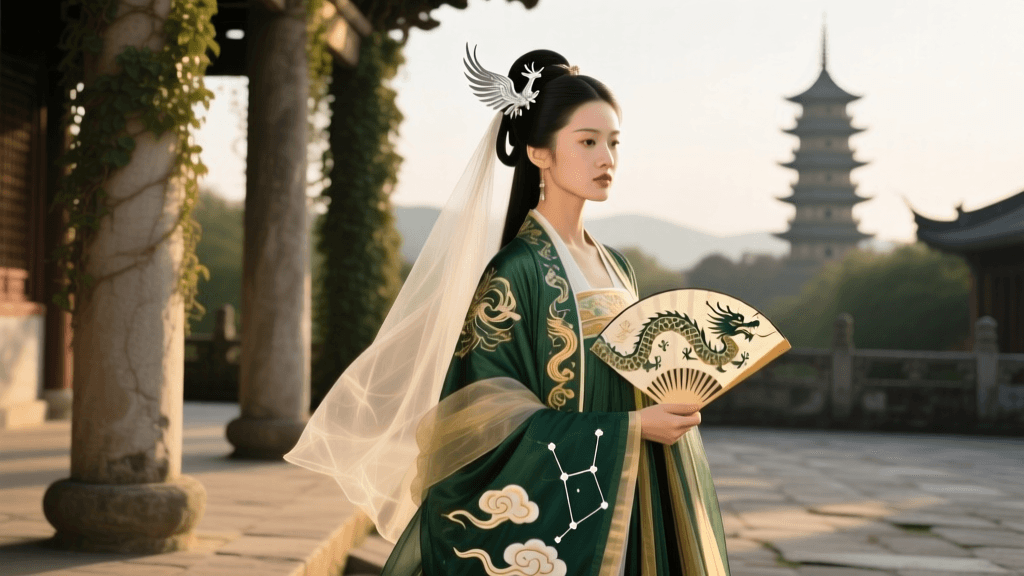
For over two millennia, silk embroidery has been the defining textile art of China, transforming simple woven threads into breathtaking canvases of cultural expression. Nowhere is this more evident than in the traditional garments of the Han, Manchu, and various ethnic groups, where embroidery serves not merely as decoration, but as a language of status, cosmology, and regional identity. According to UNESCO's Intangible Cultural Heritage registry, Chinese sericulture and silk craftsmanship represent a profound continuum of ancestral knowledge, with embroidery standing at the very pinnacle of this tradition.
For modern collectors, Hanfu enthusiasts, and Qipao aficionados, understanding the nuances of silk embroidery is essential. It is the difference between possessing a mass-produced costume and owning a wearable piece of fine art. This guide delves deep into the most revered of China's textile arts—Su Embroidery (Su Xiu)—and provides actionable advice on sourcing, authenticating, and preserving these magnificent garments.
The Four Major Embroidery Schools of China
While dozens of regional styles exist, Chinese textile arts are historically categorized into four major schools, each with distinct characteristics, stitch techniques, and preferred motifs. Understanding these differences is crucial when evaluating vintage or bespoke garments.
| School | Origin | Key Characteristics | Common Garment Applications |
|---|---|---|---|
| Su Xiu (Su) | Suzhou, Jiangsu | Refined, elegant, flat stitches, vibrant but harmonious colors, famous for thread splitting and double-sided work. | High-end Qipao, Ming-style Hanfu (Mamianqun), Xiapei (cloud shoulders). |
| Xiang Xiu (Xiang) | Hunan Province | Rich, contrasting colors, loose stitches, often features realistic wildlife (tigers, lions) and landscapes. | Ceremonial robes, decorative screens, ethnic minority festival jackets. |
| Shu Xiu (Shu) | Sichuan Province | Bright, bold colors, satin stitches, soft and smooth texture, heavily influenced by local folk art. | Everyday traditional wear, Sichuan opera costumes, bridal wear. |
| Yue Xiu (Yue) | Guangdong (Chaozhou) | Gold and silver thread couching, 3D padded embroidery (Ding Jin), highly textured and opulent. | Qungua (traditional Cantonese bridal dress), temple garments, theatrical costumes. |
Su Embroidery: The Pinnacle of Silk Textile Arts
Originating in the water towns surrounding Suzhou, Su Embroidery is celebrated for its painstaking precision and painterly quality. During the Ming and Qing dynasties, Su Xiu was heavily favored by the imperial court and the literati class. Today, it remains the most sought-after embroidery style for luxury bespoke Qipao and high-end Hanfu revival garments.
The Technique of Thread Splitting (Pi Xian)
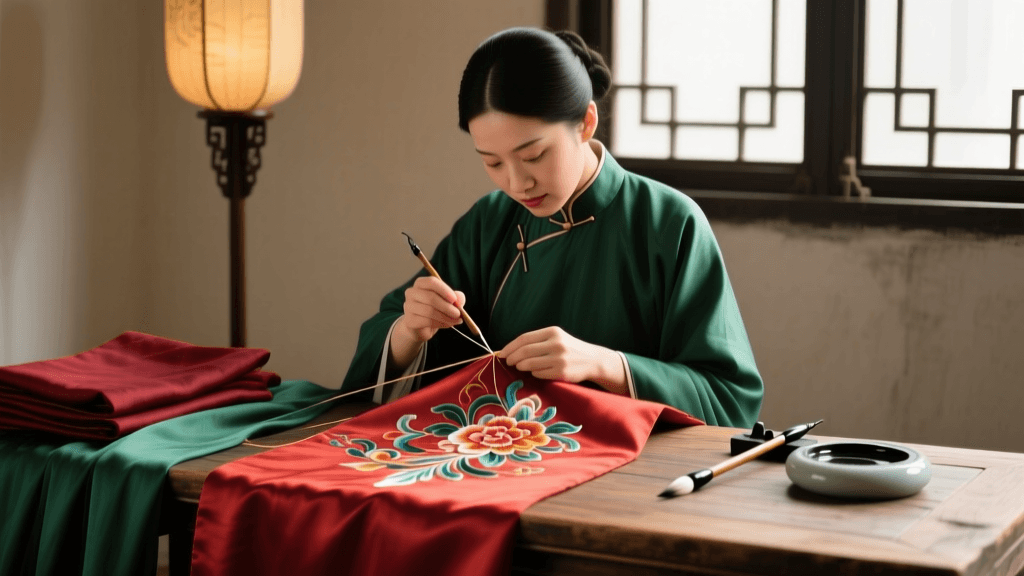
The secret to the photorealistic and incredibly smooth gradients in Su Embroidery lies in a technique called pi xian (thread splitting). A single strand of silk thread is naturally composed of multiple micro-filaments. Master artisans will split a single thread into halves, quarters, eighths, and sometimes up to 1/64th of its original thickness.
When embroidering the delicate petals of a peony or the scales of a dragon on a Mamianqun (horse-face skirt), the artisan uses these micro-threads to create imperceptible color transitions. A single square inch of high-density Su embroidery using 1/16th thread can take an experienced artisan 4 to 6 hours to complete.
Double-Sided Embroidery (Shuang Mian Xiu)
The most breathtaking evolution of Su Xiu is double-sided embroidery, where the design is visible on both sides of a sheer silk organza base, with no visible knots or thread ends. In its most advanced form, double-sided tri-color embroidery, the artisan creates two entirely different images with different color palettes on the front and back of the same fabric. While mostly used for screens and fans, master tailors occasionally incorporate small double-sided motifs into the collars or cuffs of luxury Qipao.
Practical Guide: Sourcing and Pricing Embroidered Garments
Whether you are commissioning a custom Qipao or purchasing a vintage Hanfu piece, understanding the market pricing for silk embroidery is vital to avoid overpaying for machine-made imitations. The Metropolitan Museum of Art's extensive Asian silk collection highlights the historical value of hand-stitched textiles, a standard that continues to dictate modern luxury pricing.
Cost Breakdown for Custom and Vintage Pieces
- Machine-Embroidered Panels (Polyester/Silk Blend): $40 – $120. Often stiff, with visible jump stitches on the reverse side. Suitable for daily-wear Hanfu or costume Qipao.
- Hand-Embroidered Single-Sided (Standard Silk): $600 – $2,500. Features traditional Su or Yue stitches, natural silk threads, and a clean reverse side. Ideal for wedding Qipao or formal Ming-style Aoqun.
- Master-Level Hand-Embroidered (High-Density Su Xiu): $3,000 – $15,000+. Utilizes thread splitting (1/16th or finer), custom-dyed threads, and hundreds of hours of labor. Reserved for heirloom garments and haute couture.
Authenticating Hand-Stitched vs. Machine Embroidery
Modern computerized embroidery machines can mimic traditional stitches, but they lack the soul and structural integrity of handwork. Use this actionable checklist when inspecting a garment:
- Examine the Reverse Side: Machine embroidery relies on a continuous bobbin thread, resulting in a messy back with frequent 'jump stitches' (long threads connecting separate design elements). Hand embroidery, particularly Su Xiu, will have a remarkably clean back, as the artisan buries thread tails within the stitches.
- Check the Thread Sheen: Machines often use rayon or polyester threads, which have a harsh, plastic-like glare. Authentic hand-embroidered garments use degummed natural silk, which possesses a soft, pearlescent luster that shifts subtly in different lighting.
- Look for Gradient Transitions: Machines struggle with true color blending. If a flower petal transitions from deep crimson to pale pink, a machine will use distinct blocks of color (pixelation). A hand-embroidered piece will interlock micro-threads of varying shades to create a seamless, painterly gradient.
- Feel the Drape: Heavy machine stitching with thick backing stabilizers makes the silk stiff and board-like. Hand embroidery follows the natural bias and drape of the silk, allowing a Qipao or Hanfu sleeve to flow fluidly with the wearer's movements.
Archival Care for Silk Embroidered Garments
Silk is a protein fiber, making it highly susceptible to environmental damage, light degradation, and improper storage. The Victoria and Albert Museum's Asian textile conservation guidelines emphasize that preventive care is the most effective way to preserve historical and bespoke garments.
Washing and Cleaning
Never machine wash or aggressively hand-wash embroidered silk. The agitation will cause the silk threads to fray and the embroidery to pucker. For light soil, use a specialized, pH-neutral silk detergent (such as Eucalan or The Laundress Silk Delicate) in cold water (below 68°F/20°C). Submerge the garment gently for no more than 3 minutes. Do not wring; instead, roll the garment in a clean, dry cotton towel to press out moisture, then lay flat to dry away from direct sunlight. For heavy soiling or vintage pieces, seek a dry cleaner who specializes in historical textiles and explicitly inform them of the hand-embroidered elements.
Storage and Environment
- Climate Control: Store garments in an environment with a stable temperature of 65°F (18°C) and a relative humidity of 50%. High humidity invites mold and silverfish; low humidity makes the silk brittle.
- Folding vs. Hanging: Never hang heavily embroidered garments like the Mamianqun or heavily beaded Qipao on standard hangers. The weight of the embroidery will warp the silk base fabric over time, causing irreversible tearing at the shoulders or waistband. Fold them gently with acid-free, unbuffered tissue paper stuffed into the folds to prevent hard creases.
- Light Exposure: Ultraviolet light is the enemy of natural silk dyes. Store garments in breathable, unbleached cotton garment bags (never plastic, which traps moisture and off-gasses harmful chemicals). Keep them in a dark, well-ventilated closet.
- Pest Deterrence: Avoid chemical mothballs, which can react with silk proteins and metallic embroidery threads, causing discoloration. Instead, use natural cedar blocks or dried lavender sachets, ensuring they do not directly touch the fabric.
Conclusion
Su Embroidery and the broader spectrum of Chinese textile arts are not merely decorative techniques; they are the physical manifestation of centuries of cultural philosophy, patience, and aesthetic mastery. Whether you are investing in a bespoke Qipao for a milestone event or curating a collection of traditional Hanfu, understanding the mechanics of thread splitting, the economics of hand-stitching, and the science of silk preservation ensures that these magnificent garments will endure as wearable heirlooms for generations to come.