2026 Guide To Traditional Chinese Cloud Shoes & Boots Styling
The 2026 Xin Zhongshi Renaissance: Footwear Takes Center Stage
The global fashion landscape of 2026 has firmly embraced the Xin Zhongshi (New Chinese Style) movement, transforming it from a niche subculture into a dominant force in contemporary wardrobes. While modern interpretations of the Mamianqun (horse-face skirt) and Song-style jackets have saturated the market, the true hallmark of a refined 2026 heritage wardrobe lies in its footwear. Traditional Chinese footwear, specifically the elegant Yunxie (cloud shoes) and the structured Xuezi (boots), are experiencing a massive resurgence. Today's designers are bridging the gap between ancient craftsmanship and modern ergonomic needs, creating pieces that are as comfortable for navigating urban streets as they are visually striking. This comprehensive guide explores the history, modern innovations, sizing, and styling of traditional Chinese footwear for the contemporary enthusiast.
Yunxie (Cloud Shoes): Anatomy and Modern Innovations
Yunxie, translating literally to 'cloud shoes,' are characterized by their distinctive upturned, cloud-shaped toe caps and intricate embroidery. Originating in the Ming dynasty and reaching peak popularity during the Qing era, these shoes were historically worn by women of the Han elite. According to The Metropolitan Museum of Art's Heilbrunn Timeline of Art History, Qing dynasty footwear was highly regulated and deeply symbolic, with motifs like clouds representing good fortune and high status. The traditional cloud toe, or Yuntou, was often heavily padded and stitched with silk threads to create a raised, three-dimensional effect.
In 2026, the Yunxie silhouette has been reimagined for daily wear. Leading heritage brands and contemporary indie labels have replaced the rigid, historically accurate but unforgiving cotton uppers with flexible, sustainably sourced mulberry silk blends. The most significant 2026 innovation lies in the footbed. While maintaining the visual aesthetic of the traditional flat sole, modern cloud shoes now feature hidden memory foam and bio-resin reinforced arch supports. This allows wearers to enjoy the graceful, gliding posture associated with historical Chinese dress without the foot fatigue that plagued earlier revival attempts in the 2010s.
Xuezi (Traditional Boots): From Equestrian Heritage to Urban Streetwear
While cloud shoes are often associated with delicate femininity, Xuezi (traditional boots) offer a robust, structured alternative that has become a staple in gender-neutral 2026 streetwear. Historically, thick-soled boots were worn by Manchu officials, equestrians, and military figures. As documented in Encyclopedia Britannica's comprehensive guide to Chinese dress, the thick, often white-soled boots of the Qing court were designed to elevate the wearer, denote rank, and protect the feet from the muddy, unpaved streets of ancient Beijing.
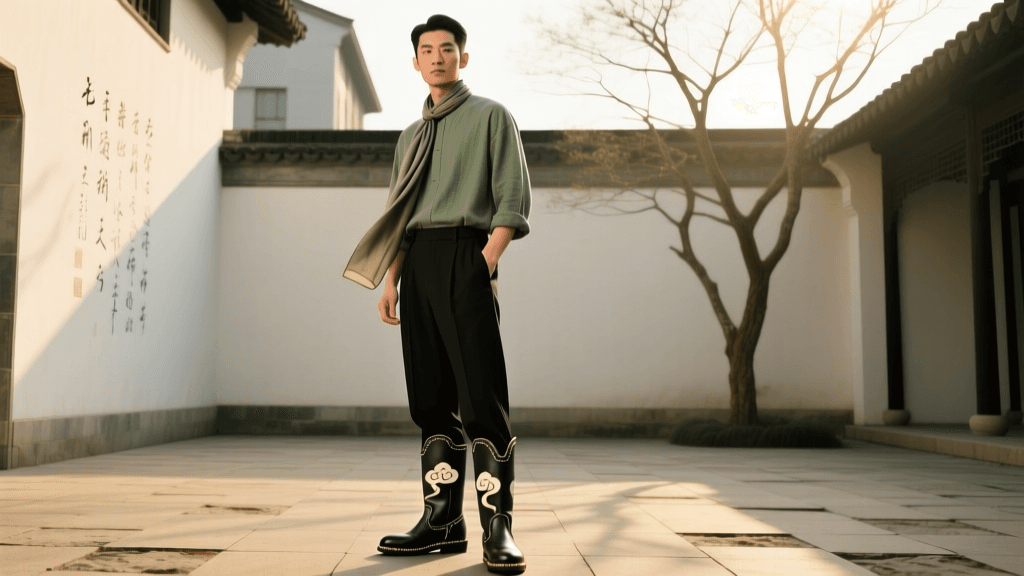
The 2026 iteration of the Xuezi boot strips away the heavy, cumbersome wooden platforms of the past, replacing them with lightweight, shock-absorbing EVA and natural rubber hybrid soles. The uppers are crafted from modern technical velvets, waterproofed brocades, and even vegan leather embossed with traditional Ruyi (auspicious) motifs. These boots typically feature a square or slightly rounded toe and a subtle side-zipper concealed by a traditional fabric flap, making them incredibly easy to slip on while maintaining a seamless historical profile. They are the perfect anchor for oversized, draped silhouettes and wide-leg trousers.
The Thousand-Layer Sole: Craftsmanship in the Modern Era
No discussion of traditional Chinese footwear is complete without mentioning the Qiancengdi, or 'thousand-layer sole.' This meticulous technique involves layering dozens of sheets of cotton cloth, pasting them together with natural flour glue, and stitching them tightly with thick hemp or cotton thread. A single authentic, hand-stitched sole can require over a thousand individual stitches and take a master artisan several days to complete. The silk and sericulture techniques that produce the premium threads used in these soles are deeply rooted in Chinese history, a legacy recognized and protected by UNESCO's Intangible Cultural Heritage registry.
In 2026, true hand-stitched Qiancengdi soles are considered luxury artisanal goods. While machine-assisted versions are available for the mass market, purists and collectors seek out the hand-stitched variants for their unparalleled breathability, flexibility, and moisture-wicking properties. The dense cotton layers naturally conform to the wearer's foot over time, creating a custom orthotic effect that modern synthetic materials struggle to replicate.
2026 Sizing and Fit Guide
One of the most common hurdles for international buyers entering the traditional footwear market is sizing. Historical Chinese shoes were often custom-made or relied on a loose, slipper-like fit. Today, standardized sizing is the norm, but the unique construction of Yunxie and Xuezi requires careful consideration, particularly regarding width and the 'break-in' period of the cotton soles.
| US Size (Women/Men) | EU Size | UK Size | Foot Length (cm) | Fit Notes for 2026 Heritage Brands |
|---|---|---|---|---|
| W6 / M4.5 | 36 | 3.5 | 23.0 | Narrow width; size up if wearing thick socks. |
| W7 / M5.5 | 37.5 | 4.5 | 23.5 | Standard fit; cotton soles will compress slightly. |
| W8 / M6.5 | 39 | 5.5 | 24.5 | Ideal for most foot shapes; true to size. |
| W9 / M7.5 | 40.5 | 6.5 | 25.5 | Wider toe box in Xuezi; Yunxie may feel snug. |
| W10 / M8.5 | 42 | 7.5 | 26.5 | Consider custom-width orders for authentic soles. |
Pro Tip: When purchasing authentic thousand-layer soles in 2026, always buy your exact measured size. The dense cotton layers will compress and mold to your foot shape after approximately 15 to 20 hours of wear. Buying a half-size too large will result in heel slip once the sole breaks in.
Sourcing Authentic Footwear: Where to Buy in 2026
The market for traditional Chinese footwear has bifurcated into accessible fashion pieces and high-end artisanal investments. For those seeking museum-quality craftsmanship, the legendary Beijing brand Neiliansheng (founded in 1853) remains the gold standard. In 2026, their flagship stores and official online portals offer hand-stitched cloud shoes and court boots retailing between $280 and $650 USD, depending on the complexity of the silk embroidery and the rarity of the brocade used.
For contemporary adaptations that prioritize streetwear aesthetics and modern ergonomics, brands like MUKZIN, Hua Mulan, and various curated Taobao and Tmall boutiques specializing in Xin Zhongshi offer excellent options. These modern interpretations typically range from $60 to $150 USD. They utilize machine-embroidered uppers and hybrid rubber-cotton soles, making them weather-resistant and suitable for daily commuting. When shopping online, always verify that the product description explicitly mentions the sole construction, as 'thousand-layer' is sometimes used as a marketing term for standard rubber soles with a printed fabric overlay.
Styling Guide: Integrating Heritage Footwear
Styling traditional footwear in 2026 is all about juxtaposition. The goal is to avoid looking like you are wearing a theatrical costume; instead, the footwear should act as a striking, grounding element in a modern outfit.
For Women: The Elegant Juxtaposition
- The Mamianqun Pairing: Pair a pleated, solid-color Mamianqun (horse-face skirt) with a pair of velvet Xuezi boots. The boots add a grounded, slightly masculine edge to the flowing skirt, perfect for autumn and winter.
- Modern Tailoring: Wear delicate, silk-embroidered Yunxie with wide-leg, high-waisted linen trousers and a structured, oversized blazer. The cloud toe will peek out elegantly from beneath the trouser hem, providing a subtle nod to heritage.
- Color Coordination: In 2026, monochromatic styling is key. Match the piping (Xiangbian) of your cloud shoes to your handbag or belt, allowing the shoe's base color to blend seamlessly with your trousers.
For Men: Structured Heritage
- The Streetwear Boot: Style black or deep indigo Xuezi boots with cropped, tapered trousers and a technical fabric bomber jacket. The square toe of the boot complements the sharp lines of modern menswear.
- The Relaxed Scholar: Pair slip-on cotton cloud shoes with loose, drawstring linen pants and a relaxed Mandarin-collar shirt. This creates a breathable, sophisticated summer look inspired by the ancient literati.
Care and Maintenance for Silk and Brocade Footwear
Investing in traditional footwear requires proper maintenance, especially when dealing with delicate silk brocades and natural cotton soles. In 2026, the golden rule for Qiancengdi soles is moisture avoidance. Never wear authentic hand-stitched cotton soles in heavy rain or snow, as the flour-based adhesives and natural fibers will degrade rapidly when saturated. For unpredictable weather, stick to the modern hybrid-sole adaptations.
To clean silk uppers, avoid harsh chemical detergents. Use a specialized, pH-neutral silk wash and a soft-bristled brush to gently lift dirt from the embroidery threads. Store your footwear in breathable cotton dust bags with cedar blocks to maintain the shape of the toe cap and naturally repel moisture and insects. By treating these pieces with the same care you would afford a tailored suit or a luxury handbag, your traditional Chinese footwear will remain a cornerstone of your Xin Zhongshi wardrobe for years to come.