Japanese Kimono Tanmono Construction: 2026 Zero-Waste Guide
The Renaissance of Zero-Waste Construction in 2026
In 2026, the global fashion industry is facing unprecedented pressure to adopt circular, sustainable practices. As designers and makers search for solutions to the textile waste crisis, many are looking backward to move forward. Among the most brilliant historical blueprints for sustainable garment construction is the Japanese kimono, specifically the tanmono (fabric bolt) system and its straight-line cutting technique, known as chokusen-dachi. Unlike Western tailoring, which relies on curved seams, darts, and significant fabric waste, the traditional Asian approach to garment engineering treats the textile as a sacred, finite resource. At The Garment Atlas, we are exploring how these centuries-old Asian dress traditions are actively shaping the zero-waste pattern-making movements of today.
The Anatomy of the Tanmono Bolt
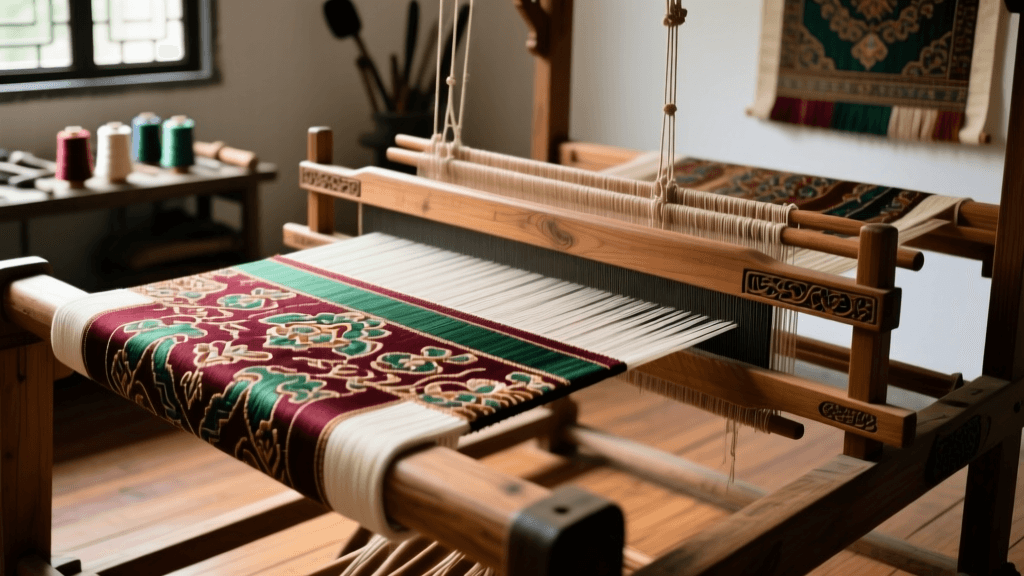
To understand Japanese garment construction, one must first understand the fabric. A traditional tanmono is a narrow, continuous bolt of fabric woven specifically to create a single garment. The standard dimensions of a tanmono bolt are remarkably precise: approximately 36 to 40 centimeters (14 to 16 inches) in width and 12 to 13 meters (13 to 14 yards) in length. This specific width was historically dictated by the width of the traditional handloom and the natural span of the human shoulder.
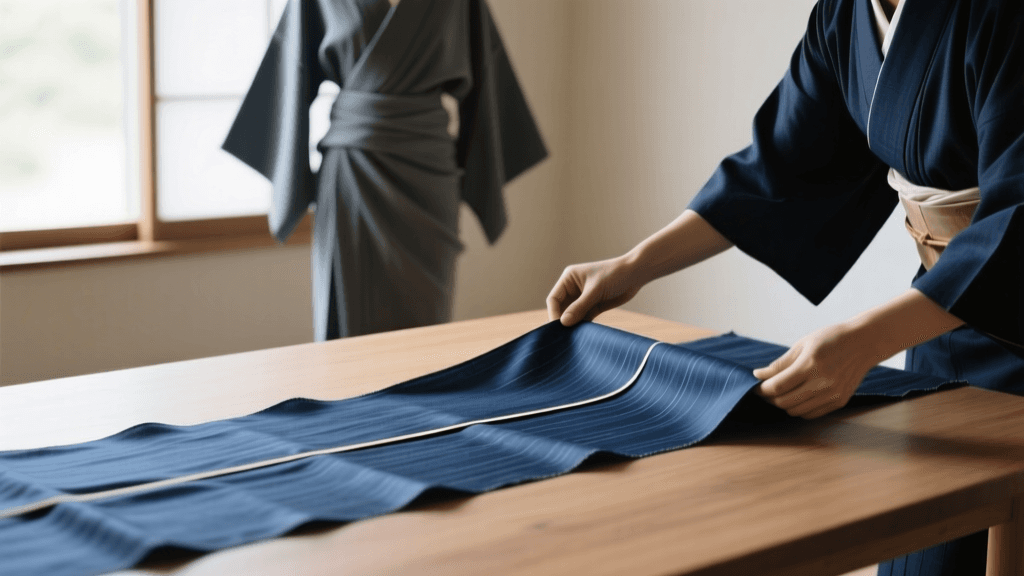
Because the fabric is woven to exact garment specifications, the cutting process generates virtually zero waste. The kimono is constructed from exactly eight rectangular pieces cut directly from this single bolt: two main body panels (migoro), two sleeves (sode), two front overlap panels (okumi), and two collar pieces (eri). According to the Victoria and Albert Museum's extensive textile archives, this rectilinear geometry not only eliminates cutting waste but also allows the garment to be entirely unstitched, washed, re-dyed, and restitched, extending its lifecycle across generations.
Straight-Line Cutting vs. Western Tailoring
The fundamental difference between traditional Asian dress construction and Western fashion lies in the relationship between the fabric and the human body. Western tailoring attempts to mold flat fabric into a three-dimensional shape through aggressive cutting and seaming. Japanese construction, conversely, wraps the body in uncut geometric planes, relying on draping, folding, and the use of the obi (sash) to secure the garment. Below is a comparison of these two paradigms as they are studied in modern 2026 sustainable design curricula.
| Feature | Western Tailoring | Japanese Tanmono System |
|---|---|---|
| Pattern Geometry | Curved, contoured, asymmetrical | Rectilinear, geometric, symmetrical |
| Fabric Waste | 15% to 25% average offcut waste | 0% (True zero-waste construction) |
| Fit and Sizing | Altered via darts, princess seams | Adjusted via wrap overlap and ties |
| End-of-Life | Difficult to upcycle due to odd shapes | Unstitched into reusable rectangular bolts |
| Seam Allowance | Trimmed and discarded | Folded inward, preserving fabric width |
Core Construction Elements of the Kimono
For modern makers and fashion students studying Asian traditions, mastering the straight-line cut requires a shift in spatial reasoning. Here are the primary construction techniques that define the kimono's architecture.
1. The Waki (Side Seams) and Ushiro (Back Seam)
The two main body panels are joined at the center back with a straight seam. The side seams (waki) are sewn from the sleeve attachment down to the hem, but crucially, they are left open at the bottom 20 to 30 centimeters. This open vent, called the waki-ake, allows for freedom of movement and makes it easier to wrap the garment tightly. In 2026, modern adaptations of this technique are frequently seen in contemporary zero-waste wrap coats and open-hem trousers.
2. The Sode (Sleeves) and Furi (Openings)
Kimono sleeves are not set-in like Western suit sleeves. Instead, they are attached to the body panels with a straight horizontal seam. The sleeve itself is a single rectangle folded in half. The bottom edge is sewn shut to create the iconic deep pocket (tamoto), while the side edge facing the body is left partially or entirely open. This opening, the furi, provides ventilation and accommodates the bulk of the obi sash without pulling the fabric.
3. The Eri (Collar) Application
The collar of a kimono is a long, narrow strip of fabric folded over a core (traditionally cotton or modern synthetic batting). It is attached in a single continuous line that travels from the left front hem, up and around the back of the neck, and down to the right front hem. The angle at which the collar intersects the front overlap panels (okumi) creates the signature V-neckline, which is secured by the tension of the obi rather than buttons or zippers.
Adapting Tanmono Techniques for Modern 2026 Wardrobes
While wearing a full traditional kimono is reserved for specific ceremonies, the chokusen-dachi cutting method is highly applicable to modern, everyday wardrobes. In 2026, independent pattern makers and sustainable brands are utilizing these techniques to create modular, size-inclusive clothing. Because straight-line garments do not rely on precise body measurements for fit, they are inherently size-inclusive, draping elegantly on a wide variety of body types.
If you are looking to adapt this technique for your own sewing projects, consider the following actionable steps:
- Simulate the Bolt: Since modern commercial fabrics are typically woven at 115cm or 150cm widths, you must first cut your fabric into 36cm to 40cm wide strips along the grainline to mimic a true tanmono bolt.
- Use the Selvedge: Traditional kimono construction incorporates the fabric's selvedge edges into the side seams and sleeve openings, eliminating the need to finish raw edges and saving time.
- Embrace the Overlap: When drafting modern wrap tops or robes based on the kimono, ensure your front overlap panels are at least 15cm wide to prevent the garment from gaping open during movement.
- Blind Hemming (Kuke): Instead of topstitching hems, use the traditional kuke blind-stitching technique. This invisible stitch catches only a single thread of the face fabric, maintaining the clean, unbroken geometric lines of the garment's exterior.
Sourcing Sustainable Fabrics for Modern Projects
The beauty of the tanmono system is that it can be applied to almost any woven textile. However, to truly honor the sustainable ethos of the technique in 2026, makers should prioritize eco-conscious materials. According to recent data highlighted by the Metropolitan Museum of Art's Asian Art textile conservation department, the longevity of a garment is deeply tied to the structural integrity of its fibers.
For modern straight-cut garments, medium-weight fabrics with a fluid drape work best. Organic hemp-cotton blends (priced around $22 to $28 per yard in 2026) offer the structural crispness needed for collars while softening beautifully with wear. Tencel-linen weaves are another excellent choice, providing the cooling properties of linen with the sustainable, closed-loop production of Tencel, resulting in a fabric that drapes elegantly without sacrificing the rectilinear geometry required for the side seams.
Conclusion: The Future is Rectilinear
The Japanese kimono is far more than a beautiful cultural artifact; it is a masterclass in sustainable engineering. By studying the tanmono bolt and the straight-line cutting techniques of Asian dress traditions, modern designers and home sewists can drastically reduce textile waste. As we navigate the sustainable fashion mandates of 2026, the ancient wisdom of the zero-waste kimono offers a practical, elegant, and profoundly respectful way to interact with the textiles we wear.