The Ultimate Hanfu and Qipao Fabric Care and Storage Guide
Introduction to Traditional Garment Care
Owning a piece of traditional Asian clothing, whether it is a flowing Hanfu, a structured Mamianqun (horse-face skirt), or a tailored Qipao, is an investment in cultural heritage and artisanal craftsmanship. However, the intricate textiles used in these garments—ranging from delicate mulberry silk to heavy brocades—require specialized care to maintain their structural integrity, vibrant dyes, and historical authenticity. Improper washing or storage can lead to irreversible damage, such as dye bleeding, fiber degradation, or permanent creasing.
This comprehensive care guide provides practical, actionable advice for cleaning, ironing, and preserving your traditional Chinese garments. By understanding the unique properties of your fabrics and following museum-grade conservation principles, you can ensure your wardrobe remains pristine for generations. For broader context on the historical significance of these textiles, the UNESCO Silk Roads Programme highlights the centuries-old trade networks that perfected these sericulture and weaving techniques, reminding us of the immense cultural value woven into every thread.
Decoding Hanfu and Qipao Fabrics
Before applying water or heat to your garments, it is crucial to identify the fabric composition. Traditional Chinese clothing utilizes a diverse array of textiles, each with distinct care requirements.
Silk (Sichou) and Crepe de Chine
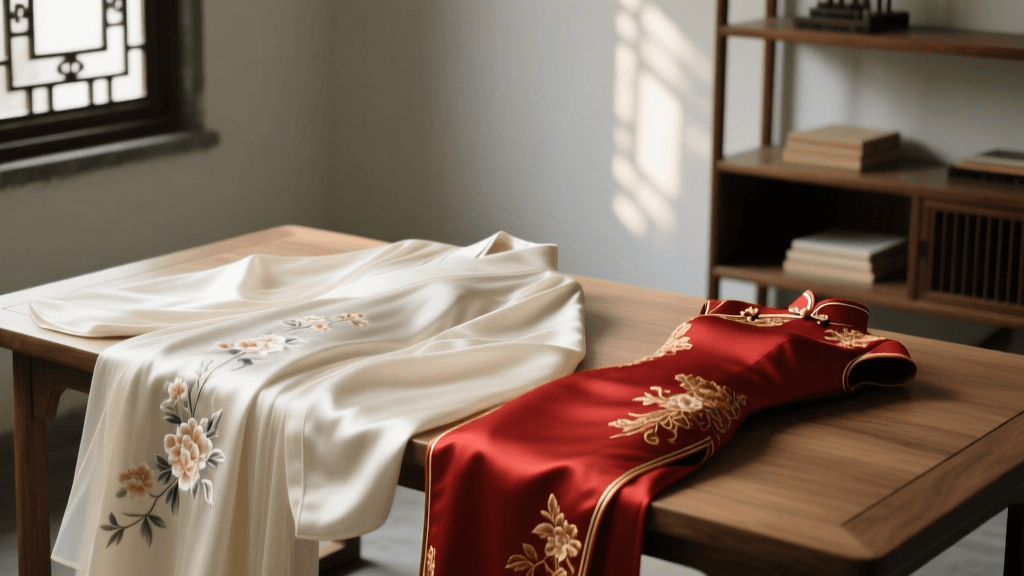
Silk is the cornerstone of traditional Chinese fashion. Used heavily in Tang and Song dynasty Hanfu styles, as well as vintage Qipaos, silk is a natural protein fiber. It is highly sensitive to alkaline substances, high heat, and prolonged exposure to ultraviolet light. Mulberry silk and charmeuse require the gentlest handling, as aggressive rubbing can cause the fibers to pill or lose their natural luster.
Brocade (Zhi Jin) and Jacquard
Often featured in Ming dynasty Mamianqun and ceremonial wedding Qipaos, brocade is a complex woven fabric that incorporates metallic threads or multiple colored silk yarns. Because of its stiff drape and intricate weaving structure, brocade is highly susceptible to snagging and water-spotting. It should almost never be submerged in water.
Linen and Ramie (Ma)
Used for lightweight, breathable summer Hanfu, linen and ramie are plant-based cellulose fibers. They are highly durable, absorb moisture well, and can withstand higher washing temperatures than silk. However, they are notoriously prone to deep wrinkling and require specific ironing techniques to restore their crisp appearance.
Modern Synthetics (Polyester and Chiffon)
Many contemporary, mass-produced Hanfu and daily-wear Qipaos utilize polyester blends or synthetic chiffon. These fabrics are designed for durability, colorfastness, and ease of care, making them ideal for beginners or frequent travelers.
The Washing Process: Hand vs. Machine
The golden rule of traditional garment care is to avoid the washing machine whenever possible. The agitation and spin cycles can warp seams, tear delicate linings, and cause severe friction damage to silk fibers. When washing is necessary, always opt for a pH-neutral detergent specifically formulated for delicates, such as Eucalan Fine Fabric Wash or The Laundress Delicate Wash. Standard alkaline laundry detergents will strip silk of its natural sericin coating, leaving it brittle.
Fabric Care Comparison Chart
| Fabric Type | Wash Method | Water Temp | Detergent Type | Max Iron Temp |
|---|---|---|---|---|
| Mulberry Silk | Hand wash only | Cold (20°C / 68°F) | pH-neutral (e.g., Eucalan) | Low (110°C / 230°F) |
| Brocade / Zhi Jin | Professional Dry Clean | N/A | N/A | Low with press cloth |
| Linen / Ramie | Hand or Machine (Delicate) | Warm (30°C / 86°F) | Mild liquid detergent | High (200°C / 392°F) |
| Polyester Blend | Machine (Delicate) | Cold (20°C / 68°F) | Standard mild | Low (110°C / 230°F) |
Hand Washing Silk Step-by-Step:
- Fill a clean basin with cold water and add a capful of pH-neutral detergent.
- Submerge the Hanfu or Qipao and gently swish it for no more than 3 to 5 minutes. Never twist, scrub, or wring the fabric.
- Drain the soapy water and refill the basin with clean, cold water to rinse. Repeat until the water runs clear.
- Press the water out gently by pressing the garment against the side of the basin.
Drying and Ironing Best Practices
Drying and ironing are where many traditional garments suffer accidental damage. Silk fibers are weakest when wet, meaning the weight of the water can stretch the fabric if hung improperly.
Never hang wet silk garments on wire hangers or expose them to direct sunlight. UV radiation will rapidly degrade the protein structure of silk, causing permanent yellowing and fiber rot.
Proper Drying Techniques
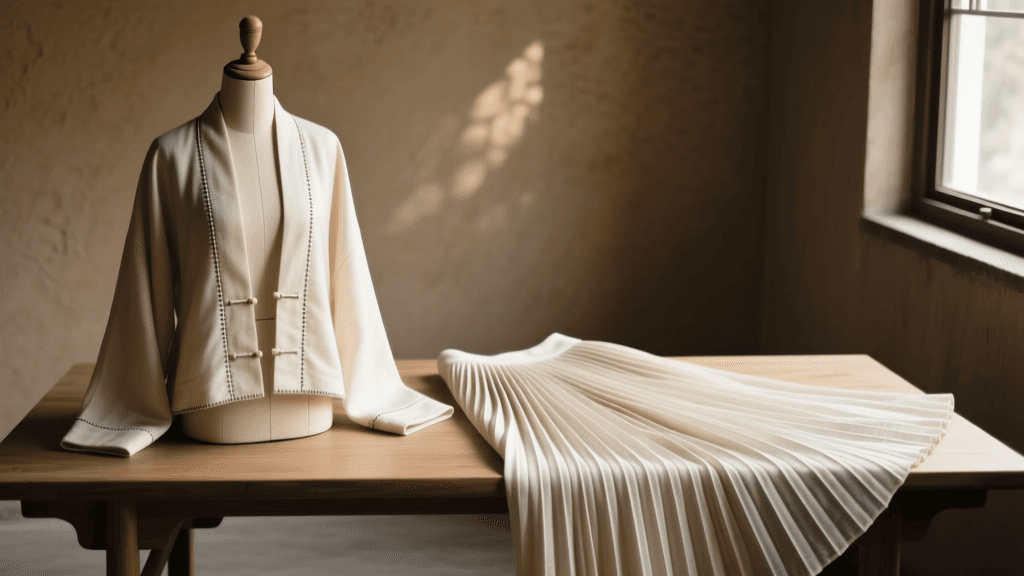
After washing, lay the garment flat on a clean, dry, white cotton towel. Roll the towel up gently like a sleeping bag to absorb the excess moisture. Unroll it and lay the garment flat on a mesh drying rack in a shaded, well-ventilated area. For heavy Mamianqun skirts, ensure the pleats are manually aligned and smoothed out while damp so they dry in their correct structural formation.
Ironing and Steaming
When ironing silk or synthetic Hanfu, always use the lowest heat setting and iron on the reverse side of the fabric. Place a clean cotton pressing cloth between the iron and the garment to prevent scorch marks and unwanted shine. For heavily embroidered Qipaos or 3D brocade textures, avoid flat ironing entirely; instead, use a handheld garment steamer held at least two inches away from the fabric to gently relax the wrinkles without crushing the intricate threadwork.
Long-Term Storage and Preservation
How you store your Hanfu and Qipao during the off-season is just as critical as how you wash them. According to the Victoria and Albert Museum's textile conservation guidelines, fluctuations in humidity, improper folding, and acidic storage materials are the primary culprits of textile degradation in historical archives and private collections alike.
Folding vs. Hanging
While it is tempting to hang all garments, gravity can distort the shoulders of a Qipao or stretch the waistband of a heavy skirt over time.
- Hang: Lightweight silk Hanfu tops (Shan) and everyday Qipaos can be hung on padded, wide-shoulder hangers to maintain their shape.
- Fold: Heavy pleated skirts (Mamianqun), multi-layered winter Hanfu, and heavily beaded wedding Qipaos should always be folded and stored flat to prevent structural stress on the seams.
The Archival Storage Method
When folding delicate silks, place unbleached, acid-free tissue paper inside the folds. This prevents hard creases from forming, which can eventually lead to fiber snapping and tearing along the fold lines. Store the folded garments in unbleached cotton garment bags or archival-quality cardboard boxes. Avoid plastic dry-cleaning bags or plastic storage bins, as these trap moisture and emit off-gassing chemicals that can yellow silk and promote mold growth.
Pest Control and Environment
Silk and wool are natural protein fibers that are highly attractive to clothes moths and carpet beetles. Avoid traditional chemical mothballs, which contain naphthalene or paradichlorobenzene; these chemicals are toxic, leave a persistent odor, and can actually react with metallic threads in brocades. Instead, use natural alternatives like cedar blocks or dried lavender sachets, and refresh the cedar by lightly sanding it every six months. Maintain your storage environment at a stable temperature (around 18°C to 21°C) with a relative humidity between 45% and 55%. The Metropolitan Museum of Art's Textile Conservation department emphasizes that stable climate control is the most effective preventative measure against both mold and embrittlement in historic textiles.
Handling Stains and Spills
If you spill food, tea, or makeup on your Hanfu during a festival or photoshoot, act quickly but carefully. Never rub a stain on silk, as this will grind the pigment into the fibers and cause localized chafing. Instead, gently blot the area with a clean, dry, white microfiber cloth. For water-based stains, lightly dab the area with a cloth dampened with distilled water. For oil-based stains, sprinkle a small amount of cornstarch or talcum powder on the spot to absorb the oil, let it sit for a few hours, and gently brush it off. For persistent stains on high-value garments, cease home treatment immediately and consult a professional textile conservator or a dry cleaner who specializes in historical and bridal garments.
Conclusion
Caring for Hanfu and Qipao requires a shift in mindset from modern, convenience-based laundry habits to a more mindful, preservation-focused approach. By respecting the unique biological and structural properties of traditional Asian textiles, utilizing pH-neutral cleaning agents, and employing archival storage techniques, you protect not just a piece of clothing, but a living continuation of Asian cultural heritage. Whether you are wearing a delicate Song dynasty-style Beizi or a modern Xin Zhongshi jacket, proper care ensures your garments remain as vibrant and elegant as the day you first acquired them.