2026 Guide to Styling the Ukrainian Vyshyvanka in Modern Wardrobes
The Vyshyvanka Renaissance: From Heritage to High Fashion in 2026
The Ukrainian vyshyvanka, a traditional embroidered shirt, has transcended its historical roots as a ceremonial and regional garment to become a staple of contemporary global fashion. As we navigate the style landscape of 2026, the vyshyvanka stands at the intersection of slow fashion, cultural pride, and modern minimalist aesthetics. No longer reserved solely for national holidays or folk festivals, today's iterations are being integrated into everyday capsule wardrobes, corporate attire, and high-end streetwear.
This revival is deeply tied to the global shift toward sustainable, artisanal clothing. Consumers in 2026 are increasingly rejecting fast fashion in favor of garments that carry historical weight, artisanal craftsmanship, and ethical production values. According to cultural preservation frameworks outlined by UNESCO's Intangible Cultural Heritage guidelines, the wearing and creation of traditional crafts like embroidery serve as a living, evolving practice rather than a static museum exhibit. Modern designers are honoring this by adapting traditional silhouettes to fit contemporary bodies and lifestyles without diluting the symbolic power of the stitches.
Understanding Regional Embroidery for Modern Styling
To style the vyshyvanka effectively in 2026, one must first understand the visual language of its embroidery. Historically, every region in Ukraine developed distinct color palettes and geometric or floral motifs, believed to offer protection and convey social status. Today, these regional differences provide a diverse toolkit for personal styling. Below is a breakdown of key regional styles and how to pair them with modern garments.
| Region | Signature Palette | Key Motifs | 2026 Styling Pairing |
|---|---|---|---|
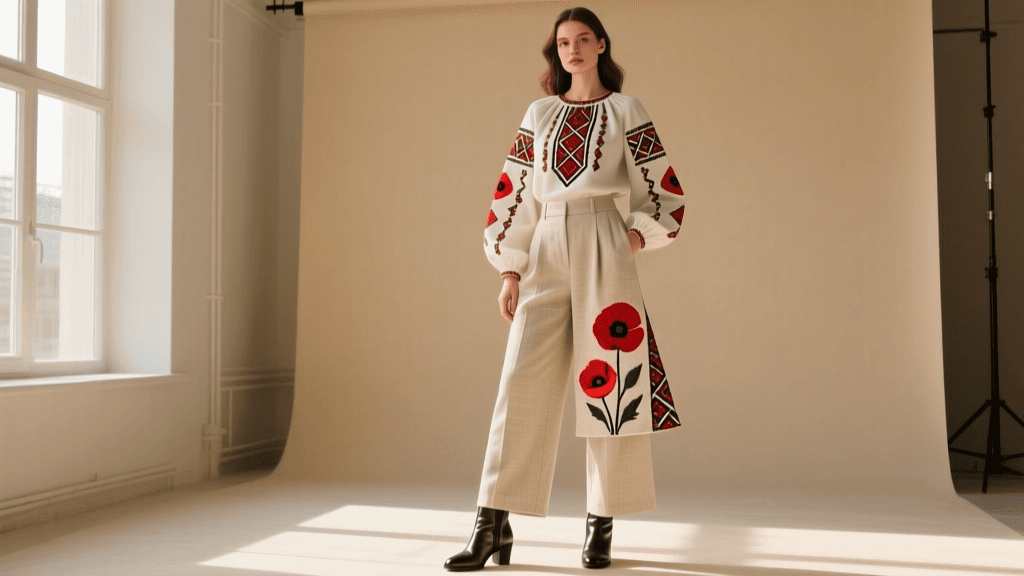
| Poltava | White-on-white, soft pastels | Geometric stars, floral vines | Tailored wide-leg trousers, minimalist blazers |
| Hutsul | Vibrant orange, green, black | Cross-stitch diamonds, sun symbols | Dark selvedge denim, leather jackets, chunky boots |
| Kyiv | Red, black, and white | Stylized grapes, hops, oak leaves | Midi skirts, sleek monochromatic trench coats |
| Bukovyna | Gold, burgundy, deep blue | Dense floral clusters, metallic threads | Evening wear, velvet blazers, silk slip dresses |
Fabric Innovations: What to Buy in 2026
While traditional homespun linen remains the most authentic choice, the 2026 market offers a variety of innovative, eco-friendly textiles that make the vyshyvanka more comfortable and practical for year-round wear. When shopping for contemporary pieces, look for brands that prioritize organic fibers and low-impact dyes.
- 100% Organic European Flax Linen: The gold standard for 2026. Expect to pay between $140 and $280 for a hand-embroidered piece. It offers high breathability, a structured drape, and exceptional longevity. The natural slubs in the fabric add a beautiful texture that complements the embroidery.
- Hemp-Cotton Blends: A highly durable, eco-conscious alternative. Priced around $90 to $160, these fabrics soften beautifully over time, resist wrinkling better than pure linen, and are ideal for casual, everyday shirts.
- Tencel-Lyocell: The modern innovator's choice for formal wear. Falling between $150 and $250, Tencel provides a luxurious, silk-like drape for evening vyshyvankas. It requires specialized, delicate hand-embroidery techniques to prevent fabric puckering, making these pieces true artisanal investments.
- Raw Silk Organza: Used primarily for sheer overlay blouses and high-fashion statement pieces. Prices range from $220 to over $400. The transparency of the organza allows the intricate cutwork and white-on-white embroidery to cast beautiful shadows against the skin.
Contemporary Styling Rules for 2026
Integrating folk dress into a modern wardrobe requires a balance of proportions and textures. The key to wearing a vyshyvanka in 2026 is to treat it as a statement piece, allowing the embroidery to take center stage while grounding the outfit with modern, structured basics.
The Office-Ready Vyshyvanka
For corporate environments, the Poltava white-on-white or subtle pastel vyshyvanka is unmatched in its elegance. Pair a mid-weight linen blouse with high-waisted, tailored wide-leg trousers in charcoal or navy. Tuck the blouse in to define the waist, and add a sleek, structured leather belt. Avoid loud jewelry; instead, opt for minimalist gold or silver hoops. A tailored, oversized blazer draped over the shoulders completes the look, bridging the gap between heritage craft and modern boardroom aesthetics.
Evening and Formal Wear
Evening styling calls for richer textiles and deeper colors. A Bukovyna-inspired blouse featuring metallic gold and burgundy threads looks stunning when layered over a simple, bias-cut silk slip dress. Alternatively, a heavily embroidered, deep-black linen tunic can be worn as a mini dress, paired with sheer black tights and knee-high leather boots. In 2026, the juxtaposition of ancient, protective motifs against the sleek, sensual lines of modern evening wear is a dominant trend on international runways and at gallery openings.
Streetwear and Casual Layering
The Hutsul region's vibrant, high-contrast cross-stitch patterns are perfectly suited for streetwear. Wear an oversized, hemp-blend vyshyvanka untucked over a plain white ribbed tank top, paired with vintage-wash straight-leg denim. Layering is essential for transitional weather; try wearing a lightweight, embroidered tunic under a chunky, hand-knit cardigan or a cropped leather moto jacket. The ruggedness of the leather and denim perfectly offsets the meticulous, time-intensive nature of the embroidery.
Accessorizing the Modern Vyshyvanka
Accessories can either anchor the vyshyvanka in tradition or push it firmly into the avant-garde. In 2026, the trend is moving away from literal folk accessories (like traditional flower wreaths or heavy glass bead necklaces) unless worn ironically or for specific cultural celebrations.
Instead, focus on modern artisanal accessories. Hand-forged silver rings, geometric brass cuffs, and minimalist leather crossbody bags complement the geometric nature of the embroidery without competing with it. For footwear, chunky loafers, pointed-toe ankle boots, and sleek white sneakers are the preferred choices, ensuring the outfit remains grounded in contemporary urban life. As noted in the Victoria and Albert Museum's textile archives, the most successful traditional garments in modern contexts are those that adapt their surrounding accessories to reflect the current era's design sensibilities.
Sourcing Authentic and Sustainable Pieces
As demand for the vyshyvanka has grown globally, so has the market for mass-produced, machine-embroidered imitations. In 2026, conscious consumers prioritize direct-to-consumer Ukrainian brands and artisanal cooperatives that ensure fair wages for embroiderers and use authentic, hand-executed stitches.
Brands like Etnodim, Folkmotives, and Kovalska have led the charge in modernizing the silhouette while strictly preserving traditional stitching techniques such as the zavolikannya (weaving stitch) and lyshva (cutwork). When purchasing, always check the product details for mentions of 'hand-embroidered' and look for transparent supply chain information. A genuine, hand-embroidered vyshyvanka takes anywhere from 40 to 120 hours to complete, which is reflected in the $120 to $400 price point. If a piece is priced under $50, it is almost certainly machine-made, often in overseas factories, and lacks the cultural and structural integrity of a true heritage garment.
Caring for Hand-Embroidered Garments
Proper care is essential to preserve both the fabric and the intricate threadwork of your vyshyvanka. Modern detergents and washing machines can be harsh on natural fibers and artisanal dyes.
- Washing: Always hand wash in cool water (maximum 30°C) using a pH-neutral, eco-friendly detergent specifically formulated for delicates. Never soak the garment for more than 15 minutes to prevent dye bleeding, especially with red and black threads.
- Drying: Never wring or twist the fabric. Gently press out excess water and lay the garment flat on a clean, dry towel, reshaping it to its original dimensions. Avoid direct sunlight, which can fade natural dyes over time.
- Ironing: Ironing is crucial for maintaining the crisp look of linen and cotton. Always iron the garment on the reverse side (inside out) while it is slightly damp. Use a medium heat setting (around 110°C to 150°C depending on the fabric) and place a clean cotton pressing cloth over the embroidery to prevent the stitches from becoming crushed or shiny.
- Storage: Store your vyshyvanka folded in a breathable cotton garment bag. Avoid wire hangers, which can distort the shoulder seams and stretch the delicate neckline embroidery. Include natural cedar blocks or dried lavender sachets to deter moths without the use of harsh chemical mothballs.
'The vyshyvanka is not a costume; it is a living textile language. When we wear it today, we are not merely dressing up—we are speaking to our ancestors while simultaneously writing the visual code of our future.' — Contemporary Eastern European Textile Curator, 2026.
By understanding the regional nuances, selecting sustainable fabrics, and applying modern styling principles, the vyshyvanka seamlessly transitions from a cherished cultural artifact to a versatile, powerful cornerstone of the 2026 wardrobe. Whether you are navigating a busy city street or attending a formal evening event, the embroidered shirt offers a profound connection to European folk heritage, worn with unmistakable contemporary confidence.