Norwegian Bunad Silver Jewelry & Bridal Crowns: 2026 Guide
The Resurgence of Norwegian Bunad Silver in 2026
In the landscape of European folk dress, few accessories command the reverence, historical weight, and financial investment of Norwegian Bunad silver (bunadsølv). As we navigate the cultural revival movements of 2026, the demand for authentic, hand-forged regional silverwork has reached unprecedented heights. No longer relegated solely to museum archives or inherited family chests, these intricate pieces are actively being commissioned by a new generation celebrating their heritage on Constitution Day (May 17th) and during traditional summer weddings. The intersection of slow fashion and ancestral pride has transformed Bunad silver from a static historical artifact into a thriving, contemporary artisan market.
The origins of this silverwork are deeply tied to Norway's agrarian past and its rich natural resources. According to the extensive textile and metalwork archives maintained by the Museum of Cultural History at the University of Oslo, the proliferation of silver jewelry in rural Norway was not merely decorative. It served as a portable bank account for farming families, a display of social standing, and a spiritual shield against the darker forces of Nordic folklore. Today, understanding the nuances of these pieces is essential for collectors, cultural enthusiasts, and brides seeking authentic European folk dress accessories in 2026.
The Brudkrone: Anatomy of the Traditional Bridal Crown
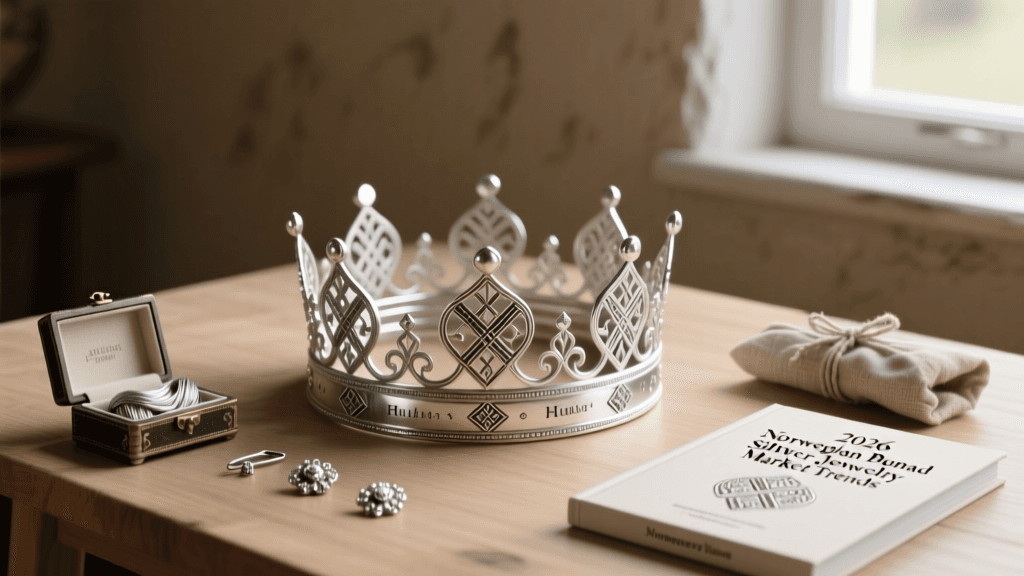
Perhaps the most breathtaking piece of headwear in the European folk dress canon is the Brudkrone, or traditional Norwegian bridal crown. Historically, these elaborate crowns were owned by the local parish or wealthy landowners and lent to brides for their wedding day. In 2026, the tradition has shifted toward private ownership, with families commissioning bespoke crowns that are passed down as modern heirlooms.
A traditional Brudkrone is a masterclass in silversmithing, often featuring a mix of sterling silver, gold plating (forgylt), and occasionally rock crystal or colored glass stones. The crown is designed to sit atop the bride's hair, which is traditionally worn down to symbolize purity, and is often secured with silk ribbons that trail down the back. The intricate filigree work and dangling ornaments are not just visually stunning; they carry deep folklore significance. The reflective surfaces and the soft chiming sounds of the moving parts were believed to blind and ward off trolls and evil spirits that might seek to curse the bride on her transitional day.
Commissioning a hand-forged Brudkrone in 2026 requires significant foresight. Master artisans in regions like Telemark and Hardanger often have waitlists extending eight to twelve months. A fully customized, museum-quality bridal crown typically weighs between 400 and 800 grams and can range in price from $2,800 to over $5,500 USD, depending on the complexity of the filigree and the inclusion of gold-gilding.
Essential Bunad Silver Jewelry: A 2026 Buyer’s Matrix
A complete Bunad ensemble requires a specific suite of silver jewelry, with the exact pieces dictated by the strict regional guidelines of the specific Bunad being worn. Below is a comprehensive breakdown of the essential components, their traditional functions, and the current 2026 market pricing for authentic, artisan-crafted sterling silver pieces.
| Piece Name | Norwegian Term | Placement & Function | Avg. Weight (Sterling) | 2026 Est. Price (USD) |
|---|---|---|---|---|
| Neck Pin | Sølje | Worn at the collarbone; secures the shirt | 25g - 45g | $250 - $450 |
| Chest Clasps | Maljer / Hekter | Worn down the bodice; decorative lacing | 40g - 80g (set) | $400 - $850 |
| Cuff Buttons | Mansjettknapper | Secures the wide sleeves of the linen shirt | 10g - 20g (pair) | $120 - $220 |
| Belt Buckle | Beltespenne | Central clasp for the woven or leather belt | 60g - 120g | $500 - $950 |
| Bridal Crown | Brudkrone | Headwear for brides; highly ornate filigree | 400g - 800g | $2,800 - $5,500+ |
The Sølje (neck pin) is arguably the most iconic and recognizable piece of Norwegian silver jewelry. Characterized by a central round or cross-shaped base with multiple dangling 'spoons' or leaves, the Sølje is worn not only by adult women but also by infants during their christening to protect them from the 'hidden people' (huldra). When sourcing a Sølje in 2026, buyers must ensure the dangling elements move freely and produce a bright, clear chime—a hallmark of superior traditional craftsmanship.
Decoding Hallmarks: Authenticating Kongsberg and Regional Silver
As the global appetite for heritage jewelry has grown, so too has the market for mass-produced, overseas imitations. For serious collectors and cultural preservationists, knowing how to authenticate Norwegian silver is paramount. The history of Norwegian silver is inextricably linked to the Kongsberg Silver Mines, which operated for over 300 years and established rigorous standards for metal purity. The Norwegian Mining Museum in Kongsberg remains the ultimate authority on the historical smelting and hallmarking practices that still influence modern artisans.
Authentic Bunad silver crafted in 2026 will bear a specific set of stamped hallmarks, usually found on the reverse of the main plate or the pin mechanism:
- The Purity Mark: Look for '925 S' or the older traditional '830 S'. While 925 (Sterling) is the modern international standard, some traditionalists still commission pieces in 830 silver for its slightly softer luster and historical accuracy.
- The Maker's Mark: A registered symbol or set of initials representing the silversmith or the workshop (e.g., the famous Sylvsmiderna or Arvesølv marks).
- The City/Region Mark: Many artisan guilds require a geographic stamp, such as the crossed hammers for Kongsberg or specific guild symbols for Oslo and Bergen.
Buyers should be highly skeptical of 'Bunad-style' silver sold on generalized e-commerce platforms that lack these deep, crisp hallmarks. Genuine 2026 artisan pieces are stamped using traditional steel dies, resulting in sharp, legible impressions, whereas cast fakes often feature blurred or shallow marks.
Regional Variations: Hardanger vs. Telemark Silverwork
European folk dress is defined by its intense regionalism, and Norwegian silver is no exception. The silverwork must perfectly match the geographic origin of the Bunad. Two of the most prominent and distinct styles are Hardanger and Telemark.
Hardanger Silver: Originating from the dramatic fjord landscapes of western Norway, Hardanger silver is typically large, bold, and heavily reliant on symmetrical, cross-like motifs. The Hardanger Sølje often features a prominent central dome surrounded by large, leaf-shaped dangles. It is designed to stand out against the stark white linen and deep black wool of the Hardanger Bunad.
Telemark Silver: In contrast, the silverwork from the inland Telemark region is characterized by intricate, swirling filigree and elaborate rose motifs (rosemaling influences). Telemark pieces often incorporate more gold-gilding and oxidized silver backgrounds to make the delicate silver wires pop. The chest clasps (hekter) from Telemark are frequently shaped like intertwined dragons or stylized floral vines, reflecting the region's rich woodcarving traditions. The Norwegian Museum of Cultural History houses an extensive comparative collection of these regional variants, highlighting how isolated valleys developed entirely distinct metalworking dialects over centuries.
Commissioning Custom Pieces in 2026
For those looking to invest in bespoke Bunad silver in 2026, the process is a collaborative journey between the buyer and the silversmith. Because a Bunad is often tailored to the exact millimeter of the wearer's body, the silver must be proportioned accordingly. A chest clasp that is too large can overwhelm a petite frame, while a delicate Sølje might get lost on a broader collar.
When approaching a master smith, be prepared to provide the specific regional name of your Bunad, the color palette of the embroidery, and your personal aesthetic preferences regarding gold-gilding versus pure silver. Due to the scarcity of raw materials and the limited number of apprentices entering the traditional metalsmithing guilds, lead times for custom waist buckles and full bridal sets frequently exceed six months. Early consultation is highly recommended for anyone planning a traditional folk wedding in the summer of 2026 or 2027.
Preservation and Care for Heritage Silver
Bunad silver is meant to be worn, and the natural oils from the skin actually help maintain the polish of the high-relief areas. However, the deep filigree and oxidized crevices require careful maintenance to prevent tarnish from turning into permanent corrosion.
Modern ultrasonic cleaners can be used on solid, sturdy pieces like belt buckles and simple Søljer, but they are strictly forbidden for pieces featuring gold-gilding, as the high-frequency vibrations can strip the delicate gold layer over time. Furthermore, any Sølje with antique glass stones or rock crystals must never be submerged, as the traditional setting adhesives can dissolve.
For routine 2026 maintenance, heritage experts recommend using a soft, untreated microfiber cloth to gently buff the raised surfaces after every wear. For deep cleaning, a mild solution of warm water and phosphate-free dish soap, applied with a remarkably soft makeup brush, can dislodge oils and cosmetics from the intricate wirework without abrading the silver. Store your pieces in individual anti-tarnish flannel bags, away from direct sunlight and humidity, ensuring that these magnificent examples of European folk dress accessories remain pristine for the next generation of cultural custodians.