Tangzhuang & Hanbok Outerwear: 2026 Modern Styling Guide
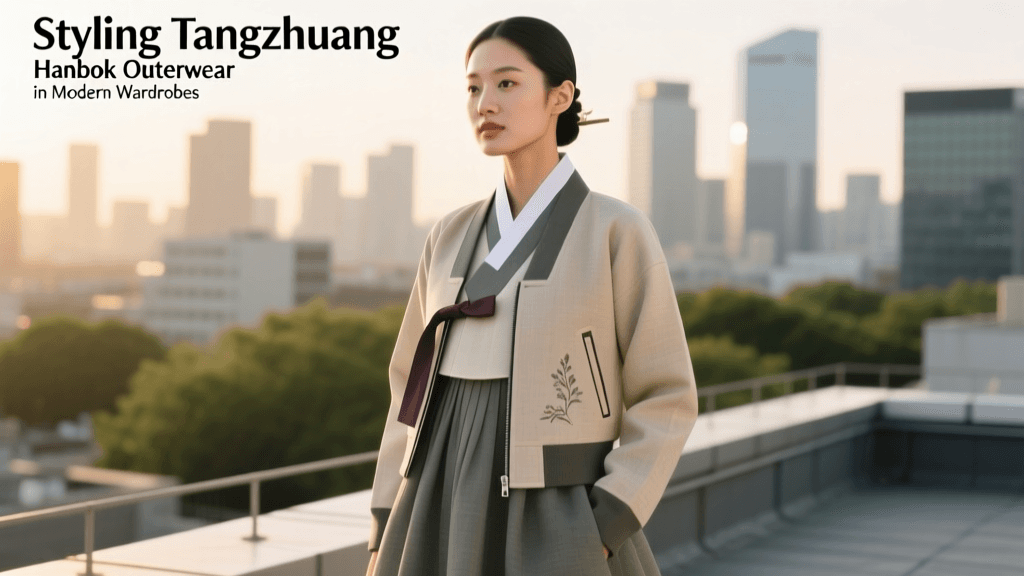
The Renaissance of Asian Silhouettes in 2026
The global fashion landscape of 2026 has decisively moved past the era of fleeting costume trends and superficial cultural borrowing. Today, the integration of traditional Asian garments into everyday modern wardrobes is defined by a sophisticated, respectful approach known as heritage minimalism. Rather than treating pieces like the Chinese Tangzhuang or the Korean Hanbok as novelty items reserved exclusively for lunar new year celebrations or weddings, contemporary stylists are re-engineering these silhouettes for daily, functional wear. By blending historical construction techniques with 2026 sustainable textiles and modern streetwear proportions, these garments have become foundational pillars of the modern capsule wardrobe.
According to historical archives maintained by The Metropolitan Museum of Art, traditional Chinese dress has always been characterized by its structural elegance, precise tailoring, and profound connection to textile craftsmanship. In 2026, we see these exact principles applied to modern menswear and womenswear, where the focus is on drape, collar architecture, and sustainable material innovation. This guide will walk you through the precise methods of styling Tangzhuang jackets and Hanbok outerwear alongside contemporary streetwear and office attire this year.
The Tangzhuang Jacket: Elevating the 2026 Capsule Wardrobe
The Tangzhuang, instantly recognizable by its upright Mandarin collar (Yuanling) and traditional woven knot closures, has undergone a radical transformation for the 2026 consumer. The stiff, heavily embroidered brocades of the early 2000s have been entirely replaced by fluid, breathable, and sustainable fabrics. This year, the most sought-after Tangzhuang jackets are crafted from Tencel-silk blends, matte-finished peace silk, and heavyweight bamboo viscose. These materials allow the jacket to drape naturally over modern layers without adding unnecessary bulk.
To integrate the Tangzhuang into a modern office or smart-casual wardrobe, focus on proportion and collar contrast. A matte-black or deep-navy Tangzhuang with hidden frog closures (where the knots are concealed behind a placket) pairs exceptionally well with a crisp, white poplin button-down shirt. The contrast between the sharp, modern spread collar of the shirt and the structured, cylindrical Mandarin collar of the jacket creates a striking visual tension. For the lower half, abandon traditional matching trousers in favor of wide-leg, pleated wool trousers that pool slightly over minimalist leather sneakers or chunky loafers.
Modern Hanbok Outerwear: Durumagi and Cropped Jeogori
The Hanbok is celebrated for its vibrant colors and graceful, voluminous lines. As noted by Encyclopedia Britannica, the traditional Hanbok consists of a top and bottom garment, often layered with outerwear like the Durumagi (an overcoat) to signify status and provide warmth. In 2026, the Durumagi and the Jeogori (the upper jacket) have been adapted into highly versatile outerwear pieces that bridge the gap between high fashion and streetwear.
The modern Durumagi is frequently cut with a slight drop-shoulder and an A-line drape that falls just below the knee. This makes it an exceptional layering piece for autumn and winter. Imagine a heavyweight, charcoal-grey cotton hoodie worn beneath an unlined, olive-green Durumagi crafted from recycled nylon or Cupro. The juxtaposition of the casual, utilitarian hood peeking out from behind the elegant, curved traditional collar (Dongjeong) is a hallmark of 2026 streetwear styling.
For warmer months, the cropped Jeogori is the garment of choice. Modern interpretations feature elongated, oversized sleeves that extend past the knuckles, paired with a cropped torso that hits exactly at the natural waist. This specific measurement—usually around 16 to 18 inches from the shoulder seam—allows the Jeogori to be worn over high-waisted, wide-leg denim or tailored linen trousers, maintaining the high-waisted silhouette characteristic of historical Hanbok while utilizing contemporary fabrics.
Silhouette Comparison: Heritage vs. 2026 Contemporary
Understanding the structural shifts between historical garments and their 2026 counterparts is crucial for proper styling. Below is a comparison chart detailing how these pieces have evolved for the modern wardrobe.
| Garment | Heritage Silhouette & Fabric | 2026 Contemporary Adaptation | Best Modern Pairing |
|---|---|---|---|
| Tangzhuang | Boxy cut, stiff silk brocade, prominent knot closures, side slits. | Tailored drape, Tencel-linen blends, hidden plackets, matte finishes. | Pleated wool trousers, poplin shirts, derby shoes. |
| Durumagi | Floor-length, heavy silk or ramie, tied with a single sash (Daenim). | Knee-length drop-shoulder, recycled nylon/Cupro, magnetic snap closures. | Heavyweight hoodies, straight-leg denim, chunky boots. |
| Jeogori | Fitted shoulders, voluminous sleeves, tied at the chest (Goreum). | Cropped to 18 inches, extended drop-sleeves, asymmetrical modern ties. | High-waisted wide-leg jeans, fitted turtlenecks, loafers. |
Three Actionable 2026 Styling Scenarios
1. The Creative Director's Ensemble
For a high-powered creative environment, opt for a mid-length Tangzhuang crafted from a charcoal bamboo-silk blend. Wear it unbuttoned over a lightweight, ribbed-knit turtleneck in a complementary slate grey. Pair this with tailored, tapered trousers featuring a subtle pinstripe. Finish the look with polished leather Chelsea boots. The Mandarin collar frames the face beautifully without the restriction of a traditional necktie, projecting authority and cultural fluency.
2. The Weekend Streetwear Layer
Take an oversized, washed-cotton Durumagi in a muted earth tone like terracotta or sage. Layer it over a vintage-wash graphic tee and a heavyweight zip-up hoodie. The key here is to leave the Durumagi open to allow the hoodie's front zipper and drawstrings to remain visible. Pair with baggy, carpenter-style denim and retro-runner sneakers. The traditional curved hem of the Durumagi softens the harsh, utilitarian lines of the streetwear beneath it.
3. The Evening Minimalist
For evening events, a cropped, black peace-silk Jeogori with subtle, tonal embroidery along the cuffs is unparalleled. Wear it with high-waisted, flowing crepe trousers that mimic the volume of a traditional Chima (skirt) but offer the mobility of modern trousers. Add a pair of minimalist, square-toe mules and geometric metal earrings. The elongated sleeves of the Jeogori provide a sense of drama and movement as you walk, echoing the historical grace of the garment.
Footwear Pairings: Grounding the Traditional
The most common mistake when styling traditional Asian outerwear is choosing footwear that is either too formal or too athletic. In 2026, the goal is to ground the ethereal, flowing nature of these garments with structured, architectural footwear. Chunky leather loafers with lug soles provide a necessary visual weight that balances the A-line drape of a Durumagi. Similarly, minimalist, unbranded leather sneakers in off-white or black offer a clean, contemporary base that prevents the Tangzhuang from looking like a period costume. Avoid highly technical running shoes, as their aggressive, futuristic aesthetics often clash with the organic, historical lines of the garments.
Garment Care for Mixed-Media Asian Wear
As traditional garments are adapted using modern, sustainable textiles, the care routines must also evolve. The peace silk and Tencel blends used in 2026 Tangzhuang jackets are highly sensitive to high heat and harsh chemicals. Avoid traditional dry cleaning, which relies on toxic solvents like perc that can degrade the natural fibers and strip the matte finishes. Instead, utilize ozone cleaning cabinets, which are now widely available for home use, to sanitize and deodorize the garments without water. For wrinkle removal, use a handheld steamer held at least six inches away from the fabric to preserve the structural integrity of the Mandarin collars and the delicate knot closures. Store your Durumagi and Jeogori on wide, contoured wooden hangers to support the drop-shoulder seams and prevent the fabric from stretching out of its intended architectural shape.
By understanding the history, respecting the construction, and embracing the textile innovations of 2026, you can seamlessly weave the Tangzhuang and Hanbok outerwear into your daily rotation, creating a wardrobe that is deeply personal, culturally resonant, and undeniably modern.