Best 2026 Hanbok Making Workshops: Master The Jeogori
The Renaissance of Hanbok Crafting in 2026
As we navigate through 2026, the global fascination with traditional Asian garments has evolved from passive appreciation to active creation. Among the most sought-after skills in the textile arts community is the construction of the Korean hanbok, specifically the intricate upper garment known as the jeogori. Unlike Western tailoring, which relies heavily on darts and structured seaming to contour the body, traditional Korean garment making embraces flat pattern cutting, geometric precision, and the dynamic drape of the fabric. For enthusiasts, fashion students, and cultural preservationists, attending a dedicated hanbok making workshop is no longer just a niche hobby; it is a profound journey into the architectural philosophy of East Asian dress.
According to the Korean Culture and Information Service, global interest in traditional Korean aesthetics has surged, driven by a desire for sustainable, culturally rooted fashion and a deeper understanding of intangible heritage. Whether you are looking to draft historical patterns from the late Joseon Dynasty or adapt traditional techniques for contemporary wear, 2026 offers an unprecedented array of workshops, seminars, and masterclasses tailored to every skill level.
Choosing Your Learning Format: In-Person vs. Virtual Seminars
The landscape of traditional garment education has diversified significantly. In 2026, students can choose between immersive in-person retreats and highly interactive virtual cohorts, each offering distinct advantages for mastering the jeogori.
In-Person Intensives: The Tactile Experience
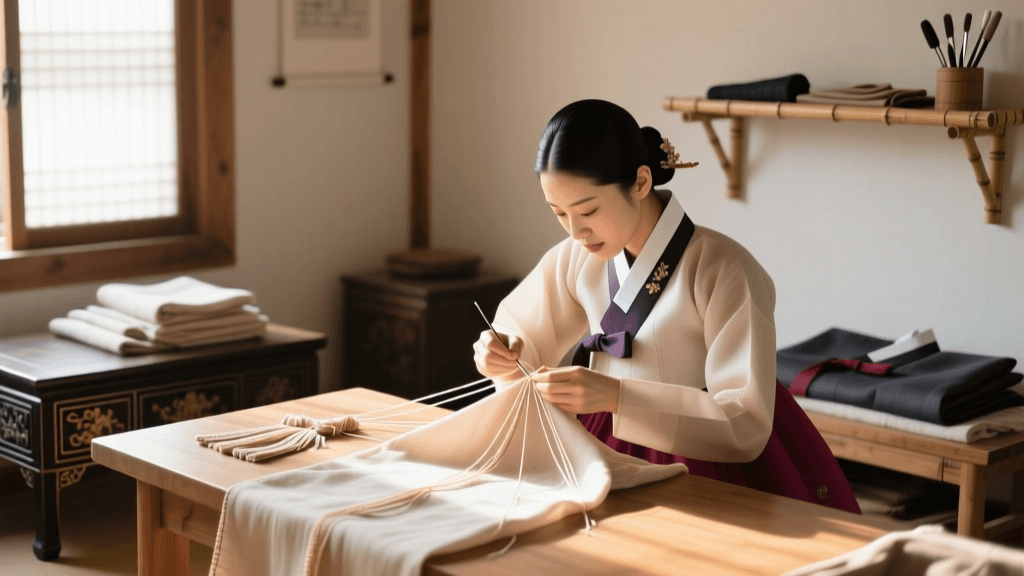
For those who learn best through hands-on correction and tactile feedback, in-person seminars remain the gold standard. Premier workshops located in cultural hubs like Seoul's Bukchon Hanok Village, as well as diaspora centers in Los Angeles, London, and Sydney, offer 5-day intensive boot camps. These seminars provide direct access to master artisans (chimseonjang) who can physically adjust your tension, correct the angle of your curved sleeves, and demonstrate the precise application of water starch (mul-ot) for crisp collar lines. The primary drawback is the higher cost and the necessity of travel, but the networking opportunities and access to specialized fabric archives are unparalleled.
Virtual Masterclasses: Precision via Multi-Camera Setups
Virtual workshops have matured far beyond the simple webcams of the early 2020s. In 2026, top-tier hanbok seminars utilize overhead 4K cameras, macro-lens close-ups for hand-stitching demonstrations, and digital pattern-sharing platforms. Virtual cohorts typically run for 6 to 8 weeks, allowing students to digest complex drafting techniques at their own pace. Instructors often mail 'swatch kits' and pre-cut muslin to students before the course begins, ensuring everyone is working with materials that mimic the behavior of traditional silk gauze and ramie.
The Anatomy of the Jeogori: Core Techniques Taught
A comprehensive hanbok workshop will break down the jeogori into its fundamental components. The Victoria and Albert Museum's extensive Asian textile archives highlight that the beauty of the hanbok lies in its seemingly simple lines, which actually conceal highly complex structural engineering. When you enroll in a 2026 seminar, expect to master the following techniques:
- The Baerae (Curved Sleeve): Unlike Western set-in sleeves, the baerae is cut as an extension of the bodice with a distinctive curved underarm seam. Workshops teach the mathematical ratios required to draft this curve, ensuring the garment folds beautifully when the arms are at rest but allows complete freedom of movement when raised.
- The Git and Dongjeong (Collar System): The git is the fabric band that wraps around the neck, while the dongjeong is the crisp, white, removable paper or fabric collar that frames the face. Learning to attach the git without puckering the delicate silk neckline is a major milestone in any seminar.
- The Seop (Front Overlap): The jeogori wraps across the chest. Students learn how to calculate the depth of the seop to ensure modesty and structural integrity, often utilizing hidden inner ties (anjeong-hyeon) to keep the garment securely in place before the outer ties are fastened.
- The Goreum (Chest Ties): The long, flowing ribbons that secure the jeogori are not merely decorative. Workshops dedicate entire sessions to the proper cutting, bias-binding, and knotting of the goreum, ensuring they hang with the correct weight and drape.
Essential Tools and Materials for Hanbok Sewing
Traditional Korean sewing (chimseon) requires a specific toolkit. While modern sewing machines are sometimes used for long basting seams in contemporary adaptations, authentic workshops emphasize hand-stitching to maintain the garment's historical integrity and flexibility. Below is a comparison of traditional tools and their 2026 equivalents.
| Tool / Material | Traditional Name | 2026 Modern Equivalent | Purpose in Construction |
|---|---|---|---|
| Silk Fabric | Myeongju / Gapsa | Digitally printed habotai or authentic imported Korean silk | Main body and sleeves; gapsa (gauze) is used for summer weight garments. |
| Needle | Chim | Japanese/Korean fine silk appliqué needles (size 9-10) | Essential for the tiny, nearly invisible slip stitches used on the collar and cuffs. |
| Thimble | Golmu | Silicone or traditional brass coin thimbles | Worn on the middle finger to push the needle through dense layered silk seams. |
| Starch | Mul-ot | Commercial spray starch or traditional rice water paste | Applied to the dongjeong (white collar) and seam allowances to create crisp, origami-like folds. |
| Bias Tape | Pyeon-ji | Pre-folded silk bias binding or custom-cut strips | Used to finish the inner seams and line the edges of the git (collar). |
Sourcing Authentic Fabrics in 2026
One of the most valuable aspects of attending a reputable hanbok seminar is gaining access to specialized supply chains. Sourcing authentic myeongju (a tightly woven, lustrous silk) outside of South Korea has historically been a challenge for international makers. However, 2026 has seen the rise of global textile cooperatives that ship directly from the Dongdaemun market and regional silk weavers in Gyeongsang province to international students. Many premium workshops now include a 'fabric sourcing module,' teaching students how to identify the grainline of traditional narrow-loom silk, which typically measures only 45cm (18 inches) in width, requiring advanced pattern piecing techniques that differ vastly from Western 150cm wide fabrics.
Costs, Certification, and Time Commitment
Investing in traditional garment education requires careful consideration of your budget and schedule. The preservation of these skills aligns closely with the goals outlined by UNESCO's Traditional Craftsmanship domain, and many 2026 seminars are partially subsidized by cultural heritage grants to keep tuition accessible. Below is a breakdown of what you can expect to invest in various workshop formats this year.
| Workshop Format | Duration | Estimated 2026 Cost (USD) | Best For |
|---|---|---|---|
| Weekend Introductory Seminar | 2 Days (16 Hours) | $250 - $400 | Beginners wanting to understand basic flat-pattern drafting and sew a cotton practice jeogori. |
| Virtual Masterclass Cohort | 8 Weeks (40 Hours) | $600 - $950 | Intermediate sewists seeking detailed instruction on silk handling, historical accuracy, and finishing techniques. |
| In-Person Intensive Retreat | 5 to 7 Days (50+ Hours) | $1,200 - $2,500 | Advanced makers and professionals desiring immersive, hands-on mentorship and access to master artisan archives. |
| Apprenticeship / Certification | 6 Months to 1 Year | $5,000+ (or grant-funded) | Aspiring chimseonjang (master tailors) seeking official cultural heritage certification and mastery of ceremonial court dress. |
Tips for Maximizing Your Workshop Experience
To get the most out of your 2026 hanbok making seminar, preparation is key. First, practice your hand-stitching stamina; traditional Korean seams require incredibly fine, uniform running stitches (homjil) that can cause hand fatigue for those accustomed only to machine sewing. Second, familiarize yourself with the concept of 'ease' in East Asian tailoring. Unlike Western corsetry or tailored suits, the hanbok is designed to create space between the body and the fabric, allowing for air circulation and a sense of dignified, flowing movement. Finally, approach the goreum (ties) with patience. Tying the perfect, asymmetrical bow that sits elegantly on the chest is an art form in itself, often taking students dozens of attempts to perfect.
Conclusion
Learning to construct a traditional jeogori is a deeply rewarding endeavor that connects you to centuries of Asian textile history. The workshops and seminars available in 2026 offer unprecedented access to master techniques, whether you are sitting in a sunlit hanok in Seoul or joining a high-definition virtual cohort from your home studio. By investing the time to understand the unique geometry, specialized tools, and philosophical underpinnings of the hanbok, you are not just making a garment; you are participating in the vital, living preservation of Asian cultural heritage.