Styling Silk Haori and Qipao Tops for 2026 Office Wear
The Renaissance of Asian Heritage in 2026 Corporate Fashion
As we navigate the professional fashion landscape of 2026, the rigid, uniform suits of the early 2020s have been entirely replaced by a more nuanced, culturally rich approach to corporate dressing. The modern workplace now champions 'cultural quiet luxury'—a movement that prioritizes exceptional craftsmanship, historical significance, and versatile layering over conspicuous branding. At the forefront of this sartorial shift is the integration of traditional Asian garments into everyday office wardrobes. Pieces like the Japanese silk haori and the Chinese qipao collar top are no longer reserved for ceremonial events or evening wear; they have been reimagined as sophisticated, breathable, and deeply elegant staples for the contemporary professional.
Mixing traditional Asian pieces with modern tailoring requires an understanding of proportion, fabric behavior, and historical respect. In 2026, the goal is not to wear a costume, but to thoughtfully incorporate heritage silhouettes that elevate a modern wardrobe. This guide will explore how to seamlessly style these iconic garments for the boardroom, the creative studio, and the modern hybrid-work environment.
The Silk Haori: From Loungewear to Boardroom Layering
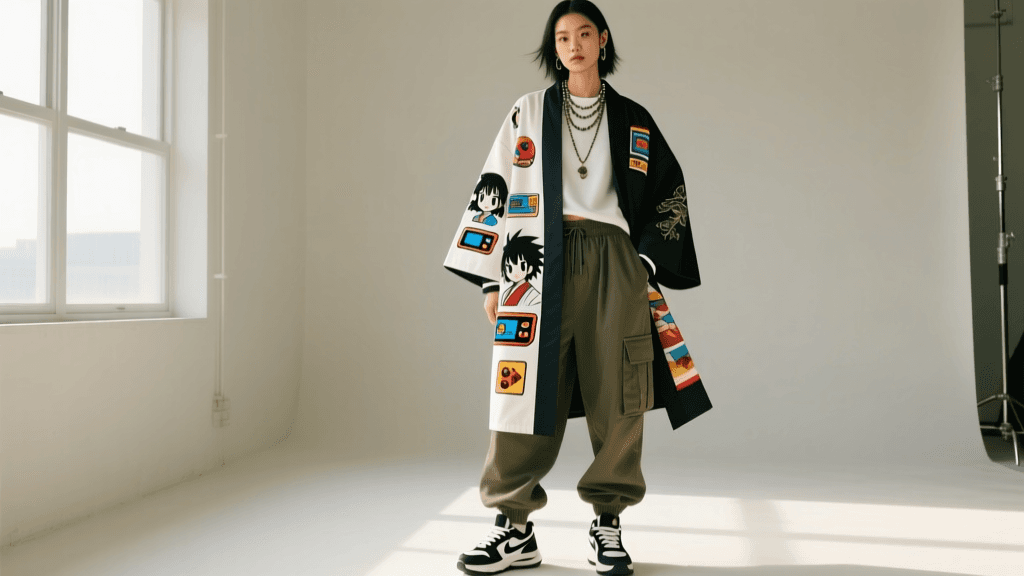
The haori is a traditional Japanese hip- or thigh-length jacket worn over a kimono. Historically, it was designed to provide warmth and display family crests or intricate artistic linings. According to the Metropolitan Museum of Art's Heilbrunn Timeline of Art History, the haori evolved significantly during the Edo period, transitioning from a purely functional garment to a canvas for immense artistic expression and social signaling. Today, its unstructured, open-front silhouette makes it the ultimate layering piece for modern office wear.
Proportions and Modern Pairings
The key to wearing a haori in a 2026 corporate setting lies in balancing its voluminous, flowing nature with structured, tailored pieces underneath. Because the haori lacks a traditional collar and falls open, it acts similarly to a modern duster coat or an unstructured blazer.
- The Turtleneck Base: Pair a mid-thigh length silk haori with a lightweight, fitted merino wool turtleneck. The high neck of the sweater mirrors the high-collared aesthetics of traditional Asian dress, creating a cohesive vertical line.
- Tailored Trousers: To ground the flowing top half, opt for high-waisted, wide-leg wool trousers with a sharp front crease. The contrast between the fluid silk of the haori and the structured wool of the trousers creates a dynamic, professional silhouette.
- The Haori Tie (Haori-jime): While traditional haori are tied at the front with a braided cord, in a modern office setting, leaving the jacket open creates a more relaxed, approachable 'creative director' aesthetic. If you prefer a closed look, substitute the traditional cord for a minimalist, single-strand silk ribbon in a muted tone.
Fabric Choices for the Modern Office
While vintage haori often feature heavy, glossy brocades or highly reflective rinzu (satin weaves), these can appear too theatrical for daytime office wear. For 2026, seek out haori crafted from matte crepe de chine or sustainable peace silk. These fabrics offer a subdued, elegant luster that catches the light beautifully under fluorescent and LED office lighting without overwhelming the outfit. Earth tones, deep navies, and subtle geometric patterns (like the traditional asanoha or seigaiha motifs rendered in tonal thread) are highly recommended for professional environments.
The Qipao Collar Top: Redefining the Modern Blouse
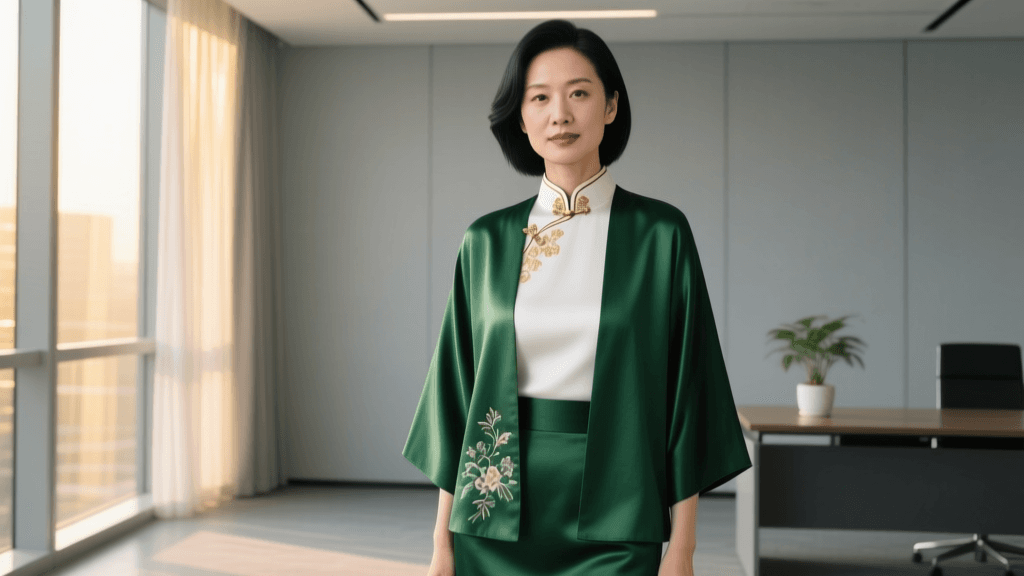
The qipao (or cheongsam) is renowned for its form-fitting silhouette, high Mandarin collar, and intricate frog button closures. However, wearing a full-length, form-fitting qipao to a standard corporate office can sometimes feel impractical or overly formal. The 2026 solution is the Qipao collar top—a blouse that borrows the iconic neckline and upper bodice detailing of the traditional dress but features a relaxed, untucked, or softly tailored lower half.
The Victoria and Albert Museum's comprehensive guide to Asian textiles and garments frequently highlights how traditional collars and closures have historically influenced global fashion. The Mandarin collar, in particular, frames the face beautifully and eliminates the need for neckties or fussy scarves, making it a masterclass in minimalist professional dressing.
Styling the Qipao Top for 2026
The modern qipao top is designed to be tucked into midi skirts or layered under sleek, collarless blazers. Here is how to integrate it into your weekly rotation:
- The Pencil Skirt Contrast: Tuck a silk qipao top into a high-waisted, knee-length pencil skirt. The structured skirt balances the delicate, ornamental nature of the frog closures (pankou) located at the neck and diagonal chest flap.
- Hardware Updates: In 2026, many contemporary designers are replacing traditional knotted silk frog buttons with hidden magnetic snaps or matte enamel toggles. This maintains the visual language of the qipao while offering the ease of use required for a busy workday.
- Color Blocking: Pair a jewel-toned qipao top (such as emerald or sapphire) with neutral, monochromatic bottom halves. A black silk qipao top with subtle tonal embroidery paired with charcoal grey wide-leg trousers is a quintessential 2026 power outfit.
2026 Wardrobe Integration Matrix
To help you visualize how these traditional pieces interact with modern corporate staples, refer to the integration matrix below. This chart outlines the best pairings, fabrics, and environments for mixing Asian heritage garments into your professional life.
| Heritage Piece | Modern 2026 Pairing | Ideal Fabric | Best Corporate Setting |
|---|---|---|---|
| Silk Haori Jacket | Merino Turtleneck & Pleated Wool Trousers | Matte Crepe de Chine | Creative Agencies, Tech Offices, Architecture Firms |
| Qipao Collar Blouse | High-Waisted Midi Skirt & Pointed-Toe Mules | Stretch Silk Charmeuse | Law Firms, Corporate Finance, Executive Boardrooms |
| Tangzhuang Jacket | Crisp Cotton Poplin Shirt & Dark Denim/Chinos | Raw Silk or Linen Blend | Business Casual Fridays, Client Dinners, Networking |
| Hakama Pants | Fitted Cashmere Sweater & Structured Blazer | Heavyweight Crepe or Wool | Academia, Publishing, Editorial & Media Offices |
Sourcing Authentic and Ethical Heritage Pieces
As the demand for heritage-inspired workwear has surged in 2026, the market has seen an influx of fast-fashion imitations that often misrepresent the cultural significance of these garments. To build a wardrobe rooted in respect and authenticity, it is crucial to source pieces from established artisans, ethical fashion houses, and specialized vintage curators.
When shopping for a silk haori or a qipao top, look for brands that provide transparency regarding their supply chain and the artisans who craft the pankou knots or weave the silk. Supporting ateliers in Kyoto, Shanghai, and Hangzhou not only ensures superior construction but also helps sustain centuries-old textile techniques that are at risk of fading in the modern era. Authentic garments will feature hand-rolled hems, matched patterns at the seams, and natural fiber linings that allow the skin to breathe during long office hours.
Care and Maintenance for Mixed-Wardrobe Textiles
Integrating delicate Asian textiles into a daily workwear rotation requires a modernized approach to garment care. The days of relying on harsh, chemical-heavy dry cleaning are behind us. In 2026, preserving the integrity of heritage silks and brocades involves gentle, eco-conscious maintenance.
- Spot Cleaning & Steaming: Avoid washing silk haori or qipao tops after every wear. Instead, use a handheld garment steamer to release wrinkles and neutralize odors. The steam also helps revive the luster of the silk fibers.
- Eco-Friendly Wet Cleaning: If a deep clean is necessary, seek out professional cleaners who specialize in liquid silicone or advanced wet-cleaning technologies. These methods are entirely free of PERC (perchloroethylene) and are safe for delicate dyes and metallic embroidery threads often found on traditional collars.
- UV-Protective Storage: Silk is highly susceptible to UV degradation and color shifting. Store your heritage pieces in breathable, UV-blocking cotton garment bags rather than plastic, which can trap moisture and cause the silk to yellow over time.
Conclusion
The integration of traditional Asian garments into the 2026 corporate wardrobe is a testament to the evolving nature of global fashion. By treating the silk haori as a sophisticated layering piece and the qipao collar top as a refined alternative to the standard button-down shirt, professionals can cultivate a personal style that is both deeply respectful of history and entirely suited for the modern world. Through mindful sourcing, careful styling, and dedicated garment care, these heritage pieces will continue to elevate and inspire the contemporary workplace for years to come.